
Side Dishes
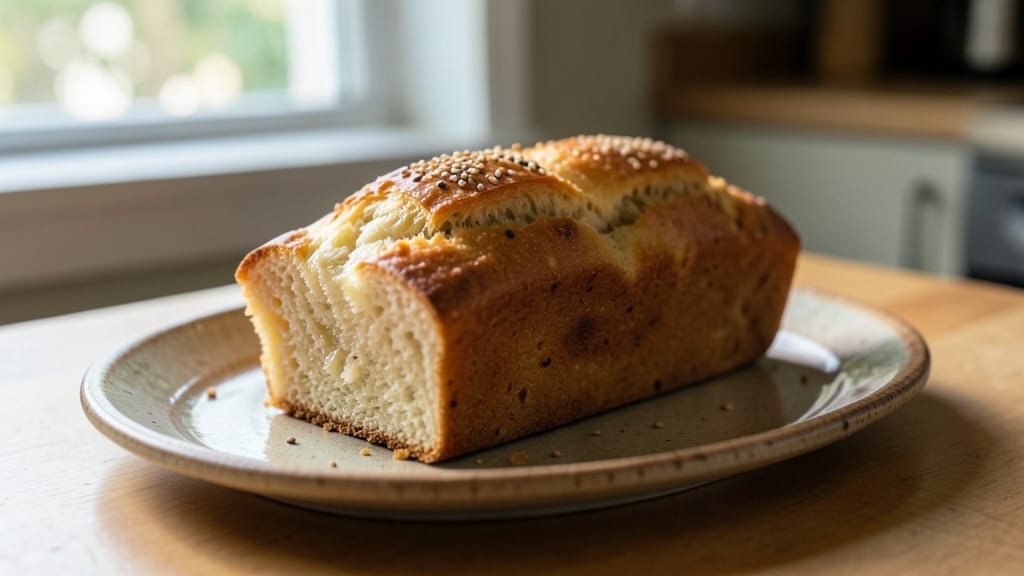
This acid whey bread recipe brings Eastern European tradition to your kitchen with its signature tangy crust and impossibly light, airy interior. The secret lies in incorporating acid whey—a byproduct of cheese-making—into the dough, which creates that distinctive flavor and texture.
I first discovered this recipe while researching Balkan baking techniques, and it quickly became a staple in my home.
The fermentation process is key to achieving that perfect balance of crispy crust and tender crumb. Unlike traditional breads, this recipe requires a longer fermentation time to develop the whey's unique tanginess while maintaining a delicate structure.
The result is a loaf that's both rustic and refined, with a subtle sour note that pairs beautifully with rich dishes.
What makes this bread truly special is its versatility—serve it fresh with butter, toasted for extra crunch, or even as a base for open-faced sandwiches. The acid whey not only enhances flavor but also contributes to a longer shelf life, making this an excellent make-ahead option for busy weeks.
Each slice delivers that satisfying contrast between the crisp exterior and fluffy interior.
While traditional versions use dairy whey, you can adapt this recipe for vegetarian or vegan diets by substituting plant-based acid whey. The technique remains the same, ensuring you achieve that signature texture and tang regardless of the whey source. Let's get started on creating this authentic, flavorful bread.
Ingredients for acid whey bread
Authentic Balkan baking relies on these 11 ingredients for its signature tangy crust and airy interior.
| Ingredient | Amount | Notes |
|---|---|---|
| Acid Whey 🥛 | 1 cup | Fresh or pasteurized, tangy flavor |
| All-Purpose Flour 🌾 | 5 cups | Bread flour preferred for texture |
| Active Dry Yeast 🍞 | 2 ¼ tsp | One packet for convenience |
| Granulated Sugar 🍚 | 1 tbsp | Feeds yeast for fermentation |
| Unsalted Butter 🧈 | ½ cup | Cold, cubed for dough enrichment |
| Large Eggs 🥚 | 1 whole | Room temperature for even mixing |
| Diamond Crystal Kosher Salt 🧂 | 2 tsp | Adjusts for whey's natural tang |
| Water 💧 | 1 ½ cups | Lukewarm for yeast activation |
| Honey 🍯 | 1 tbsp | Enhances fermentation and sweetness |
| Cornmeal 🌽 | ½ cup | Prevents sticking during shaping |
| Sesame Seeds 🌻 | 1 tbsp | Optional for traditional finish |
The acid whey is non-negotiable for that signature tang. Local dairy farms or specialty cheese shops often sell it fresh, but pasteurized whey from Amazon or bulk suppliers works too. Look for vibrant, slightly sour whey—anything murky or overly strong should be avoided. For vegetarian adaptations, plant-based acid whey from fermented coconut or soy sources delivers comparable results. The flour choice matters: King Arthur bread flour yields the best texture, though all-purpose flour will suffice in a pinch. Yeast quality is critical—always check the expiration date, as old yeast produces weaker fermentation.
No acid whey? Substitute with buttermilk or yogurt, though the flavor will differ slightly. Running short on bread flour? All-purpose plus 1 tbsp vital wheat gluten mimics its protein structure. The butter should be cold—European-style unsalted like Plugrá adds richness without overpowering. Eggs can be replaced with 1 flax egg (1 tbsp ground flax + 3 tbsp water) for vegan versions. Honey is essential for fermentation, but maple syrup works in a bind. The cornmeal prevents sticking, though semolina or rice flour are acceptable alternatives. For the sesame seeds, poppy seeds or sunflower seeds offer a similar crunch.
Store the dough in an airtight container at room temperature for up to 24 hours before baking to enhance flavor development. Once baked, the loaf keeps well at room temperature for 3-4 days wrapped in a clean kitchen towel. For longer storage, freeze the cooled loaf in slices for up to 3 months. Reheat slices in a 350°F oven for 5-7 minutes to restore crispness. The acid whey's tang intensifies over time, making this bread even more flavorful the next day.
Why You'll Love This Recipe
- No Yeast Struggle: I’ve made bread where yeast acts up—this recipe just works. The acid whey keeps the dough light without fuss, and the butter gives it that melt-in-your-mouth softness. Honestly, I’ve never had a batch fail.
- Tangy Sweet Crust: That crust? Golden and crackly, with a hint of buttery sweetness from the sugar. The acid whey adds a subtle tang that makes it taste like a bakery loaf, not something you whipped up in 20 minutes.
- Freezer-Friendly Staple: Slice it, freeze it—this bread stays fresh for weeks. Toss a few slices in a lunchbox or toast them straight from frozen for breakfast. My go-to for lazy mornings (yes, even on a Tuesday night).
- Cheap & Crowd-Pleaser: Uses pantry basics and stretches into sandwiches, toast, or French toast. The acid whey cuts costs (no expensive milk substitutes), and everyone—kids included—gobbles it up. My secret weapon for potlucks.
Step-by-step instructions for acid whey bread
This method transforms simple ingredients into a bread with a distinctive tangy crust and delicate interior.
Activate the Yeast with Acid Whey
In a small bowl, combine the 1 cup acid whey, 1 tbsp granulated sugar, and 1.5 cups lukewarm water (around 105-110°F). The whey should be at room temperature to prevent shocking the yeast. Sprinkle the 2.25 tsp active dry yeast over the liquid and let it sit for 10-15 minutes until foamy.
You'll notice the mixture bubble vigorously as the yeast activates. If it doesn't foam within 10 minutes, your yeast may be inactive—start over with fresh yeast. The acidity of the whey will create a slightly tangy flavor profile that develops further during baking. Keep this mixture at room temperature while you prepare the remaining ingredients.
Mix the Dough Components
In the bowl of a stand mixer fitted with the dough hook, combine the 5 cups all-purpose flour and 2 tsp diamond crystal kosher salt. Mix on low speed for 30 seconds to aerate the flour. Add the 0.5 cup cold cubed unsalted butter and mix until it begins to incorporate into the flour.
In a separate bowl, whisk together the 1 whole large egg, 1 tbsp honey, and the yeast mixture. With the mixer running on low, gradually pour in the wet ingredients while mixing. Increase the speed to medium and knead for 5-7 minutes until the dough becomes smooth and elastic, pulling away from the sides of the bowl.
Develop the Dough for Optimal Texture
Transfer the dough to a lightly floured surface and shape it into a round ball. Return it to the bowl, cover with a damp towel, and let it rise in a warm place for 1-2 hours or until it has doubled in size. The dough should feel light and springy when pressed gently with a finger.
I find that the acid whey creates a slightly sticky dough, so I don't flour it excessively during handling. The natural tang from the whey also enhances fermentation, which is why we monitor for the doubled size rather than relying solely on time. If the dough rises too quickly, place it in the refrigerator to slow fermentation and develop more flavor.
Shape and Proof the Loaf
Punch down the risen dough and divide it into two equal portions. On a floured surface, shape each portion into a round boule. Place them seam-side up on a baking sheet lined with parchment paper, then dust generously with 0.5 cup cornmeal to prevent sticking. Cover and let them proof for another 30-45 minutes until puffy.
For shaping, I press the dough gently but firmly to create surface tension, which helps maintain the round shape during baking. The cornmeal coating not only prevents sticking but also contributes to the bread's distinctive crust. If the dough springs back slowly when poked, it's ready for baking.
Bake for a Tangy Crust and Airy Crumb
Preheat your oven to 425°F with a baking stone or inverted baking sheet inside. Bake the loaves for 25-30 minutes until they develop a deep golden brown crust and sound hollow when tapped on the bottom. The interior should register 190-200°F on an instant-read thermometer.
For that perfect crust, I recommend using a steam pan method: Place a small tray of boiling water in the oven while preheating, then remove it just before baking. The steam helps create a crispy, tangy crust while keeping the interior tender. Once baked, transfer the loaves to a wire rack to cool completely before slicing. The sesame seeds can be sprinkled on top just before baking if desired, though they're optional.
Pro Tips For Making Acid Whey Bread
- Warm the Whey First: Pour your acid whey into a measuring cup and microwave it for 30 seconds before mixing with flour—this prevents the yeast from getting shocked by the cold liquid. I learned this after my dough took forever to rise the first time, and now it springs to life in half the time.
- Measure Butter Precisely: Use a kitchen scale for the unsalted butter—packed cups leave too much room for error. A few extra grams won’t ruin the bread, but you’ll notice the texture gets denser when you overdo it. (Yes, I’ve done it.)
- Skip the Over-Kneading: Acid whey makes dough stickier than usual, so resist the urge to knead until it’s "smooth"—just mix until the flour is fully hydrated and the dough pulls away from the bowl. Overworking it turns the crumb gummy, and nobody wants that.
- Proof at Room Temp: Let the dough rise in a warm spot (like a turned-off oven with a bowl of hot water inside) for 1–1.5 hours—no need for a proofing box. Cold dough rises slower, and rushing it with heat makes the bread taste flat. Patience here pays off.
Regional styles of this recipe
Balkan Tradition
This bread originates from Eastern Europe, particularly in regions where cheese-making is traditional like Serbia, Croatia, and Bosnia. The acid whey—a byproduct of making kaymak or sirene cheese—was historically used to prevent waste while adding unique tang to bread.
I first encountered it in a Serbian village bakery where the crust had that signature crackly texture from the whey’s acidity. 🌍
Turkish Influence
In Turkey, this style of bread is known as peynir ekmeği ("cheese bread"), often made with beyaz peynir whey. The technique spread through the Balkans via Ottoman culinary traditions, blending with local grains like durum wheat.
Turkish versions often include sumac sprinkled on top for a citrusy finish, which pairs beautifully with the whey’s tang. The slower fermentation in Turkish methods creates a denser crumb.
Modern Adaptations
Today’s bakers adapt this bread with plant-based whey for vegan diets, using fermented coconut or soy milk. Some add 1 tsp apple cider vinegar to mimic acidity if whey is unavailable. I’ve experimented with spelt flour for a nuttier crumb, though the traditional all-purpose yields the lightest texture.
For quick versions, reduce fermentation to 1 hour in a warm oven, though flavor depth suffers.
Regional Fermentation
In Croatia, bakers often proof dough overnight in cool cellars to develop deeper sour notes, while Serbian versions prioritize a quicker rise for daily baking. The key difference? Croatian dough includes 1 tbsp sour cream> to enhance tang, while Serbian recipes rely solely on whey.
I recommend the Croatian method for maximum flavor—just plan ahead for the 12-hour cold proof.
Crust Variations
The crust’s texture varies by region: Serbian loaves have a thin, crackly crust> from high-heat baking, while Croatian versions develop a thicker, chewy layer> due to longer proofing.
For a hybrid approach, bake at 400°F for 20 minutes>, then increase to 450°F> for the final 10 minutes>. The whey’s acidity ensures crispness even without extra steam.
Serving Traditions
In Bosnia, this bread is served warm with ajvar> (roasted red pepper spread) or krempita> (creamy cheese pastry). Turkish versions pair with olive oil and za’atar>, while modern adaptations use it for avocado toast> or charcuterie boards>.
The whey’s tang cuts through rich cheeses like feta or halloumi, making it a versatile side for any meal. 🧀
Nutrition facts
Frequently asked questions
What makes acid whey bread different from regular bread?
The acid whey creates a signature tangy flavor and crispy crust while keeping the interior light and airy. Unlike traditional breads, this recipe uses fermented dairy byproducts that enhance fermentation and create a unique texture. The whey's acidity also helps preserve freshness longer than standard doughs.
Can I substitute acid whey with something else?
Yes! For a similar tang, use 1 cup buttermilk or plain yogurt. For vegan versions, try fermented coconut or soy milk with 1 tsp apple cider vinegar. The texture will be slightly different, but the flavor remains comparable. Always adjust liquid measurements if your substitute is thicker or thinner than whey.
How do I know when the dough is properly fermented?
The dough should double in size and feel light when gently pressed. For acid whey bread, the fermentation process is slower due to the whey's acidity. If using a warm oven for proofing, check every 30 minutes—overproofing leads to a dense crumb. The dough should spring back slowly when poked with your finger.
Why did my bread turn out dense instead of light and airy?
This usually happens from overproofing, insufficient yeast, or cold ingredients. Ensure your yeast is fresh and your water is 105-110°F. Also, the acid whey can slow fermentation—try increasing yeast by 0.25 tsp or proofing in a slightly warmer environment. For extra lift, add 1 tsp baking soda to the dough before shaping.
How should I store acid whey bread for maximum freshness?
Wrap cooled loaves in a clean kitchen towel and store at room temperature for 3-4 days. For longer storage, freeze slices for up to 3 months. To restore crispness, reheat slices in a 350°F oven for 5-7 minutes. The whey's acidity actually improves flavor as the bread ages, making it taste even better the next day!