
Side Dishes
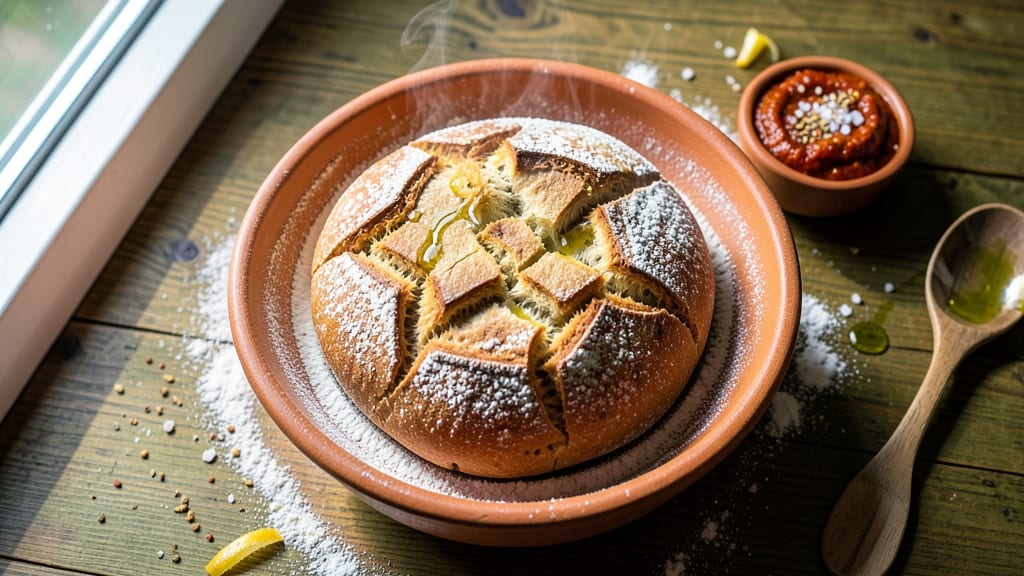
This Algerian bread recipe delivers the signature flaky layers and aromatic crust that make it a staple across North African tables. The secret lies in a simple yet precise dough technique—just flour, water, yeast, and a touch of olive oil—that transforms into golden, pillowy loaves with a crispy exterior.
What sets this apart is the harissa-kissed crust, where a light brush of the spicy paste before baking adds depth without overpowering the bread's natural warmth.
The dough requires minimal effort but maximum patience—allowing it to rise slowly develops that signature airy texture. Traditional Algerian bread (khobz) is often baked in wood-fired ovens, but a home oven can replicate the results with the right timing.
The harissa isn’t just for flavor; it creates a subtle char that adds complexity to every bite, making this bread perfect for soaking up stews or serving alongside tagines.
By the time you pull these loaves from the oven, you’ll have bread that’s foolproof to make yet restaurant-worthy in texture and aroma.
The crust crackles with just the right resistance, while the interior remains tender and slightly chewy—a balance that’s hard to achieve but simple once you know the technique.
This is the kind of bread that elevates any meal, whether you’re serving it with breakfast eggs or using it to scoop up rich couscous.
For those who love texture play, the harissa can be adjusted to taste—reduce it for milder heat or increase for a bold kick. The dough also freezes beautifully, so you can prep ahead and bake as needed. Here’s how to make it step by step.
Ingredients for algerian bread
Four cups flour kickstarts this bread's signature flaky magic—harissa brings the bold North African touch.
| Ingredient | Amount | Notes |
|---|---|---|
| All-Purpose Flour 🌾 | 4 cups | Plus 1 tbsp for dusting |
| Active Dry Yeast 🍞 | ¼ tsp | Or 1 packet instant yeast |
| Warm Water 💧 | 1 ¼ cups | 110°F (43°C) ideal |
| Extra-Virgin Olive Oil 🫒 | 2 tbsp | High-quality for flavor |
| Fine Sea Salt 🧂 | 1 ½ tsp | Diamond Crystal preferred |
| Harissa Paste 🌶️ | 1 tbsp | Adjust for heat preference |
| Semolina Flour 🌾 | ½ cup | For dusting and crust |
| Cornmeal 🌽 | ¼ cup | For baking surface |
The flour is non-negotiable here—King Arthur or Caputo Tipo 00 if you want that restaurant-style texture. Bulk bins at Whole Foods are my go-to for yeast, but the single-serving packets work fine too. Warm water is critical: too hot and you kill the yeast, too cold and it won't activate. Test it by dipping your finger in—it should feel like bath water. For harissa, Levant Spice Co. or La Boîte brands deliver authentic heat, but any good-quality paste will work. If you can't find semolina, fine cornmeal substitutes in a pinch.
No harissa? Mix 1 tsp smoked paprika + 1/2 tsp cayenne + 1/2 tsp garlic powder for a close approximation. Running short on olive oil? Melted butter works too (though it'll add richness). The dough is forgiving—if it feels too sticky, add 1 tbsp more flour; if too dry, splash in 1 tsp water. For the crust, toasted sesame seeds can replace semolina if you're feeling adventurous. The key is the double-rise time: patience here = perfect texture.
This dough keeps beautifully—3 days refrigerated or 3 months frozen as a log. For freezing, wrap tightly in plastic and thaw overnight in the fridge. The harissa-kissed crust? Best used within 2 days for maximum crunch. Store in a bread bag or wrapped in a towel to maintain freshness. Pro tip: Brush the crust with extra olive oil after baking for that bakery-fresh shine.
Why You'll Love This Recipe
- Five-Ingredient Magic: I swear by this list—flour, yeast, water, olive oil, salt—and that’s it. No fancy pantry trips, no last-minute ingredient panics. The dough comes together faster than I can boil water for tea.
- Crispy, Chewy, Repeat: That golden crust? Achievable. The tender crumb inside? Guaranteed. The olive oil keeps it rich without overpowering, while the salt cuts through for a real bread flavor—not the bland stuff you sometimes get from store-bought.
- Breakfast to Brunch: Tear it into chunks for a quick charcuterie board, toast slices for avocado toast, or pack a loaf in the fridge for school lunches. It’s my go-to for lazy mornings or when I’m hosting—no one notices the effort, but they will notice the taste.
- Budget Bread Wins: A single batch costs pennies and lasts days. Freeze half the dough for emergencies, or let it sit in the pantry—it stays fresh longer than most store bread. Plus, no preservatives, just honest, flavorful carbs.
Step-by-step instructions for Algerian bread
Let's create this aromatic, flaky bread with a harissa-kissed crust that'll impress anyone.
Activate the Yeast and Mix the Dough
In a large bowl, combine the 1.25 cups warm water (around 110°F) with the 0.25 tsp active dry yeast. Let it sit for 5-10 minutes until frothy—this means your yeast is alive and ready to work. If it doesn't bubble, your yeast might be dead, and you'll need to start over.
Add the 4 cups all-purpose flour, 1.5 tsp fine sea salt, 2 tbsp extra-virgin olive oil, and 1 tbsp harissa paste to the bowl. Mix with a wooden spoon until a shaggy dough forms. The harissa paste will give your bread that signature Algerian kick, so don't skip this step. Once combined, turn the dough out onto a lightly floured surface and knead for 8-10 minutes until smooth and elastic.
First Rise and Prepare the Dough
Place the dough in a lightly oiled bowl, cover it with a damp towel, and let it rise in a warm place for 1-2 hours, or until it has nearly doubled in size. I like to keep my oven light on with the door slightly ajar for a warm, cozy environment. Poke the dough gently—if it springs back slowly, it's ready.
Once risen, punch down the dough to release air, then divide it into 4 equal pieces. Roll each piece into a 12-inch log about 1 inch thick. The goal is to create long, thin loaves that will develop beautiful layers when baked. If your dough feels sticky, wet your hands slightly to handle it without sticking.
Shape and Second Rise
Lay each log on a baking sheet lined with parchment paper. Brush the tops with a little extra-virgin olive oil and sprinkle lightly with the 0.5 cup semolina flour. This step adds texture and prevents sticking. Cover loosely with a towel and let the dough rise again for 30-45 minutes until puffy and slightly domed.
While the dough rises, preheat your oven to 375°F. Sprinkle the baking sheet with the 0.25 cup cornmeal—this creates a crispy, golden crust that's characteristic of Algerian bread. The cornmeal also helps the bread brown evenly and adds a subtle nutty flavor.
Bake to Golden Perfection
Bake the bread for 20-25 minutes until the crust is deep golden brown and the internal temperature reaches 190°F. You'll know it's done when it sounds hollow when tapped on the bottom. The harissa paste will give the crust a beautiful reddish hue and a subtle spicy aroma that fills your kitchen.
Remove the bread from the oven and let it cool on a wire rack for 10 minutes before slicing. The layers should be flaky and crisp, with a tender crumb inside. Serve warm with olive oil and a sprinkle of flaky sea salt for the ultimate Algerian bread experience.
Pro Tips For Making Algerian Bread
- Bloom the Yeast First: Skip the guesswork—proof the yeast in warm water (about 110°F) with a pinch of sugar or honey for 5-10 minutes until frothy. Algerian bread relies on a strong rise, and dead yeast means a dense, flat loaf. I learned this the hard way after baking a brick-like loaf once.
- Use Olive Oil Sparingly: Algerian bread isn’t a brioche—don’t drown it. Use just 1-2 tablespoons of extra-virgin olive oil for the dough (not the full bottle). Too much oil makes the bread greasy and gummy, not crispy. Trust me, your crust will thank you.
- Don’t Over-Knead the Dough: Algerian bread dough is delicate. Knead just until smooth—about 5-7 minutes by hand—then let it rest. Overworking it develops gluten too much, making the bread tough instead of tender. I used to knead until my arm ached; now I stop early and let the dough do the work.
- Shape Loaves Tightly: Pack the dough into your baking dish (or pan) as tightly as possible, pressing the edges down firmly. This prevents air gaps and ensures a uniform, crackly crust. If it looks messy, that’s fine—just press it down hard. (Yes, even if you’re impatient like me.)
Regional styles of this algerian bread
Moroccan Khobz
This is the classic Algerian bread you’ll find in every Moroccan home—round, crusty loaves baked in wood-fired ovens. For a home oven version, shape the dough into 6-inch rounds instead of logs.
Brush the tops with melted butter and sprinkle with coarse sea salt before baking at 425°F for 15-18 minutes. The key is a steam-injected oven (spray water on the oven walls) to create that signature crackly crust. Serve warm with msemen or use to scoop up tagines. 🌟
Tunisian Msemen
For a lighter, puffed version, try msemen, a traditional Algerian/Tunisian flatbread. Mix 2 cups flour, 1 tsp salt, and 2 tbsp olive oil into a dough, then roll it into thin circles. Cook in a heated skillet with oil for 30 seconds per side until puffed.
The secret? Fold the dough in half and press down with a pastry brush while cooking. Serve with honey, cinnamon, or labneh for breakfast. ✨
Algerian Baghrir
This delicate, crispy flatbread is a staple at Algerian breakfast tables. Use 1 cup flour, 1 egg, and 1 tsp baking powder to create a thin batter. Cook in a hot, oiled pan for 1-2 minutes per side until golden.
The trick is keeping the heat medium-high and flipping quickly. Serve with sweetened yogurt, jam, or fresh fruit. It’s so light, it almost melts in your mouth! 💫
Harissa-Free Variations
If you prefer a milder bread, skip the harissa and add 1 tsp garlic powder or ½ tsp smoked paprika to the dough instead. For a savory twist, brush the baked loaves with garlic-infused olive oil and sprinkle with dried za’atar.
This works beautifully with lamb tagines or egg dishes. The dough remains the same—just the seasoning changes! 🌶️
Wood-Fired Crust Trick
For that authentic wood-fired flavor at home, bake your bread on a preheated pizza stone or steel at 450°F. Place a cast-iron skillet in the oven for 10 minutes to heat, then transfer the dough logs onto it.
The skillet’s heat mimics a wood oven’s intense burst, giving you a deeply caramelized crust in half the time. Just be ready to work fast—it bakes quicker than on a sheet! 🔥
Nutrition facts
Frequently asked questions
Can I make this Algerian bread without harissa?
Skip the harissa and substitute 1 tsp garlic powder or ½ tsp smoked paprika for a milder flavor. For extra depth, brush the baked loaves with garlic-infused olive oil and sprinkle with za’atar. The dough's texture stays the same—only the seasoning changes!
Why does my dough feel too sticky?
Sticky dough is normal with this recipe! Wet your hands slightly when handling, or add 1 tbsp flour at a time until it's workable. The harissa and olive oil contribute to the stickiness, so don't over-knead—just handle gently. If it's extremely sticky, let it rest 10 minutes before shaping.
How do I store Algerian bread for maximum freshness?
Keep bread in an airtight container at room temperature for 2-3 days. For longer storage, freeze the baked loaves for up to 3 months—thaw overnight in the fridge. To revive stale bread, warm in a 350°F oven for 5-10 minutes until crispy again.
Can I make this bread in a Dutch oven?
Yes! Shape the logs into a round loaf and bake in a preheated Dutch oven at 425°F for 20-25 minutes. The steam creates a crispier crust. For extra authenticity, spray water on the oven walls during the first 5 minutes of baking. This mimics traditional wood-fired ovens!
What's the best way to reheat sliced Algerian bread?
For crispy slices, wrap them in foil and warm at 350°F for 3-5 minutes. For toasted bread, use a toaster set to medium heat. Avoid microwaving—it makes the crust soggy. Pro tip: Brush slices with olive oil before reheating for extra flavor!