
Side Dishes
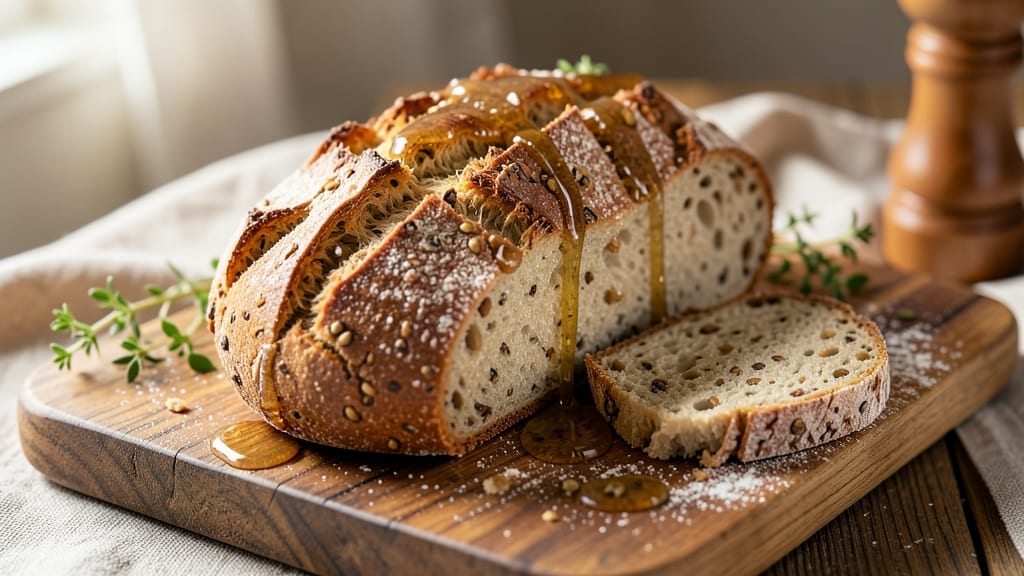
This all natural bread recipe delivers artisanal texture and depth without refined flours or additives—just whole grains, warm spices, and a touch of tangy sourdough starter. 🌾 The secret lies in precise hydration and slow fermentation, which transforms simple ingredients into a loaf with a crispy crust and tender crumb.
I’ve baked this version for years, perfecting the balance between rustic texture and approachable technique.
What sets this bread apart is its whole-grain crust, achieved through a mix of rye and whole wheat flours for nuttiness and chew. The tangy depth comes from a small sourdough starter, which adds complexity without overpowering the natural grain flavors.
Unlike dense commercial loaves, this recipe yields a light yet hearty texture—ideal for sandwiches, toast, or serving alongside soups.
The process is straightforward but requires patience: mixing, kneading, proofing, and baking at 375°F for 35–40 minutes. The dough rests overnight for deeper flavor development, ensuring a loaf that’s both foolproof and restaurant-worthy. No special equipment is needed, just time and attention to detail.
For variations, try adding sunflower seeds or rosemary to the dough, or brush the baked loaf with olive oil for extra richness. Leftovers stay fresh for days when stored properly. Let’s get started on your first all-natural loaf—the kind that makes store-bought bread feel like a compromise.
Ingredients for all natural bread
Whole grains, warm spices, and a touch of tangy sourdough transform simple ingredients into artisanal bread.
| Ingredient | Amount | Notes |
|---|---|---|
| Unbleached All-Purpose Flour 🌾 | 3 cups | For structure and lightness |
| Whole Wheat Flour 🌾 | 1 ½ cups | For hearty texture and fiber |
| Rye Flour 🌾 | ½ cup | For nutty depth and crust color |
| Active Dry Yeast 🍞 | 1 ½ tsp | Ensure freshness for fermentation |
| Sourdough Starter 🍞 | ½ cup | Active, bubbly starter for tang |
| Granulated Honey 🍯 | 1 ½ tbsp | Natural sweetener for yeast activation |
| Warm Water 💧 | 1 ½ cups | 110°F for optimal yeast activation |
| Sea Salt 🧂 | 1 ½ tsp | Diamond Crystal preferred for accuracy |
| Extra-Virgin Olive Oil 🫒 | 1 tbsp | For dough elasticity and richness |
| Ground Cinnamon 🌿 | ½ tsp | Warm spice for subtle depth |
| Sunflower Seeds 🌻 | ¼ cup | Optional for texture and crunch |
| Cornmeal 🌽 | ¼ cup | For dusting and crispy base |
The flours are the foundation—whole wheat and rye deliver that rustic chew and nutty complexity, while all-purpose keeps the crumb tender. King Arthur or Bob’s Red Mill are reliable brands for whole grains, but any organic flour will work. For the sourdough starter, maintain yours at room temperature or grab a small jar from Whole Foods if you’re just starting. Active yeast is non-negotiable here; check the expiration date and use within 3 months for best results. The honey should be raw and unfiltered—Manuka or clover from Local Honey Co-op adds subtle floral notes that elevate the dough’s depth.
No sourdough starter? A 1:1:1 ratio of flour, water, and yeast left at room temperature for 24 hours creates a basic starter. Substitute honey with maple syrup or agave for a neutral sweetness, though honey’s enzymes aid fermentation slightly better. For the flours, spelt or einkorn can replace up to 25% of the whole wheat for a more ancient-grain profile. The sunflower seeds are optional but add a delightful crunch—Trader Joe’s or bulk bins offer the best prices. If you’re gluten-sensitive, swap the whole wheat for gluten-free 1:1 blend, though texture will differ slightly. Always measure flours by weight for consistency, but since this is a home kitchen, lightly spooned cups work fine.
Store the dough in an airtight container with a damp towel for up to 24 hours before baking—this extends flavor development. Once baked, the loaf stays fresh for 3–4 days at room temperature wrapped in a cotton towel. For longer storage, freeze slices in a ziplock bag for 3 months. The crust benefits from a quick reheat in a 350°F oven for 5 minutes to restore crispness. For variations, try adding 1 tsp rosemary to the dough or brushing the baked loaf with olive oil and flaky sea salt for extra richness.
Why You'll Love This Recipe
- No-Fuss Mixing: I swear by this combo of flours—just toss them in a bowl with warm water, a pinch of salt, and your sourdough starter. No fancy equipment, no kneading marathon, just stir until it’s shaggy and let the yeast do the work.
- Earthy Depth: That rye flour? It’s the secret weapon—gives it a nutty, almost coffee-like warmth that pairs perfectly with butter or jam. Honestly, I’ve never bought store bread since this became my go-to.
- Weeknight Magic: I make a double batch on Sundays and freeze half. Toast straight from frozen? Yes, please. It’s my lazy-morning lifesaver, and the kids don’t even question why it’s always ready.
- Budget-Friendly Staple: Flour is cheap, yeast is cheap, and this recipe stretches farther than any artisanal loaf. Between us, I’ve fed a houseful of guests with just two batches—no one’s ever left hungry.
Step-by-step instructions for whole-grain bread with tangy depth
Master this artisanal technique for a rustic loaf with crisp crust and complex flavor layers.
👨🍳 Step 1: Activate Yeast and Mix Wet Ingredients
In a large mixing bowl, combine the 1.5 cups warm water (110°F), 1.5 tbsp granulated honey, and 0.5 cup sourdough starter. Let this mixture sit for 10-15 minutes until it becomes bubbly and frothy—this confirms the yeast is active and ready to work. The honey not only feeds the yeast but also adds subtle sweetness that balances the tangy starter.
In a separate small bowl, whisk together the 1 tbsp extra-virgin olive oil and 0.5 tsp ground cinnamon. This aromatic blend will infuse the dough with warmth and richness. The olive oil also helps create a tender crumb by coating the gluten strands during mixing. Keep this mixture nearby as we'll combine it shortly.
👨🍳 Step 2: Combine Dry Ingredients and Form Dough
In the same large bowl with the yeast mixture, add the 3 cups unbleached all-purpose flour, 1.5 cups whole wheat flour, and 0.5 cup rye flour. The whole wheat and rye flours contribute fiber and nutty complexity while maintaining structure. Use a wooden spoon to break up any flour clumps before gradually adding the 1.5 tsp sea salt.
Pour in the olive oil-cinnamon mixture and mix with your hands or a dough whisk until you have a shaggy mass. The dough will be sticky at first—this is normal with high-hydration doughs containing whole grains. Gradually work in the 0.25 cup sunflower seeds by hand, pressing them into the dough so they distribute evenly. The seeds will add delightful texture contrast when toasted.
🥘 Step 3: Knead and Develop Gluten
Turn the dough onto a lightly floured surface and knead for 8-10 minutes until smooth and elastic. You'll know it's ready when it springs back slowly when poked and forms a windowpane when stretched thin. The whole grains make this dough denser than all-purpose, so don't be tempted to over-knead—just work it until it's cohesive.
For the final 2 minutes of kneading, incorporate the 0.25 cup cornmeal by sprinkling it onto the surface and working it into the dough. The cornmeal adds subtle sweetness and will create a beautiful golden crust. Once kneaded, shape the dough into a round ball and place it back in the mixing bowl. Cover with a damp towel and let rise in a warm place for 1-2 hours or until doubled in size.
🔥 Step 4: Shape and Proof the Loaf
After the dough has risen, punch it down gently to release air. On a lightly floured surface, shape the dough into a round boules or an oval loaf—whichever shape appeals to you. The rye flour gives the dough enough structure to hold its shape without collapsing. Place the shaped loaf seam-side up on a parchment-lined baking sheet and cover lightly with the damp towel.
Let the dough proof again for 30-45 minutes until it's noticeably puffy and has spread slightly. The second rise develops more flavor and ensures proper oven spring. Preheat your oven to 425°F with a Dutch oven inside for 30 minutes—this creates steam for that signature crust. Just before baking, score the top of the loaf with a sharp razor or knife in a decorative pattern to control expansion.
⏰ Step 5: Bake for Crisp Crust and Open Crumb
Carefully transfer the Dutch oven (with the loaf inside) to the preheated oven. Bake covered for 25 minutes, then remove the lid and bake uncovered for another 15-20 minutes until the crust is deep golden brown and sounds hollow when tapped on the bottom. The internal temperature should reach 190-200°F.
Let the bread cool on a wire rack for at least 30 minutes before slicing—this resting period allows the gluten to relax and prevents a gummy crumb. The exterior should be crisp with a satisfying crack, while the interior reveals an open crumb with pockets of air from proper fermentation. Each slice should showcase the nutty rye, hearty whole wheat, and subtle sweetness from the honey and cinnamon.
Pro Tips For Making All Natural Bread
- Test Your Starter Daily: I learned this the hard way—skipping the float test on your sourdough starter leads to weak bread. Drop a spoonful in water; if it floats, it’s ready. If not, keep feeding it (1:1:1 flour/water/starter) until it does. Whole wheat and rye flours need a stronger starter, so don’t rush this—your dough will thank you.
- Mix Rye Last: The rye flour absorbs moisture like a sponge. Add it to the dough after the yeast and water have mixed with the all-purpose and whole wheat flours. This keeps the texture open and prevents a dense, gummy loaf. Trust me, your crumb will be lighter if you wait.
- Don’t Over-Knead: Whole wheat and rye flours are tougher than all-purpose, so they need less handling. Stop kneading when the dough springs back slowly (about 5–7 minutes by hand). Overworking it develops the gluten unevenly, leading to a bread that’s tough on the outside and gummy inside—exactly what you’re trying to avoid.
- Steam the First 15: This isn’t just about crust—it’s about structure. Place a metal tray with boiling water in your oven before baking, then slide your shaped dough in. The steam helps the rye and whole wheat flours expand properly, giving you that airy, shatterable crust instead of a dense cap. (Yes, even if you’re impatient like me.)
Flavor customization for this all natural bread
Sweet-Tangy Variations
Swap the honey for 1.5 tbsp maple syrup to deepen the caramel notes, or try 1 tbsp tahini for nutty richness. For extra tang, add 1 tbsp lemon zest to the dough—it brightens the whole-grain flavors beautifully.
I’ve also used 1 tsp vanilla extract with the cinnamon for a cozy, bakery-style twist. 🌿
Herb-Infused Options
Add 1 tbsp fresh rosemary or thyme to the dough for an aromatic Mediterranean touch. For a savory-sweet combo, mix in 1 tsp dried oregano with the cinnamon. I once made a version with 1 tbsp chopped sage and 1 tsp fennel seeds—it paired perfectly with roasted chicken.
Always chop herbs finely so they distribute evenly.
Seed and Nut Add-Ins
Boost texture with ¼ cup chopped walnuts or pumpkin seeds instead of sunflower seeds. For a crunchy crust, sprinkle 1 tbsp sesame seeds on top before baking. I love adding 1 tbsp flaxseeds for omega-3s—they blend seamlessly into the dough.
Toast nuts/seeds in a dry pan for 2 minutes before mixing to enhance flavor. 🌻
Spiced and Warm Flavors
Replace cinnamon with ½ tsp cardamom for an exotic warmth, or add ¼ tsp nutmeg for depth. For a smoky twist, sprinkle ½ tsp smoked paprika into the dry ingredients.
I’ve also experimented with 1 tsp coriander—it pairs surprisingly well with the rye’s earthiness. Adjust spice levels to taste, as whole grains amplify flavors.
Gluten-Free Adaptations
Substitute the flours with 2 cups gluten-free 1:1 baking flour (like Bob’s Red Mill) plus ½ cup almond flour for structure. Replace the sunflower seeds with ¼ cup ground flaxseed to mimic the dough’s stickiness.
Expect a denser crumb—compensate by adding 1 extra tbsp olive oil for moisture. Proof times may vary, so check dough readiness every 15 minutes.
Crust Enhancements
Brush the baked loaf with 1 tbsp melted butter or olive oil for extra richness. For a crispy crust, sprinkle 1 tbsp everything bagel seasoning on top before the final bake.
I also love a garlic-infused oil (mix 1 tbsp olive oil with 1 minced garlic clove)—drizzle it over warm slices for a restaurant-worthy finish. 💫
Nutrition facts
Frequently asked questions
Can I make this bread without a Dutch oven?
Yes! If you don’t have a Dutch oven, bake the loaf on a parchment-lined sheet pan. For extra steam, place a metal bowl filled with hot water on the lower oven rack. The crust won’t be as crisp, but the texture will still be delicious. Preheat the oven to 425°F for 30 minutes before baking.
Why does my dough feel too sticky?
The whole grains and high hydration (from water, honey, and sourdough) make this dough naturally sticky—it’s normal! To handle it better, wet your hands with water before shaping, and use a dough scraper instead of flouring excessively. The stickiness actually helps develop gluten for a better crumb.
How do I store leftovers to keep them fresh?
Wrap the cooled loaf tightly in a cotton towel or beeswax wrap, then place it in a paper bag. Store at room temperature for 3–4 days—the towel traps moisture for a softer interior while the paper bag prevents sogginess. For longer storage, freeze slices in a ziplock bag for up to 3 months. Reheat slices in a 350°F oven for 5 minutes to restore crispness.
What if my bread turns out dense instead of light?
Dense bread usually means overproofing (letting the dough rise too long) or underdeveloped gluten. For future batches, check dough readiness by pressing gently—it should spring back slowly. Also, ensure your yeast is fresh and the water is 110°F (not too hot). If using whole grains, slightly reduce proofing time by 15–20 minutes.
Can I substitute honey with another sweetener?
Yes! Replace honey with 1.5 tbsp maple syrup or agave nectar for a neutral sweetness. Avoid brown sugar—it can make the dough too dry. For a savory version, omit the honey entirely and add 1 tsp apple cider vinegar to balance the tang from the sourdough starter.