
Breakfast & Brunch
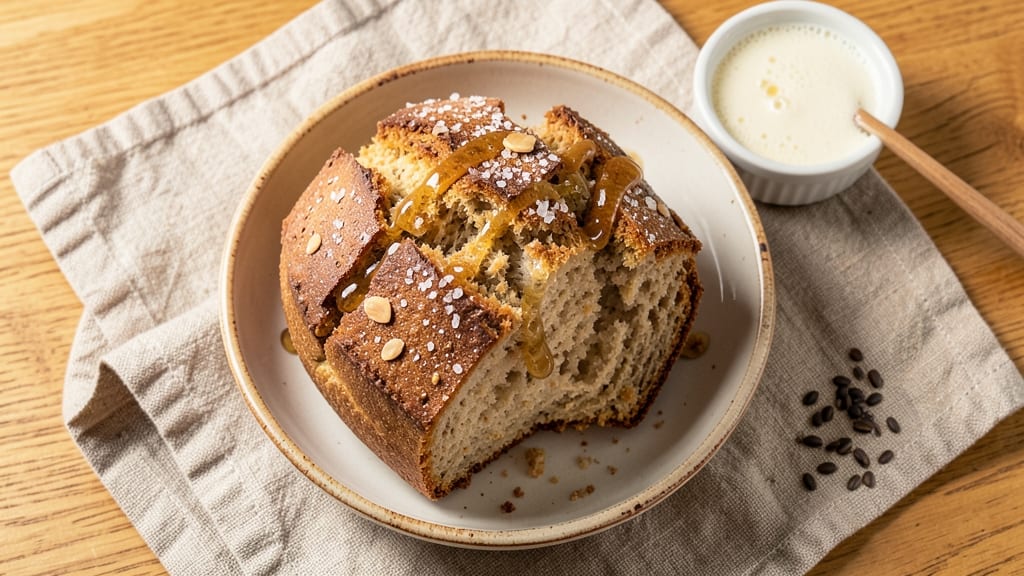
This almond flour yeast bread recipe delivers a nutty crust and pillowy crumb without gluten or eggs—perfect for those avoiding dairy or seeking grain-free options. The secret lies in combining almond flour’s natural moisture with flaxseed meal for binding, creating a loaf that’s both sturdy and tender.
Unlike dense eggless breads, this recipe yields a light texture with a golden, crackly crust that holds up beautifully for toast or sandwiches.
The process is straightforward but requires patience: mixing warm yeast with almond milk kickstarts fermentation, while a touch of honey balances the flour’s natural bitterness. A gentle kneading (or folding) develops gluten-free structure, and proofing in a warm spot ensures rise without overproofing.
The result? A loaf that’s crisp on the outside and soft enough to melt in your mouth—no eggs, no gluten, no compromise on flavor or texture.
What makes this recipe stand out is its versatility. Use it for breakfast toast with almond butter, as a base for sandwiches, or even as a vehicle for soups.
The nutty depth of almond flour shines through, while the flaxseed adds a subtle earthiness that complements both sweet and savory toppings. For those new to almond flour baking, this recipe proves it’s possible to achieve restaurant-quality bread at home—without traditional binders.
Ready in about 2 hours (including proofing), this bread is ideal for meal prep or gifting. The key to success is measuring ingredients precisely and avoiding overmixing, which can lead to a dense crumb.
Once baked, store it wrapped at room temperature for up to 3 days or freeze for longer shelf life. Let’s bake this nutty, egg-free loaf that’s as impressive as it is delicious.
Ingredients for almond flour bread recipe with yeast no eggs
These 11 ingredients create a gluten-free, egg-free loaf with restaurant-quality texture and nutty flavor.
| Ingredient | Amount | Notes |
|---|---|---|
| Almond Flour 🌾 | 3 cups | Finely ground, unsweetened preferred |
| Flaxseed Meal 🌰 | ¼ cup | Ground flaxseeds for binding |
| Unsweetened Almond Milk 🥛 | 1 ¼ cups | Room temperature, unsweetened |
| Active Dry Yeast 🍞 | 1 tsp | Instant yeast works too |
| Raw Honey 🍯 | 1 tbsp | Or maple syrup for vegan option |
| Sea Salt 🧂 | 1 ½ tsp | Fine grain preferred |
| Olive Oil 🫒 | ¼ cup | Extra-virgin for richness |
| Granulated Sugar 🍚 | 1 tbsp | Balances almond flour bitterness |
| Baking Powder 🍞 | 1 tsp | Aluminum-free preferred |
| Psyllium Husk Powder 🌿 | 1 tbsp | For improved texture and rise |
| Water 💧 | ¼ cup | Warm, not hot |
Almond flour makes or breaks this recipe—Bob's Red Mill or Anthony's Goods are the gold standards for fine grind and consistent moisture. The flaxseed meal is non-negotiable for binding; Bob's Red Mill again is reliable. If your almond flour smells bitter, it's likely rancid—toss it. For the yeast, Saf-Instant is my go-to as it doesn't need proofing in water. Psyllium husk powder might be new to your pantry—Frontier Co-op sells it in bulk, or check the baking aisle at Whole Foods. The olive oil should be extra-virgin; California Olive Ranch is a solid budget pick.
No almond milk? Oat milk or coconut milk work in a pinch, but the flavor will differ slightly. Swapping honey? Maple syrup or agave at the same amount keeps it vegan. For the psyllium husk, if you can't find it, 1 extra tbsp almond flour plus 1 tbsp water can substitute (though texture won't be identical). The warm water should be 100-110°F—too hot kills the yeast. If your yeast is old, test it first by mixing with 1 tsp sugar and 2 tbsp warm water—it should foam in 5-10 minutes.
This dough is delicate—don't overmix. Store it in an airtight container in the fridge for up to 3 days before baking. The baked loaf keeps 3 days at room temperature wrapped in a clean kitchen towel, or 3 months frozen. To revive frozen bread, wrap it in foil and warm at 300°F for 10-15 minutes. The crust stays crisp for about 2 hours after baking, so slice it fresh for maximum crunch.
Why You'll Love This Recipe
- No-Knead Magic: I swear by this—just mix, let it rise, and bake. The flaxseed meal binds everything together while the yeast does all the heavy lifting, so you’re not stuck measuring egg substitutes or fussing with gluten-free hacks.
- Honey-Yeast Crust: That raw honey isn’t just for sweetness—it caramelizes into a golden, slightly crisp crust while keeping the inside tender. Between us, the first slice out of the oven is my favorite part.
- Weeknight & Picnic: Slice it for toast in the morning, pack it for lunch, or serve it warm with butter at dinner. Honestly, I’ve even used it as a base for charcuterie boards—no one bats an eye at how simple it is.
- Budget-Friendly Staple: Almond flour isn’t cheap, but a single batch stretches for days. The yeast and honey keep costs low, and the flaxseed meal adds protein without breaking the bank. My freezer’s always stocked with extras.
Step-by-step instructions for almond flour yeast bread without eggs
A nutty crust and pillowy crumb are within reach with this egg-free almond flour bread.
Activate the Yeast and Mix Wet Ingredients
In a small bowl, combine the 1.25 cups unsweetened almond milk (room temperature), 1 tbsp raw honey, and 1 tsp active dry yeast. Let this mixture sit for 5-10 minutes until it becomes frothy—this confirms the yeast is alive and ready to work. The mixture should nearly double in volume and develop a light, bubbly texture.
In a separate large bowl, whisk together the 0.25 cup flaxseed meal and 0.25 cup warm water. Let this sit for 2 minutes to form a gel-like consistency, which will act as an egg substitute to bind the dough. Then add the 0.25 cup olive oil, 1 tbsp granulated sugar, and 1.5 tsp sea salt. Mix until fully combined—this creates the foundation for your bread's flavor and texture.
Combine Wet and Dry Ingredients
Gradually add the 3 cups almond flour to the wet mixture while stirring with a wooden spoon or silicone spatula. The dough will be thick and sticky at first, but keep mixing until it begins to come together. Add the 1 tsp baking powder and 1 tbsp psyllium husk powder next, incorporating them gently to avoid deflating any air bubbles.
This is where the psyllium husk powder works its magic—it helps create structure and improves the bread's rise. The dough should be soft but manageable, similar to a very dense cookie dough. If it feels too dry, add 1 tablespoon of almond milk at a time until it reaches the right consistency. Avoid overmixing, as this can make the bread dense.
Knead and Let the Dough Rest
Transfer the dough to a lightly floured surface and knead gently for 2-3 minutes until it becomes smooth and elastic. The almond flour dough won't be as stretchy as traditional wheat flour dough, but it should hold together when pressed lightly. If the dough feels too sticky, wet your hands slightly to prevent sticking.
Place the dough in a lightly oiled loaf pan or a round baking dish. Cover it with a damp kitchen towel or plastic wrap and let it rise in a warm place for 1-1.5 hours until it has nearly doubled in size. You'll know it's ready when the dough feels springy to the touch and has puffed noticeably. This resting period allows the yeast to work its magic, creating that light, airy crumb you're after.
Preheat and Shape the Bread
Preheat your oven to 350°F and position a rack in the lower third of the oven. While the oven heats, gently remove the dough from the pan or dish and place it on a parchment-lined baking sheet. If the dough has risen unevenly, use a spatula to gently shape it into a loaf or round form. This step ensures even baking and a more uniform texture.
Brush the top of the dough lightly with a mixture of 1 tablespoon olive oil and 1 teaspoon water to create a golden, crispy crust. Sprinkle with a pinch of sea salt for extra flavor. The oil will help the crust brown beautifully while keeping the interior moist. Place the baking sheet in the preheated oven and bake for 45-50 minutes.
Bake to Golden Perfection and Cool Properly
Bake the bread until the top is deep golden brown and the internal temperature reaches 190-195°F when measured with an instant-read thermometer. The bread should sound hollow when tapped on the bottom. If the top browns too quickly, tent the bread with aluminum foil to prevent over-browning while it continues to bake.
Remove the bread from the oven and let it cool in the pan for 10 minutes before transferring it to a wire rack to cool completely. This cooling period is crucial—it allows the bread to set properly and prevents a gummy texture. Once fully cooled, slice and serve. The crust should be nutty and crispy, while the interior should be soft, pillowy, and slightly sweet from the almond flour and honey.
Pro Tips For Making Almond Flour Bread Recipe With Yeast No Eggs
- WHISK THE FLAX FIRST: Mix the ground flaxseed with almond milk before adding it to the yeast—this prevents clumping and ensures the flax fully hydrates. I learned this the hard way when my first batch turned into a gummy mess because the flax sat as dry chunks.
- USE WARM ALMOND MILK: The yeast needs warmth to activate, but almond milk cools fast. Heat it to 105–110°F (40–43°C)—just warm enough to touch with your wrist without burning—then let it sit for 5 minutes before mixing. Cold milk kills the yeast; too-hot milk does the same.
- DON’T OVERMIX THE DOUGH: Almond flour is delicate. Once you’ve combined everything, stir just until the ingredients barely come together—overmixing develops gluten-like toughness, and this bread falls apart. Think "loose and shaggy," not "smooth and elastic."
- LET THE DOUGH RISE TWICE: After the first rise (usually 1–1.5 hours), punch it down and let it rise again—this time, for 30–45 minutes. The second rise improves texture and ensures even baking. I skip this step half the time, and the bread always turns out denser.
Serving suggestions for almond flour bread recipe with yeast no eggs
Breakfast Toast
This nutty almond flour bread is perfect for breakfast—slice it thick and toast it in a Lodge cast iron skillet until golden and crisp. Spread with almond butter and drizzle with maple syrup for a protein-packed morning treat.
I love adding a sprinkle of cinnamon and a few chopped walnuts for extra crunch. 🌟
Savory Sandwiches
Use this bread as a base for hearty sandwiches—its sturdy crust holds up to fillings like avocado mash, turkey slices, and sprouts. Try a "Mediterranean" version with hummus, roasted red peppers, and feta cheese.
The nutty flavor pairs beautifully with bold flavors, making it a great gluten-free alternative to sourdough. 🥖
Soup Companion
Serve warm slices alongside soups like creamy tomato basil or lentil stew. The bread’s crispy crust soaks up broth while the soft interior stays tender. For extra flair, brush slices with garlic-infused olive oil before serving.
I often toast a few slices in the oven at 375°F for 5 minutes to enhance the crunch. ✨
Dessert Twist
Dip slices in dark chocolate or nutella for a quick dessert. The almond flavor complements sweet spreads beautifully. For a fancy touch, sprinkle with crushed pistachios or sea salt flakes before baking. This bread is surprisingly versatile—don’t limit it to savory uses! 🍫
Meal Prep Slices
Pre-slice the bread and store in an airtight container with parchment paper between slices to maintain freshness. Reheat individual slices in a toaster or 300°F oven for 3-5 minutes to restore crispiness. Pack these with peanut butter and banana slices for grab-and-go lunches. 💪
Gift-Worthy Loaves
Wrap cooled loaves in brown kraft paper with a ribbon for a thoughtful homemade gift. Pair with a jar of homemade jam or olive oil for a complete gift basket.
The nutty aroma makes it a standout at holiday gatherings or potlucks. Perfect for sharing with friends who avoid gluten or eggs! 🎁
Nutrition facts
Frequently asked questions
Why does my almond flour bread turn out dense?
Almond flour absorbs moisture differently than wheat flour, so overmixing or skipping the rest period can create a dense crumb. Always knead gently for 2-3 minutes and let the dough rise until nearly doubled (1-1.5 hours). If the dough feels dry, add 1 tbsp almond milk at a time until it's just combined.
Can I substitute flaxseed meal with another binder?
Yes! For 1/4 cup flaxseed meal, try 1/4 cup ground chia seeds (mixed with 1/4 cup water) or 1/4 cup unsweetened applesauce. Chia works well but may add a slightly tangy flavor. Never skip the binder—it's what holds this egg-free bread together without eggs.
How do I know when the bread is fully baked?
Look for a deep golden brown crust and an internal temperature of 190-195°F (use an instant-read thermometer). Tap the bottom—it should sound hollow. If the top browns too quickly, tent with foil to prevent over-browning while the center finishes baking.
Will this bread work in a bread machine?
Not ideal—almond flour dough is delicate and requires gentle handling. The bread machine's aggressive kneading can overwork the gluten-free structure. Stick to the hand-kneading method for best results. If you're determined to try, use the "dough" setting and add 1 extra tbsp olive oil to prevent sticking.
Can I make this bread without honey?
Replace the 1 tbsp honey with 1 tbsp maple syrup or agave nectar for a vegan option. For a neutral flavor, use 1 tbsp granulated sugar (reduce other sugar by 1 tsp if needed). The sweetener helps balance almond flour's natural bitterness and feeds the yeast.