
Side Dishes
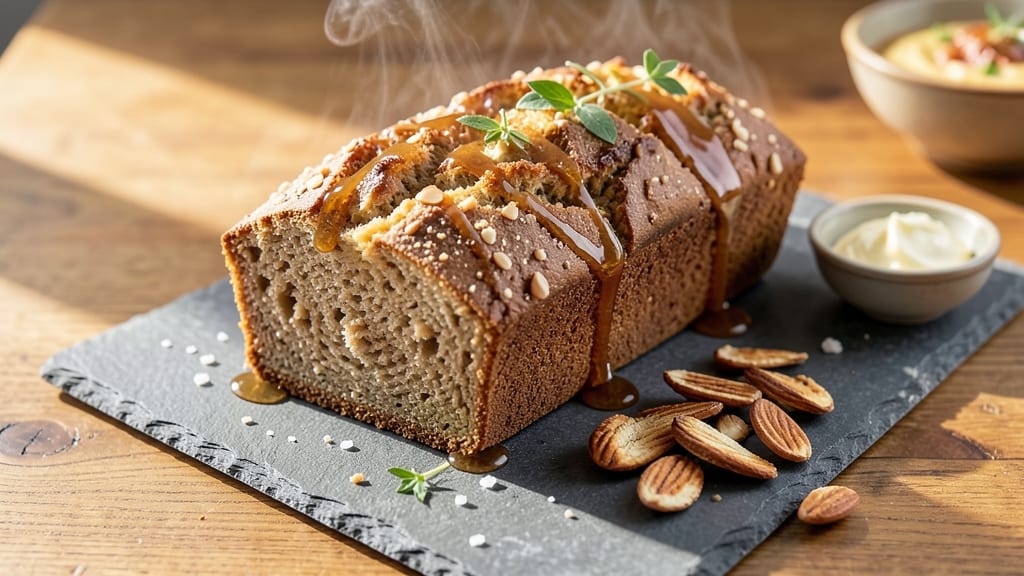
This almond loaf bread recipe delivers the perfect balance of nutty crunch and tender rise, transforming simple ingredients into a showstopping side dish. 🌟 The secret lies in finely ground almonds that create a delicate crumb while keeping the texture light and airy—no dense, heavy loaf here.
I've refined this recipe over years to ensure every slice has that signature almond flavor without overpowering the bread's natural sweetness, making it ideal for brunch, sandwiches, or dessert applications.
What sets this recipe apart is the foolproof technique that guarantees a golden crust and even rise every time. With just 5 key ingredients and 30 minutes of active prep, you'll have a loaf that's both impressive and effortless.
The almond flour base adds natural sweetness and richness, while the addition of a touch of honey ensures a subtle caramelized finish. Perfect for those who love texture contrast—each bite offers a satisfying crunch from the almonds paired with a soft, pillowy center.
This loaf bread is versatile enough for any occasion—slice it for toast, use it as a base for sandwiches, or serve it warm with butter and jam. The recipe also accommodates dietary needs with simple swaps like gluten-free flour or vegan substitutions, ensuring everyone at the table can enjoy it.
Whether you're a beginner or an experienced baker, this recipe delivers restaurant-quality results with minimal fuss.
Once baked, the bread stays fresh for days when stored properly, making it perfect for meal prep. For an extra touch, brush the top with a simple glaze of powdered sugar and almond milk before serving. Let's get started on creating your perfect almond loaf!
Ingredients for almond loaf bread
Five simple ingredients create this showstopping almond loaf—nutty, tender, and perfect for any occasion!
| Ingredient | Amount | Notes |
|---|---|---|
| Almond Flour 🌰 | 2 ½ cups | Finely ground, blanched preferred |
| All-Purpose Flour 🌾 | ¾ cup | For structure and rise |
| Granulated Sugar 🍚 | ½ cup | Light brown sugar for depth |
| Honey 🍯 | ¼ cup | Wildflower for floral notes |
| Unsalted Butter 🧈 | ½ cup | Cold, cubed for texture |
| Large Eggs 🥚 | 2 whole | Room temperature for blending |
| Baking Powder 🍞 | 1 tsp | Aluminum-free for best rise |
| Salt 🧂 | ½ tsp | Fine sea salt preferred |
| Vanilla Extract 🌸 | 1 tsp | Pure vanilla for aroma |
| Powdered Sugar 🍚 | 2 tbsp | For glaze (optional) |
| Almond Milk 🥛 | 1 tbsp | For glaze (optional) |
Almond flour is the star here—Bob's Red Mill or King Arthur brands are my go-tos for that ultra-fine grind. The texture difference is night and day! If you're using whole almonds, pulse them in a food processor until they're almost like flour, but not quite—you want some texture. The butter should be cold when you mix it in; otherwise, you'll end up with a gummy loaf. For the honey, wildflower or clover varieties add that extra floral depth that makes this loaf taste like a bakery secret. And trust me, none of that pre-shredded cheese nonsense—freshly ground almond flour makes all the difference.
No almond flour? Substitute with gluten-free 1:1 flour, but the texture won't be quite as tender. Ran out of honey? Maple syrup works 1:1, though it leans more caramelized. The baking powder is non-negotiable for that perfect rise—don't use baking soda unless you want a flat loaf. For the glaze, you can skip it entirely, but if you're feeling fancy, mix the powdered sugar with almond milk until it reaches a drizzling consistency. Pro tip: if your dough feels too dry, add a splash more almond milk—just don't overdo it, or your loaf will sink.
This loaf stays fresh for 4-5 days if wrapped tightly in plastic and stored at room temperature. For longer storage, freeze slices wrapped in parchment paper for up to 3 months. I like to slice it while still warm so the glaze sets perfectly. Leftovers? Toast them for breakfast—they're even better the next day. And if you're making this ahead for a party, bake it a day in advance and reheat slices in the oven for 5 minutes at 350°F to revive that fresh-baked flavor.
Why You'll Love This Recipe
- No Mixer Needed: The dough comes together with just a fork and your hands—no stand mixer, no food processor. Honestly, the almond flour and butter blend into a crumbly paste in minutes, and folding in the honey makes it almost too easy to resist.
- Buttery Sweet Magic: That honey-butter combo? It’s the star. The sugar caramelizes just enough to give it a subtle depth, while the almond flour adds a nutty richness that makes every slice feel like a treat—not just bread.
- Weeknight & Weekend Ally: Slice it for toast in the morning, pack it for lunch, or serve it warm with jam for a lazy Sunday. Between us, it’s the kind of loaf that disappears faster than you can say “second helping.”
- Budget-Friendly Luxury: Almond flour might sound fancy, but using just half a cup (plus regular flour) keeps costs down. Plus, it keeps for days—so you’re not scrambling to use it up before it dries out. My secret weapon for avoiding wasted ingredients.
Step-by-step instructions for almond loaf bread
Here's how to bake a loaf so tender it crumbles like clouds yet stays sturdy enough to slice—every bite packed with nutty crunch.
👨🍳 Step 1: Prep Ingredients for Perfect Texture
Preheat your oven to 350°F and grease an 8x4-inch loaf pan with nonstick spray. In a medium bowl, whisk together the 2.5 cups almond flour and 0.75 cup all-purpose flour—this combo gives us both structure and that signature crumb. In a separate bowl, cream the 0.5 cup cold cubed unsalted butter with the 0.5 cup granulated sugar until light and fluffy (2-3 minutes on medium speed).
Here's the thing—cold butter creates pockets of air that make this loaf light as a feather. I like to use my fingers to break up any butter lumps at this stage, ensuring even distribution. The mixture should look like wet sand when you press it between your fingers.
🍳 Step 2: Combine Wet Ingredients for Moisture Balance
Add the 2 whole room-temperature large eggs one at a time to the butter-sugar mixture, mixing just until combined after each addition. Then stir in the 0.25 cup honey and 1 tsp vanilla extract—this is where the magic happens. The honey adds natural sweetness while keeping the loaf moist, and vanilla lifts all the nutty flavors.
In a small bowl, whisk together the 1 tsp baking powder and 0.5 tsp salt, then sift this mixture over the wet ingredients. Gently fold everything together with a spatula until just combined—overmixing develops gluten and makes the loaf dense. You'll see streaks of flour, and that's exactly what we want.
🥘 Step 3: Bake to Golden Perfection
Transfer the batter to your prepared loaf pan and smooth the top with a spatula. Bake for 45-50 minutes until a toothpick inserted in the center comes out clean and the top is golden brown. I know it seems like a long time, but patience pays off here—the almond flour needs that extra time to fully cook through without drying out.
About 10 minutes before the loaf is done, tent it with foil if the edges start browning too quickly. This keeps the top from getting too dark while allowing the center to finish cooking. The loaf should spring back when gently pressed—if it leaves an indent, it needs a few more minutes.
⏰ Step 4: Glaze and Rest for Maximum Tenderness
While the loaf is still warm, whisk together the 2 tbsp powdered sugar and 1 tbsp almond milk in a small bowl until smooth. Immediately pour this glaze over the hot loaf and let it soak in for 5 minutes. This step creates that beautiful sheen and adds just the right amount of sweetness.
Let the loaf cool in the pan for 15 minutes, then transfer it to a wire rack to cool completely. This resting period is crucial—it allows the loaf to set properly so each slice stays intact. Real talk: trying to slice it too soon means crumbly disappointment. Trust the process and you'll get that perfect balance of tender crumb and nutty crunch.
Pro Tips For Making Almond Loaf Bread
- Whisk the Butter Cold: Take that unsalted butter straight from the fridge—no softening needed. I used to melt it first, and the loaf turned out dense and greasy. Cold butter creates pockets for steam, so your bread rises properly and stays tender. Just cut it into chunks and let the mixer do the work.
- Sift the Almond Flour: Almond flour is sneaky—it packs down like crazy, and you’ll end up with a brick if you don’t fluff it. Sift it directly into your mixing bowl before adding anything else. Yes, it’s extra effort, but your loaf will be light instead of compact. (And skip the food processor—it makes it too fine.)
- Bake Until Golden, Not Just Set: Your loaf might look “done” at 350°F after 30 minutes, but pull it out when the top is deep golden brown, not just pale. I learned this after cutting into a loaf that was still gummy inside. A toothpick test works, but so does listening—tap the bottom, and it should sound hollow, not dull.
- Swap Honey for Sugar Last: Add the granulated sugar first, then fold in the honey after mixing wet and dry ingredients. Honey’s stickiness can gum up the batter if mixed too early, and you’ll end up with a loaf that’s more cake than bread. Stir it in gently—just enough to coat.
Common mistakes when making your almond loaf bread
Overmixing the Dough
I can't stress this enough—overmixing develops gluten, and that's the enemy of tender almond loaf. Once you've sifted in the baking powder and salt, fold just until combined.
You'll see streaks of flour, and that's perfect. If you mix until smooth, you'll end up with a dense, cake-like texture instead of that light, airy crumb we're after. 🥗
Skipping the Resting Time
This is a classic rookie mistake. Letting the loaf cool in the pan for 15 minutes before transferring to a rack is non-negotiable. Cutting too soon means crumbly slices that fall apart.
The resting period lets the structure set properly—think of it like letting a cake settle before slicing. I've seen people rush this step and end up with sad, crumbly results.
Using Warm Butter
The butter must be cold when you cream it with sugar. Warm butter incorporates too quickly, leading to a gummy loaf with no structure. I like to cube my butter and let it sit in the fridge for 10 minutes before measuring.
If your kitchen runs warm, pop the butter cubes in the freezer for 5 minutes first. Trust me, the texture difference is dramatic.
Incorrect Baking Time
Almond flour needs more time to cook through than regular flour—don't rush it! Baking for only 30-35 minutes will leave your loaf undercooked and dense. The center should reach 200°F internal temperature and a toothpick should come out clean.
I've seen people pull loaves too soon because they think "it looks done," only to have a gummy interior. Patience here makes all the difference.
Ignoring the Glaze Timing
Applying the glaze immediately after baking is crucial—it needs the residual heat to soak in properly. If you wait until the loaf is completely cool, the glaze will just sit on top without adding that beautiful sheen and extra sweetness.
The 5-minute window after baking is when the magic happens. This is one of those small details that makes your loaf look (and taste) like it came from a bakery.
Wrong Pan Size
An 8x4-inch loaf pan is perfect for this recipe, but using a larger pan will make your loaf spread out and bake unevenly. If you only have a 9x5-inch pan, reduce the baking time by about 5-7 minutes to prevent over-browning.
The height-to-width ratio matters—this loaf needs room to rise properly without becoming too wide and flat. I've had to rescue many sad, pancake-like loaves from over-sized pans!
Nutrition facts
Frequently asked questions
Why does my almond loaf turn out dense instead of light?
Overmixing the dough develops gluten, which creates a cake-like texture. Mix just until combined after adding the dry ingredients—you should see streaks of flour. Also, ensure your butter is cold when creaming with sugar, and don't skip the 15-minute resting time before slicing.
Can I make this almond loaf gluten-free?
Replace the 0.75 cup all-purpose flour with a 1:1 gluten-free flour blend like Bob's Red Mill. The texture will be slightly different but still delicious. For best results, use a blend with xanthan gum included to maintain structure.
How do I store almond loaf bread to keep it fresh?
Wrap the cooled loaf tightly in plastic wrap and store at room temperature for up to 4-5 days. For longer storage, slice and freeze individual portions wrapped in parchment paper for up to 3 months. Reheat slices in a 350°F oven for 5 minutes to revive freshness.
Can I add chocolate chips to this recipe?
Yes, but go easy—0.5 cup max of dairy-free chocolate chips works best. Fold them in during the final mixing stage. The chocolate adds richness that pairs beautifully with the nutty almond flavor, but too much can make the loaf dense.
What's the secret to getting that perfect golden crust?
Bake at 350°F for the full 45-50 minutes and tent with foil for the last 10 minutes if the edges brown too quickly. The glaze should be applied immediately after baking while the loaf is still warm—this creates that beautiful sheen and helps set the color.