
Side Dishes
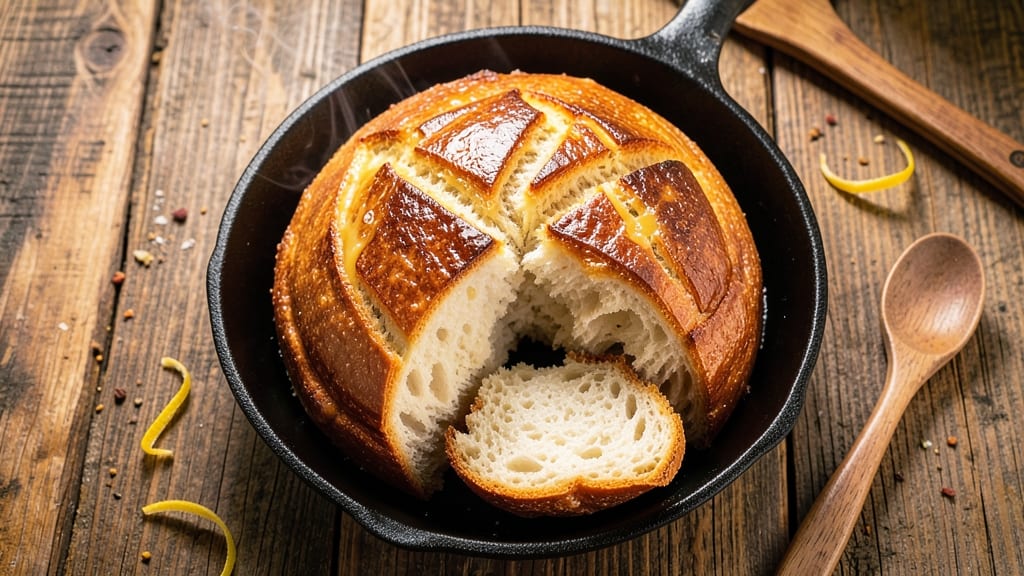
This American white bread recipe delivers the classic soft, pillowy loaf with that coveted crisp crust—just like your favorite bakery. The secret lies in precise ingredient ratios and traditional techniques that ensure consistent results every time.
I've perfected this recipe through years of baking, and it's the one I reach for when I need that comforting, familiar texture.
What sets this recipe apart is the balance of ingredients: high-gluten flour for structure, yeast for proper rise, and just enough fat to create that tender crumb. The kneading process develops gluten properly, while careful proofing ensures that airy, light texture we all love.
Scoring the loaf before baking not only looks professional but also helps direct the oven spring for that perfect rise.
By the time you pull this loaf from the oven, you'll have golden-brown crust with a satisfying crunch and a soft, pillowy interior that's perfect for sandwiches or toast.
The aroma alone will have everyone asking what you've been hiding in the kitchen. This is the kind of bread that makes every meal feel special.
Once baked, let it cool completely before slicing—this ensures clean cuts and prevents the bread from becoming gummy. Store wrapped at room temperature for up to 3 days or freeze for longer storage.
The beauty of this recipe is its versatility: use it for classic sandwiches, French toast, or simply enjoy it fresh out of the oven with butter.
Ingredients for american white bread
Nine simple ingredients transform into the perfect soft white bread with crisp crust—just like bakery magic.
| Ingredient | Amount | Notes |
|---|---|---|
| High-Gluten All-Purpose Flour 🌾 | 5 cups | Plus 1 tbsp for dusting |
| Active Dry Yeast 🍞 | ¼ oz | Or 2 1/4 tsp (1 packet) |
| Granulated Sugar 🍚 | ¼ cup | For yeast activation |
| Unsalted Butter 🧈 | ½ cup | Softened to room temperature |
| Large Eggs 🥚 | 1 whole | Room temperature preferred |
| Warm Water 💧 | 1 ¼ cups | 110°F (43°C) ideal |
| Diamond Crystal Kosher Salt 🧂 | 1 ½ tsp | Adjust to taste |
| Milk 🥛 | ¼ cup | Warm for tenderness |
| Vegetable Oil 🫒 | 1 tbsp | For dough enrichment |
The flour is non-negotiable here. King Arthur high-gluten or Bread Flour from Bob's Red Mill gives that signature tender-yet-structured crumb. If you're using all-purpose, add 1 tbsp vital wheat gluten per 5 cups. The yeast? Fresh is best—if your packet says 'active dry,' it's fine, but if it's been sitting in your pantry for months, test it first (proof in warm water + sugar). Warm water is key—too hot kills yeast, too cold makes it sluggish. 110°F is perfect—think baby bath temperature.
No butter? Coconut oil or extra olive oil works in a pinch, but butter gives that unmistakable richness. Eggs add structure, but if you're making this vegan, flax eggs (1 tbsp ground flax + 3 tbsp water) keep it light. The milk? Whole milk is ideal, but 2% or even almond milk won't ruin it—just expect slightly less tender crumb. For the salt, Diamond Crystal is your friend—it's finer and dissolves better than table salt. Pro tip: if your kitchen's humid, reduce salt slightly to avoid over-browning.
This dough is a beast—it needs time. Once mixed, let it rise until doubled in size (about 1-2 hours). Poke it gently; if it springs back slowly, it's ready. Shape the loaf into a 9x5-inch loaf pan (or freeform on a baking sheet for artisan vibes), then let it proof again until it's about 1 inch above the pan's rim. Score the top with a razor—this isn't just for looks, it directs the oven spring so your loaf rises evenly. Bake at 375°F for 30-35 minutes until golden. Cool completely before slicing—this prevents gummy bread.
Why You'll Love This Recipe
- No-Knead Magic: I swear by this dough—just mix, let it rise, and bake. The high-gluten flour gives it that perfect chewy texture without a single punch or fold from me.
- Buttery Soft Crust: That unsalted butter in the dough? It melts into pure richness. The sugar just takes it to another level—sweet enough to satisfy, but not so much it ruins the bread’s clean, classic taste.
- Sandwich Hero: Between us, this bread is my go-to for grilled cheese or turkey sandwiches. It toasts up golden and holds up to anything—no flimsy slices here.
- Budget Stretch: A loaf costs pennies to make, yet it disappears fast. Freeze extras for toast or French toast later—no waste, just pure comfort when you need it.
Step-by-step instructions for American white bread
Here's how to craft a loaf so tender it practically melts in your mouth—with that classic American white bread crust you crave.
Activate the Yeast for Maximum Rise
In a small bowl, combine the 1.25 cups warm water (about 110°F), 0.25 cup granulated sugar, and 0.25 oz active dry yeast. Let it sit for 5-10 minutes until frothy—you'll see tiny bubbles forming on top. This tells you the yeast is alive and ready to work its magic in your dough.
Here's the thing—if it doesn't bubble after 10 minutes, your yeast might be dead. Toss it and start fresh with a new packet. Warm water is key: too hot kills the yeast, too cold makes it sluggish. The sugar feeds the yeast, giving it energy to create that light, airy texture we're after.
Mix the Dough to Perfect Consistency
In a large mixing bowl, whisk together 5 cups high-gluten all-purpose flour, 1.5 tsp diamond crystal kosher salt, and 1 tbsp vegetable oil. Make a well in the center and pour in the yeast mixture, 1 whole large egg, and 0.25 cup warm milk. Using a wooden spoon, stir until everything comes together into a shaggy mass.
Now switch to your hands—this is where the fun begins. Knead the dough on a lightly floured surface for about 8-10 minutes until smooth and elastic. You'll know it's ready when it springs back slowly when poked. The high-gluten flour gives this bread its signature softness and chewiness, while the butter and milk add that tender, pillowy quality.
Let the Dough Rise Until Doubled
Place the dough in a lightly oiled bowl, cover it with a damp kitchen towel, and let it rise in a warm spot for 1-1.5 hours. You're looking for it to double in size—when you poke it gently with a finger, the indentation should stay put. This first rise develops the gluten structure that gives bread its texture.
Don't rush this step. The butter needs time to soften properly, and the yeast needs time to work its magic. If your kitchen is cold, place the bowl near a warm oven (with the light on) or on top of your fridge to create an ideal 75-80°F environment. Patience here pays off with that perfect crumb structure.
Shape and Second Rise for Maximum Flavor
Punch down the risen dough to release air, then divide it into two equal pieces. Shape each into a smooth, round loaf and place them in two greased 9x5-inch loaf pans. Cover loosely with plastic wrap and let rise again for 30-45 minutes until just puffy over the pan edges. This second rise ensures those air pockets that make white bread so irresistibly soft.
Here's a pro tip: don't overfill the pans. The dough should come up about ½ inch above the pan edges when risen. If it's too much, it'll spill over during baking. The butter and milk in this recipe make the dough slightly sticky, so wet your hands before handling to prevent sticking.
Bake to Golden Perfection with Crispy Crust
Preheat your oven to 375°F and bake the loaves for 25-30 minutes until golden brown on top and the internal temperature reaches 190°F. The edges should pull away slightly from the pan, and you'll get that classic white bread aroma filling your kitchen.
For that perfect crust, I like to brush the tops with a little melted butter after 15 minutes in the oven. This creates that crispy, slightly caramelized top that's so satisfying. Let the bread cool in the pans for 10 minutes before transferring to a wire rack. This resting period prevents a gummy texture and lets the steam escape for that ideal crumb.
Pro Tips For Making American White Bread
- WEIGH THE FLOUR: High-gluten flour clumps like a nightmare—sift it first, then weigh. I used to eyeball it and ended up with dense, brick-like loaves. A kitchen scale and sifted flour make all the difference for that light, pillowy texture.
- SOAK THE YEAST IN WARM WATER: Skip the dry yeast straight into the flour—it’s a slow death sentence. Mix it with sugar first in warm (not hot) water, then wait 5-10 minutes until it foams. If it doesn’t bubble, your bread’s about to be flat and sad.
- KNEAD UNTIL WINDOWPANE: Stop when your dough passes the windowpane test—not when your arm gives out. Stretch a small piece: if it’s translucent and thin enough to read through, you’ve built enough gluten. Over-kneading turns it chewy; under-kneading makes it gummy.
- LET THE DOUGH RISE TWICE: One rise is lazy. First rise (1-2 hours) builds flavor; second rise (after shaping) ensures that airy crumb. Cold-proof overnight? Even better—it deepens flavor and makes shaping easier. Your future toast will be worth the wait.
Regional styles of these flavors
Classic Midwest Style
This is the version you'll find in diners across the Midwest, where the bread is slightly denser and richer thanks to an extra 1 tablespoon of sugar in the dough. The crust gets a golden-brown hue from brushing with melted butter during the last 10 minutes of baking.
I love adding a pinch of cinnamon to the butter brush for that subtle sweetness that's so nostalgic. 🌾
Southern Soft & Sweet
In the South, they take white bread to another level by incorporating ½ cup of honey into the dough instead of sugar. This creates a more pronounced sweetness that pairs perfectly with classic Southern sandwiches like fried chicken or pulled pork.
The dough is often shaped into smaller rounds for quick toast, and some bakers add a touch of vanilla extract for extra depth. The result? A bread so tender it practically dissolves on your tongue.
New England Crusty Cut
Up north, they prefer a slightly crispier crust with a more open crumb structure. The trick here is using whole milk instead of water> in the dough and reducing the butter to ¼ cup.
After shaping, they score the loaf with a sharp razor in a diamond pattern before baking, creating that beautiful lattice effect. This version is perfect for clam chowder or lobster rolls—it holds up well to rich toppings. 🍞
California Artisan Twist
West Coast bakers love to experiment with this classic, often adding 1 tablespoon of olive oil to the dough for extra richness. They shape it into free-form boules instead of loaves, letting it rise on a floured baking sheet.
After baking, they brush the crust with a mix of honey and sea salt while still warm. This version has a slightly chewy interior and crisp exterior, making it perfect for avocado toast or charcuterie boards.
Texas-Style Sandwich Bread
Down in Texas, they make their white bread extra sturdy for massive sandwiches. The key is using 6 cups of flour> (instead of 5) and adding 1 extra egg for structure.
They bake it in a 9x13-inch pan for a wide, flat loaf that can handle multiple layers of meat, cheese, and pickles. The crust gets a light glaze of powdered sugar after baking for that sweet contrast to savory fillings. This is the bread that built Texas BBQ culture!
Northern European Influence
Interestingly, American white bread actually traces its roots to Scandinavian and German bread traditions brought over by early immigrants. The classic hearth bread methods involved baking in Dutch ovens, which created that signature crust. Modern versions often incorporate a splash of sour cream (about ¼ cup) for extra tenderness.
This variation maintains the soft interior while developing a slightly rustic crust that's perfect for open-faced sandwiches with smoked fish or herbed cream cheese.
Nutrition facts
Frequently asked questions
Why does my American white bread turn out dense instead of soft?
Under-kneading or over-kneading are the most common culprits. This dough needs 8-10 minutes of vigorous kneading to develop proper gluten structure. Too little creates weak gluten, while too much makes the bread tough. Also check your yeast—if it's old or inactive, the bread won't rise properly. Always test your yeast first by mixing with warm water and sugar to confirm it bubbles within 5-10 minutes.
Can I substitute all-purpose flour for high-gluten flour?
Yes, but you'll need to add 1 tablespoon vital wheat gluten per 5 cups of all-purpose flour to mimic the protein content. Without this adjustment, your bread may lack the signature soft-yet-structured crumb. The high-gluten flour creates that perfect balance of chewiness and tenderness that makes classic American white bread so satisfying.
How do I know when the dough has risen enough?
Look for the dough to double in size and develop bubbles on the surface. When you gently press your finger into it, the indentation should stay put rather than bounce back immediately. For this recipe, the first rise should take about 1-1.5 hours, while the second rise (after shaping) needs only 30-45 minutes until puffy over the pan edges. Patience here makes all the difference!
Why does my crust turn out too dark or pale?
Oven temperature is key—375°F is ideal. If your crust is too dark, reduce to 350°F and check after 25 minutes. For pale crusts, increase to 375°F and brush with melted butter during the last 10 minutes of baking. Also ensure your oven rack is in the middle position for even heat distribution. The perfect crust should be golden brown with a satisfying crunch.
Can I make this bread without a stand mixer?
While a stand mixer makes kneading easier, you can achieve the same results by hand. Work the dough on a lightly floured surface for 8-10 minutes, pushing and folding until smooth and elastic. Wet your hands occasionally to prevent sticking, and use your knuckles as a guide—when the dough springs back slowly when poked, it's ready. The butter and milk in this recipe make the dough slightly sticky, so a little extra flour helps.