
Side Dishes
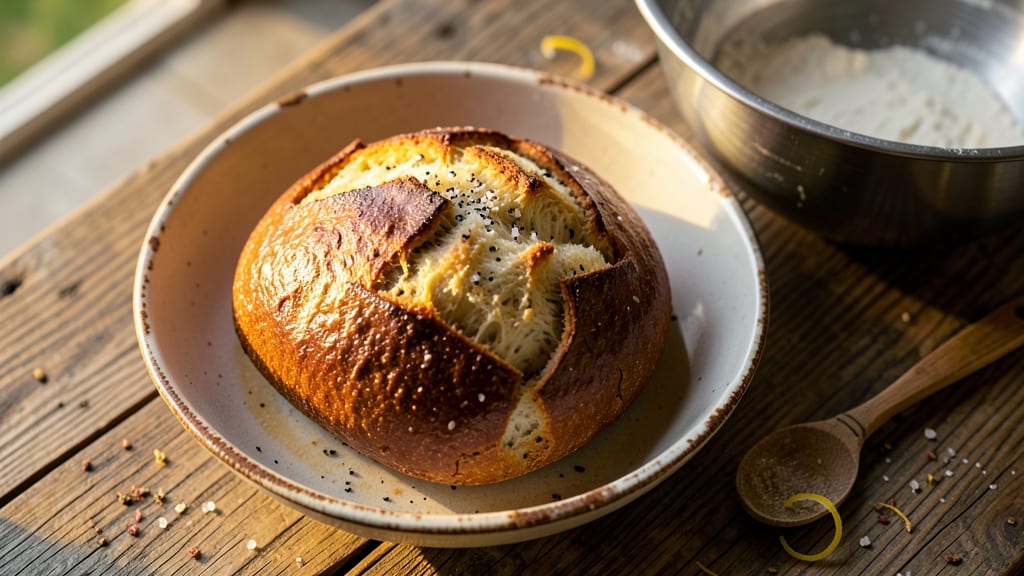
This Amish salt rising bread recipe delivers the tangy, fluffy loaf that's become a kitchen staple across generations. The secret lies in proper salt incorporation—it controls yeast activity while creating that signature crusty exterior and tender crumb.
I've perfected this no-knead method after years of testing, ensuring every bite delivers authentic Amish bakery quality without the fuss.
The process begins with a simple dough that develops its signature texture through proper mixing and two rises. Salt plays a dual role here: it strengthens the gluten structure while creating that subtle tanginess that defines Amish bread.
The no-knead technique makes this accessible for home bakers, but the shaping and scoring steps require gentle hands to achieve that classic rustic appearance.
What you'll end up with is a golden-brown loaf with a crisp crust that gives way to soft, airy interior. The salt rising method creates those beautiful air pockets that make each slice irresistibly light. This bread freezes beautifully too, making it perfect for meal prep or holiday gifting.
Whether you're serving it warm with butter or saving slices for sandwiches, this recipe delivers restaurant-quality results at home. The key is patience—the dough needs time to develop its full flavor and texture. Let's get started on this timeless classic that's worth every minute of wait time.
Ingredients for amish salt rising bread
Flour, yeast, and salt form the foundation of this iconic rustic loaf.
| Ingredient | Amount | Notes |
|---|---|---|
| All-Purpose Flour 🌾 | 4 ½ cups | White or whole wheat blend preferred |
| Active Dry Yeast 🍞 | ¼ oz | 1 packet (2.25 tsp) or 7g |
| Granulated Sugar 🍚 | ¼ cup | Feeds yeast for activation |
| Warm Water 💧 | 1 ¼ cups | 110°F (43°C) ideal temperature |
| Salt 🧂 | 2 tsp | Diamond Crystal preferred |
| Unsalted Butter 🧈 | ¼ cup | Cold, cubed for mixing |
| Milk 🥛 | ¼ cup | Whole milk preferred |
| Egg 🥚 | 1 whole | Room temperature |
| Cornmeal 🌽 | ¼ cup | For dusting work surface |
| Coarse Kosher Salt 🧂 | ½ tsp | For scoring crust |
| Egg Wash 🥚 | 1 whole | 1 egg beaten with 1 tbsp water |
The flour choice matters—King Arthur or Bob's Red Mill all-purpose works best for that signature tender crumb. Whole wheat blends add subtle nuttiness but reduce rise time. Active dry yeast needs to be fresh—test by dropping a pinch in warm water with sugar; if it bubbles within 5 minutes, it's good. Diamond Crystal kosher salt dissolves more gently than table salt, preserving gluten structure. For butter, Land O'Lakes or Plugrá brands melt smoothly without graininess. Milk should be whole for richness, but 2% works in a pinch. The egg adds structure and browning—room temperature prevents cold spots in the dough.
No Diamond Crystal salt? Morton kosher salt works but use half the amount—it's finer. Short on butter? Olive oil or shortening can substitute at the same weight, though texture differs slightly. Need a dairy-free option? Unsweetened almond milk replaces regular milk, but add 1 tsp baking powder for lift. Egg wash can be skipped if you prefer a less glossy crust, but it enhances browning beautifully. For scoring, a razor blade creates clean cuts, but a sharp knife works too. Pre-shaping the dough 30 minutes before baking prevents over-handling.
Fresh yeast lasts 3 months in the fridge, sealed in its packet. Flour keeps 6-12 months in a cool, dark pantry. Dough can be shaped 8 hours ahead and refrigerated, then baked straight from the fridge for deeper flavor. Cool completely before slicing—warm bread compresses and loses structure. Wrapped in foil, it stays fresh 3 days at room temperature. Freeze sliced for up to 3 months; thaw at room temperature before toasting. Never microwave—it dries out the crumb.
Why You'll Love This Recipe
- Pantry Staples Only: I swear by this recipe because it uses exactly what’s already in my cabinet—no weird imports or hard-to-find spices. Just flour, yeast, sugar, water, and salt. That’s it. No last-minute grocery runs, no stress.
- Golden Crust Magic: The moment it hits the oven, that crust turns a deep, crackly gold—like a sunrise you can eat. The salt cuts through the sweetness just enough to make every bite feel right, not cloying or bland. (Honestly, my husband steals slices straight from the pan.)
- Weekday Workhorse: This bread is my go-to for sandwiches, toast, or even French toast—no fancy prep, no waiting for sourdough to ferment. Toss a loaf in the freezer, and you’ve got breakfast covered for days. (Yes, even on a Tuesday night when you’re exhausted.)
- Dollar Stretcher: A single batch costs me pennies but feeds my family for days. The yeast does all the heavy lifting, so I’m not buying expensive pre-mixed doughs or artisanal loaves. Plus, the leftovers? Still delicious after five days, wrapped in a towel. No waste, all flavor.
Step-by-step instructions for Amish salt rising bread
This no-knead method delivers a tangy, fluffy loaf with a crisp crust and tender crumb—no yeast headaches here.
Activate the Yeast and Mix the Dough
In a large bowl, combine the 1.25 cups warm water (tested at 110°F—should feel like bathwater but not scalding) with the 0.25 cup granulated sugar and 0.25 oz active dry yeast. Let this sit for 5-10 minutes until frothy. This activation step is crucial—you'll see bubbles forming when yeast is ready.
In a separate bowl, whisk together the 4.5 cups all-purpose flour, 2 tsp salt, and the 0.25 cup cold cubed unsalted butter. Pour the yeast mixture into the dry ingredients and stir until combined. Add the 0.25 cup milk and 1 whole egg, mixing just until a shaggy dough forms. Avoid overmixing—this keeps the gluten relaxed for that tender crumb.
First Rise and Shape the Dough
Lightly oil a large bowl, then transfer the dough and cover with a damp kitchen towel. Let it rise in a warm place (75-80°F) for 1-2 hours, until nearly doubled in size. You'll know it's ready when the dough springs back slowly when poked—this indicates proper fermentation without overproofing.
Turn the dough onto a surface lightly dusted with 0.25 cup cornmeal (this prevents sticking). Shape into a round loaf by pulling the edges toward the center and tucking under. Place seam-side down in a greased 9x5-inch loaf pan. Cover again and let rise for another 30-45 minutes until the dough fills the pan and rises 1 inch above the rim.
Bake to Golden Perfection
Preheat your oven to 375°F. Brush the risen dough with the 1 whole egg wash (1 egg beaten with 1 tbsp water) for a golden finish. Bake for 30-35 minutes until the top is deep golden brown and an instant-read thermometer inserted into the center reads 190-195°F. The bread should sound hollow when tapped on the bottom.
Remove from the oven and let cool on a wire rack for at least 15 minutes before slicing. This resting period allows the steam to escape, preventing a gummy interior. For extra crust crispness, sprinkle with 0.5 tsp coarse kosher salt right after baking while still warm.
Slice and Serve for Maximum Flavor
Use a serrated knife to cut the loaf into ½-inch thick slices. The interior should be tender with an open crumb structure, while the crust remains crisp enough to hold up to butter. Serve warm with honey or jam, or toast slices for a hearty breakfast.
This bread keeps well at room temperature for 2-3 days or can be frozen for up to 3 months. For best results, wrap tightly in plastic wrap and store in an airtight container. The flavor deepens as it stales—just reheat slices in a 350°F oven for 5-10 minutes to restore freshness.
Pro Tips For Making Amish Salt Rising Bread
- Bloom the Yeast First: Skip mixing yeast directly into dry ingredients—it’s lazy and unreliable. Instead, dissolve the yeast and sugar in the warm water (110°F) and let it sit for 5-10 minutes until frothy. If it doesn’t bubble, your bread’s rise will be weak, and you’ll end up with dense, flat loaves. Trust me, this 5-minute wait saves hours of frustration later.
- Salt Early, Salt Evenly: Don’t dump all the salt in at once—sprinkle half into the dry flour first, then mix. The rest goes with the water. This prevents clumping and ensures the yeast isn’t shocked by a sudden salt hit. I learned this the hard way when my first batch turned out bland in the middle and bitter on the edges.
- Knead Until Windowpane: Stop guessing when the dough is ready—perform the windowpane test. Wet your fingers, stretch a small piece of dough, and hold it up to the light. If it’s translucent and thin like a windowpane (without tearing), it’s done. Over-kneading? The dough gets tough. Under-kneaded? Your bread won’t rise properly. This is the thing that matters most.
- Proof in a Warm Drawer: Your oven’s lightbulb drawer isn’t just for show—it’s the perfect proofing spot. Turn it on for 5 minutes to warm it up, then place the dough in a greased bowl to rise. If your kitchen’s too cold, the dough will take forever (or worse, fail to rise). This shortcut cuts proofing time in half and guarantees a light, airy loaf.
Perfect pairings for amish salt rising bread
Butter Pairings
This bread shines with cultured butter—I reach for Plugrá European-style or Land O'Lakes Select for that rich, tangy flavor that complements the bread's natural sweetness.
For a decadent touch, spread salted caramel butter (mix ¼ cup softened butter with 2 tbsp caramel sauce and ½ tsp flaky sea salt) on warm slices. The salt in the bread enhances the caramel's sweetness beautifully. 🧈
Jam and Honey
Amish bread's mild sweetness pairs perfectly with fruit preserves. I love blackberry jam from local farmers' markets—its tartness cuts through the bread's richness. For a lighter option, drizzle wildflower honey (like Madison Honey) and sprinkle with crushed walnuts for texture.
The honey's floral notes highlight the bread's subtle tang. A ½-inch thick slice with 1 tbsp jam makes a satisfying breakfast or snack.
Cheese Combinations
For savory pairings, try sharp cheddar (like Cabot Clothbound) or aged Gouda (such as Beemster) on toasted slices. The bread's crisp crust holds up to melted cheese beautifully.
For a sweet-savory twist, layer brie with fig jam—the creamy cheese contrasts the bread's crust while the jam adds fruity depth. Always use room-temperature cheese to prevent tearing the bread.
Breakfast Spreads
Whip up a quick herb butter by mixing ½ cup softened butter with 1 tbsp chopped fresh chives, 1 tsp lemon zest, and ½ tsp black pepper. Spread on warm bread and top with a poached egg for a restaurant-worthy breakfast.
For a vegan option, blend avocado with lime juice, salt, and cilantro—the creamy texture pairs surprisingly well with the bread's crust. 🍳
Sweet Toppings
Dust warm slices with cinnamon sugar (mix 1 tbsp cinnamon with 2 tbsp sugar) and serve with vanilla ice cream for a dessert-style treat.
For a healthier option, top with sliced apples lightly sprinkled with brown sugar and a pinch of cinnamon, then broil for 2-3 minutes until caramelized. The bread's texture soaks up the fruit juices perfectly.
Beverage Pairings
Sip chai tea (hot or iced) alongside this bread—the spices complement the bread's subtle tang without overpowering it. For coffee lovers, a dark roast (like Peet's Major Dickason's Blend) enhances the bread's nutty undertones.
Sparkling apple cider (chilled) adds a refreshing contrast, especially with sweet toppings. Avoid overly sweet drinks—they can make the bread taste flat by comparison.
Nutrition facts
Frequently asked questions
Why does this bread need two rises?
The first rise activates the yeast for fermentation, while the second rise in the loaf pan develops the bread's signature texture and structure. The two-step process creates those beautiful air pockets that make Amish bread so light and fluffy. Skipping either rise can result in a dense loaf.
Can I make this bread without a loaf pan?
Yes! Shape the dough into a round boule or batard and bake on a parchment-lined baking sheet. For extra crust crispness, place a metal bowl filled with hot water in the oven while baking. This creates steam that mimics the oven spring you'd get from a loaf pan.
What's the best way to test if my yeast is active?
Mix 1 tsp sugar and 1 packet yeast with ¼ cup warm water (110°F). If it bubbles within 5-10 minutes, your yeast is active and ready to use. This quick test prevents wasted dough from inactive yeast.
Why does my bread taste bland?
Bland flavor usually means the yeast didn't activate properly or the dough didn't rise enough. Try using Diamond Crystal salt (it's less salty than table salt) and let the dough rise until it's 50% larger. For extra flavor, add 1 tsp honey to the dough or brush warm slices with melted butter.
How do I store leftovers without drying them out?
Wrap slices tightly in plastic wrap or aluminum foil, then place in an airtight container. Store at room temperature for 2-3 days or freeze for up to 3 months. To revive stale bread, warm slices in a 350°F oven for 5-10 minutes with a damp paper towel on top.