
Side Dishes
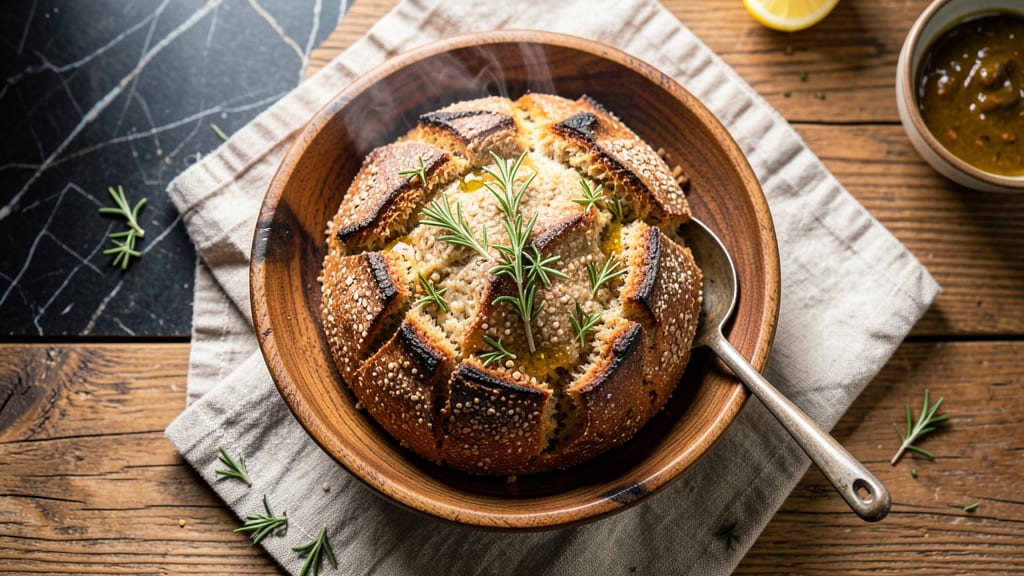
This Anglo-Saxon bread recipe brings medieval baking to life with its dense, rustic heart and crispy crust—just like the loaves that fed warriors and villagers over a thousand years ago.
The secret lies in whole grains like barley and malt, combined with herbs and spices that were staples in early English kitchens. Unlike modern bread, this version relies on natural fermentation and wood-fired heat for an authentic, earthy flavor that’s impossible to replicate with shortcuts.
What sets this bread apart is its simplicity and historical accuracy. No yeast substitutes or refined flours here—just whole grains, water, and a long fermentation process that develops deep, complex flavors.
The dough is shaped into a thick, round loaf and baked slowly to create a crisp exterior and a tender, slightly chewy interior. This method mirrors the hearth-baked breads of the Anglo-Saxon era, where every loaf was a labor of love.
The result is a bread with a nutty, slightly sweet taste from the barley and malt, balanced by the earthy aroma of herbs like thyme or rosemary. The crust develops a satisfying crunch, while the interior remains soft and hearty—perfect for dipping in broth or pairing with stews.
Each bite transports you back to a time when bread was a symbol of sustenance and craftsmanship.
For those eager to embrace tradition, this recipe includes optional variations like adding flaxseeds or poppy seeds for texture, or even shaping the loaf into a smaller, more portable form for easier handling.
Whether you’re baking for a historical reenactment or simply craving a taste of the past, this bread delivers authenticity without sacrificing modern convenience.
Ingredients for anglo saxon bread
Whole grains, herbs, and time-honored techniques create this historically accurate Anglo-Saxon loaf.
| Ingredient | Amount | Notes |
|---|---|---|
| Barley Flour 🌾 | 2 cups | Coarse grind for texture |
| Whole Wheat Flour 🌾 | 1 cup | Stone-ground preferred |
| Malt Powder 🍺 | ½ cup | From barley malt |
| Active Dry Yeast 🍞 | 1 tsp | Cultured for fermentation |
| Sea Salt 🧂 | 1 ½ tsp | Diamond Crystal preferred |
| Fresh Rosemary 🌿 | ¼ cup | Chopped, stems removed |
| Fresh Thyme 🌿 | ¼ cup | Leaves only, chopped |
| Water 💧 | 1 ½ cups | Room temperature |
| Honey 🍯 | 1 tbsp | Wildflower preferred |
| Olive Oil 🫒 | 2 tbsp | Extra-virgin for richness |
| Flaxseeds 🌱 | ¼ cup | Optional for texture |
| Poppy Seeds 🌱 | 1 tbsp | Optional for crunch |
Barley flour is the heart of this bread—look for coarse grind at health food stores or bulk bins. Bob's Red Mill carries excellent options, but any whole-grain mill will work. The malt powder adds that signature sweetness; Penzeys sells pure barley malt powder if you can't find it in regular stores. Fresh herbs make all the difference—harvest rosemary and thyme from your garden if possible, but supermarket bunches work too. Just pick the freshest stems. The yeast should be active dry, not instant—this recipe relies on traditional fermentation methods.
No barley flour? Substitute half with rye flour for a similar earthy flavor. Short on malt? Brown sugar at half the amount mimics the sweetness. Dried herbs work in a pinch—use one-third the amount of fresh. For the honey, maple syrup is a neutral substitute, though it lacks the floral notes. The flaxseeds and poppy seeds are optional but add delightful texture; Trader Joe's sells them pre-ground for convenience. If you're feeling ambitious, you can toast the flaxseeds lightly in a dry pan before adding them to the dough for extra nuttiness.
This dough needs patience—ferment for 12-16 hours in a warm spot. I keep mine in a proofing box or oven with the light on for consistent warmth. Shape the loaf on a floured surface and let it rest another 30 minutes before baking. The bread keeps well at room temperature for 3-4 days wrapped in a linen towel, or you can freeze it for up to 3 months. For reheating, wrap in foil and warm in a 200°F oven for 10 minutes—just enough to restore that crisp crust without drying it out.
Why You'll Love This Recipe
- No-Knead Magic: Between us, this bread takes zero effort—just mix, let it rise, and bake. The barley and whole wheat blend means no fussing with gluten development, and the malt powder gives it that golden crust without extra work.
- Earthy, Toasty Crunch: Honestly, the flavor is what makes this worth it. That nutty barley depth, the slight sweetness from the malt, and the sea salt tying it all together—it’s the kind of bread you’ll reach for instead of grabbing store-bought.
- Weeknight Workhorse: I bake a loaf every Sunday because it’s that reliable. Toast it for breakfast, tear it for sandwiches, or slice it for charcuterie—it handles everything without falling apart (unlike some artisanal loaves I’ve tried).
- Budget-Friendly Staple: Whole wheat and barley flour are cheap, and a single batch feeds my family for days. Freeze half for later, and you’ve got a pantry hero that costs pennies per serving—no sad, stale bread here.
Step-by-step instructions for ancient-grain crust with rustic heart
This bread brings Anglo-Saxon baking traditions to life with a crisp crust and hearty texture.
Activate the Yeast and Prepare the Dough
In a large mixing bowl, combine the 1.5 cups water with the 1 tbsp honey and 2 tbsp olive oil. Stir until the honey dissolves completely. Sprinkle the 1 tsp active dry yeast over the surface and let it sit for 5-10 minutes until it begins to foam and bubble—this confirms the yeast is alive and ready to work.
Add the 2 cups barley flour, 1 cup whole wheat flour, 0.5 cup malt powder, 1.5 tsp sea salt, 0.25 cup chopped fresh rosemary, and 0.25 cup chopped fresh thyme to the bowl. Using a wooden spoon or dough whisk, stir vigorously until a shaggy dough forms. The malt powder will help develop gluten, giving the bread its characteristic chewiness. If the dough feels too dry, add 1 tablespoon water at a time until it comes together.
Knead the Dough Until Elastic
Transfer the dough to a lightly floured surface and knead for 8-10 minutes by hand, or use a stand mixer fitted with a dough hook on medium speed for 5-6 minutes. You're looking for a smooth, elastic dough that springs back slightly when poked. The barley flour will make it denser than modern white bread, so don't be alarmed if it feels heavier.
Shape the dough into a round loaf and place it in a lightly oiled bowl. Cover with a damp kitchen towel and let it rise in a warm place for 1-2 hours, or until it has nearly doubled in size. The dough should feel light and airy when pressed gently with a fingertip. If it rises too quickly, place it in the refrigerator to slow fermentation—this enhances flavor development.
Shape and Score the Dough
Punch down the risen dough to release air, then divide it into 4 equal portions (about 8 ounces each). Shape each portion into a round loaf by pulling the edges toward the center and sealing the seam. Place the loaves on a parchment-lined baking sheet, spacing them 2 inches apart to allow for expansion.
Mix the 0.25 cup flaxseeds and 1 tbsp poppy seeds in a small bowl, then sprinkle evenly over the tops of the loaves. Using a sharp razor blade or serrated knife, score each loaf with a deep crosshatch pattern—this allows steam to escape and prevents cracking during baking. The seeds will add texture and a subtle nutty flavor to the crust.
Bake for a Crisp Crust and Rustic Heart
Preheat your oven to 375°F. Bake the loaves for 35-40 minutes, until the crust is deep golden brown and sounds hollow when tapped on the bottom. The interior should register 190-200°F on an instant-read thermometer. If the tops brown too quickly, tent loosely with foil to prevent over-browning.
Remove the bread from the oven and let it cool on a wire rack for at least 30 minutes before slicing. The crust will harden as it cools, developing that satisfying crunch, while the interior remains tender and moist. For best flavor, serve within 2-3 days or store in an airtight container to maintain freshness.
Pro Tips For Making Anglo Saxon Bread
- Bloom the Yeast Slowly: Skip the warm water shortcut—mix your yeast with cool (not cold) water and a pinch of malt powder first, then let it sit for 10 minutes in a warm-but-not-hot spot (like your oven with the light on). I learned this the hard way after my first batch failed because I rushed it; the malt powder helps the yeast wake up faster, and the gradual warmth prevents overproofing later.
- Sift the Barley Flour: Barley flour is dense and clumpy—sift it directly into your mixing bowl with the whole wheat flour before adding liquids. This avoids lumps that turn into tough pockets in your bread. (Yes, even if you’re impatient like me, take the extra 30 seconds—it’s worth it.)
- Don’t Overwork the Dough: Anglo-Saxon bread relies on barley and whole wheat, which develop gluten faster than white flour. Once the dough comes together, stop mixing—just fold it a few times to incorporate. Overmixing makes it dense and chewy, and you’ll regret it when you’re left with a brick instead of a rustic loaf.
- Steam the First 15 Minutes: Place a metal tray on the oven rack below your bread and add 1 cup of boiling water when you bake it. The steam mimics a bread oven and gives you that crisp crust without burning the malt powder’s sweetness. (I know, it’s an extra step—but your crust will thank you.)
Pro cooking tips for anglo saxon bread
Fermentation Mastery
The key to authentic Anglo-Saxon bread lies in its 12-16 hour cold fermentation—this slow rise develops complex flavors and improves digestibility. I place my dough in a proofing box (or oven with light on) at 75°F for the first 4 hours, then transfer it to the fridge overnight.
The cold slows fermentation, allowing enzymes to break down gluten and starches for a softer crumb. If your kitchen is warm, reduce fermentation to 8-10 hours—over-fermenting can make the bread taste sour. 🌱
Wood-Fired Crisp
For that true historical crust, bake your loaves in a wood-fired oven if possible—apple or oak wood adds smoky depth. If you don’t have one, preheat your oven with a baking stone for 30 minutes before baking.
Brush the loaves with melted butter after 20 minutes for extra crispiness. The crosshatch scoring isn’t just decorative—it helps steam escape, preventing cracks and ensuring an even rise. A sharp razor blade works best for clean cuts. 🔥
Dough Texture Secrets
Barley flour makes this dough denser and stickier than modern bread—don’t fight it! Wet your hands when handling to prevent sticking. If the dough feels too dry, add 1 tbsp water at a time until it passes the "windowpane test" (stretch a piece—it should be translucent without tearing).
For extra elasticity, let the dough rest 30 minutes after kneading before shaping. The malt powder also helps bind moisture, so don’t skip it. ✨
Hearth Baking Hacks
No oven? Anglo-Saxons baked in clay pots or over open flames. For a modern hearth approach, wrap your loaves in heavy-duty foil and bake on a campfire grill or pizza stone over coals for 25-30 minutes, flipping once.
Alternatively, use a Dutch oven in your oven—place it on the lower rack for 45 minutes at 375°F for a steamy, crusty loaf. The foil traps moisture, mimicking a hearth’s steam. 💪
Herb Infusion Tips
Fresh herbs like rosemary and thyme add depth, but dried works too—just use ⅓ the amount. For extra flavor, make an herb-infused oil: heat 2 tbsp olive oil with 1 tbsp chopped herbs for 5 minutes, then strain and use in the dough.
Avoid over-kneading with herbs—they bruise easily, releasing bitter compounds. If your dough smells too strong, reduce herbs by ½ tsp. 🌿
Storage Like a Medieval Baker
This bread stays fresh 5-7 days at room temperature wrapped in a linen towel (better than plastic—it breathes!). For longer storage, freeze sliced loaves in an airtight container for up to 3 months.
To reheat, wrap slices in foil and warm in a 200°F oven for 5 minutes—just enough to restore that crisp crust without drying. Anglo-Saxons ate stale bread as "twice-baked" (toast)—try toasting slices for a rustic snack! 🏺
Nutrition facts
Frequently asked questions
Why does this bread use barley flour instead of wheat?
Barley flour was a staple grain in Anglo-Saxon England because it grew well in the climate and required less processing than wheat. The result is a denser, nuttier bread with excellent keeping qualities—perfect for medieval storage. The malt powder adds natural sweetness without refined sugar, just like historical recipes would have used.
Can I make this bread without a Dutch oven?
For a crisp crust, bake on a preheated baking stone or in a heavy cast-iron skillet. For steamier results, place a tray of boiling water in the oven below the bread. If you're feeling adventurous, wrap the dough in foil and bake it directly over coals for an authentic hearth-baked flavor.
What’s the difference between this and modern sourdough?
While both use fermentation, this bread relies on active dry yeast (like medieval bakers did) rather than wild sourdough cultures. The barley and malt create a distinct nutty flavor, while the long cold fermentation develops deeper complexity than quick-rise sourdough. The crust is also thicker and crispier, mimicking hearth-baked loaves.
How do I know when the bread is fully baked?
Look for a deep golden-brown crust and listen for a hollow sound when tapping the bottom. The internal temperature should reach 190-200°F—use an instant-read thermometer for accuracy. If the top browns too quickly, tent loosely with foil after 20 minutes to prevent over-browning.
Can I add other medieval ingredients?
Try adding ground coriander for warmth or crushed juniper berries (sparingly) for piney notes—both were used in early English cooking. For extra richness, replace some water with buttermilk. Just remember: medieval bakers used what was available, so keep substitutions simple and natural.