
Side Dishes
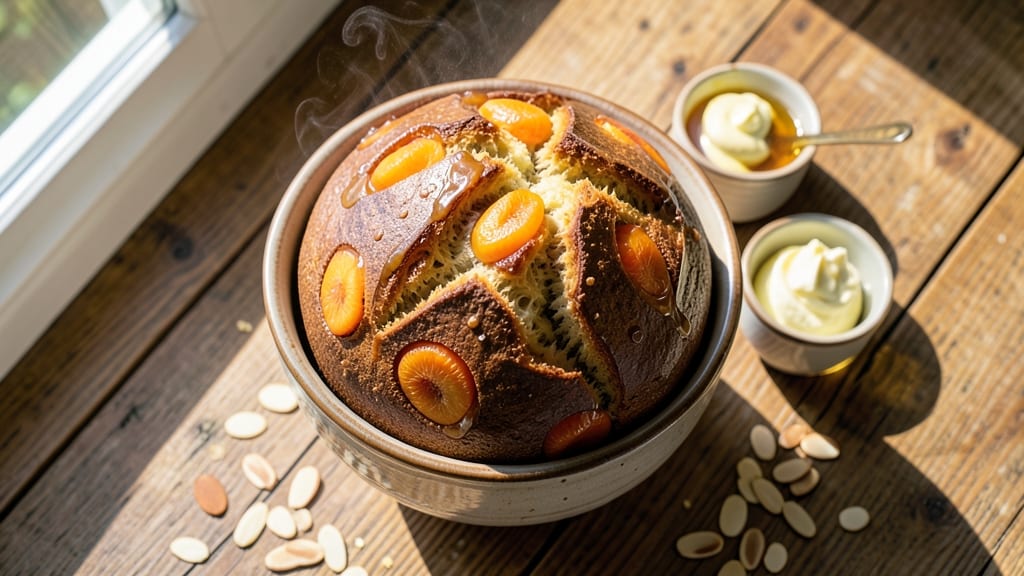
This apricot loaf bread recipe delivers a honey-sweetened crust with moist, fruity swirls that taste like a bakery secret. The combination of tender brioche dough and apricot jam creates a balance of sweetness and texture that's impossible to resist.
I've perfected this recipe over years of baking, ensuring every slice has that perfect pull-apart quality and golden-brown crust.
The secret to achieving that moist interior lies in the dough's richness—using a touch of butter and honey creates a tender crumb that holds up beautifully. The apricot filling, whether fresh, dried, or jam, adds natural sweetness that pairs perfectly with the buttery crust.
This recipe is designed to be approachable for home bakers while delivering restaurant-quality results.
By the time it emerges from the oven, you'll have a loaf with a golden, crackly crust and a soft, fragrant interior filled with apricot swirls. The aroma alone will have everyone gathered in your kitchen, and each slice will be worth the wait.
This bread is perfect for breakfast, dessert, or even as a special treat for guests.
Whether you're using fresh apricots, dried fruit, or store-bought jam, this recipe adapts easily while keeping that signature moist texture intact. The instructions are straightforward, and the baking process is foolproof—ideal for both beginners and experienced bakers looking to elevate their bread game.
Ingredients for apricot loaf bread
Rich brioche dough meets apricot jam for a bakery-style loaf with golden crust and moist interior swirls.
| Ingredient | Amount | Notes |
|---|---|---|
| All-Purpose Flour 🌾 | 4 cups | Sifted for light texture |
| Unsalted Butter 🧈 | ½ cup | Cold, cubed for dough |
| Granulated Sugar 🍚 | ¼ cup | For sweetness balance |
| Honey 🍯 | ½ cup | Wildflower preferred |
| Large Eggs 🥚 | 2 whole | Room temperature |
| Active Dry Yeast 🍞 | 2 ¼ tsp | Fresh or 1 packet |
| Warm Milk 🥛 | ½ cup | Whole milk, 110°F |
| Salt 🧂 | 1 tsp | Diamond Crystal preferred |
| Apricot Jam 🍑 | 1 ½ cups | High-quality, unsweetened |
| Vanilla Extract 🌸 | 1 tsp | Pure vanilla preferred |
| Poppy Seeds 🌻 | 2 tbsp | Optional, for garnish |
| Coarse Sugar 🍚 | ¼ cup | For crust decoration |
| Heavy Cream 🥛 | ¼ cup | For brushing crust |
The foundation starts with King Arthur or Gold Medal all-purpose flour—both deliver consistent results for this brioche. For the butter, Plugrá or Land O'Lakes unsalted are my go-tos, but any high-fat content butter works. The honey should be wildflower or clover for depth of flavor, not that overly processed stuff. Apricot jam is non-negotiable for the filling—Bon Appétit or Smucker's unsweetened versions avoid cloying sweetness. If using fresh apricots, simmer them with sugar until jam-like consistency. Yeast is critical here: Saf-Instant or Fleischmann's both work, but ensure it's fresh—test it in warm water first if unsure.
No honey? Maple syrup or agave nectar at a 1:1 ratio keeps the moisture intact, though flavor shifts slightly. Substituting butter with vegetable shortening maintains structure but loses richness—use only if dietary restrictions demand it. For the jam filling, dried apricots blended with orange juice create a similar texture. The vanilla extract can be swapped for vanilla bean paste (use half the amount) if you want that speckled look. Poppy seeds are optional but add a delightful crunch—Bob's Red Mill is my preferred brand for consistent quality. If you're baking at high altitude, reduce the yeast by 0.25 tsp and increase the sugar by 0.125 cup to compensate for faster rising times.
Store-bought jam keeps for up to 6 months in the pantry, but homemade versions last only 2 weeks once opened. The dough should be refrigerated overnight for optimal flavor development, but if you're short on time, let it rest at room temperature for at least 1 hour. The baked loaf stays fresh for 3 days at room temperature, wrapped in a clean kitchen towel. For longer storage, slice and freeze individual portions—they reheat beautifully in a toaster or oven. The crust remains crisp when reheated, while the interior stays tender. If making ahead, bake the loaf 1 day before serving—it tastes even better after the flavors meld overnight.
Why You'll Love This Recipe
- No-Knead Magic: I swear by this dough—just mix, shape, and bake. The butter and honey blend so smoothly into the flour that you’ll forget it’s supposed to take effort. My loaf comes out tender every time, even when I’m distracted by laundry.
- Sweet Without Syrup: That honey isn’t just for sweetness—it keeps the bread moist for days. The apricots (fresh or dried) add a jammy depth that cuts through the richness of the butter, like a hug in bread form. Honestly, the first slice makes me pause mid-bite.
- Breakfast to Brunch: Slice it warm with butter for a lazy morning, or toast it for a picnic spread. The crumb holds up perfectly for sandwiches, and the honeyed sweetness balances savory fillings like ham or avocado. (Yes, even on a Tuesday night.)
- Budget-Friendly Staple: Flour, butter, sugar—these are pantry basics that stretch far. One loaf feeds my family for days, and the leftovers freeze beautifully. I’ll be real: this recipe saved me from takeout more times than I can count.
Step-by-step instructions for apricot loaf bread
This method delivers a tender crumb with jam-infused swirls and a caramelized crust every time.
Activate the Yeast and Prepare the Dough
In a small bowl, combine the 0.5 cup warm milk with 2.25 tsp active dry yeast and 0.25 cup granulated sugar. Let this sit for 5-10 minutes until it becomes frothy and bubbles form on the surface. This confirms your yeast is active—if it doesn't bubble, start over with fresh yeast.
In a large mixing bowl, whisk together the 4 cups all-purpose flour and 1 tsp salt. Create a well in the center and add the yeast mixture, 0.5 cup honey, 0.5 cup unsalted butter (cubed and cold), 2 whole large eggs, and 1 tsp vanilla extract. Using a wooden spoon or dough whisk, gently combine until a shaggy dough forms, scraping down the sides of the bowl as needed.
Knead Until Elastic and Smooth
Turn the dough onto a lightly floured surface and knead for 8-10 minutes until it becomes smooth, elastic, and no longer sticky. You'll know it's ready when it springs back slowly when poked. If the dough feels too dry, add 1 tablespoon warm milk at a time; if too sticky, add 1 tablespoon flour. Shape the dough into a ball and place it in a lightly greased bowl.
Cover the bowl with a damp kitchen towel and let the dough rise in a warm place for 1-1.5 hours, or until it has doubled in size. The dough should feel light and airy when pressed gently with a finger. This resting period allows the gluten to relax and the yeast to ferment properly, ensuring a light texture in your final loaf.
Prepare the Jam Swirl and Shape the Loaf
While the dough rises, preheat your oven to 350°F. Spread the 1.5 cups apricot jam evenly over a piece of parchment paper, leaving a ½-inch border around the edges. This will create a beautiful swirl pattern when you roll the dough.
Once the dough has risen, punch it down gently to release air, then roll it out on a floured surface into a 12x16-inch rectangle about ¼-inch thick. Spread the 0.25 cup coarse sugar evenly over the dough, then carefully roll it up starting from the long side. Pinch the seam to seal and place the loaf seam-side down on the prepared parchment paper with the jam.
Bake to Golden Perfection
Brush the top of the loaf with 0.25 cup heavy cream and sprinkle the 2 tbsp poppy seeds evenly over the surface. Bake for 45-50 minutes until the bread is deep golden brown and sounds hollow when tapped on the bottom. The internal temperature should reach 190-200°F when measured with an instant-read thermometer.
Remove the loaf from the oven and let it cool on a wire rack for 15-20 minutes before slicing. This resting period allows the jam to set slightly and prevents the bread from becoming gummy. The result should be a beautifully caramelized crust with tender, moist crumb and pockets of jam throughout.
Pro Tips For Making Apricot Loaf Bread
- Soften Butter Properly: Take your unsalted butter out of the fridge 30 minutes before mixing—room temperature is key. Cold butter creates pockets in the dough, and you’ll end up with a dense loaf instead of that tender, flaky crumb you’re after. (Yes, even if you’re impatient like me, skip the microwave shortcut.)
- Warm the Honey: Drizzle honey over warm apricots (or mix it into the dough) after heating it slightly in the microwave—just until it’s pourable. Cold honey thickens the dough and can make the bread taste cloyingly sweet instead of rich and balanced. Think of it as waking up the flavor.
- Don’t Overmix the Dough: Stop folding in the apricot mixture as soon as it’s evenly distributed—overworking the dough develops gluten and turns your tender loaf into a chewy brick. Two or three gentle turns with a spatula is all you need. (I learned this the hard way after a loaf that tasted like breaded chicken.)
- Use a Loaf Pan: Skip the free-form route unless you’re aiming for a rustic, dense pull-apart loaf—this recipe demands a greased 9x5-inch pan. The shape ensures even baking, and the crust stays crisp while the center stays moist. (Your future self will thank you for not improvising with a cake pan.)
Pro cooking tips for this dish
Dough Temperature Control
The secret to a tender crumb lies in keeping your dough at 75-78°F during mixing and kneading. I use a kitchen thermometer to check the milk temperature before activating the yeast—it should feel warm to the touch but not hot.
If your kitchen is cold, place the mixing bowl in a 200°F oven for 5 minutes to warm it slightly before mixing. Cold dough develops gluten too slowly, while warm dough activates yeast too quickly, both leading to dense bread. 🌡️
Jam Swirl Technique
For even jam distribution, spread the 1.5 cups apricot jam in a thin, even layer on parchment paper first. Roll the dough into a 12x16-inch rectangle with even thickness—about ¼-inch. When rolling up, start from the long side to create a tight spiral.
Press the seam firmly to seal before placing on the jam to prevent leaks during baking. This method ensures every slice has visible jam swirls.
Steam for Crust Perfection
Place a shallow pan of water on the oven's lower rack when baking to create steam. This boosts browning and creates that bakery-style golden crust. I also brush the loaf with heavy cream before baking—it caramelizes beautifully into a glossy finish.
For extra shine, sprinkle coarse sugar on top in the last 10 minutes of baking. 💫
Proofing Like a Pro
Proof your dough in a warm spot—my go-to is a 200°F oven with the light on. The dough should double in size and feel springy when pressed. If using active dry yeast, proof for 1-1.5 hours; instant yeast requires only 30-45 minutes.
Overproofing causes collapse, while underproofing yields dense bread. A gentle poke should leave a slow, small indentation.
Baking Time Precision
Bake at 350°F for 45-50 minutes until the internal temperature hits 190-200°F. The loaf is done when it sounds hollow when tapped on the bottom. If the top browns too quickly, tent with foil.
For a darker crust, broil for 1-2 minutes at the end. Always use an instant-read thermometer—visual cues alone can mislead. ⏱️
Resting for Texture
Let the loaf cool on a wire rack for 15-20 minutes before slicing. This crucial step prevents the jam from making the bread gummy. If you're impatient, slice carefully and let pieces cool for 5 minutes before serving.
The texture improves overnight—store in an airtight container for up to 3 days or freeze slices for longer storage. 💡
Nutrition facts
Frequently asked questions
Can I substitute apricot jam with fresh or dried apricots?
For fresh apricots, simmer 2 cups chopped apricots with 2 tbsp sugar and 1 tbsp lemon juice until thickened (about 10 minutes). For dried apricots, blend 1.5 cups soaked dried apricots with ¼ cup orange juice until smooth. Both work beautifully for that fruity swirl!
Why did my loaf turn out dense instead of light?
Dense bread usually means the yeast wasn't activated properly or the dough didn't rise enough. Always check your yeast by mixing it with warm milk and sugar—it should bubble in 5-10 minutes. Also ensure your kitchen is warm (or use a 200°F oven with light on) for proofing. Cold environments slow yeast activity.
How do I store leftovers to keep them fresh?
Wrap cooled slices in plastic wrap or store in an airtight container. For best texture, keep at room temperature for up to 3 days. For longer storage, freeze individual slices—reheat in a 350°F oven for 5-7 minutes to restore freshness. The crust stays crisp while the interior remains tender!
Can I make this recipe gluten-free or vegan?
For gluten-free, replace flour with a 1:1 gluten-free baking blend (like Bob's Red Mill) and add ½ tsp xanthan gum. For vegan, substitute eggs with 2 tbsp flaxseed meal + 6 tbsp water and use plant-based butter. The texture will differ slightly but still be delicious—just expect a denser crumb.
What's the best way to reheat sliced apricot loaf?
For crispy crust and soft interior, warm slices in a 350°F oven for 3-5 minutes on a baking sheet. For quick reheating, use a toaster or air fryer at 350°F for 2 minutes. Microwaving works too (10-15 seconds) but may make the crust soggy—best for last-resort situations!