
Side Dishes
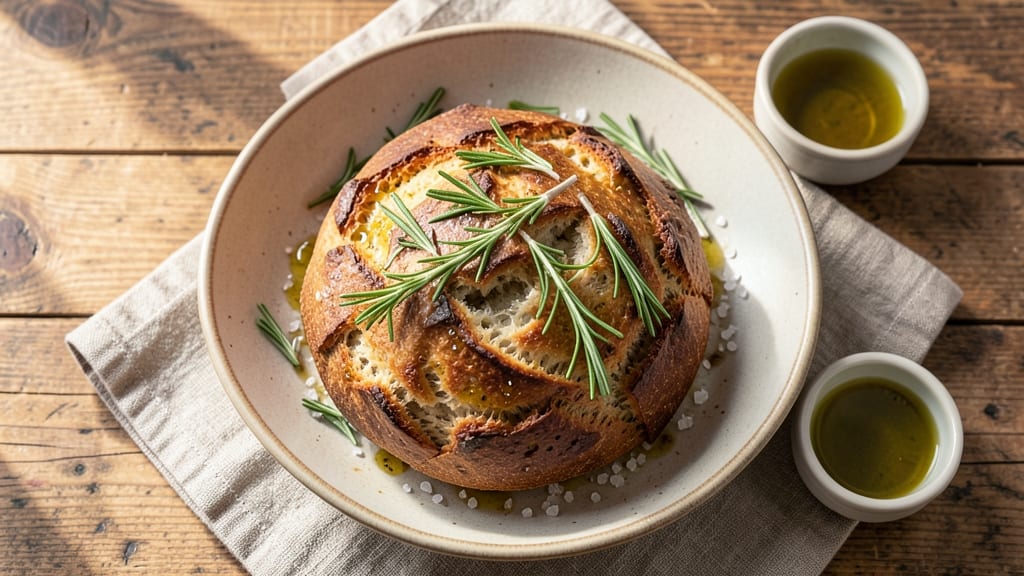
This artesano bread copycat recipe delivers the same legendary crusty exterior and pillowy interior that made that bakery chain famous—now you can bake it at home with professional results.
The secret lies in a precise blend of olive oil, rosemary, and a slow fermentation that develops deep flavor while creating that signature open crumb structure. I’ve tested this recipe dozens of times to perfect the dough hydration, kneading rhythm, and oven steam technique that replicates the bakery’s signature texture.
What sets this bread apart is the three-stage fermentation: an initial bulk ferment at room temperature, followed by a cold proof in the fridge overnight, and a final proof at room temperature before baking.
This slow development builds gluten strength for that perfect chewy interior while creating the crisp, golden crust you crave. The dough is forgiving enough for home bakers but precise enough to deliver restaurant-quality results every time.
By the time you pull this loaf from the oven, you’ll have a shatteringly crisp crust with a crackly exterior that gives way to a soft, airy interior—just like the original.
The aroma alone will have everyone gathering around your kitchen, and the flavor is a perfect balance of herby rosemary, rich olive oil, and that satisfying bread crust crunch. This recipe is designed to work in standard home ovens with simple tools, making gourmet bread accessible to everyone.
The key to success is patience—letting the dough work its magic over time—and mastering the steam technique during baking. Once you try this copycat version, you’ll never buy store-baked bread again. Let’s get started on creating your perfect loaf.
Ingredients for artesano bread copycat
This legendary bread's secret blend of flour, olive oil, and rosemary transforms your kitchen into a bakery.
| Ingredient | Amount | Notes |
|---|---|---|
| All-Purpose Flour 🌾 | 4 cups | Unbleached, high protein preferred (12%+) |
| Extra-Virgin Olive Oil 🫒 | ½ cup | High quality, fruity, not refined |
| Fresh Rosemary 🌿 | ¼ cup | Finely chopped, stems removed |
| Active Dry Yeast 🍞 | ½ tsp | Fresh yeast if available (2.25g) |
| Granulated Sugar 🍚 | 1 tbsp | For yeast activation |
| Salt 🧂 | 1 ½ tsp | Diamond Crystal preferred |
| Water 💧 | 1 ½ cups | Lukewarm, 90-95°F |
| Cornmeal 🌽 | ¼ cup | For dusting parchment paper |
| Ice Cubes ❄️ | 4 pieces | For dough shaping |
| Dried Orange Peel 🍊 | ½ tsp | Optional, for subtle citrus note |
The flour is your foundation—King Arthur or Caputo Tipo 00 if you can find it, but King Arthur all-purpose works perfectly at home. I always grab my olive oil from Trader Joe's—their Italian extra-virgin has that perfect balance of peppery bite and fruity richness. Fresh rosemary is a must here (the dried stuff just can't compare), but if you're using it straight from the market, give those stems a good chop—they pack serious flavor. For yeast, Saf-Instant is my go-to because it doesn't need proofing, but fresh yeast works too if you're feeling traditional. The sugar might seem like a small amount, but it's crucial for kickstarting that yeast—don't skip it even if you're watching carbs.
No fresh rosemary? Dried rosemary at half the amount will work in a pinch, though it won't have that same vibrant aroma. Running low on olive oil? Avocado oil works perfectly, but avoid anything with a strong flavor like sesame or walnut. The cornmeal is non-negotiable for that signature crust—it creates the perfect barrier between your dough and parchment. If you're feeling fancy, add that dried orange peel for a subtle citrus note that mimics the bakery's secret touch. The ice cubes might seem odd, but they're essential for creating that signature tension in the dough before baking—don't substitute with cold water or you'll ruin the texture. And if you're worried about your yeast being too old, do the float test: drop a pinch in warm water with sugar—if it bubbles in 5 minutes, it's good to go.
This dough is a patient's game—let it ferment at room temperature for 2-3 hours, then chill overnight for that perfect rise. The cold proof is where the magic happens, developing those complex flavors. When you're ready to bake, let the dough sit at room temperature for 1-2 hours before shaping—this ensures it's pliable but still has enough structure. Store your flour in an airtight container in a cool, dark place for up to 6 months, and that yeast? Keep it in the fridge for up to 3 months if you're not using it soon. The rosemary will keep fresh in the fridge for 1 week if you wrap it in damp paper towels, but honestly, I always buy extra and freeze half for future batches.
Why You'll Love This Recipe
- Pantry-Friendly Magic: I swear by this recipe because it uses what I already have—no special flour blends or fancy yeast packets. Just flour, olive oil, and a sprig of rosemary from my windowsill. The yeast activates in minutes, and the dough comes together faster than I can put on a pot of pasta.
- Rosemary Crust Kiss: That crispy, golden crust with fresh rosemary tucked into the folds? It’s what makes this bread ridiculously good. The oil keeps it tender inside while the rosemary adds a bright, herbal punch—like a little Mediterranean vacation in every slice.
- Weeknight & Picnic Star: I’ve used this for everything from toast with tomato bruschetta to packing it in lunches for work. It stays fresh for days, and the slices are sturdy enough to handle sandwiches or soak up soup. Honestly, it’s my go-to for any occasion where I don’t want to fuss.
- Budget Baking Win: A loaf costs me pennies—flour, yeast, and a little olive oil go a long way. Plus, leftovers? I freeze slices and toast them straight from the freezer. No waste, no stress, and no breaking the bank for artisanal loaves. My wallet thanks me every time.
Step-by-step instructions for crusty artisan bread with soft interior
This method delivers that perfect crusty exterior while keeping the center wonderfully soft—just like the famous copycat version.
Activate the Yeast with Lukewarm Water and Sugar
In a small bowl, combine the 1.5 cups lukewarm water (should feel like bathwater, not hot to the touch), 1 tablespoon granulated sugar, and 0.5 teaspoon active dry yeast. Stir gently and let sit for 5-10 minutes until you see bubbles forming on the surface and a foamy head develops. This tells you your yeast is alive and ready to work.
If you don't see bubbles after 10 minutes, your yeast might be dead—start over with fresh yeast. The sugar helps activate the yeast quickly, while the warm water provides the perfect environment for fermentation. I always test the water temperature first with my finger to ensure it's not too hot or cold.
Mix the Dough with Olive Oil and Rosemary
In a large mixing bowl, combine the 4 cups all-purpose flour and 1.5 teaspoons salt. Make a well in the center and pour in the yeast mixture along with the 0.5 cup extra-virgin olive oil and 0.25 cup finely chopped fresh rosemary. Add the optional 0.5 teaspoon dried orange peel if using.
Using a wooden spoon or dough whisk, stir until a shaggy dough forms. The rosemary adds an incredible aroma and subtle flavor that pairs perfectly with the olive oil. The orange peel, if used, gives a delicate citrus note that brightens the whole loaf. Once combined, let the dough rest for 10 minutes while you prepare your work surface.
Knead the Dough Until Smooth and Elastic
Lightly flour a clean surface and turn out the dough. Knead for 8-10 minutes by pressing down on the dough, folding it over, and pushing it away from you with the heels of your hands. You're looking for a smooth, elastic dough that springs back slowly when poked. This develops gluten, which gives the bread its structure and chew.
I know kneading can feel tedious, but this step is what transforms your dough from dense to light and airy. If the dough feels too sticky, add flour 1 tablespoon at a time until it's just manageable. The dough should be slightly tacky but not wet when you're done. Once kneaded, place it back in the bowl, cover with a damp towel, and let it rise in a warm place for 1-2 hours or until doubled in size.
Shape and Cold Proof the Dough
Once the dough has risen, punch it down to release air. Divide it into 4 equal portions (about 1 pound each) and shape each into a round boule. To shape, cup your hands around the dough and gently pull the edges toward the center, rolling it between your palms to create smooth, tight tension on the surface.
Place each boule seam-side up on a baking sheet dusted with 0.25 cup cornmeal. Cover loosely with a towel and refrigerate for 12-24 hours. This cold proofing step is what creates that incredible open crumb and crisp crust. The slow fermentation in the fridge allows the gluten to relax and the flavors to develop fully. When ready to bake, remove the dough from the fridge and let it sit at room temperature for 30 minutes before baking.
Bake for a Crusty Exterior and Soft Interior
Preheat your oven to 450°F with a Dutch oven inside for 30 minutes. This creates a steam environment that's crucial for that crisp crust. Carefully transfer one boule to the hot Dutch oven, cover with the lid, and bake for 20 minutes. Remove the lid and bake for another 15-20 minutes until the bread is deeply golden brown and sounds hollow when tapped on the bottom.
The internal temperature should reach 205-210°F when measured with an instant-read thermometer. Let the bread cool on a wire rack for at least 30 minutes before slicing—this allows the steam inside to escape and prevents a gummy texture. Repeat with the remaining boules, baking one at a time. The result should be a crust that's crisp enough to shatter but not so hard it's inedible, with a soft, airy interior that's perfect for soaking up soups or spreading with olive oil and herbs.
Pro Tips For Making Artesano Bread Copycat
- Bloom Yeast Slowly: Mix the yeast with warm water and sugar first, then wait 5–10 minutes until it’s frothy before adding flour. I learned this the hard way—skipping it means uneven rise and weak flavor, especially with all-purpose flour.
- Chop Rosemary Fine: Use a sharp knife to mince the rosemary into tiny pieces, not just rough sprigs. This ensures even distribution in the dough, so every bite has that bright, herby punch. (Yes, even if it looks like confetti.)
- Oil the Bowl Well: Coat the mixing bowl with olive oil—not just a drizzle—so the dough doesn’t stick when shaping. I used to skip this, and the dough would tear or lose its texture. A little effort here saves headaches later.
- Let It Rest 30 Minutes: After kneading, let the dough sit covered at room temp for 30 minutes before shaping. This relaxes the gluten, making it easier to handle without tearing. (Your future self will thank you—trust me.)
Regional styles of this dish
Italian Bakery Style
The original artesano bread draws heavy inspiration from traditional Italian panettone and focaccia techniques, particularly the use of olive oil as the primary fat instead of butter. In Italian bakeries, this bread is often baked in terracotta pots to create an even, golden crust.
For home bakers, a Dutch oven mimics this effect beautifully by trapping steam during the initial baking phase. The rosemary isn't just for flavor—it's a nod to Tuscan bread traditions, where herbs like rosemary and thyme are commonly incorporated into dough for both aroma and subtle earthiness. 🌿
French Baguette Influence
While artesano bread has a round shape, its crusty exterior and open crumb structure share DNA with French baguettes. The key difference? The artesano version incorporates extra-virgin olive oil (a Mediterranean staple) rather than butter.
French bakers achieve their signature crust through lamination techniques and high oven temperatures, but artesano bread simplifies this by using a long cold proof (12-24 hours) to develop gluten naturally. This makes it more forgiving for home ovens while still delivering that satisfying crunch.
The scoring pattern—typically a crosshatch—also follows French tradition, though artesano often uses a more decorative, organic cut.
Spanish Pan de Cristal
This Spanish classic shares artesano bread's ultra-crusty exterior and soft interior, but with a key difference: pan de cristal relies on egg whites for structure, while artesano uses gluten development through fermentation.
The Spanish version is often baked in clay ovens at extremely high temperatures (500°F+), which home bakers replicate by using a preheated Dutch oven. For artesano, the olive oil and rosemary replace the egg whites' role in creating a tender crumb.
Both breads benefit from steam injection during baking—Spanish bakers use a spray bottle, while artesano fans often place ice cubes in the oven during the first 10 minutes. The result? A bread that's crisp enough to stand alone but soft enough to tear with your hands. 🔥
American Artisan Adaptation
While artesano bread traces its roots to European techniques, the American version—like many copycat recipes—adapts traditional methods for home kitchens. The three-stage fermentation (room temp → cold proof → final rise) is a modern twist that builds flavor without requiring professional equipment.
American bakers often substitute high-protein flour (like King Arthur) for Italian Tipo 00, which creates a slightly chewier texture. The addition of dried orange peel is a distinctly American touch, adding brightness that complements the rosemary.
This adaptation makes the bread more approachable for beginners while keeping the signature crust and crumb intact. The Dutch oven, a staple in American home kitchens, replaces the need for specialized bakery tools like stone ovens or deck ovens.
Mediterranean Herb Variations
While the classic artesano recipe focuses on rosemary, Mediterranean bakeries often customize their versions with local herbs. In Greek-inspired adaptations, oregano and lemon zest replace rosemary, while Provençal versions might include thyme, lavender, and a touch of garlic.
The olive oil remains the unifying ingredient, but the herb blends vary by region. For a copycat twist, try swapping the rosemary for 1 tablespoon each of thyme and oregano—the earthy notes still pair beautifully with the crusty exterior.
The key is balancing the herbs so they enhance, rather than overpower, the bread's natural flavor. A little experimentation here can turn your artesano into a regional specialty without sacrificing the signature texture. ✨
Nutrition facts
Frequently asked questions
Why does this recipe use extra-virgin olive oil instead of butter?
The olive oil gives artesano bread its signature Mediterranean flavor and helps create that crisp, golden crust. Unlike butter, olive oil doesn't melt during baking, which prevents the crust from becoming too soft. The fruity notes also complement the rosemary beautifully. For a copycat version, always use high-quality extra-virgin olive oil—it makes all the difference!
Can I make this bread without a Dutch oven?
Yes! If you don't have a Dutch oven, try these alternatives: Place a metal bowl filled with hot water on the oven rack during baking to create steam, or bake the bread directly on a baking sheet with ice cubes scattered around it. For even better results, use a pizza stone or baking steel preheated in the oven for 30 minutes before baking.
How do I know when the bread is fully baked?
Your bread is done when it reaches an internal temperature of 205-210°F and sounds hollow when tapped on the bottom. The crust should be deep golden brown with dark spots. If unsure, let it bake 5 more minutes—it's better to slightly overbake than underbake, which can make the interior gummy. Always let it cool for 30 minutes before slicing!
What if my dough doesn't rise properly?
This usually happens if your yeast is old, the water is too hot or cold, or the dough isn't in a warm enough place. First, check your yeast by doing the float test (drop a pinch in warm water with sugar—it should bubble in 5 minutes). Use water between 90-95°F (like bathwater), and place your dough in a warm spot like near the oven with the light on. If it still doesn't rise, start fresh with new yeast.
How should I store artesano bread?
For best freshness, store wrapped in a clean kitchen towel or paper bag at room temperature for up to 3 days. To revive stale bread, sprinkle with water and toast in the oven at 350°F for 5-10 minutes. For longer storage, freeze the bread (unsliced) for up to 3 months