
Side Dishes
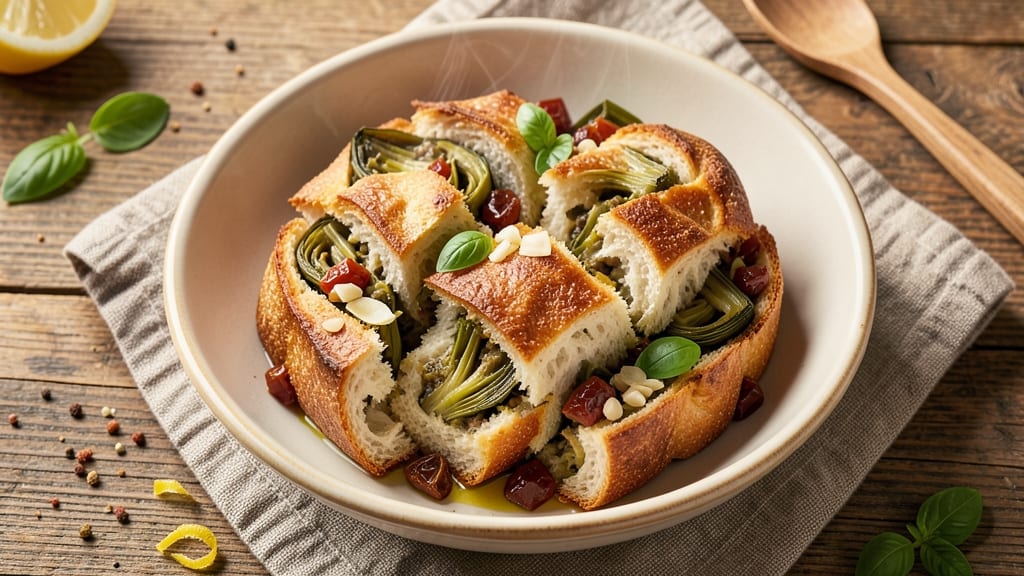
This artichoke-stuffed bread delivers the perfect balance of crispy golden crust and molten, cheesy artichoke filling that transforms any meal into something special.
The secret lies in using a simple pizza dough base—light enough to crisp beautifully while holding its shape—and a filling packed with tender artichoke hearts, sharp parmesan, and fragrant herbs.
I developed this recipe after years of experimenting with stuffed breads, and it never fails to impress, whether served as an appetizer or a hearty side dish.
The dough preparation is straightforward, requiring just flour, yeast, olive oil, and water, while the filling comes together in minutes with sautéed artichokes, garlic, and a blend of mozzarella and parmesan for that signature gooey center.
Baking at 425°F ensures the crust achieves that coveted crispness while keeping the filling warm and stretchy. The combination of textures—crunchy exterior, creamy interior—makes every bite irresistible.
What sets this recipe apart is how it elevates humble ingredients into something restaurant-worthy without requiring advanced techniques. The artichokes add a subtle earthiness that pairs perfectly with the rich, melty cheese, while the garlic and herbs infuse the filling with aromatic depth.
The result is a bread that’s as satisfying to make as it is to eat, proving that even simple dough can become extraordinary with the right filling.
Perfect for game day, holiday gatherings, or a cozy weeknight dinner, this artichoke-stuffed bread is versatile enough to adapt to your menu. Serve it warm with a drizzle of olive oil or a sprinkle of flaky sea salt for extra flair.
The recipe also works well ahead of time—just reheat in the oven to restore that crispy crust. Let’s get started!
Ingredients for artichoke stuffed bread
Transform simple dough and artichokes into a restaurant-worthy masterpiece with this crispy, cheesy creation.
| Ingredient | Amount | Notes |
|---|---|---|
| All-Purpose Flour 🌾 | 3 ½ cups | Spooned and leveled for accuracy |
| Active Dry Yeast 🍞 | ¼ tsp | Ensure freshness (test in warm water) |
| Granulated Sugar 🍚 | 1 tbsp | For yeast activation |
| Extra-Virgin Olive Oil 🫒 | ½ cup | High-quality for dough richness |
| Warm Water 💧 | 1 ¼ cups | 110°F for optimal yeast activation |
| Kosher Salt 🧂 | 1 ½ tsp | Diamond Crystal preferred |
| Marinated Artichoke Hearts 🌿 | 14 oz | Drained and chopped finely |
| Garlic Cloves 🧄 | 3 cloves | Minced for aromatic depth |
| Fresh Parsley 🌿 | ¼ cup | Chopped, for vibrant freshness |
| Shredded Mozzarella Cheese 🧀 | 1 ½ cups | Low-moisture, freshly grated |
| Freshly Grated Parmesan Cheese 🧀 | ½ cup | From a high-quality wedge |
| Flaky Sea Salt 🧂 | 1 tbsp | For finishing |
| Cornmeal 🌽 | ¼ cup | For dusting baking sheet |
The dough's success hinges on high-quality flour and fresh yeast—skip the old packets. King Arthur or Caputo flour yield the best texture, while Whole Foods or local bakeries often carry the finest yeast. For the artichokes, marinated hearts from Trader Joe's save time, but jarred options work too—just drain and chop thoroughly. Fresh parsley elevates the filling; if unavailable, dried parsley at one-third the amount suffices. The cheese blend is critical: low-moisture mozzarella prevents sogginess, while Parmigiano-Reggiano adds depth. Pre-grated cheese lacks texture, so invest in a wedge and grate it yourself.
No artichoke hearts? Sun-dried tomatoes or roasted bell peppers mimic the umami richness, though texture differs. Substituting garlic with garlic powder (half the amount) works in a pinch, but fresh is non-negotiable for flavor. For a dairy-free twist, replace mozzarella with vegan mozzarella and Parmesan with nutritional yeast, though texture will vary. The dough’s olive oil can be swapped for avocado oil, but extra-virgin olive oil’s fruity notes are ideal. If your yeast isn’t active, test it in warm water—it should foam within 5 minutes. For extra crispiness, brush the baked bread with melted butter post-bake, though this adds richness.
Dough rises best in a warm, draft-free environment—place it near the oven with a bowl of hot water to create humidity. The filling can be prepped a day ahead, stored in the fridge, and assembled just before baking. For reheating, 350°F for 5-10 minutes restores crispiness. Portion leftovers into airtight containers to maintain freshness for 3 days at room temperature or 1 month frozen. To revive stale bread, wrap in foil and bake at 375°F for 5 minutes—the crust will crisp up beautifully.
Why You'll Love This Recipe
- No-Knead Magic: I swear by this dough—just mix, let it rise, and forget it. The yeast does all the work while I sip coffee, and the olive oil keeps it tender without a single drop of butter.
- Umami Bomb: That first bite of warm, gooey artichoke heart melting into the bread? It’s like a Mediterranean vacation in your mouth. The olive oil and sugar caramelize just enough to balance the earthy artichokes.
- Picnic Perfect: Between us, this bread is my go-to for lunchboxes, potlucks, or even a lazy Sunday spread. Wrap it in foil, toss it in a bag, and it stays fresh for days—no sad, squished sandwiches here.
- Pantry Stretch: Honestly, this recipe uses what you already have. Flour, yeast, sugar, olive oil—no fancy ingredients, just real food that doesn’t break the bank. And the leftovers? Toast them up the next morning.
Step-by-step instructions for artichoke-stuffed bread
Master this technique and you'll achieve a golden crust with a molten cheese center every time.
Prepare the Yeast Dough Foundation
In a large mixing bowl, combine the 3.5 cups all-purpose flour, 1.5 tsp kosher salt, and 1 tbsp granulated sugar. Make a well in the center and add the 0.25 tsp active dry yeast. Pour in the 0.5 cup extra-virgin olive oil and 1.25 cups warm water (about 110°F). Mix vigorously with a wooden spoon until a shaggy dough forms.
Transfer the dough to a lightly floured surface and knead for 8-10 minutes until smooth and elastic. You'll know it's ready when it springs back slowly when poked. This kneading develops gluten, which gives your bread structure and that perfect oven-spring. If the dough feels too sticky, add flour 1 tablespoon at a time—but don't overdo it, or your bread will be dense.
Create the Artichoke Filling
While the dough rests, prepare the filling by finely chopping the 14 oz marinated artichoke hearts (drained well). In a small bowl, mix the chopped artichokes with the 3 minced garlic cloves, 0.25 cup chopped fresh parsley, 1.5 cups shredded mozzarella cheese, and 0.5 cup freshly grated parmesan cheese. Set aside—this mixture should be chunky but still spreadable.
Here's the thing—don't skip draining the artichokes thoroughly. Excess liquid will make your filling soggy instead of gooey. Press the artichokes between paper towels if needed to remove all moisture. The cheese blend should be cool but not cold, so it melts beautifully in the oven.
Shape and Stuff the Dough
Divide the rested dough into 4 equal portions (about 12 oz each). Roll each portion into a 12-inch circle on a floured surface, keeping the edges slightly thicker than the center. This creates the classic bread shape with a thick crust.
Spread ¼ of the artichoke mixture evenly over each circle, leaving a 1-inch border around the edges. Fold the dough over the filling to create a half-moon shape, then seal by pinching the edges firmly. Place each stuffed half-moon seam-side down on a parchment-lined baking sheet.
Proof and Prepare for Baking
Cover the shaped bread with a clean kitchen towel and let proof at room temperature for 45-60 minutes, or until the dough has risen by about 50%. You'll see the edges puff slightly and the dough feel springy when pressed gently. This resting period allows the yeast to activate fully and the gluten to relax.
While proofing, preheat your oven to 375°F and sprinkle 0.25 cup cornmeal evenly on a second baking sheet. The cornmeal creates a crispy barrier that prevents sticking. Just before baking, brush the tops of the bread with water and sprinkle generously with 1 tbsp flaky sea salt. This creates that signature crispy crust we're after.
Bake to Golden Perfection
Bake for 25-30 minutes until the tops are deep golden brown and the internal temperature reaches 190°F. The bread should sound hollow when tapped on the bottom. Watch closely after 20 minutes—ovens vary, and you want that perfect balance of crispy exterior and gooey interior.
For the ultimate finish, broil for 1-2 minutes at the end to intensify the browning. The cheese inside should be fully melted and bubbly. Let the bread rest for 10 minutes before serving—this allows the filling to set slightly and makes slicing easier. Serve warm with your favorite dipping sauce or simply enjoy the gooey center straight from the oven.
Pro Tips For Making Artichoke Stuffed Bread
- Test Your Yeast First: Skip the guesswork—mix 1 packet yeast with ¼ cup warm water (110°F) and 1 tsp sugar. If it doesn’t foam in 5–10 minutes, your yeast is dead or your water’s too hot. Trust me, nothing’s worse than kneading for 20 minutes only to realize your dough won’t rise.
- Salt the Dough Early: Add the full salt (about 1½ tsp for this recipe) with the yeast, not later. It dissolves faster and distributes evenly, so your bread tastes seasoned all the way through—not just on the crust. (Yes, even if you’re impatient like me.)
- Shape Loaves Tightly: Pack the artichoke filling into the dough rolls like you’re stuffing a sausage—no air gaps. Press the edges hard to seal, or the filling will leak out during baking. Think "compact sandwich," not "loose burrito."
- Bake Until Golden: Don’t pull the bread out at 375°F just because it looks done. Rotate the pan halfway and bake until the crust is deep golden (about 20–25 minutes total). Underbaked bread tastes gummy—overbaked crust tastes like regret. A toothpick test works, but so does your nose: pull it out when it smells toasted, not raw.
Pro cooking tips for this dish
Dough Perfection
For that signature crispy crust, use a stand mixer with a dough hook attachment to knead the dough for 5-7 minutes—this ensures even gluten development without overworking. If mixing by hand, knead for 8-10 minutes until the dough is smooth and elastic.
I’ve found that King Arthur flour yields the best texture, but any all-purpose flour works. The key is not over-kneading—stop when the dough springs back slowly when poked. 💪
Filling Consistency
The artichoke filling should be chunky but spreadable—think of it like thick hummus. If your mixture feels too wet, add 1-2 tbsp shredded mozzarella to absorb excess moisture. I like to press the chopped artichokes between paper towels to remove all liquid before mixing.
The cheese blend (mozzarella + parmesan) should be cool but not cold—this ensures it melts beautifully in the oven rather than staying rubbery. 🧀
Shaping Secrets
When rolling out the dough circles, keep the edges slightly thicker than the center—this creates that classic bread shape with a thick, crispy crust. For sealing, pinch the edges firmly but gently to avoid tearing the dough.
If the filling leaks slightly during proofing, that’s normal! Just press the edges back together before baking. I’ve also found that dusting the work surface with a little cornmeal (not flour) prevents sticking when shaping. ✨
Proofing Like a Pro
Proofing is where the magic happens—your dough should rise by about 50% in 45-60 minutes. If your kitchen is cold, place the dough near the oven with a bowl of hot water to create humidity and speed up fermentation.
The dough is ready when it feels springy and leaves a slight indent when pressed gently. Overproofing leads to dense bread, so keep an eye on it! 🌡️
Baking Temperature
Bake at 375°F for 25-30 minutes—this lower temp ensures the filling melts evenly without burning the crust. The bread is done when it’s deep golden brown and reaches 190°F internally.
I like to broil for 1-2 minutes at the end to intensify the browning, but watch closely to avoid over-browning. The crust should be crispy, while the filling remains gooey and stretchy. 🔥
Resting Matters
Let the baked bread rest for 10 minutes before slicing—this allows the filling to set slightly and makes it easier to slice without spilling.
The bread will keep at room temperature for 2-3 hours, but for longer storage, wrap in foil and reheat at 350°F for 5-10 minutes to restore crispiness. The filling reheats beautifully, so don’t skip this step! 💫
Nutrition facts
Frequently asked questions about artichoke-stuffed bread
Can I make this bread without yeast?
Yes! For a quick version, use 1.5 cups self-rising flour instead of all-purpose flour and yeast. Skip the kneading and proofing steps, then bake at 375°F for 20-25 minutes. The texture will be denser but still delicious. For a fluffier result, try a biscuit dough base with baking powder instead.
What if my dough doesn't rise properly?
Check your yeast first—it should foam within 5 minutes in warm water. If not, replace it. Keep the dough in a warm spot (like near the oven with a bowl of hot water) and give it 1-2 extra hours to rise. Cold kitchens slow fermentation. If it still doesn't rise, your flour might be old—try fresh King Arthur or Caputo flour next time.
How can I make this recipe gluten-free?
Use a 1:1 gluten-free flour blend (like Bob's Red Mill) and add 1 tsp xanthan gum to the dough. Replace yeast with 1 tbsp baking powder and reduce water by 2 tbsp. The texture will be slightly different but still satisfying. For the filling, ensure your cheese is gluten-free certified.
Can I prepare the filling ahead of time?
The filling keeps well in the fridge for 24 hours or freezes for 1 month. Thaw in the fridge overnight before using. For best results, assemble the stuffed bread just before baking—this ensures the cheese melts perfectly. If you must prep ahead, shape the dough balls, refrigerate them, then let them rise at room temperature before stuffing.
What's the best way to reheat leftover stuffed bread?
Wrap slices in foil and reheat at 350°F for 5-7 minutes to restore crispiness. For the whole loaf, bake at 375°F for 10 minutes covered, then 2-3 minutes uncovered to crisp the top. Avoid microwaving—it makes the crust soggy. A quick broil for 1 minute also works for extra crunch!