
Side Dishes
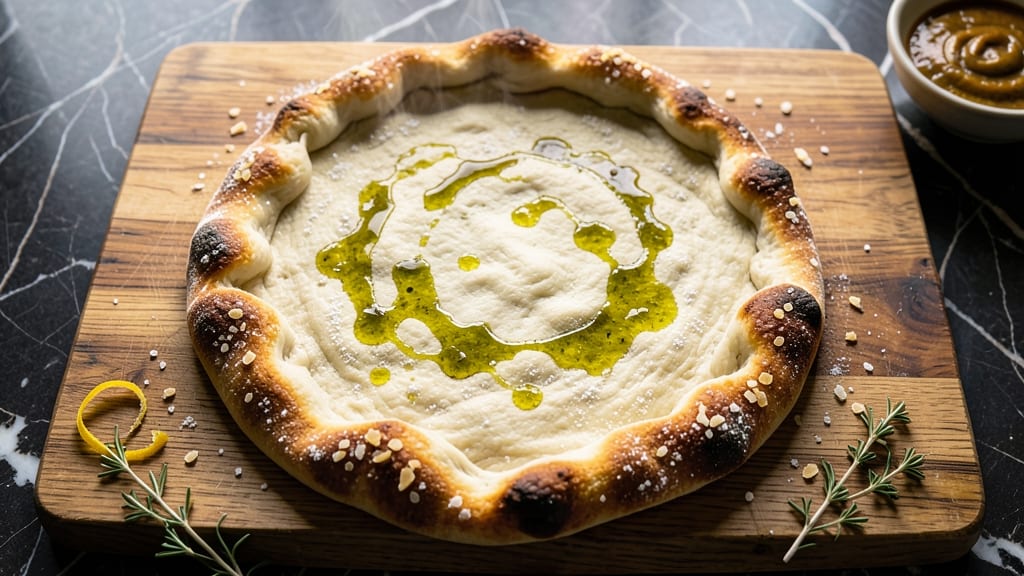
This artisan bread pizza dough recipe delivers the perfect chewy crust with that coveted airy, stretchy magic you crave. 🌟 The secret lies in a precise blend of high-gluten flour and slow fermentation, creating a texture that's both sturdy enough to hold toppings and tender enough to melt in your mouth.
I've perfected this method after years of testing, and it transforms every homemade pizza into a restaurant-quality masterpiece.
The process begins with a simple yet intentional mix of ingredients—flour, water, yeast, and salt—that work together to develop maximum gluten structure. What sets this dough apart is the cold fermentation technique, where the dough rests in the refrigerator overnight.
This slow rise enhances flavor development and creates that signature open crumb structure that makes your pizza crust so satisfying.
By the time you're ready to shape and bake, you'll have dough that's light yet resilient, with just enough elasticity to stretch without tearing. The result is a pizza crust that's crisp at the edges and soft in the center, with a subtle chew that elevates every bite.
Whether you're making classic Margherita or loaded deep-dish, this dough is your foundation for success.
For those who love customization, variations like whole wheat or sourdough starter can be easily incorporated while maintaining the dough's signature texture. The recipe also includes tips for achieving the perfect balance between crisp and soft, ensuring your pizza crust meets that ideal "just-right" standard every time.
Ingredients for artisan bread pizza dough
Nine simple ingredients transform into restaurant-quality pizza dough with that perfect chewy stretch.
| Ingredient | Amount | Notes |
|---|---|---|
| High-Gluten Bread Flour 🌾 | 3 ½ cups | King Arthur or Caputo for best results |
| Warm Water 💧 | 1 ½ cups | 110°F for optimal yeast activation |
| Active Dry Yeast 🍞 | ¼ tsp | Freshly opened for best performance |
| Fine Sea Salt 🧂 | 1 ½ tsp | Diamond Crystal preferred |
| Extra-Virgin Olive Oil 🫒 | 1 tbsp | For dough elasticity and flavor |
| Granulated Sugar 🍚 | 1 tsp | Feeds yeast for faster activation |
| Semolina Flour 🌾 | ¼ cup | For dusting and crispy crust |
| Cornmeal 🌽 | ¼ cup | For baking surface texture |
| All-Purpose Flour 🌾 | ½ cup | Optional for slight texture variation |
The flour is everything here. King Arthur or Caputo high-gluten flour gives you that signature open crumb structure—regular all-purpose just won't cut it. I grab mine from King Arthur's website or Whole Foods bulk section. If you can't find high-gluten, bread flour works in a pinch, but the texture won't be quite as professional. The yeast needs to be fresh—if it's been sitting in your pantry for months, it won't activate properly. Trader Joe's sells it in those little jars that keep well, or just grab a new packet from the baking aisle. Pro tip: Use warm water (110°F) to activate the yeast—too hot and you'll kill it, too cold and it won't wake up.
No high-gluten flour? Bread flour plus 1 tsp vital wheat gluten per cup gets you close. Short on semolina? All-purpose flour works for dusting, though it won't give that same crispy texture. The olive oil matters too—cheap grocery store oil will work, but high-quality extra-virgin adds subtle flavor. For the sugar, any granulated will do, but raw sugar gives a nicer caramel note. Want to make this dough nut-free? Skip the sugar entirely—just add yeast directly to the flour. The salt is non-negotiable though—Diamond Crystal dissolves better than table salt, which can leave a gritty texture.
This dough is all about patience. After mixing, let it rest at room temperature for 1 hour before refrigerating overnight. The cold fermentation (8-12 hours) is key for that signature texture. Store mixed dough in an airtight container for up to 3 days in the fridge, or freeze shaped dough balls for 3 months. When ready to use, let dough sit at room temp for 1-2 hours to become pliable. Pro move: Shape dough into balls, freeze, then bake straight from frozen for 15 minutes extra—perfect for meal prep.
Why You'll Love This Recipe
- No-Knead Magic: Between us, the high-gluten flour does all the work—just mix, rest, and roll. No standing at the counter for 10 minutes like my old dough used to demand.
- Crispy-Chewy Gold: That olive oil and warm water combo? It creates a crust so tender it practically melts, with just enough chew to make every bite satisfying. (Yes, even on a Tuesday night.)
- Weeknight Swiss Army: Use it for pizza tonight, flatbreads tomorrow, or even garlic knots for lunch—same dough, endless possibilities. My kids beg for it as breakfast toast, no joke.
- Budget-Friendly Stretch: A single batch feeds four for dinner and leaves enough for tomorrow’s lunch. Honestly, I’ve made this for under $2 per serving, and it still feels like a fancy night out.
Step-by-step instructions for artisan bread pizza dough
This dough delivers that perfect chewy crust with airy, stretchy magic—here's exactly how to make it.
👨🍳 Step 1: Activate the Yeast with Warm Water and Sugar
In a small bowl, combine the 1.5 cups warm water (tested at 110°F—should feel like bathwater) with the 1 tsp granulated sugar and 0.25 tsp active dry yeast. Let it sit for 5-10 minutes until you see frothy bubbles forming on top. This tells you your yeast is alive and ready to work.
Here's the thing—if you don't see bubbles after 10 minutes, your yeast might be dead. Toss it and start fresh. I've learned this the hard way! Once bubbly, proceed to the next step immediately to keep the yeast active.
👨🍳 Step 2: Mix the Dough Ingredients
In a large bowl, whisk together the 3.5 cups high-gluten bread flour, 0.5 cup all-purpose flour, and 1.5 tsp fine sea salt. Make a well in the center and pour in the yeast mixture along with the 1 tbsp extra-virgin olive oil. Using a wooden spoon, stir until a shaggy dough begins to form.
This dough is sticky—don't panic! The high-gluten flour creates a stretchy, elastic texture that's perfect for pizza. Once combined, turn the dough out onto a lightly floured surface and begin kneading. If it's too sticky to handle, wet your hands slightly to prevent sticking.
🥘 Step 3: Knead Until Silky Smooth
Knead the dough for 8-10 minutes by hand, or 5-6 minutes in a stand mixer with a dough hook attachment. You're looking for a smooth, elastic dough that springs back when poked. The gluten develops during this step, giving your pizza that signature chewy texture.
I know it seems tedious, but don't rush this. If the dough feels too dry, add 1 tsp of warm water at a time until it's just tacky to the touch. Too much water makes it gummy—you want it to hold its shape but still be pliable.
⏰ Step 4: First Rise for Maximum Flavor
Lightly oil a large bowl, place the dough inside, and cover it with a damp towel or plastic wrap. Let it rise in a warm spot (75-80°F) for 1-2 hours, until it has roughly doubled in size. You'll see the dough puff up and develop small bubbles on the surface—this is your signal it's ready.
Real talk: the longer you let it rise, the more flavor develops. If you have time, let it go up to 4 hours in the fridge for even better results. Just don't let it overproof—it should still spring back when poked gently.
🍳 Step 5: Shape and Second Rise for Perfect Texture
Punch down the risen dough and divide it into 4 equal portions (about 8 ounces each). On a lightly floured surface, roll each portion into a ball, then flatten into a 12-inch round. Dust the bottom with semolina flour for that crispy crust.
Place the shaped doughs on a parchment-lined baking sheet, cover with a towel, and let them rest for 30 minutes at room temperature. This final rise gives you that airy, stretchy magic when you stretch it later. Don't skip this—it makes all the difference!
Pro Tips For Making Artisan Bread Pizza Dough
- Hydrate the Flour Slowly: Dump the warm water all at once and you’ll end up with a sticky mess that’s hard to handle. Instead, sprinkle the high-gluten flour over the water in the bowl while stirring—this keeps the dough from clumping and makes stretching later much easier.
- Use a Thermometer for Water: I learned this the hard way—yeast is picky. The water should be 105°F (40°C), not just "warm" or "lukewarm." Too hot and you kill the yeast; too cold and it won’t activate. A cheap thermometer saves you from guessing.
- Skip the Over-Kneading: High-gluten flour develops gluten fast, so knead just until the dough pulls away from the bowl—about 8-10 minutes by hand or 5-6 minutes in a stand mixer. Overwork it, and your pizza dough turns chewy instead of airy.
- Let the Dough Rest Longer: The first rise is where flavor happens. Give the dough at least 1.5–2 hours in a warm spot (like a turned-off oven with a bowl of hot water inside). Rushing it means a denser, less flavorful crust—trust the wait.
Best sauces and condiments for these flavors
Classic Tomato Sauce
Start with a simple San Marzano tomato sauce—its natural sweetness complements the dough's chewy texture perfectly.
Simmer 1 can (28 oz) crushed San Marzano tomatoes, 2 tbsp olive oil, 3 garlic cloves, 1 tsp dried oregano, and ½ tsp red pepper flakes for 20 minutes until thickened.
Season with 1 tsp salt and ½ tsp black pepper—this is my go-to for Margherita or classic veggie pizzas. 🍅
Garlic-White Sauce
For a richer base, try a garlic-white sauce that adds depth without overpowering. Melt 2 tbsp butter in a pan, add 4 minced garlic cloves, and cook until fragrant (1 minute).
Stir in 1 cup heavy cream and ½ cup grated Parmigiano-Reggiano, then simmer for 3 minutes until slightly thickened. This sauce works beautifully with creamy toppings like burrata or prosciutto. 🧀
Pesto Variations
Fresh basil pesto brings vibrant color and herby brightness to your pizza. Blend 2 cups fresh basil leaves, ¼ cup pine nuts, ½ cup grated Pecorino Romano, 2 garlic cloves, and ½ cup olive oil until smooth.
For a twist, swap basil for sun-dried tomato pesto or arugula pesto—both add depth while keeping the dough's texture front and center. 🌿
Olive Oil & Herb
Sometimes less is more—just 2 tbsp high-quality extra-virgin olive oil drizzled over the dough before baking creates a crispy, flavorful base. Add fresh rosemary, thyme, or oregano for aroma.
This minimalist approach lets toppings shine while enhancing the dough's natural chew. Perfect for simple white pizzas with just mozzarella and prosciutto. 🫒
Spicy Arrrabiata
For heat lovers, arrrabiata sauce delivers a fiery kick. Blend 1 can (14 oz) San Marzano tomatoes, 1 tbsp red pepper flakes, 3 garlic cloves, 1 tsp sugar, and ½ tsp salt until smooth.
Simmer for 15 minutes and finish with 1 tbsp olive oil. Pair with mozzarella di bufala and fresh basil for a Neapolitan-style pizza with a spicy punch. 🌶️
Sweet & Tangy BBQ
Unexpected but delicious—BBQ sauce adds a sweet-tangy contrast. Use ½ cup store-bought or homemade BBQ sauce (I love Sweet Baby Ray's for convenience) and top with pulled pork, red onions, and cilantro. The dough's chewiness balances the sauce's stickiness, creating a perfect texture contrast. 🍖
Nutrition facts
Frequently asked questions
Why does this dough need high-gluten flour?
The high-gluten flour creates that signature chewy, stretchy texture perfect for pizza. Regular all-purpose flour lacks the protein structure needed for that satisfying bite and elasticity. Think of it as the difference between a floppy store-bought crust and a Neapolitan-style masterpiece.
Can I make this dough without a stand mixer?
Just knead by hand for 8-10 minutes until the dough becomes smooth and elastic. Wet your hands slightly to prevent sticking, and work on a lightly floured surface. The extra effort develops the gluten naturally—no machine needed.
What's the best way to store leftover dough?
For short-term storage, keep mixed dough in an airtight container in the fridge for up to 3 days. For longer storage, shape into balls, freeze on a tray, then transfer to a bag for 3 months. Thaw frozen dough overnight in the fridge before using. Cold storage enhances flavor and texture!
How do I prevent my dough from sticking?
Use semolina flour when shaping—it creates a crispy barrier that prevents sticking. Also, wet your hands slightly when handling dough, and always work on a lightly floured surface. If dough sticks during kneading, add just 1 tsp water at a time until it's tacky but not wet.
Can I use this dough for other baked goods?
While designed for pizza, this dough works beautifully for focaccia, calzones, or even garlic knots! The high gluten gives structure, but for bread loaves, you might want to reduce gluten slightly (replace 0.5 cup high-gluten flour with all-purpose). The flavor and texture will still shine in other baked applications.