
Side Dishes
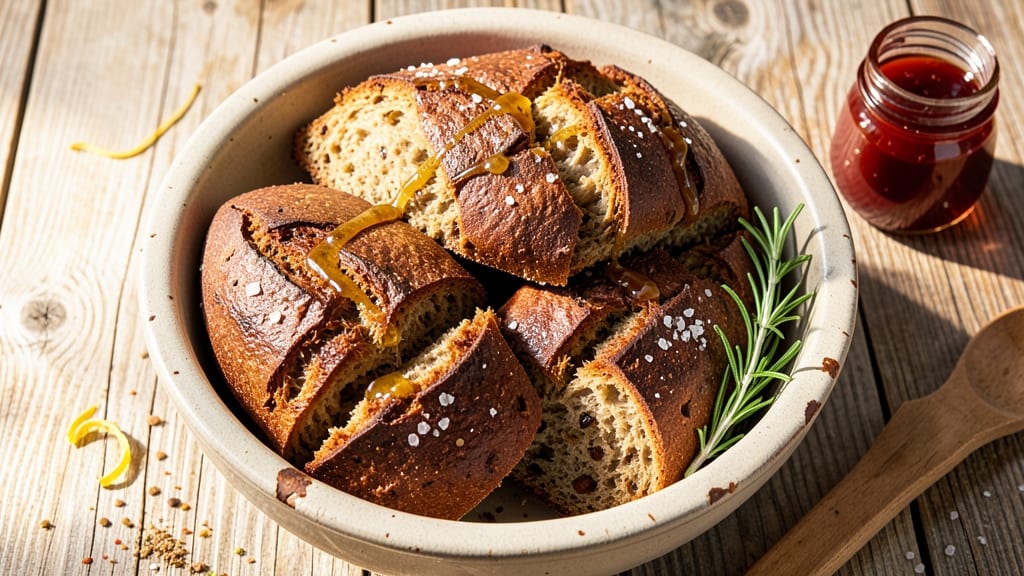
This artisan brown bread recipe delivers the perfect balance of rustic crust and molasses-kissed sweetness that transforms any meal. The secret lies in a precise blend of whole wheat flour, molasses, and a touch of honey—each ingredient playing its part to create that signature caramelized crust and tender interior.
After years of perfecting the technique, I’ve developed a method that ensures foolproof results, even for home bakers.
The process begins with a simple yet transformative dough that requires just 15 minutes of active prep time, followed by a 2-hour rise for maximum flavor development. The key is creating steam in your oven during baking, which gives that coveted crispy crust while keeping the inside soft and moist.
This bread is more than just a side—it’s a centerpiece that pairs beautifully with soups, stews, or simply slathered with butter.
What sets this recipe apart is the molasses, which adds depth and a subtle sweetness that lingers on the palate. The crust develops a deep amber hue with a satisfying crunch, while the interior remains tender and slightly chewy.
Whether you’re baking for a holiday gathering or treating yourself to homemade goodness, this bread delivers restaurant-quality results with minimal effort.
For added versatility, you can experiment with variations like whole wheat, rye, or even incorporate a sourdough starter for an even tangier profile. The possibilities are endless, but the foundation remains the same: a rustic loaf that’s as satisfying to make as it is to eat.
Let’s get started on this timeless classic.
Ingredients for artisan brown bread
These carefully selected ingredients create the signature rustic crust and molasses-kissed sweetness of artisan brown bread.
| Ingredient | Amount | Notes |
|---|---|---|
| Unbleached All-Purpose Flour 🌾 | 2 cups | Standard white flour preferred |
| Whole Wheat Flour 🌾 | 2 cups | Stone-ground for optimal texture |
| Dark Molasses 🍯 | ½ cup | Unsulphured for rich flavor |
| Honey 🍯 | ¼ cup | Wildflower preferred for complexity |
| Active Dry Yeast 🍞 | 2 ¼ tsp | Ensure freshness with expiration date |
| Granulated Sugar 🍚 | ¼ cup | Light brown preferred for caramelization |
| Unsalted Butter 🧈 | ½ cup | Cold, cubed for even distribution |
| Large Eggs 🥚 | 1 whole | Room temperature for even mixing |
| Warm Water 💧 | 1 ¼ cups | 110°F for optimal yeast activation |
| Diamond Crystal Kosher Salt 🧂 | 1 ½ tsp | Adjust to taste after initial rise |
| Cornmeal 🌽 | ¼ cup | For dusting baking sheet |
| Ice Cubes ❄️ | ½ cup | For creating steam during baking |
The molasses is the heart of this recipe, so choose unsulphured dark molasses for authentic depth—anything else will taste artificial. For flour, King Arthur whole wheat or Bob's Red Mill stone-ground create that perfect rustic texture. The yeast must be fresh; if your packet is older than six months, test it in warm water first. Honey selection matters too—wildflower or clover adds subtle floral notes that complement the molasses. Butter should be cold and cubed; Plugrá or Land O'Lakes unsalted work perfectly for consistent results. For the water, use a thermometer to ensure it's exactly 110°F—any hotter and you'll kill the yeast.
No dark molasses? Blackstrap molasses at half the amount works, though the flavor will be more intense. Substituting honey? Maple syrup at the same quantity maintains sweetness, but the flavor profile shifts slightly. Running low on whole wheat flour? White whole wheat flour is a 1:1 substitute with a lighter color. For yeast, instant yeast at 75% the amount can be mixed directly with dry ingredients. The egg can be replaced with 1 tbsp ground flaxseed mixed with 3 tbsp warm water for a vegan version, though texture may vary slightly. Salt is non-negotiable—Diamond Crystal kosher dissolves cleanly, but Morton coarse works in a pinch.
This dough requires a 2-hour rise at room temperature, so plan ahead. For storage, wrap tightly in plastic and keep at room temperature for 2 days or freeze for 3 months. To reheat, wrap in a damp towel and warm in a 350°F oven for 10 minutes. The molasses-rich crust freezes beautifully—slice before freezing for easy serving. For best results, bake immediately after shaping, as the dough develops flavor during the rise. If prepping ahead, refrigerate shaped loaves for up to 12 hours before baking, allowing them to come to room temperature first.
Why You'll Love This Recipe
- No-Knead Magic: I swear by the simplicity—just mix, wait, and bake. The yeast does all the work while I sip coffee, and that dark molasses and honey combo makes it smell like a bakery by lunchtime.
- Deep, Rich Bite: That molasses isn’t just for flavor—it’s the soul of this bread. Sweet but not cloying, with a subtle chew from the whole wheat that makes every slice satisfying. Honestly, my husband grabs the last one before I do.
- Weeknight Workhorse: Toss a loaf in the oven while dinner simmers, or pack slices for lunches. It’s my go-to for sandwiches, toast, or even crusty bread for soups—no one ever turns it down.
- Budget-Friendly Staple: Whole wheat flour and molasses stretch my grocery budget, and a single batch lasts us days. Freeze extras for when I’m too tired to bake, and it still tastes fresh. (Yes, even on a Tuesday night.)
Step-by-step instructions for artisan brown bread
Transform simple ingredients into a loaf with a crackling crust and molasses-kissed sweetness.
Activate the Yeast and Mix the Dough
In a large mixing bowl, combine the 1.25 cups warm water (about 110°F) with the 2.25 tsp active dry yeast. Let it sit for 5-10 minutes until frothy—this confirms the yeast is alive and ready to work. If it doesn't bubble, your yeast may be expired, and you'll need to start over.
Add the 2 cups unbleached all-purpose flour, 2 cups whole wheat flour, 0.25 cup granulated sugar, and 1.5 tsp diamond crystal kosher salt. Stir with a wooden spoon until a shaggy dough forms. The whole wheat flour will make this dough denser than white flour alone, so don't be surprised if it feels heavier.
Incorporate Wet Ingredients and Knead
Create a well in the center of the dough and pour in the 0.5 cup dark molasses, 0.25 cup honey, and 0.5 cup cold cubed unsalted butter. Add the 1 whole large egg and mix gently with a fork until the butter begins to soften and incorporate. The molasses and honey will add richness, but be prepared for a sticky dough.
Turn the dough onto a lightly floured surface and knead for 8-10 minutes until smooth and elastic. The whole wheat flour requires more kneading than all-purpose, so work until the dough springs back when poked. If it's too sticky, wet your hands slightly to prevent tearing. The goal is a dough that's just slightly tacky but holds its shape.
First Rise and Shaping
Place the dough in a lightly greased bowl, cover with a damp towel, and let it rise in a warm place for 1-2 hours, or until doubled in size. The whole wheat flour will slow fermentation slightly, so be patient—this rise is crucial for developing flavor. You'll know it's ready when the dough feels light and springs back slowly when pressed.
Punch down the dough to release air, then shape it into a round loaf. Place it seam-side up on a baking sheet dusted with 0.25 cup cornmeal. The cornmeal creates a textured crust and prevents sticking. Cover again and let it rise for another 30-45 minutes until puffy. This second rise ensures proper oven spring.
Create Steam and Bake
Preheat your oven to 375°F. Place a small bowl of 0.5 cup ice cubes on the bottom rack to create steam during baking—this prevents a dry crust and promotes an even rise. Score the top of the loaf with a sharp knife in a decorative pattern, then bake for 35-40 minutes until golden brown and the internal temperature reaches 190°F.
Tap the bottom of the loaf—it should sound hollow when done. The crust should be deep amber with crackling texture, while the interior should be moist but fully baked. If the top browns too quickly, tent loosely with foil after 20 minutes to prevent over-browning while allowing the bread to continue rising.
Cool and Serve
Transfer the bread to a wire rack and let it cool completely for at least 1 hour before slicing. The internal temperature should drop to 100°F for clean slices. The molasses and honey will keep this bread moist for days, but it's best enjoyed warm with butter or jam.
For maximum flavor, store wrapped at room temperature for up to 3 days or freeze sliced portions for up to 3 months. The whole wheat flour gives this bread a hearty texture, while the molasses and honey create a subtle sweetness that pairs beautifully with savory dishes or as a standalone treat.
Pro Tips For Making Artisan Brown Bread
- Mix the Molasses Last: I learned this the hard way—adding dark molasses to the wet ingredients too early turns your dough into a sticky mess. Stir it into the warm water after dissolving the honey and yeast, then quickly combine with the dry ingredients. The dough will still be tacky, but it’ll handle shaping better.
- Use a Thermometer for Yeast: That "warm water" instruction? Your tap might be deceiving. Yeast thrives at 105–110°F—any hotter and you kill it, too cool and it’s sluggish. I now toss in a cheap instant-read thermometer; if it’s off, just microwave the water in 10-second bursts until it’s right. No more waiting around for dough that never rises.
- Don’t Over-Knead the Wheat: Whole wheat flour is stubborn. After 8–10 minutes by hand (or 5–6 in a mixer with a dough hook), the dough will look shaggy and resist further kneading—and that’s exactly when to stop. Overworking it develops too much gluten, making the bread dense instead of chewy. Feel for smoothness, not perfection.
- Save Time with a Sponge Start: Mix just the yeast, honey, and half the warm water the night before, then refrigerate. In the morning, stir in the molasses and remaining water, then add the flours. The yeast gets a head start, and the dough rises faster—no waiting for sluggish fermentation. (Yes, even if you’re impatient like me.)
Regional styles of this recipe
Southern Molasses Bread
In the American South, molasses is the star of brown bread, creating a deep, caramelized crust that's almost candy-like. This version replaces some of the honey with extra molasses—up to ⅔ cup—for an intensified sweetness that pairs perfectly with chili or BBQ.
I like using Grandma's brand molasses for its rich, robust flavor. The dough gets slightly denser from the extra molasses, so knead for 10-12 minutes to develop gluten properly. 🍯
New England Whole Wheat
Up north, the focus shifts to hearty whole wheat with a lighter molasses touch—just ¼ cup—to balance the earthy flavor. Add 1 tsp cinnamon and ½ tsp nutmeg to the dough for warmth, inspired by classic Yankee baking.
The crust turns a rich amber, while the interior stays tender. For extra depth, brush the baked loaf with melted butter while still warm. This version is perfect for cold-weather breakfasts with jam.
German Pumpernickel Style
German immigrants brought their rye traditions, creating a denser, darker loaf with 1 cup rye flour replacing half the whole wheat. Use 1 tbsp coffee in the dough for a deeper flavor, and reduce the molasses to ¼ cup to avoid overpowering the rye's natural bitterness.
Bake at 350°F for 50-55 minutes—the longer bake time develops the rye's robust taste. This bread keeps for 5-7 days when stored in an airtight container. 🌾
Italian Focaccia Twist
For a Mediterranean-inspired take, shape the dough into a flat oval on a baking sheet and dimple the top with your fingers. Brush with olive oil and sprinkle with flaky sea salt before baking. Use ½ cup honey and ¼ cup molasses for a balanced sweetness.
Add rosemary sprigs or garlic cloves for aroma. This version is great for dipping in olive oil or pairing with grilled meats. The crust stays crisp even after cooling.
Scandinavian Cardamom Bread
Nordic bakers sweeten their brown bread with cardamom instead of molasses, creating a fragrant, lightly sweet loaf. For this adaptation, replace the molasses with 1 tsp ground cardamom and reduce honey to ¼ cup.
The dough rises slower—plan for 2.5 hours—but the result is a tender crumb with floral notes. Brush the baked loaf with melted butter and sprinkle with pearl sugar for a festive touch. Perfect with coffee or lingonberry jam. ❄️
Nutrition facts
Frequently asked questions
Why does my artisan brown bread turn out dense instead of light? Dense bread usually means the dough didn't rise properly or wasn't kneaded enough. The whole wheat flour absorbs more liquid, so
Can I make this bread without molasses?
Yes, but the flavor will be different. Replace the 0.5 cup molasses with 0.5 cup maple syrup or 0.25 cup honey plus 0.25 cup brown sugar. The bread will still have sweetness but lose that deep, caramelized character. For a savory version, omit the molasses entirely and add 1 tsp caraway seeds or 1 tbsp whole grain mustard to the dough.
How do I store this bread to keep it fresh?
Wrap the cooled loaf tightly in plastic wrap or place it in an airtight container. Store at room temperature for up to 3 days—the molasses and honey help preserve moisture. For longer storage, slice the bread and freeze portions for up to 3 months. To reheat, wrap slices in a damp towel and warm in a 350°F oven for 5-10 minutes. The crust stays crisp, while the interior remains soft.
What's the best way to shape this dough for a rustic look?
For a classic rustic appearance, shape the dough into a round loaf by pulling the edges toward the center and sealing the seam underneath. Place it on a baking sheet dusted with cornmeal for texture. For extra rustic charm, use your fingers to create dimples or a lattice pattern on top before baking. If you prefer a longer loaf, roll the dough into a log shape and place it seam-side down on the baking sheet.
Can I use this dough for sandwiches?
The whole wheat and molasses give it a sturdy texture perfect for sandwiches. For even better results, slice the bread while still slightly warm (after 1 hour of cooling) for cleaner cuts. Toast lightly before assembling to enhance flavor. This bread pairs especially well with smoked meats, strong cheeses, or avocado. Just avoid slicing too thin—this is a hearty loaf!