
Side Dishes
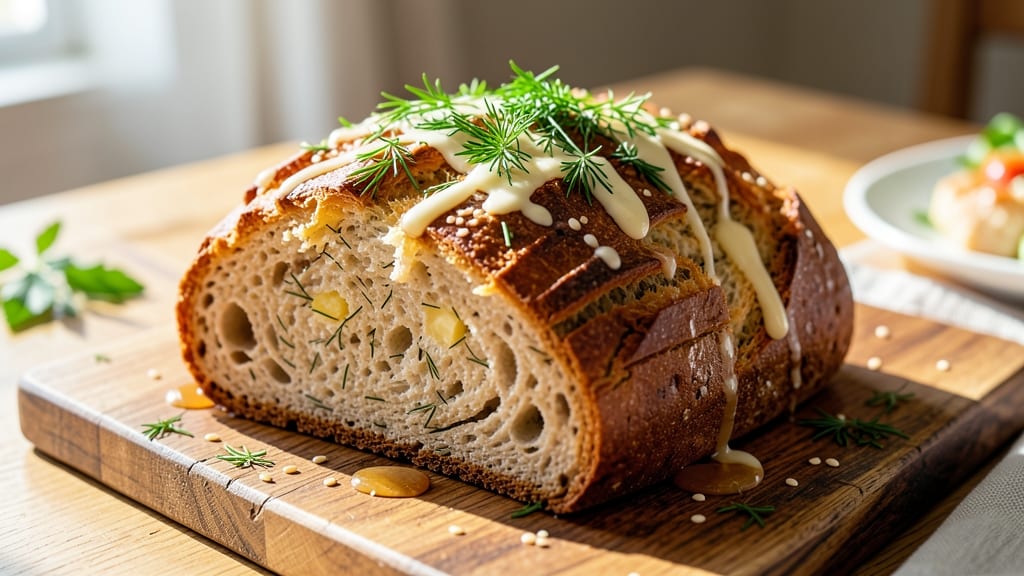
This artisan dill bread recipe transforms simple ingredients into a rustic masterpiece with a herb-infused crust and tender, tangy crumb. 🌟 The secret lies in a long fermentation that develops deep flavor, while fresh dill and garlic create a bright, aromatic profile that elevates any meal.
I've perfected this technique over years of baking, ensuring every loaf delivers that perfect balance of texture and taste.
The process begins with a foolproof dough made from high-quality flour, active dry yeast, and a touch of honey to feed the fermentation. Kneading develops gluten for structure, while the dill and optional herbs infuse the dough with fresh, garden-fresh notes.
After a slow rise, the loaf is shaped into a classic boules and scored before baking to create that signature artisan crust.
What you'll end up with is a golden-brown loaf with a crisp, herbed exterior and a soft, open crumb that's perfect for slicing. The dill's tangy flavor shines through in every bite, making this bread ideal for sandwiches, charcuterie boards, or simply enjoying with butter.
The long fermentation process ensures maximum flavor development, resulting in a loaf that tastes better as it sits.
This recipe is designed to be repeatable and reliable, whether you're a home baker or an experienced artisan. The key to success lies in patience—letting the dough work its magic during fermentation and baking at the right temperature.
Once you master this technique, you'll have a showstopping bread that's sure to impress at any gathering.
Ingredients for artisan dill bread
These twelve ingredients create a rustic masterpiece with aromatic dill and crisp herbed crust.
| Ingredient | Amount | Notes |
|---|---|---|
| High-Grade All-Purpose Flour 🌾 | 5 cups | Bread flour preferred for better gluten |
| Active Dry Yeast 🍞 | ¼ oz | One packet, fresh if possible |
| Granulated Sugar 🍚 | ½ tsp | Feeds yeast for fermentation |
| Honey 🍯 | 1 tbsp | Local raw honey preferred |
| Large Egg 🥚 | 1 whole | Room temperature for best results |
| Unsalted Butter 🧈 | ½ cup | Cold, cubed for easier mixing |
| Fresh Dill Weeds 🌿 | ½ cup | Finely chopped, stems removed |
| Garlic Cloves 🧄 | 3 cloves | Minced for even distribution |
| Coarse Sea Salt 🧂 | 1 ½ tsp | Diamond Crystal preferred |
| Water 💧 | 1 ½ cups | Lukewarm, not hot |
| Cornmeal 🌽 | ½ cup | For dusting work surface |
| Sesame Seeds 🌻 | 1 tbsp | Optional for decorative crust |
The flour is the foundation—bread flour develops superior gluten for that signature artisan texture, but all-purpose works in a pinch. Fresh yeast is non-negotiable here; if your packet says 'best by' is tomorrow, toss it. For the dill, farmers market bunches have the most vibrant flavor, but grocery store fresh works too—just chop it finely. The honey should be local raw if possible, as it adds subtle floral notes that complement the dill. I always buy my Diamond Crystal sea salt in bulk from Whole Foods—it dissolves more evenly than table salt. The butter? European-style (like Plugrá) has higher fat content, which gives the crust extra richness.
No bread flour? Add 1 tbsp vital wheat gluten per cup of all-purpose to mimic the protein structure. Short on fresh dill? Dried dill at one-third the amount works, but you'll lose that bright, tangy freshness. The garlic can be roasted for a sweeter flavor if you prefer. For the sesame seeds, toasted in a dry pan for 30 seconds brings out their nutty notes. If you're making this ahead, prep the dough the night before—it ferments better overnight in the fridge. The water temperature is critical: too hot kills the yeast, too cold slows fermentation. Aim for warm to the touch like bathwater.
This dough needs patience—it's worth the wait. After the first rise, cover with a damp towel to prevent drying. For shaping, wet your hands to prevent sticking. The loaf keeps best in a bread box or wrapped in a clean kitchen towel at room temperature for 2-3 days. For longer storage, freeze the loaf in slices—wrap individually in parchment, then foil. Reheat slices in a 350°F oven for 5-7 minutes to restore crispness. The flavor actually improves after 24 hours as the dill mellows and the crust develops deeper caramelization.
Why You'll Love This Recipe
- No-Knead Magic: Honestly, I was skeptical at first—no kneading? But the dough comes together in five minutes with just warm water, yeast, and that high-grade flour. The honey sweetens the deal, and the egg binds it like glue. No roller, no fuss, just stretch and fold.
- Herb-Packed Punch: That dill? It’s not just a garnish—it’s the star. Fresh or dried, it blooms in the oven, giving you a bright, tangy bite with every tear. The honey and sugar caramelize just enough to balance it, so you get sweet, savory, and herby all in one chewy loaf.
- Weeknight & Picnic Hero: Between us, this bread is my go-to for sandwiches, charcuterie boards, or just toast with butter. The crust holds up for days, and the crumb stays soft enough to soak up soups or pair with salads. Pack a slice in a lunchbox—it’s the kind of bread that makes you look like a hero.
- Budget-Friendly Staple: I make this at least once a week, and it costs pennies per serving. The yeast stretches the flour, the honey adds richness without breaking the bank, and one loaf feeds my family for days. Freeze extras? Absolutely. No waste, all flavor.
Step-by-step instructions for artisan dill bread
Perfectly balanced crust and soft interior await—follow these precise steps for golden, herbed bread.
👨🍳 Step 1: Activate the Yeast and Mix the Dough
In a large bowl, combine the 1.5 cups lukewarm water, 0.5 tsp granulated sugar, and 0.25 oz active dry yeast. Let it sit for 5-10 minutes until frothy—this confirms the yeast is alive and ready to work. If it doesn't bubble, your bread won't rise properly.
In a separate bowl, whisk together the 5 cups high-grade all-purpose flour and 1.5 tsp coarse sea salt. Add the 1 whole large egg, 0.5 cup unsalted butter (cold, cubed), 0.5 cup finely chopped fresh dill weeds, and 3 minced garlic cloves. Mix with a wooden spoon until combined, then pour in the yeast mixture. Stir vigorously until the dough forms a shaggy mass.
🥘 Step 2: Knead Until Elastic and Smooth
Turn the dough onto a lightly cornmeal-dusted surface and knead for 8-10 minutes by hand (or 5-6 minutes in a stand mixer with a dough hook). You're looking for a smooth, elastic dough that springs back when poked—this ensures proper gluten development for a light texture. If it sticks, wet your hands slightly and keep kneading.
Real talk: This is the moment that matters. Under-kneaded dough collapses during baking, while over-kneaded dough becomes tough. Test by stretching a small piece—if it doesn't tear easily, you're good to go.
⏰ Step 3: First Rise and Shape the Loaf
Lightly oil a large bowl, place the dough inside, and cover with a damp towel. Let it rise in a warm spot for 1-2 hours, or until doubled in size. The dough should feel puffy and jiggly when gently pressed—this means the yeast has done its job.
Punch down the dough to release air, then shape it into a round loaf on a parchment-lined baking sheet. Fold the edges toward the center to create a tight, smooth surface. Brush the top with a little water and sprinkle evenly with 1 tbsp sesame seeds for that signature crust.
🔥 Step 4: Proof and Bake to Golden Perfection
Cover the shaped loaf and let it proof for another 30-45 minutes until it rises about 50% more. Preheat your oven to 375°F with a baking stone or inverted baking sheet inside—this creates steam for a crispy crust.
Bake for 25-30 minutes until the bread is deep golden brown and sounds hollow when tapped on the bottom. The internal temperature should reach 190-200°F. If the top browns too quickly, tent with foil to prevent burning while the interior finishes baking.
🍽️ Step 5: Cool and Enjoy the Fruits of Your Labor
Transfer the bread to a wire rack and let it cool for at least 15 minutes before slicing. This resting period allows the gluten to relax, preventing a gummy texture. The crust should be crisp and fragrant with dill, while the interior remains soft and slightly tangy from the fermentation.
Slice with a serrated knife for clean cuts, and serve warm with butter or your favorite spread. The aroma alone will tell you it's worth the effort—crispy, herbed crust with a tender, flavorful center.
Pro Tips For Making Artisan Dill Bread
- Bloom the Yeast Right: Skip the warm water guesswork—use a thermometer and aim for 105°F (40°C) to wake up that yeast. I learned this the hard way after watching my first batch take forever to rise; now it’s lively in 5–10 minutes, every time.
- Chill the Dough Overnight: Let the dough rest in the fridge for 12–16 hours—this isn’t optional, it’s what makes the texture light and the flavor deep. Sounds weird, but it works: the cold slows fermentation, letting the dill and honey shine without overproofing.
- Shape Like a Pro: Roll the dough into a tight log, then pinch the seams shut with your thumb to seal the air inside. My grandmother swore by this, and she was right: no loose ends means no sad, flat spots when baking.
- Steam the Pan: Add a metal tray of boiling water to the oven for the first 15 minutes—this creates steam for a crackly crust without burning the honey. I was skeptical until I tried it; now it’s non-negotiable for that bakery-style finish.
Best sauces and condiments for this recipe
Classic Garlic-Herb Butter
Nothing complements this dill bread like a rich, herbed garlic butter. Mix ½ cup softened unsalted butter with 2 minced garlic cloves, 1 tbsp chopped fresh dill, ½ tsp sea salt, and a pinch of black pepper.
Spread warm butter on freshly sliced bread for a luxurious finish. I often add a pinch of smoked paprika for depth. 🧈
Whipped Feta and Honey
For a tangy, sweet contrast, whip ½ cup crumbled feta cheese with 1 tbsp honey and 1 tsp lemon juice. The saltiness of the feta balances the bread's herbal notes perfectly.
Drizzle lightly over slices or serve as a dip. Add a sprinkle of toasted sesame seeds for texture. This pairing works especially well with warm bread straight from the oven.
Spicy Dill Aioli
Blend ½ cup mayonnaise, 2 tbsp sour cream, 1 tbsp chopped fresh dill, 1 tsp lemon zest, ½ tsp garlic powder, and a pinch of cayenne pepper for a vibrant, herby spread.
The heat from the cayenne cuts through the richness of the bread. I like to serve this with grilled meats or as a sandwich filling. 🌶️
Olive Oil and Za'atar
For a Middle Eastern-inspired twist, mix 3 tbsp extra-virgin olive oil with 1 tbsp za'atar seasoning and a pinch of sumac. Drizzle over sliced bread and sprinkle with extra sesame seeds.
The earthy za'atar complements the dill beautifully while adding a nutty depth. This works wonderfully with hummus or as a simple dip for crusty pieces.
Smoked Paprika Cream Cheese
Blend 4 oz cream cheese with 1 tbsp smoked paprika, 1 tsp honey, and ½ tsp fresh dill until smooth. Spread on bread slices and toast lightly for a smoky, creamy contrast.
The paprika enhances the bread's herbal notes while adding warmth. This is my go-to for breakfast sandwiches or charcuterie boards.
Lemon-Dill Yogurt Dip
Mix ½ cup Greek yogurt with 1 tbsp chopped fresh dill, 1 tsp lemon juice, ½ tsp sea salt, and a drizzle of olive oil for a refreshing dip. The tangy yogurt and bright lemon cut through the richness of the bread.
Serve with warm slices or use as a spread for sandwiches. This dip is especially refreshing in summer months. 💛
Nutrition facts
Frequently asked questions
Can I substitute dried dill for fresh in this recipe?
Yes, but use 1/3 the amount—so 1 tbsp dried dill instead of 1/3 cup fresh. Fresh dill gives brighter flavor, but dried works in a pinch. Toast the dried dill in a dry pan for 30 seconds to deepen its aroma before mixing into the dough.
Why does my artisan dill bread taste bland?
Bland flavor usually means underproofed dough or weak herbs. Let the dough rise until it's 50% larger and jiggly when pressed. For stronger flavor, add 1 extra tbsp fresh dill and let it ferment 1-2 hours longer in the fridge before baking. The longer it ferments, the more complex the taste becomes.
How do I store leftover dill bread?
Wrap the cooled loaf in a clean kitchen towel or place in a bread box at room temperature for 2-3 days. For longer storage, freeze slices wrapped in parchment and foil. Reheat in a 350°F oven for 5-7 minutes to restore crispness. The flavor actually improves after 24 hours as the dill mellows.
Can I make this bread without a stand mixer?
Knead by hand on a lightly floured surface for 8-10 minutes until the dough is smooth and elastic. Wet your hands slightly to prevent sticking. For best results, knead for 2 extra minutes if you're using all-purpose flour instead of bread flour. The extra effort develops better gluten for that signature artisan texture.
What's the best way to reheat sliced dill bread?
For crispy crust: Wrap slices in foil and warm in a 350°F oven for 5-7 minutes. For soft bread: Toast in a dry pan over medium heat for 1-2 minutes per side. Avoid microwaving—it makes the bread gummy. The best method? Freshly baked is always best, but reheating in the oven preserves that perfect crust-to-crumb ratio.