
Side Dishes
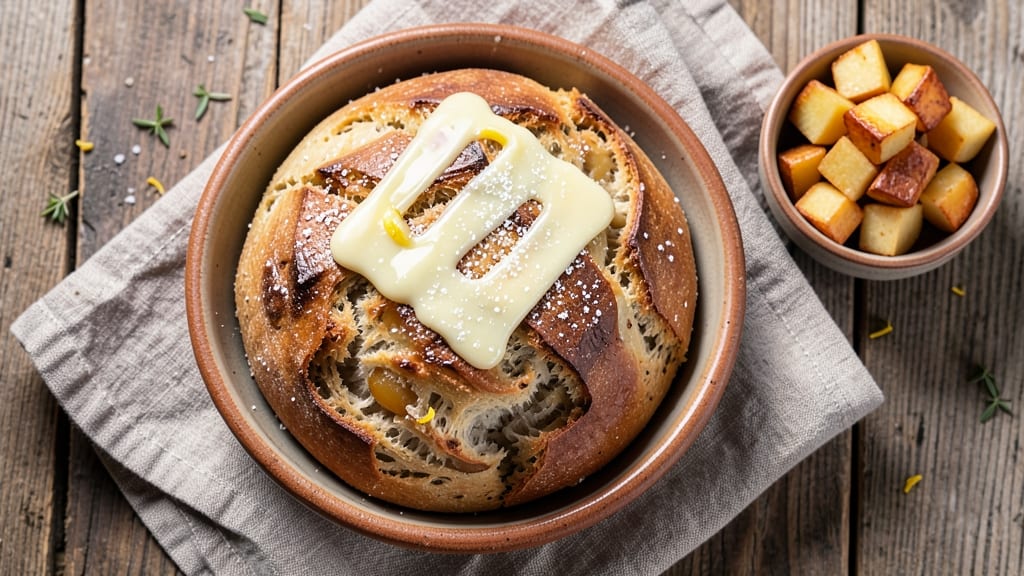
This artisan potato bread recipe delivers a rustic loaf with a crisp golden crust and tender crumb infused with creamy potato swirls. The secret lies in incorporating warm mashed potatoes directly into the dough, creating pockets of flavor that transform ordinary bread into something extraordinary.
I developed this recipe after years of experimenting with potato breads that either turned out too dense or failed to develop proper crust—this version solves both problems with precise technique.
The process begins with a simple yeast dough enriched with mashed potatoes, which adds moisture and creates that signature tender crumb. Kneading is gentle yet thorough to develop gluten without overworking the dough, followed by strategic proofing that ensures proper rise.
Baking at 375°F for 30-35 minutes yields a loaf with a crackling crust and golden potato swirls visible throughout—proof that homemade artisan bread can rival bakery quality.
What you'll end up with is a loaf that's perfect for serving warm with butter, pairing with soups, or toasting for breakfast. The potato swirls add subtle sweetness that balances the bread's rustic character, while the crust provides satisfying crunch with every bite.
This recipe is designed for home ovens and includes troubleshooting tips to prevent common issues like dense crumb or flat loaves.
Whether you're baking for a family dinner or meal prepping for the week, this artisan potato bread delivers restaurant-quality results with minimal effort. The dough comes together in under 20 minutes of active time, with most of the work happening during proofing and baking.
Let's get started on creating your perfect loaf.
Ingredients for artisan potato bread
Eight essential ingredients transform ordinary bread into a rustic loaf with golden potato swirls.
| Ingredient | Amount | Notes |
|---|---|---|
| All-Purpose Flour 🌾 | 4 cups | Spooned and leveled for accuracy |
| Instant Yeast 🍞 | ¾ tsp | Active dry yeast works too |
| Russet Potatoes 🥔 | 2 medium | Peeled and boiled until tender |
| Whole Milk 🥛 | ¾ cup | Warmed to room temperature |
| Unsalted Butter 🧈 | ½ cup | Cold, cubed for easier mixing |
| Granulated Sugar 🍯 | ½ tsp | Or honey for slight sweetness |
| Salt 🧂 | 1 ½ tsp | Diamond Crystal preferred |
| Egg 🥚 | 1 large | Room temperature for best rise |
| Cream Cheese 🧀 | 4 oz | Softened for swirling |
| Cornmeal 🌽 | ¼ cup | For dusting baking sheet |
| Water 💧 | ¼ cup | Warm for yeast activation |
The potatoes are the heart of this recipe—Russet potatoes work best because of their high starch content. Buy organic if possible, as the skins can add subtle earthiness. Boil them until fork-tender, then mash them smooth while still warm so they blend seamlessly into the dough. The cream cheese swirl adds richness without overpowering the bread's rustic character. For the best results, grab Philadelphia brand cream cheese from the refrigerated section—it's the most consistent texture. If you're short on time, instant yeast is a game-changer, cutting active proofing time by half.
No Russet potatoes? Yukon Golds work in a pinch, but they'll yield a slightly denser crumb. Running out of cream cheese? Substitute softened butter mixed with a pinch of salt—it won't swirl as beautifully, but the flavor stays intact. The milk should be warm but not hot—microwave for 20 seconds if it's straight from the fridge. For a vegan version, swap the egg for a flax egg (1 tbsp ground flaxseed + 3 tbsp water) and use vegan butter. The cornmeal is crucial for preventing sticking—don't skip it, even if your baking sheet is nonstick.
This dough is best made fresh, but you can prep it up to 24 hours ahead by shaping the loaf and refrigerating it overnight. Let it come to room temperature before baking. The finished loaf keeps well wrapped at room temperature for 3 days, but it's best enjoyed fresh. For longer storage, freeze the cooled loaf wrapped in plastic for up to 3 months. To reheat, wrap in foil and warm at 350°F for 10 minutes—it'll revive that bakery-fresh crust every time.
Why You'll Love This Recipe
- No-Knead Magic: I swear, this dough comes together in five minutes—just mash the potatoes, mix the wet stuff, and let the yeast do the work. No rolling, no fuss, no "I’m not a baker" excuses.
- Creamy Crust, Buttery Soul: That first bite? The outside cracks just enough to give way to a moist, almost custardy center—thanks to the cooked potatoes and whole milk. Honestly, it’s the kind of bread I’d happily eat for breakfast and dinner.
- Weeknight Hero: Freeze half the batch for lazy mornings or pop a slice straight into the toaster for a quick snack. (Yes, even on a Tuesday night.) The butter and potatoes make it rich enough to feel special, but simple enough to throw together after work.
- Pantry Stretch: Russets are cheap, flour’s a staple, and you’re already using butter and milk for other meals. This recipe turns pantry basics into something that feels like a treat—without breaking the bank or taking over your fridge.
Step-by-step instructions for artisan potato bread
Here's how to create a rustic loaf with a crisp crust and tender potato swirls.
Prepare the Potato Filling
Peel the 2 medium russet potatoes and cut them into small cubes, about ½-inch in size. Place them in a small pot of boiling salted water and cook until fork-tender, which takes about 10-12 minutes. Drain the potatoes thoroughly and transfer them to a clean bowl.
Using a potato masher or fork, mash the potatoes until smooth. Let them cool slightly, then mix in 2 tablespoons of the softened unsalted butter and 1 tablespoon of the warmed whole milk. Set this filling aside—it's the secret to those beautiful golden swirls in your bread.
Mix the Dough
In a large bowl, combine the 4 cups all-purpose flour, 0.75 teaspoon instant yeast, 0.5 teaspoon granulated sugar, and 1.5 teaspoons salt. Whisk these dry ingredients together until evenly distributed. This ensures your bread will rise properly and have consistent flavor throughout.
In a separate bowl, mix the 1 large egg, remaining 0.5 cup whole milk, and the remaining 3 tablespoons softened unsalted butter. Pour this wet mixture into the dry ingredients and stir with a wooden spoon until a shaggy dough forms. The dough should come together but still feel slightly sticky—this is normal at this stage.
Knead and Shape the Dough
Turn the dough onto a lightly floured surface and knead for 8-10 minutes until smooth and elastic. You'll know it's ready when it springs back slowly when poked. If the dough feels too sticky, add flour 1 tablespoon at a time until it's workable.
Divide the dough into 8 equal portions. Roll each portion into a 12-inch rope, about ½-inch thick. Flatten each rope slightly and place a teaspoon of the potato filling in the center. Roll up each rope tightly, sealing the ends to create a log shape. Arrange these logs seam-side down in a greased 9x13-inch baking dish.
First Rise and Swirl
Cover the baking dish with a clean kitchen towel and let the dough rise in a warm place for 1 to 1½ hours, or until the dough has nearly doubled in size. You'll see the logs expand and fill the baking dish—this indicates the yeast is actively working.
Once risen, use a sharp knife to make a shallow cut down the center of each log, about ½-inch deep. Gently press the sides inward to create a well in the center of each log. This creates space for the potato filling to expand during baking, giving you those beautiful golden swirls.
Bake to Golden Perfection
Preheat your oven to 375°F. Sprinkle the 0.25 cup cornmeal evenly over the risen dough logs. This creates a crisp crust and prevents sticking. Bake for 25-30 minutes until the bread is golden brown and sounds hollow when tapped on the bottom.
For the final touch, brush the tops with melted butter while still warm. Let the bread cool in the pan for 10 minutes before transferring to a wire rack. The interior should be tender and moist, while the crust remains crisp. Slice and serve warm for the best texture and flavor.
Pro Tips For Making Artisan Potato Bread
- BOIL POTATOES UNTIL TENDER: I learned this the hard way—undercooked potatoes make the dough dense and gummy. Boil peeled Russets until a fork slides in like butter (about 12-15 minutes), then mash while hot to break down the starch properly. Cold, lumpy mash = sad bread.
- MEASURE FLOUR BY WEIGHT: That "scoop and sweep" method? Lies. Use a kitchen scale for the flour—1 cup of all-purpose varies wildly by packing. For this dough, aim for 350-375g total (including the potato mash) to balance chewiness without heaviness.
- LET THE DOUGH RISE TWICE: Skip the second rise, and you’ll get a flat, cakey loaf. After the first rise (45-60 minutes), punch it down, then let it rise again for another 30-45 minutes. The second rise develops gluten properly—trust me, your bread’s structure depends on it.
- USE COLD BUTTER FOR LAYERS: Cut that unsalted butter into cold cubes and fold them into the dough at the end. Warm butter melts too fast, turning your bread into a greasy brick. Cold butter creates those flaky, buttery pockets—just don’t overwork the dough after adding it.
Perfect pairings for these flavors
Butter Pairings
Nothing complements this potato bread like a pat of cultured butter melted on top or spread fresh from the jar. I love using Plugrá European-style butter for its rich, slightly tangy flavor that balances the bread's sweet potato notes.
For a gourmet touch, try Trader Joe's European-Style Butter—it's widely available and adds a luxurious finish. 🧈
Soup Companions
This bread shines with creamy soups like potato-leek or roasted tomato. I often serve it with a warm bowl of homemade butternut squash soup, where the bread's crust soaks up the velvety broth beautifully.
For something lighter, pair it with a chilled cucumber-dill soup—the contrast of warm bread and cool soup is pure comfort.
Cheese Boards
Create a rustic cheese board by pairing slices of this bread with aged cheddar, brie, and goat cheese. The potato swirls add subtle sweetness that cuts through sharp cheeses like Point Reyes Blue or Taleggio.
Add a drizzle of honey and a few walnuts for crunch. This combination became a weekend staple in my kitchen after my first successful bake.
Breakfast Spread
Toast thick slices and top with scrambled eggs, crumbled bacon, and a sprinkle of fresh chives. The bread's moisture keeps scrambled eggs from drying out, and the potato swirls add a satisfying heartiness.
For a sweet breakfast, spread with cream cheese and jam—this became my go-to weekend brunch option after perfecting the recipe.
Dinner Pairings
Serve warm slices alongside roasted meats like pork tenderloin or herb-crusted chicken. The bread's crust handles hearty sauces well, making it perfect for soaking up red wine reductions or garlic-herb butter.
I recently paired it with braised short ribs and was amazed at how well the bread's texture complemented the rich, slow-cooked meat. 🍷
Wine Recommendations
A crisp Sauvignon Blanc from New Zealand highlights the bread's potato sweetness with its citrus notes. For red wine lovers, a Pinot Noir from Oregon provides enough acidity to balance the richness.
I also enjoy a dry Riesling—its slight sweetness mirrors the bread's potato swirls beautifully. Avoid heavy tannins that would overpower the delicate flavors.
Nutrition facts
Frequently asked questions
Can I make this potato bread without cream cheese?
For a lighter version, replace the cream cheese with 2 tablespoons softened butter mixed with 1 teaspoon milk. The flavor stays rich, though the swirls won't be as dramatic. For extra moisture, add 1 extra tablespoon of warm milk to the dough. The bread will still be delicious—just slightly less decadent.
Why did my potato bread turn out dense instead of crusty?
Dense bread usually means the dough wasn't kneaded enough or proofed properly. Try kneading for 10-12 minutes until the dough springs back slowly when poked. Also, ensure your yeast is fresh and the dough rises in a warm spot (75-80°F) for 1-1.5 hours. Overmixing or underproofing are common culprits—both disrupt gluten development.
How do I store leftovers to keep them fresh?
Wrap cooled slices tightly in plastic wrap or store the whole loaf in an airtight container at room temperature for 3 days. For longer storage, freeze slices wrapped individually for up to 3 months. To reheat, wrap in foil and warm at 350°F for 10 minutes—this revives the crust beautifully. Never refrigerate unless necessary, as it dries out the bread faster.
Can I use sweet potatoes instead of russets?
Sweet potatoes will work, but expect a slightly sweeter, denser bread. Use 1.5 cups mashed sweet potato (instead of 2 russets) and reduce the sugar to ¼ teaspoon to balance the natural sweetness. The texture will be more moist but less fluffy. For best results, stick with russets—their neutral flavor lets the bread's crusty character shine.
What's the best way to achieve those perfect golden swirls?
After the first rise, cut a shallow well in each log and press the sides inward to create space for the potato filling to expand. Use a hot knife (dip in boiling water briefly) for cleaner cuts. Bake at 375°F for 25-30 minutes—the cornmeal topping helps create a crisp crust while the potato filling puffs up dramatically. Patience is key: don't open the oven early!