
Side Dishes
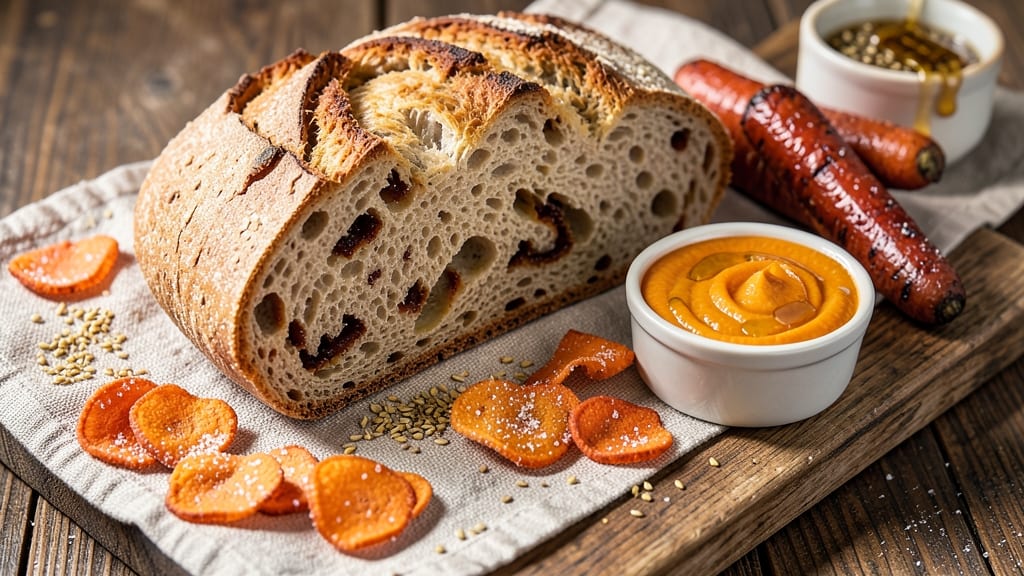
This artisan sourdough clever carrot bread delivers the perfect balance of tangy sourdough crust and sweet, spiced carrot swirls—transforming a classic loaf into something extraordinary. 🌟 The secret lies in blending carrot purée into the dough, creating a moist, flavorful crumb with a golden crust that crackles with every bite.
Unlike traditional sourdough, this recipe incorporates natural sweetness from carrots while keeping the process straightforward for home bakers.
What sets this recipe apart is the vegan-friendly approach, where carrot purée replaces some of the fat while adding moisture and subtle sweetness. The dough ferments overnight, developing deep flavor and a light, airy texture that’s impossible to resist.
The carrot swirls add visual appeal and a subtle carrot aroma that pairs beautifully with the tangy sourdough. Whether you’re baking for breakfast, snacks, or a special occasion, this bread is sure to impress.
The result is a crusty, aromatic loaf with a tender crumb and pockets of carrot-infused sweetness that make it stand out. The carrot swirls caramelize slightly during baking, adding depth to each bite.
This recipe is perfect for those who love sourdough but want a twist—no special equipment required, just patience and a little creativity. The best part? It’s just as delicious toasted as it is fresh from the oven.
Pair it with vegan butter, hummus, or a sprinkle of flaky salt for an elevated snack. The clever carrot element makes this more than just bread—it’s a showstopping centerpiece for any table. Let’s get baking!
Ingredients for artisan sourdough bread recipe clever carrot
Sourdough magic meets carrot brilliance—just 14 ingredients transform simple flour into showstopping golden loaves.
| Ingredient | Amount | Notes |
|---|---|---|
| Active Sourdough Starter 🍞 | ½ cup | Unfed, bubbly starter (100% hydration) |
| All-Purpose Flour 🌾 | 4 cups | Organic, white or whole wheat blend |
| Organic Carrot Purée 🥕 | 1 cup | Homemade or high-quality jarred |
| Coconut Oil (Melted) 🥥 | ¼ cup | Unrefined, virgin preferred |
| Granulated Cane Sugar 🍯 | ¼ cup | Raw or turbinado for caramel notes |
| Ground Flaxseed 🌱 | 1 tbsp | For vegan egg replacement |
| Apple Cider Vinegar 🍎 | 2 tbsp | For flax egg activation |
| Ground Cinnamon 🌿 | 1 tsp | Freshly ground for warmth |
| Ground Ginger 🌶️ | ½ tsp | Freshly ground for zing |
| Sea Salt 🧂 | 1 ½ tsp | Fine grain, Diamond Crystal preferred |
| Whole Organic Carrots 🥕 | 12 whole | Medium size, peeled and grated |
| Extra-Virgin Olive Oil 🫒 | 1 tbsp | For dough brushing |
| Flaxseed Meal 🌱 | 1 tbsp | For topping sprinkle |
| Toasted Sesame Seeds 🌻 | 1 tbsp | For nutty crunch |
The sourdough starter is non-negotiable here—it's the soul of this bread. King Arthur or Bob's Red Mill starters work perfectly if you're not maintaining your own, but nothing beats a well-fed, bubbly homemade starter (100% hydration). For the carrots, organic is ideal—they're sweeter and more vibrant. The purée can be homemade (steam, peel, blend, and strain) or grab a high-quality jarred version from Trader Joe's or Whole Foods. Pro tip: Toast your sesame seeds in a dry pan for 2 minutes—they'll add incredible depth to the crust. The flaxseed meal? Bob's Red Mill is my go-to for consistent texture.
No coconut oil? Melted vegan butter or olive oil works in a pinch, though coconut adds that subtle sweetness. Running short on carrots? Sweet potato purée at half the amount gives similar moisture. The flax egg (1 tbsp ground flax + 2 tbsp vinegar) can be swapped for 1 tbsp chia seeds + 3 tbsp water if you're out of flax. For the carrot swirls, grate the carrots fresh—pre-shredded gets soggy. The spices? Penzeys Spices has the best ground cinnamon and ginger, but regular grocery store brands work fine. Just make sure they're fresh—smell them before buying!
This dough needs 8-12 hours of cold fermentation for maximum flavor—don't rush it! Shape the loaf in a 9x5-inch loaf pan lined with parchment paper for easy removal. Store wrapped at room temperature for 3 days or freeze for 3 months. The carrot swirls keep best when the bread is fully cooled—resist slicing until then! For extra crunch, brush the crust with olive oil before baking. Leftovers? Toast them—they become irresistible croutons. This bread freezes beautifully—slice before freezing for perfect portions.
Why You'll Love This Recipe
- Sweet & Savory Fusion: I’ll be real—this carrot purée twist is the only time I’ve ever used veggies in bread without my family side-eyeing me. The natural sweetness from the purée balances the tangy sourdough, and honestly? It’s the kind of flavor that makes you want to eat it for breakfast, lunch, and snacks.
- No-Knead Magic: Between us, I’m not a patient person. But this dough comes together with just a few folds and a long slow rise—no punishing kneading, no stress. The coconut oil keeps it tender, and the sugar just barely caramelizes on the crust for that extra touch of warmth.
- Leftovers That Shine: That loaf lasts forever—I’ve turned stale slices into croutons, toasted them with butter for a quick snack, or even blended them into soup broth. (Yes, even on a Tuesday night.) The carrot purée adds depth to leftovers that plain sourdough never could.
- Budget-Friendly Artisan: I use all-purpose flour here because it’s what I have, and the carrot purée stretches every ingredient further. Still feels fancy—crusty, chewy, with that subtle sweetness—but costs me half what store-bought artisan bread does. Plus, the sourdough starter is my free forever ingredient.
Step-by-step instructions for artisan sourdough clever carrot bread
Here's how to create that perfect balance of tender crumb, sweet-spiced swirls, and irresistible crust.
👨🍳 Step 1: Prepare the Vegan Egg Substitute and Carrot Swirl
In a small bowl, whisk together the 1 tablespoon ground flaxseed and 2 tablespoons apple cider vinegar. Let this sit for 5 minutes until it thickens into a gel-like consistency—this is your vegan egg replacement. Meanwhile, peel and grate the 12 whole organic carrots using a box grater or food processor. You want fine, even shreds that will distribute beautifully through the dough.
In a separate small bowl, combine the grated carrots with the 1 cup organic carrot purée, 1 teaspoon ground cinnamon, and ½ teaspoon ground ginger. Mix well to create your sweet-spiced carrot swirl mixture. This combination gives you both texture and moisture—don't skip the purée, as it keeps the swirls tender rather than dry.
🍳 Step 2: Mix the Dough to Perfect Development
In the bowl of a stand mixer fitted with the dough hook attachment, combine the 0.5 cup active sourdough starter, 4 cups all-purpose flour, 0.25 cup granulated cane sugar, 1.5 teaspoons sea salt, and the flaxseed gel you prepared earlier. Mix on low speed for 2 minutes to hydrate the flour completely—you should see a shaggy dough forming with no dry spots.
With the mixer still running on low speed, slowly drizzle in the 0.25 cup melted coconut oil while scraping down the sides of the bowl. Increase speed to medium and knead for 5-7 minutes until the dough becomes smooth and elastic, pulling away from the sides of the bowl. You'll know it's ready when it passes the windowpane test—press your thumb into the dough and stretch gently; it should form a thin, translucent membrane without tearing.
🥘 Step 3: Incorporate the Carrot Swirl and First Rise
Remove the dough from the mixer and turn it out onto a lightly floured surface. Gently press down on the dough to create a rectangle about ½-inch thick. Spread the carrot swirl mixture evenly over the surface, leaving a ½-inch border around the edges. Using a bench scraper, carefully fold the sides inward, then fold the dough over itself like a letter to completely enclose the carrot filling.
Shape the dough into a round loaf and place it seam-side down in a lightly greased 9x5-inch loaf pan. Cover the pan with a damp towel and let the dough rise at room temperature for 1-2 hours, or until it has nearly doubled in size. Here's the thing—your kitchen's humidity affects rise time, so watch for when the dough domes above the pan edge and springs back slowly when gently pressed.
🔥 Step 4: Bake to Golden Perfection with Crispy Crust
Preheat your oven to 375°F and position a rack in the lower third position. Brush the risen dough with the 1 tablespoon extra-virgin olive oil, then sprinkle evenly with the 1 tablespoon flaxseed meal and 1 tablespoon toasted sesame seeds. This creates that beautiful crunchy topping you crave. Bake for 45-50 minutes until the bread reaches an internal temperature of 190°F and the top is deep golden brown with a crackly crust.
I always tap the bottom of the loaf—when it sounds hollow, it's done. For that perfect oven spring, I recommend baking for the full 50 minutes even if it seems done earlier. The residual heat will finish cooking the center while developing that gorgeous crust. Let the bread cool in the pan for 10 minutes before transferring to a wire rack to cool completely.
⏰ Step 5: Rest and Slice for Maximum Tenderness
While the bread cools, here's where patience pays off. Allow it to rest at room temperature for at least 1 hour before slicing. This resting period lets the gluten relax and the moisture redistribute, preventing dry slices. The carrot swirls should be moist and flavorful, not stringy or dry—this is your reward for proper technique.
Slice the bread into ½-inch thick pieces and serve warm with a smear of almond butter or a dusting of powdered sugar. Each bite should deliver that perfect balance of tender crumb, sweet-spiced carrot swirls, and crispy crust. Store any leftovers wrapped tightly at room temperature for 2 days or freeze for up to 1 month—the flavor actually improves with time!
Pro Tips For Making Artisan Sourdough Bread Recipe Clever Carrot
- STRAIN YOUR PURÉE: Your organic carrot purée will have water—sometimes a lot of it. Strain it through a fine-mesh sieve or cheesecloth before mixing it into the dough. I learned this the hard way when my first batch turned into a soggy mess because I skipped it. Less liquid means tighter crumb and better structure.
- WEIGH, DON’T SCOOP, YOUR FLOUR: All-purpose flour varies in density, and scooping it leads to inconsistent dough. Use a kitchen scale for precision—especially since this recipe relies on the balance of flour and carrot purée. My first few loaves were either too dense or too sticky because I eyeballed it. Trust the scale.
- STRETCH AND FOLD AT ROOM TEMP: Cold dough resists shaping, and that’s when you’re most likely to overwork it or give up. Let your dough sit at room temp for 10–15 minutes before your final stretch-and-folds. Warmer dough handles better, develops gluten more evenly, and saves you from frustration.
- BRUSH WITH MELTED COCONUT OIL: Skip the water spray for scoring—this bread needs a crisp crust. After baking, brush the loaf with a mix of melted coconut oil and a pinch of sugar while it’s still hot. It adds shine, enhances the carrot sweetness, and keeps the crumb soft. (Yes, it’s an extra step, but it’s worth it.)
Pro cooking tips for artisan sourdough bread recipe clever carrot
Starter Strength
Your sourdough starter is the foundation—never skip the 5-minute vigorous bubbling test before using. I feed mine with equal parts flour and water (1:1 ratio) and check for bubbles after 4-6 hours at 75°F.
If it’s sluggish, try a 24-hour feeding cycle with whole wheat flour for extra activity. The starter should float in water like a cork—if it sinks, give it another 8 hours of feeding. 🔥
Dough Temperature
Keep your dough between 75-78°F for optimal fermentation. If your kitchen is too warm, chill the dough for 30 minutes before shaping. Use an instant-read thermometer to check—dough that’s too warm ferments too fast, risking a dense loaf.
I like to mix my dough in a cooler kitchen (68-70°F) and let it warm slightly during the first rise. Pro tip: Wet your hands when handling dough to prevent sticking and maintain temperature.
Carrot Swirl Technique
Spread the carrot mixture evenly in a ½-inch thick layer for perfect distribution. Use a bench scraper to fold the dough cleanly—this prevents leaks during baking. For extra flavor, add ½ teaspoon cinnamon directly to the carrot swirl before folding.
The purée acts as a binder, so don’t overmix—just combine until the shreds are evenly coated. This step is where the magic happens! ✨
Cold Proofing
After the initial rise, transfer your shaped loaf to the fridge for 12-24 hours to develop deeper flavor. Cold fermentation slows yeast activity, creating a more complex taste. I place my dough in a proofing box lined with a towel to maintain humidity.
This step is especially important for the carrot swirls—it prevents them from drying out during baking. The longer it ferments, the more tender the crumb becomes.
Steam for Crust
Create steam in your oven by placing a baking sheet with boiling water on the lower rack for the first 10 minutes of baking. This mimics a bread oven and gives you that perfect crusty exterior.
I also spray the dough with water before baking for extra steam. The carrot swirls will caramelize beautifully, adding a sweet contrast to the tangy crust. Don’t skip this—it’s the secret to that artisanal look!
Internal Temp Check
Use a thermometer to confirm doneness at 190°F—this ensures the carrot swirls are fully cooked without drying out. If your oven runs hot, reduce temperature to 350°F for the last 10 minutes to prevent over-browning.
I always tap the bottom—the hollow sound means it’s ready. Let it cool completely before slicing to maintain that perfect texture. Patience here makes all the difference! 💫
Nutrition facts
Frequently asked questions
Can I make this bread without a stand mixer?
This dough can be mixed by hand—just combine all ingredients in a large bowl and knead for 10-12 minutes until smooth and elastic. Use the windowpane test to check for proper development. The kneading process helps activate the gluten, which is crucial for that perfect crumb structure. For the carrot swirl, use a pastry brush to spread the mixture evenly over the dough before folding.
How do I store leftover clever carrot bread?
Wrap the cooled loaf tightly in plastic wrap or place it in an airtight container to keep it fresh for 3 days at room temperature. For longer storage, freeze slices individually between parchment paper for up to 1 month. To revive, toast frozen slices directly in a toaster or warm them in a 350°F oven for 5-7 minutes. The carrot swirls stay moist when stored properly!
What if my sourdough starter isn't ready?
If your starter isn't bubbly, try feeding it with equal parts flour and water (1:1 ratio) and wait 4-6 hours at 75°F. For a quick fix, use a store-bought starter like King Arthur or Bob's Red Mill—just ensure it's active (floating in water). If you're in a hurry, increase the starter amount by 25% to compensate for lower activity. The carrot swirls will still work, but fermentation may be slightly slower.
Can I substitute sweet potatoes for carrots?
Yes! For a similar texture and moisture, use ½ cup sweet potato purée and 6 whole grated sweet potatoes (adjust spices to ½ teaspoon cinnamon and ¼ teaspoon ginger for balance). Sweet potatoes add a deeper sweetness, so reduce the granulated sugar to ¼ cup. The dough will be slightly denser, but the flavor is rich and satisfying. Roast the sweet potatoes first for extra caramelization!
Why did my bread turn out dense?
Dense bread usually means the dough didn't ferment long enough or was overworked. Ensure your starter is active and the dough rises until it nearly doubles in size. Avoid over-kneading—stop when the dough passes the windowpane test. For the carrot swirl, don't overmix the filling; just combine until the shreds are evenly coated. If your kitchen is warm, chill the dough for 30 minutes before shaping to slow fermentation.