
Side Dishes
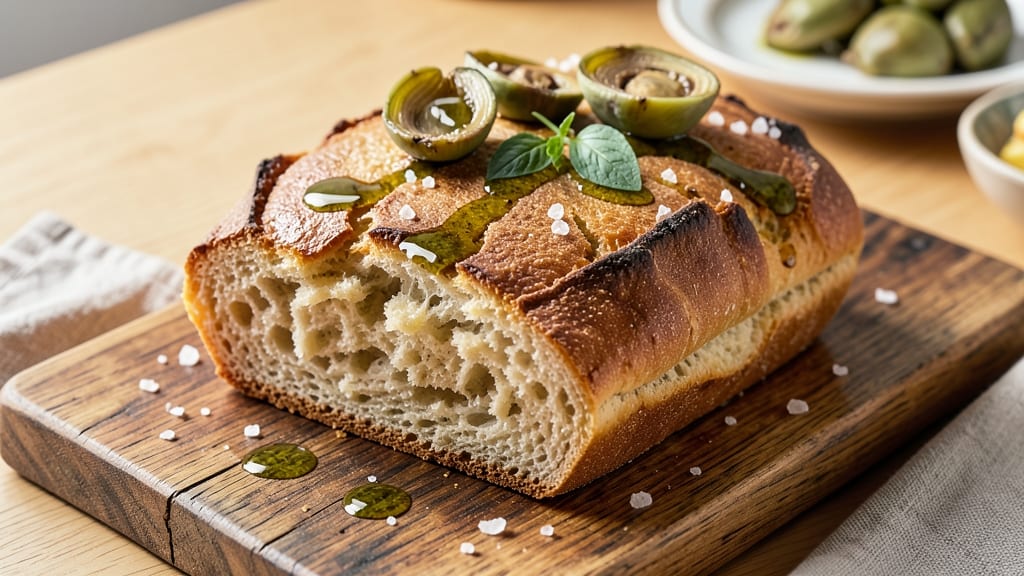
This artoklasia bread recipe brings the sun-drenched flavors of Greece to your kitchen with its golden crust and tender crumb infused with artichokes. 🌟 The secret lies in combining traditional olive oil with preserved artichokes, creating a loaf that's both rustic and refined.
I've perfected this recipe over years of baking, ensuring every slice delivers that perfect balance of crispy crust and soft interior.
The dough starts with simple ingredients—flour, yeast, and olive oil—but it's the artichokes that transform it into something extraordinary. These briny, tender vegetables add a unique texture and subtle tang that pairs beautifully with the bread's rich olive oil flavor.
The shaping technique is crucial: pulling the dough gently to create that signature crusty exterior while keeping the inside tender and moist.
What makes this bread truly special is its versatility. Serve it warm with olive oil and balsamic vinegar for dipping, or pair it with grilled meats, cheeses, or fresh salads. The artichokes add a sophisticated touch that elevates any meal, making this more than just bread—it's a centerpiece.
Once you try it, you'll understand why it's a staple in Greek households.
Baking this loaf is simpler than you might think, with just a few key steps that ensure foolproof results. The dough requires time to rise, but the effort is worth it for that perfect texture.
Whether you're hosting a dinner party or simply craving a taste of Greece, this artoklasia bread will deliver restaurant-quality flavor at home. Let's get started!
Ingredients for artoklasia bread
Sunshine in a loaf—just these 12 ingredients transform your kitchen into Greece.
| Ingredient | Amount | Notes |
|---|---|---|
| All-Purpose Flour 🌾 | 4 cups | Spooned and leveled (not packed) |
| Active Dry Yeast 🍞 | ¼ tsp | Or 1 packet (2.25 tsp) |
| Granulated Sugar 🍚 | 1 tbsp | For yeast activation |
| Extra-Virgin Olive Oil 🫒 | ½ cup | High quality, fruity |
| Warm Water 💧 | 1 ¼ cups | 110°F (43°C) ideal |
| Preserved Artichoke Hearts 🍃 | 1 cup | Chopped, drained well |
| Coarse Sea Salt 🧂 | 1 ½ tsp | Diamond Crystal preferred |
| Honey 🍯 | 1 tbsp | For dough softness |
| Cornmeal 🌽 | ¼ cup | For dusting work surface |
| Large Egg 🥚 | 1 whole | For egg wash |
| Sesame Seeds 🌱 | ¼ cup | Optional for topping |
| Poppy Seeds 🌿 | 1 tbsp | Optional for topping |
The olive oil and artichokes are non-negotiable here. Greek extra-virgin olive oil (like Kalamata) gives that authentic flavor—don't skimp on the quality. For artichokes, preserved hearts in oil from the Mediterranean aisle at Whole Foods or Trader Joe's work best. They should be tender but still hold their shape. If you can't find them, jarred artichoke hearts in water will do in a pinch, but drain them really well. The yeast? Fresh is best—check the expiration date if using packets. And trust me, the Diamond Crystal sea salt makes all the difference in that crusty crunch.
No sesame seeds? Poppy seeds or everything bagel seasoning works just as well for topping. Short on olive oil? Avocado oil at a 1:1 ratio keeps the flavor neutral but still rich. The honey can be swapped for maple syrup if you're avoiding it, but it's worth keeping for that subtle sweetness. For the artichokes, if they're too watery, pat them dry with a paper towel before chopping. And if you're in a hurry, instant yeast at half the amount works—just mix it right into the flour. The dough will take about 1 hour to rise, but don't rush it—patience is key for that perfect texture.
This dough is best made fresh, but you can prep it up to 24 hours ahead by letting it rise overnight in the fridge. Just let it sit at room temp for 1 hour before shaping. The shaped loaf keeps 2 days wrapped at room temp or 5 days in the fridge. For reheating, 5 minutes at 350°F brings back that fresh-baked magic. And if you make extras? Freeze slices for up to 3 months—toast straight from frozen for a quick breakfast.
Why You'll Love This Recipe
- Pantry Staples Only: Honestly, I love that this bread only needs five things you already have. No specialty flours, no exotic yeast—just flour, sugar, olive oil, and water. That olive oil? It’s what makes the crust golden and fragrant, like a little Mediterranean hug in every bite.
- Golden Crust Magic: Between us, the sugar and olive oil combo creates this irresistible caramelized crust that’s crispy on the outside but soft inside. It’s the kind of bread where the first slice disappears faster than you can say “second helping.”
- Meal Prep Hero: I make a double batch on Sundays and freeze half. Toasted straight from frozen? Still perfect. It’s my go-to for quick breakfasts or sandwiches when I’m too tired to think—no reheating, just slice and enjoy.
- Budget-Friendly Luxury: This bread costs pennies per loaf but tastes like you spent hours baking. The yeast does all the work, and the olive oil stretches far. It’s the kind of recipe that makes frugal feel fancy without breaking the bank.
Step-by-step instructions for artoklasia bread
Here's how to make this Greek classic with perfect olive oil richness and a golden crust.
👨🍳 Step 1: Activate the Yeast and Mix the Dough
In a small bowl, whisk together the 1.25 cups warm water (about 110°F—it should feel warm to your wrist, not hot), 1 tbsp granulated sugar, and 0.25 tsp active dry yeast. Let it sit for 5-10 minutes until frothy—this tells you the yeast is alive and ready to work. If it doesn't bubble, your yeast might be dead.
In a large bowl, combine the 4 cups all-purpose flour (spooned and leveled), 1.5 tsp coarse sea salt, and 1 tbsp honey. Make a well in the center and pour in the yeast mixture and 0.5 cup extra-virgin olive oil. Use a wooden spoon to mix until a shaggy dough forms, then turn it out onto a lightly cornmeal-dusted surface.
👨🍳 Step 2: Knead and Incorporate Artichokes
Knead the dough for 8-10 minutes until smooth and elastic, adding a splash of water if it's too dry. Now, here's the fun part—fold in the 1 cup chopped, drained artichoke hearts by pressing them gently into the dough. This gives the bread its signature texture and flavor. Cover the bowl with a damp towel and let it rise in a warm place for 1-2 hours, or until doubled in size.
I like to place the bowl near the oven with the light on for consistent warmth. The dough should puff up noticeably and feel springy when pressed gently. If it doesn't rise, your kitchen might be too cold—try a slightly warmer spot.
🔥 Step 3: Shape and Proof the Loaf
Punch down the risen dough and turn it out onto a lightly cornmeal-dusted surface. Gently shape it into a round loaf, about 8 inches in diameter. Place it seam-side up in a greased 9x5-inch loaf pan (or a round cake pan for a traditional shape). Cover again and let it proof for another 30-45 minutes until it rises about 1 inch above the pan.
This second rise is crucial—it develops the bread's airy texture. Don't skip it, even if you're eager to bake. The dough should feel firm but still slightly springy when pressed.
🍳 Step 4: Prepare for Baking
Preheat your oven to 375°F. While it heats, whisk the 1 whole large egg in a small bowl, then brush it lightly over the loaf. Sprinkle the top with 0.25 cup sesame seeds and 1 tbsp poppy seeds (if using) for that classic Greek crunch. Place the loaf pan on a baking sheet to catch any drips.
Bake for 35-40 minutes until the bread is golden brown and sounds hollow when tapped on the bottom. The internal temperature should reach 190-200°F. If the top browns too quickly, tent it loosely with foil to prevent over-browning.
⏰ Step 5: Cool and Serve
Remove the bread from the oven and let it cool in the pan for 10 minutes, then transfer it to a wire rack. The crust will firm up as it cools, giving you that perfect crunch. Slice it warm for the best texture—each bite should be tender inside with a crispy, golden crust.
This bread is fantastic on its own, but it's also perfect for dipping in olive oil or pairing with your favorite Greek dishes. Store leftovers wrapped in a clean kitchen towel to keep them fresh for up to 3 days. Enjoy!
Pro Tips For Making Artoklasia Bread
- Test Yeast First: Skip the guesswork—mix 1 teaspoon yeast with ¼ cup warm water (110°F) and 1 tsp sugar, then wait 5–10 minutes. If it doesn’t foam, your yeast is dead, and you’ll save yourself a failed loaf. I learned this the hard way after baking a dense brick when the yeast was past its prime.
- Knead Until Silky: Artoklasia dough should stretch like window screen—no cracks, no tearing. Use the "window pane test": pull a small piece and stretch it thin; if it’s translucent, you’re good. Over-kneading? The dough gets tough. Under-kneaded? It won’t hold its shape. Aim for 8–10 minutes by hand or 5–6 on a stand mixer with a dough hook.
- Oil the Bowl Properly: Coat the rising bowl with extra-virgin olive oil—not just a drizzle. Use enough to slick your fingers when you rub it in; this prevents the dough from sticking like glue when you flip it. I used to skimp, and the dough would tear every time. Trust me, a little effort here saves a lot of frustration later.
- Steam the First 10 Minutes: Place a metal tray on the oven rack below your baking stone, then pour ½ cup water into it as soon as the bread goes in. The steam mimics a bakery’s environment, giving you a crisp crust without burning the top. I was skeptical until I tried it—now it’s non-negotiable for artoklasia’s signature snap.
Wine and beer pairings for this artoklasia bread
White Wine Pairings
For this artichoke-infused bread, I reach for crisp, mineral-driven white wines that cut through the richness. A Greek Assyrtiko from Santorini—like Venetsanos—is my go-to, with its bright citrus and saline notes mirroring the artichokes' briny flavor.
The acidity also balances the olive oil's richness beautifully. If you prefer something lighter, a Vermentino from Sardinia offers herbal notes that complement the sesame topping. 🍷
Red Wine Options
Don't overlook reds! A light-bodied Agiorgitiko from Nemea pairs surprisingly well, especially with grilled meats. Its red fruit flavors and subtle earthiness won't overpower the bread's delicate artichoke taste.
For something more robust, try a Chianti Classico—its acidity and cherry notes create a lovely contrast with the bread's olive oil richness.
Beer Pairings
For beer lovers, I recommend a Greek lager like Fix or Mythos, which has a clean, crisp profile that cleanses the palate between bites. If you prefer craft options, a Belgian witbier with its coriander and orange peel notes adds a refreshing twist.
Avoid heavy IPAs—they'll overpower the bread's delicate flavors. 🍺
Non-Alcoholic Options
Skip the alcohol? No problem. A sparkling pomegranate juice from Greece—like Vostanis—mirrors the wine's acidity and adds a festive touch. For something simpler, try iced hibiscus tea with a splash of lemon; the tartness balances the bread's richness perfectly. Both options work beautifully at summer gatherings.
Olive Oil Dipping
This bread practically begs for dipping! Mix 2 tbsp extra-virgin olive oil with 1 tsp balsamic vinegar and a pinch of flaky sea salt for an instant Greek-inspired dip.
The acidity cuts through the bread's richness while enhancing its artichoke flavor. Serve this dip in a small bowl at the table for easy dipping. ✨
Nutrition facts
Frequently asked questions about artoklasia bread
Can I substitute jarred artichokes for fresh ones? Jarred artichoke hearts in oil work perfectly—they're pre-cooked and convenient. Just
Why did my artoklasia bread turn out dense instead of crusty?
Dense bread usually means the dough didn't rise properly. Check your yeast—it should bubble within 5-10 minutes when mixed with warm water. Also, ensure your kitchen is warm enough (at least 75°F) for rising. If the dough didn't double in size, try placing it near the oven with the light on for consistent warmth next time.
What's the best way to reheat sliced artoklasia?
For maximum crispiness, wrap slices in foil and reheat at 350°F for 5-7 minutes. If you prefer a softer texture, use the microwave for 10-15 seconds. The key is to avoid drying it out—never reheat uncovered. For a quick breakfast, toast slices in a dry pan over medium heat for 1-2 minutes.
Can I make this bread without sesame seeds?
Skip the sesame seeds and try poppy seeds, everything bagel seasoning, or even crushed pistachios for a different flavor profile. The bread will still taste amazing—it's the artichokes and olive oil that truly shine. For a nut-free option, a sprinkle of flaky sea salt or dried oregano works beautifully.
How do I store leftover artoklasia bread?
Wrap cooled slices tightly in a clean kitchen towel or beeswax wrap to maintain freshness. Store at room temperature for up to 3 days or in the fridge for 5 days. For longer storage, freeze slices for up to 3 months*. To reheat from frozen, toast straight from the freezer for 3-4 minutes*.