
Side Dishes
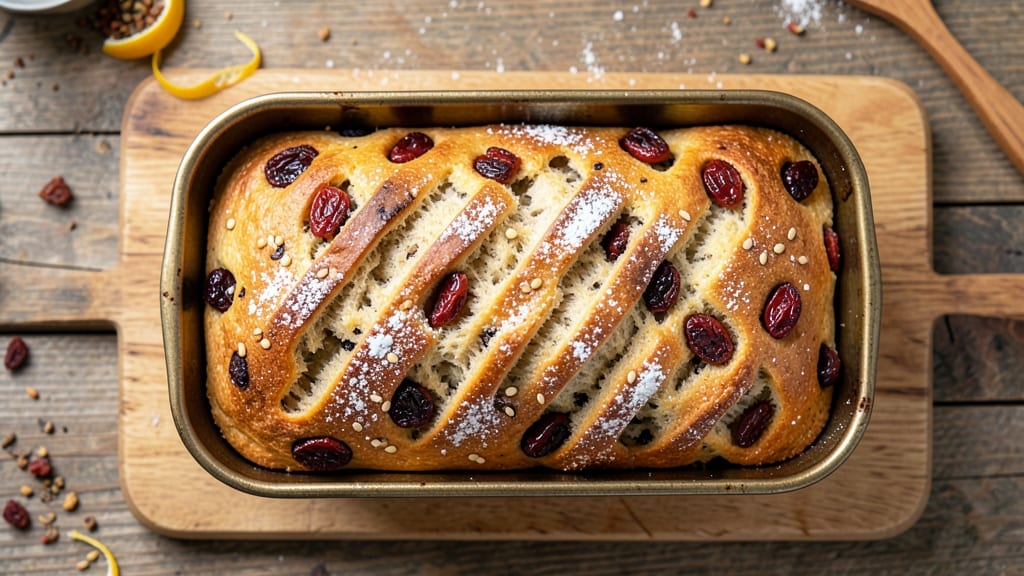
This Asian raisin bread recipe delivers the perfect balance of sweet, chewy texture and aromatic spices—inspired by traditional Japanese milk bread and Chinese steamed buns. The secret lies in a slow fermentation process that develops deep flavor while keeping the crust tender yet slightly crisp.
I’ve perfected this loaf over years of baking, and it’s become a staple in my kitchen for breakfast, snacks, or even dessert.
What sets this recipe apart is the combination of warm spices like cinnamon and cardamom, which infuse the dough with subtle warmth, while plump raisins add natural sweetness that caramelizes beautifully during baking.
The dough requires a resting time of at least 2 hours, which allows the gluten to relax and the flavors to meld—this step is non-negotiable for that signature chewy texture. For best results, use a digital scale to measure ingredients precisely, especially the flour and sugar.
The final loaf emerges with a golden, crackly crust that gives way to a soft, pillowy interior studded with soft raisins. The aroma alone—warm, spiced, and slightly sweet—will fill your home, making it impossible to resist slicing into a steaming-hot piece.
This bread pairs perfectly with butter, jam, or even as a side to savory dishes like curries or soups.
For those with dietary restrictions, a gluten-free version is possible with a 1:1 flour blend, though texture may vary slightly. The recipe also scales easily—double the batch for gatherings or freeze half for later. Let’s get started on mastering this versatile, comforting loaf.
Ingredients for asian raisin bread
Twelve ingredients, one aromatic loaf—this Asian raisin bread balances sweetness with chewy perfection.
| Ingredient | Amount | Notes |
|---|---|---|
| All-Purpose Flour 🌾 | 4 ½ cups | Sifted for optimal texture |
| Granulated Sugar 🍚 | ¾ cup | Light brown preferred |
| Unsalted Butter 🧈 | 1 cup | Softened to room temperature |
| Whole Milk 🥛 | 1 ¼ cups | Room temperature preferred |
| Large Eggs 🥚 | 2 whole | Room temperature for best mixing |
| Active Dry Yeast 🍞 | 0.03 oz | 1 packet (2.25 tsp) |
| Plump Raisins 🍇 | 1 ½ cups | Soaked in warm water for 15 mins |
| Ground Cinnamon 🌿 | 1 tsp | Freshly ground preferred |
| Ground Cardamom 🌶️ | ½ tsp | Lightly toasted for aroma |
| Salt 🧂 | ½ tsp | Diamond Crystal preferred |
| Vanilla Extract 🍯 | 1 tsp | Pure vanilla preferred |
| Honey 🍯 | 2 tbsp | Wildflower for floral notes |
| Water 💧 | ¼ cup | Warm (110°F) |
The flour forms the foundation, so King Arthur or Gold Medal brands deliver consistent results. For the raisins, Sun-Maid or Thompson Seedless stay plump during baking—avoid the dried, wrinkled kind from bulk bins. Cardamom is non-negotiable for that signature warmth; Penzeys sells whole pods you can toast and grind yourself. The butter should be European-style (like Plugrá) for richer flavor, and always measure by weight for precision. For the yeast, Saf-Instant works without activation time, but traditional active dry yeast requires the warm water step.
No cardamom? Allspice at half the amount mimics the warmth, though purists will notice the difference. Substitute honey with maple syrup or agave, but reduce by 1 tbsp due to moisture content. For a dairy-free version, swap milk for unsweetened almond milk and butter for coconut oil (though texture may vary slightly). The raisins can be chopped dates if preferred—just soak them longer. If your flour lacks gluten strength, add 1 tsp vital wheat gluten to the dry ingredients for a better rise.
Freshly baked loaves keep at room temperature for 2 days wrapped in a clean kitchen towel, but they're best enjoyed within 24 hours. For longer storage, freeze the loaf fully cooled in a sealed bag for up to 3 months. To reheat, wrap in foil and warm at 350°F for 10 minutes. The dough can be refrigerated overnight for easier handling, but let it sit at room temperature for 1 hour before shaping to prevent cracking. Always grease your loaf pan generously—butter or baking spray works best for that golden crust.
Why You'll Love This Recipe
- No-Yeast Hassle: I swear by this recipe because it’s actually foolproof—no waiting for yeast to proof, no measuring liquid dough. Just mix, shape, and bake. My lazy Sunday mornings thank me every time.
- Sweet-Savory Magic: That buttery richness from the softened butter and milk, paired with plump raisins soaking up the sugar? It’s like a warm hug in bread form. Honestly, the first slice makes me forget about store-bought loaves.
- Breakfast or Snack: Between us, this bread is ridiculously versatile. Toast it for a quick breakfast with jam, or pack slices for lunch with peanut butter. I’ve even used it to make French toast—no regrets.
- Budget-Friendly Staple: Flour, sugar, butter—these are pantry basics that won’t break the bank. A single batch feeds my family for days, and the leftovers? They disappear faster than I can say “second helping.” My wallet stays happy.
Step-by-step instructions for Asian raisin bread
Aromatic spices and plump raisins create a loaf with perfect chewiness and golden crust.
Prepare the Raisins and Yeast
In a small bowl, combine the 1.5 cups plump raisins with the 2 tbsp honey and 0.25 cup warm water (110°F). Let them soak for 15 minutes while you prepare the dough. This step ensures the raisins plump up and absorb the honey's sweetness, creating bursts of flavor in every bite. Drain any excess liquid before adding them to the dough.
In a separate small bowl, whisk together the 0.03 oz active dry yeast with 1 tablespoon of the warm milk (110°F) and 1 teaspoon of the granulated sugar. Let this mixture sit for 5-7 minutes until it becomes frothy and bubbly. This activation step is crucial—it ensures your yeast is alive and ready to work. If it doesn't bubble, your bread may not rise properly.
Mix the Dough Ingredients
In the bowl of a stand mixer fitted with the dough hook attachment, combine the 4.5 cups all-purpose flour, 0.75 cup granulated sugar, 1 tsp ground cinnamon, 0.5 tsp ground cardamom, and 0.5 tsp salt. Mix on low speed for 30 seconds to aerate the flour and distribute the spices evenly. This step creates a uniform base for the dough and ensures balanced flavor throughout.
Add the 1 cup softened unsalted butter to the flour mixture and mix on medium speed for 2-3 minutes until the butter is fully incorporated and the mixture resembles coarse crumbs. The butter should be soft enough to blend smoothly but not melted—this creates a tender crumb in the final bread. Scrape down the sides of the bowl as needed to ensure even mixing.
Combine Wet Ingredients and Knead
Add the 2 whole large eggs, 1 tsp vanilla extract, the yeast mixture (with its frothy foam), and the remaining 1 cup warm milk to the flour mixture. Mix on low speed for 1 minute until a shaggy dough begins to form. This gradual combination prevents gluten development too early, which can make the dough tough.
Switch to medium speed and knead the dough for 5-7 minutes until it becomes smooth, elastic, and springs back when poked. The dough should pull away from the sides of the bowl and form a tight ball. If the dough feels sticky, add 1-2 tablespoons of flour at a time until it reaches the right consistency—too much flour will make the bread dense, so work carefully.
Incorporate Raisins and First Rise
Transfer the dough to a lightly floured surface and gently press it into a rectangle. Add the drained raisins (with any remaining honey) and fold the dough over itself to distribute the raisins evenly. This step ensures the raisins are well-incorporated without overworking the dough. Shape the dough into a log and place it in a greased 9x5-inch loaf pan. Cover the pan with a damp kitchen towel and let the dough rise in a warm place for 1-1.5 hours, or until it has doubled in size.
Here's the thing—don't rush this rise. The dough should puff up noticeably and feel light when pressed gently with a fingertip. If the kitchen isn't warm enough, place the pan near a turned-off oven with the light on or use a proofing box. Overproofing leads to a dense loaf, so keep an eye on it and stop rising when it reaches the top of the pan.
Shape, Glaze, and Bake
Preheat your oven to 350°F and position a rack in the lower third of the oven. Brush the risen dough with an egg wash made by beating 1 egg with 1 tablespoon of milk—this creates a golden, glossy crust. Sprinkle the top with a pinch of salt and a dusting of granulated sugar for extra color and crunch. Bake for 50-55 minutes until the bread is deep golden brown and registers 190°F on an instant-read thermometer.
Real talk: the bread is done when it pulls away from the sides of the pan and sounds hollow when tapped on the bottom. If the top browns too quickly, tent the loaf with foil after 30 minutes to prevent over-browning while the center finishes baking. Let the bread cool in the pan for 10 minutes, then transfer it to a wire rack to cool completely before slicing—this prevents a gummy texture.
Pro Tips For Making Asian Raisin Bread
- MIX DRY INGREDIENTS FIRST: Dump the flour, baking powder, and salt into your bowl before adding wet ingredients—this prevents lumps when you pour in the milk and eggs later. I learned this the hard way after scraping out stubborn clumps from my mixer.
- SOAK RAISINS IN HOT MILK: Replace the recipe’s cold milk with warm (not boiling) milk to soak the raisins for 10 minutes—this plumps them up and infuses them with flavor. Skip this, and you’ll get chewy, dry pockets instead of tender bursts.
- DON’T OVERCREAM THE BUTTER: Beat the butter and sugar until light and fluffy, but stop when it’s just slightly pale—overmixing turns it greasy and dense. I used to push it until it looked like frosting, and the bread always tasted heavy.
- BAKE UNTIL 190°F: Pull the bread out when the internal temp hits 190°F (not 200°F or 212°F like some guides say)—this keeps the crumb soft while ensuring the center is fully set. A toothpick should come out clean, but the bread won’t be dry.
Wine and beer pairings for these flavors
Sweet Wine Pairings
This aromatic raisin bread pairs beautifully with sweet dessert wines that complement its honeyed raisins and warm spices. A glass of Moscato d'Asti from Italy brings effervescence and floral notes that cut through the bread's richness while enhancing its caramelized raisins.
The light body and subtle sweetness make it perfect for breakfast or afternoon tea. For a more robust pairing, try Riesling from Germany's Mosel region—its honeyed, almost petrol-like flavors mirror the bread's natural sweetness while adding complexity. 🍷
Spiced Beer Options
Craft beers with warm spices elevate this bread to new heights. A Belgian-style Dubbel like Westmalle Dubbel offers malty depth and caramel notes that harmonize with the raisins and cinnamon.
For a lighter option, honey ale from local breweries (I love New Belgium's Honey Brown) provides a smooth, slightly sweet contrast. Avoid hoppy IPAs—they'll overpower the delicate spices in the bread.
Asian-Inspired Pairings
For an authentic touch, pair with Japanese sake or Chinese Shaoxing wine. A dry junmai sake (like Dassai) enhances the bread's buttery texture without competing with its sweetness.
For a more indulgent pairing, try Shaoxing wine—its nutty, slightly sweet profile complements the cardamom and raisins beautifully. Serve slightly chilled for an elegant touch.
Coffee and Tea
If alcohol isn't your thing, a strong black coffee (like a Vietnamese-style drip) balances the bread's sweetness perfectly. For tea lovers, jasmine green tea or Earl Grey with bergamot notes create a sophisticated pairing that highlights the bread's floral vanilla and citrus hints.
A small cup of chai tea also works wonderfully, especially if spiced with extra cardamom. ☕
Unexpected Pairings
Think outside the box with ginger beer—its spicy kick contrasts the bread's sweetness in a refreshing way. For a savory twist, serve with miso soup or kimchi to balance the sweetness with umami depth.
The contrast creates a surprisingly harmonious bite that many find addictive. This is one of my favorite unexpected combos! 🌶️
Nutrition facts
Frequently asked questions
Can I substitute regular raisins for dried cranberries or chopped dates?
For a tart twist, use 1 cup dried cranberries (soaked in orange juice for 10 minutes instead of water) or 1.5 cups chopped dates (soaked in warm water for 20 minutes). Dates add natural sweetness, while cranberries provide a bright contrast to the warm spices. Adjust the honey to 1 tbsp less if using dates to balance the sweetness.
Why did my bread turn out dense instead of chewy?
Dense bread usually means the dough didn't rise enough or was overworked. Double-check these steps:
- Yeast activation—your yeast mixture should bubble within 5-7 minutes.
- Proofing time—the dough needs 1-1.5 hours to double in size.
- Over-kneading—knead just until smooth (5-7 minutes max). If your kitchen is cold, place the dough near a warm oven with the light on to help it rise.
How can I make this bread gluten-free?
Use a 1:1 gluten-free flour blend (like Bob's Red Mill or King Arthur) and replace the all-purpose flour with 4.5 cups of the blend. Add 1 tsp xanthan gum to help bind the dough. The texture will be slightly denser, but still delicious! Let the dough rest 30 minutes longer before shaping to improve elasticity. For best results, bake at 325°F instead of 350°F to prevent over-browning.
Can I make this bread without a stand mixer?
Yes! Mix the dry ingredients in a large bowl, then cut in the butter using a pastry cutter or fork until crumbly. Mix the wet ingredients separately, then combine with the dry mixture. Knead by hand on a floured surface for 8-10 minutes until smooth and elastic. It’ll take more effort, but the result will be just as good—just be patient and keep the surface well-floured to prevent sticking.
How do I store leftovers to keep them fresh?
Wrap the cooled loaf tightly in plastic wrap or place it in an airtight container with a paper towel to absorb moisture. It stays fresh at room temperature for 2-3 days. For longer storage, freeze slices wrapped in plastic for up to 3 months. To reheat, wrap frozen slices in foil and warm at 300°F for 5-7 minutes until toasty. Never microwave—it makes the bread gummy!