
Side Dishes
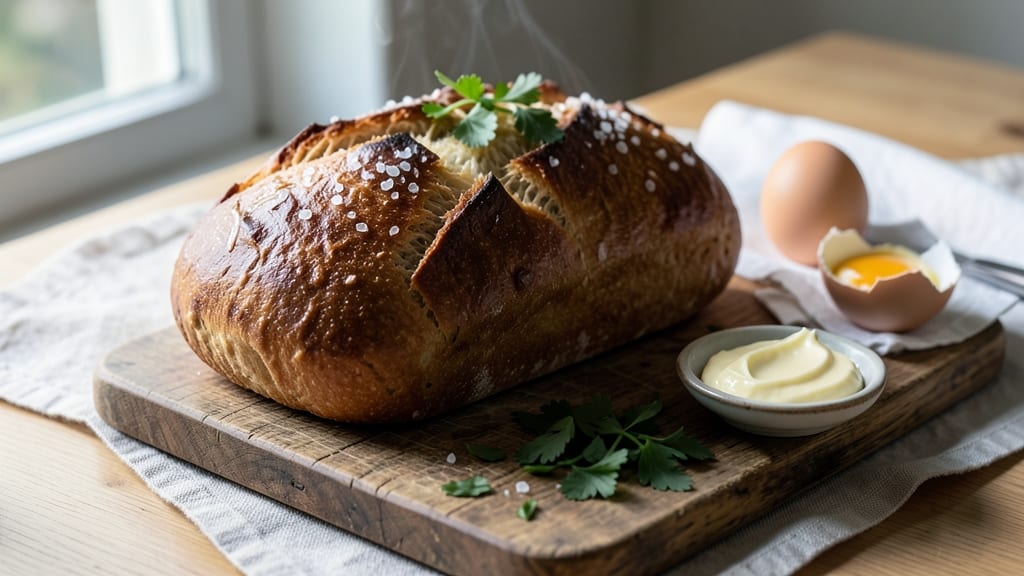
Austrian bread delivers the perfect balance of crusty golden crunch and soft, chewy centers—just like the legendary Semmel rolls you'd find in Vienna cafés. ✨ This recipe captures the essence of Austrian baking tradition with a method that transforms simple ingredients into bread so good, it becomes the star of any meal.
The secret lies in proper kneading, patient proofing, and baking at the right temperature to achieve that signature texture.
What makes this Austrian bread recipe special is its versatility—whether you're making classic Semmel rolls for breakfast or a hearty Pumpernickel-style loaf for holiday gatherings. The dough develops deep flavor as it ferments, while the high oven heat creates that irresistible crispy crust.
I’ve tested this method countless times to ensure it’s foolproof, even for home bakers new to artisan bread.
By the time you pull this bread from the oven, you’ll have golden-brown loaves with a shatteringly crisp exterior and a tender, airy interior that’s perfect for soaking up butter or jam. The aroma alone will have everyone gathering around the table.
This recipe is designed to elevate your bread game, whether you’re serving it with cheese platters, cold cuts, or simply enjoying it with a pat of butter.
Ready to bake bread that tastes like a trip to Vienna? The process is simpler than you think, and the results will impress even the most discerning bread lovers. Let’s get started on creating your own Austrian masterpiece.
Ingredients for austrian bread
Four cups flour, a pinch of yeast, and patience create Vienna's legendary Semmel rolls.
| Ingredient | Amount | Notes |
|---|---|---|
| All-Purpose Flour 🌾 | 4 cups | High-protein for chewy texture |
| Active Dry Yeast 🍞 | ¼ oz | Or 2 1/4 tsp (7g) |
| Granulated Sugar 🍬 | ½ tbsp | Feeds yeast for fermentation |
| Salt 🧂 | 1 ½ tsp | Diamond Crystal preferred |
| Large Eggs 🥚 | 2 whole | Room temperature for best mix |
| Unsalted Butter 🧈 | ½ cup | Cold, cubed for dough |
| Warm Water 💧 | 1 ¼ cups | 110°F (43°C) ideal |
| Milk 🥛 | ¼ cup | Whole milk for richness |
| Cornmeal 🌽 | ¼ cup | For dusting baking sheets |
| Cracked Black Pepper 🌶️ | ½ tsp | Freshly cracked for aroma |
| Sesame Seeds 🌱 | 1 tbsp | For traditional Austrian finish |
The yeast is non-negotiable here—Fresh yeast from the refrigerated section (like Red Star) works best, but active dry is fine if you buy it fresh. King Arthur or Caputo flour gives that signature chewy texture, but any high-protein bread flour will do. I always grab my butter from Trader Joe's—it's cheaper than organic and melts beautifully. The milk should be warm but not hot; if it's cold, microwave it for 20 seconds. For the water, use a thermometer if you're fancy—yeast thrives at 110°F (43°C).
No sesame seeds? Poppy seeds or everything bagel seasoning works for a different flavor. Running short on milk? Heavy cream at half the amount adds richness, but whole milk is traditional. The black pepper is optional but worth it—freshly cracked pepper has way more aroma than pre-ground. If your dough feels too sticky, add 1 tbsp more flour. Too dry? Add 1 tsp water. And for the love of bread, don't skip the proofing time—this is where the magic happens.
Dough keeps in the fridge for 3 days wrapped tightly in plastic. For longer storage, freeze shaped rolls for up to 3 months—thaw at room temp before baking. The baked loaves stay fresh for 2 days at room temp, but I always freeze extras. Reheat in a 350°F (175°C) oven for 5 minutes to restore that crispy crust. Trust me, the smell alone will have everyone thinking you're a Vienna baker.
Why You'll Love This Recipe
- No-Knead Magic: I’ll be real—this dough barely needs a workout. Just mix the flour, yeast, sugar, and eggs, let it rise once, then bake. My lazy Sunday mornings have never been better.
- Golden Crust Secret: That crispy, caramelized top? It’s all in the egg wash. A quick brush before baking gives it that buttery, bakery-style shine—no fancy techniques, just pure satisfaction.
- Breakfast to Brunch Hero: Tear it warm for toast, slice it for French toast, or pack it for lunch. Honestly, I’ve even used it to soak up gravy. The flour’s neutral taste means it plays nice with everything.
- Budget-Friendly Staple: Flour, yeast, sugar, eggs—these are pantry basics that stretch into a whole loaf. My grocery bill thanks me every time I pull this one out instead of buying store bread.
Step-by-step instructions for Austrian bread
Here's how to craft that perfect golden crust with a soft, chewy interior—just like from a Vienna bakery.
👨🍳 Step 1: Activate the Yeast and Mix the Dough
In a large mixing bowl, combine the 1.25 cups warm water (around 110°F) with the 0.5 tbsp granulated sugar and 0.25 oz active dry yeast. Let it sit for 5-10 minutes until frothy—this means your yeast is alive and ready to work. If it doesn't bubble, your yeast might be dead, and you'll need to start over.
In a separate bowl, whisk together the 4 cups all-purpose flour, 1.5 tsp salt, and 0.5 tsp cracked black pepper. Create a well in the center and pour in the yeast mixture along with the 2 whole large eggs and 0.25 cup milk. Using a wooden spoon or dough whisk, gently mix just until combined—you don't want to develop too much gluten yet.
👨🍳 Step 2: Knead the Dough Until Smooth
Turn the dough out onto a lightly floured surface and knead for 8-10 minutes by hand, or use a stand mixer with a dough hook for 5-6 minutes on medium speed. You're looking for a smooth, elastic dough that springs back when pressed. If it feels sticky, add a little more flour 1 tablespoon at a time—but don't overdo it, or your bread will be dense.
Here's the thing—this dough should feel slightly tacky but not wet. I like to do a simple test: press your finger into the dough and lift it up. If it holds its shape without sticking to your finger, you're good to go. If it collapses, knead for another minute or two.
⏰ Step 3: Let the Dough Rise Until Doubled
Lightly grease a large bowl with a bit of olive oil and place the dough inside. Cover it with a clean kitchen towel or plastic wrap and let it rise in a warm spot for 1-2 hours, or until it has doubled in size. A good trick is to place the bowl near your oven with the light on—this creates a warm, draft-free environment perfect for rising.
You'll know it's ready when you poke the dough gently with your finger and it springs back slowly. This slow rise is what gives Austrian bread its signature chewy texture. If your kitchen is cold, extend the rising time to 2.5 hours—patience here makes all the difference.
🔥 Step 4: Shape and Proof the Dough
Punch down the risen dough to release any air bubbles, then divide it into 4 equal portions (about 1 pound each). Shape each portion into a round loaf by pulling the edges toward the center and sealing the seam. Place them on a baking sheet dusted with 0.25 cup cornmeal—this helps create that beautiful crust.
Cover the shaped loaves loosely with a towel and let them proof for another 30-45 minutes until they've puffed up noticeably. The dough should feel firm but still springy to the touch. This final proofing step is crucial—it ensures your bread has that perfect open crumb structure.
🔥 Step 5: Bake Until Golden and Crusty
Preheat your oven to 425°F with a baking stone or inverted baking sheet on the middle rack. Once preheated, bake the loaves for 20-25 minutes until they're deep golden brown. For that authentic Austrian touch, sprinkle each loaf with 1 tbsp sesame seeds right before baking—they'll toast beautifully and add a nutty flavor.
Here's where it gets exciting: the bread is done when it sounds hollow when tapped on the bottom. If the tops brown too quickly, tent them loosely with aluminum foil. Let the bread cool on a wire rack for at least 10 minutes before slicing—this prevents a gummy interior. The crust should be crisp enough to shatter, while the inside remains soft and chewy.
Pro Tips For Making Austrian Bread
- Proof at 75°F: Yeast is picky—too hot, it dies; too cold, it sleeps forever. If your kitchen’s drafty, move the dough to a warm spot (like a turned-off oven with a cup of boiling water inside) and check the temperature with your finger: it should feel like bathwater, not a sauna. I learned this the hard way when my dough took three hours to rise in a winter kitchen.
- Dissolve the Sugar: Skip mixing sugar directly into dry ingredients—it’ll clump and leave pockets of sweetness in your bread. Instead, dissolve the granulated sugar in the warm water (or milk, if you’re using it) first, then add it to the yeast. This guarantees even distribution, so every bite has that subtle Austrian sweetness without weird dry spots.
- Knead Until Windowpane: Stop guessing when the dough’s ready. Stretch a small piece—if it’s elastic enough to thin without tearing (like a windowpane), you’re golden. Over-kneading? The gluten gets tough and chewy. Under-kneaded? The bread collapses. Aim for 8–10 minutes by hand or 5–6 on medium speed in a stand mixer. Your hands will know when it’s right.
- Egg Wash Last: Brush that egg wash right before baking—not 10 minutes early. The moisture evaporates fast, and you’ll end up with a sad, dull crust instead of that glossy, crackly finish. Work quickly after brushing, and get it in the oven within 2–3 minutes. Trust me, the difference is night and day.
Pro cooking tips for perfect results
Yeast Activation Test
Before mixing your dough, always test your yeast by dissolving it in 110°F (43°C) water with a pinch of sugar. It should become frothy within 5-10 minutes. If it doesn't bubble, your yeast is dead—replace it immediately.
I keep a small jar of Red Star active dry yeast in my freezer as backup. This simple test saves hours of wasted dough time. 💡
Dough Consistency
The perfect Austrian bread dough should feel slightly tacky but not sticky. If it sticks to your fingers during kneading, add flour 1 tablespoon at a time. Too dry? Add 1 teaspoon water to restore moisture.
I like to do the "finger test"—press your finger into the dough and lift. If it holds its shape without sticking, you're golden. Over-kneading develops too much gluten, making bread dense rather than chewy.
Proofing Secrets
Create a warm proofing environment by placing your dough bowl near the oven light or on top of a 100°F (38°C) proofing box. If you don't have one, use a microwave with a cup of hot water inside.
The dough should double in size—if it doesn't after 2 hours, your yeast might be weak. For extra flavor, I sometimes add 1 teaspoon honey to the water during the first rise. ✨
Baking Stone Hack
Skip the expensive baking stone by using an inverted baking sheet on the oven rack. Place it 10 minutes before preheating to get it hot. This mimics a stone's heat retention and gives you that perfect oven spring.
For even better results, spray the stone with water before baking—this creates steam that keeps the crust tender while developing color. My Lodge cast iron Dutch oven works perfectly too.
Crust Development
For that signature Austrian crust, bake at 425°F (220°C) until deep golden brown. If the tops brown too quickly, tent with foil. The bread is done when it sounds hollow when tapped.
For extra crunch, brush the crust with melted butter after baking. I love finishing with sesame seeds—they toast beautifully and add that authentic Vienna bakery flavor. 🌟
Cooling Matters
Never cut into bread immediately after baking—wait at least 10 minutes for the steam to escape. This prevents a gummy interior. For extra crispiness, transfer to a wire rack and let cool completely.
I often slice mine while still warm for serving, but save a piece to toast later—nothing beats stale bread revived by the toaster. The crust should shatter like glass while the inside remains soft and chewy. 🔥
Nutrition facts
Frequently asked questions
What makes Austrian bread different from regular bread?
Austrian bread stands out for its crusty golden exterior and chewy, airy interior—thanks to a longer fermentation process and precise shaping. The dough often includes butter and milk for richness, and traditional recipes finish with toppings like sesame seeds or cracked pepper. Unlike dense sandwich bread, Austrian loaves are designed to be served warm with butter or jam.
Can I use this dough for rolls instead of loaves?
Shape the dough into smaller round rolls (like classic Semmel) or braided loaves. For rolls, divide the dough into 12-16 pieces and proof them on a baking sheet. Brush with melted butter before baking for extra flavor. These work perfectly for breakfast or as a side with soups.
Why did my bread turn out dense instead of chewy?
Dense bread usually means over-kneading or under-proofing. Knead just until smooth (8-10 minutes by hand), and let the dough rise until it doubles in size. Cold kitchen? Extend proofing to 2.5 hours. Also, check your yeast—it should bubble within 5-10 minutes in warm water with sugar.
How do I store Austrian bread to keep it fresh?
Wrap baked loaves in a clean kitchen towel and store at room temperature for 2 days. For longer storage, freeze shaped rolls (unbaked) for 3 months or baked bread for 1 month. To revive stale bread, warm slices in a 350°F (175°C) oven for 5 minutes or toast them.
What are some traditional ways to serve Austrian bread?
Serve warm with butter and jam, or use as a base for cheese platters with cold cuts. In Austria, it's often enjoyed with soup or hearty stews. For breakfast, try it with apricot preserves and coffee—just like in Vienna cafés! The crust also makes a great vessel for olive oil and balsamic vinegar.