
Side Dishes
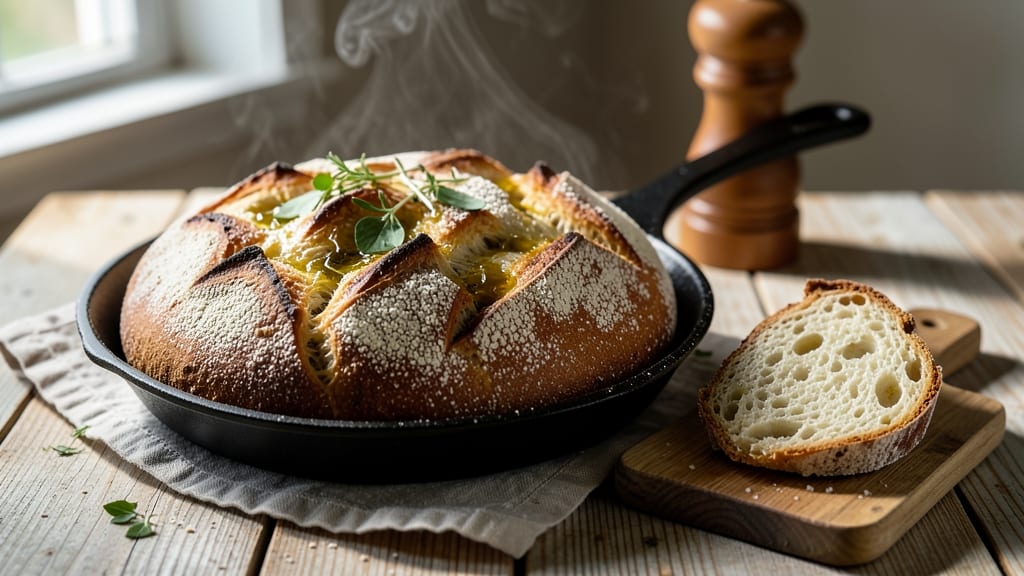
This authentic schiacciata bread recipe brings the rustic charm of Tuscany to your kitchen with its signature olive oil-infused crust and tender crumb. 🌟 Born in the heart of Italy, schiacciata translates to "flattened" or "squished," reflecting its traditional hand-shaped form that yields a crispy exterior and soft interior.
The secret lies in its simplicity—just flour, water, olive oil, and salt—yet it delivers unmatched flavor when baked to golden perfection.
What sets this recipe apart is its one-bake method, eliminating the need for multiple proofs or complex techniques. The dough develops naturally as it rests, creating that signature rustic texture without requiring advanced skills.
Traditional Tuscan bakers often shape schiacciata by hand, but I’ve included a foolproof shaping technique that ensures even baking every time. The result? A loaf with a crispy, caramelized crust and a tender crumb that’s perfect for dipping in olive oil or pairing with soups.
This bread is more than just a side—it’s a taste of Italy’s culinary heritage, where every bite carries the essence of Tuscan kitchens. The olive oil infusion gives it a rich, aromatic depth that elevates any meal, whether served warm with dinner or toasted for breakfast.
With just five ingredients and minimal effort, you’ll achieve a loaf that rivals the best from Italian bakeries. Let’s get started on this timeless classic.
For those eager to experiment, variations like adding rosemary or sea salt can further enhance the flavor profile. The beauty of schiacciata lies in its versatility—equally at home as a side, appetizer, or even a base for bruschetta.
Once you master this recipe, you’ll never reach for store-bought bread again. Here’s how to make it authentically yours.
Ingredients for authentic schiacciata bread
Five essential ingredients transform into Italy's beloved rustic bread with minimal effort.
| Ingredient | Amount | Notes |
|---|---|---|
| All-Purpose Flour 🌾 | 4 cups | High-protein for structure, sifted for even texture |
| Extra-Virgin Olive Oil 🫒 | ¾ cup | Italian variety for authentic flavor |
| Warm Water 💧 | 1 ½ cups | 110°F for optimal dough development |
| Fine Sea Salt 🧂 | 1 ½ tsp | Diamond Crystal preferred for purity |
| Active Dry Yeast 🍞 | ¼ tsp | Fresh yeast for reliable activation |
| Semolina Flour 🌾 | 2 tbsp | For dusting and crust enhancement |
| Cornmeal 🌽 | 2 tbsp | For baking surface texture |
| Optional Fresh Rosemary 🌿 | ¼ cup | Finely chopped for aromatic variation |
| Optional Coarse Sea Salt 🧂 | 1 tsp | For finishing crust |
The flour is the foundation—high-protein all-purpose (11-12%) creates that signature tender crumb while maintaining structure. Italian extra-virgin olive oil from Marche or Tuscany regions delivers the most authentic flavor profile, though a quality California or Spanish variety works well too. For the yeast, always use active dry—fresh yeast activates more reliably for this recipe's gentle development. The water temperature matters: 110°F ensures proper gluten formation without killing the yeast. If your kitchen is cold, warm the water slightly longer. Penzeys Spices or Whole Foods bulk bins are excellent sources for the yeast and salt if you prefer premium options.
No extra-virgin olive oil? Light olive oil works in a pinch, though the flavor will be milder. Substituting avocado oil is possible but loses the authentic character. For the optional rosemary, fresh is ideal but dried at half the amount suffices if needed. The semolina and cornmeal can be swapped for white bread flour if unavailable, though they contribute to the signature crispy crust. Diamond Crystal kosher salt is preferred over table salt—its larger crystals dissolve more evenly. If you're making this for a crowd, double the recipe but ensure your baking sheet is large enough to accommodate the wider shape without overcrowding.
The dough develops naturally over 2 hours at room temperature, so no proofing box is needed. Store any unused flour in an airtight container with a silica gel packet to prevent moisture absorption. The yeast packet can be refrigerated for up to 3 months in its original packaging. For the finished loaf, wrap tightly in parchment paper and store at room temperature for 2-3 days or freeze for up to 3 months. To revive, warm in a 350°F oven for 5-10 minutes until crispy. The crust benefits from 10 minutes of cooling before slicing to maintain texture.
Why You'll Love This Recipe
- No-Knead Magic: I swear by this—just mix the dough, let it rise, then slap it onto a hot pan. That olive oil infusion? Pure gold. The yeast does all the work while I sip coffee.
- Olive Oil Bliss: Between us, this bread tastes like a Tuscan sunset. The extra-virgin olive oil gets absorbed into every nook, giving it that rich, buttery depth without butter. My kids fight over the last slice.
- Weeknight Hero: Toss it in a basket for breakfast, tear it for sandwiches, or serve it warm with dinner. Honestly, I make a double batch every Sunday—it’s my go-to for lazy mornings and last-minute guests.
- Budget-Friendly Staple: Five ingredients, zero waste. That flour and olive oil stretch for days, and the dough keeps in the fridge for up to three days. My wallet and my taste buds thank me.
Step-by-step instructions for authentic schiacciata bread
Mastering schiacciata means embracing simplicity with intentional technique—here's how to achieve that signature olive oil-rich crust.
👨🍳 Step 1: Activate the Yeast and Develop the Dough
In a large mixing bowl, combine the 1.5 cups warm water (about 110°F) with the 0.25 tsp active dry yeast and 1.5 tsp fine sea salt. Let this mixture sit for 5 minutes until the yeast begins to foam actively—this confirms it's alive and ready to work. The water temperature is critical; too hot kills the yeast, too cold prevents activation.
Add the 4 cups all-purpose flour and 0.75 cup extra-virgin olive oil to the bowl. Using a wooden spoon or dough whisk, mix vigorously for 3-4 minutes until a shaggy dough forms. The olive oil should be fully incorporated, with no visible pools of liquid. This initial mixing develops gluten and creates the bread's signature tender crumb.
🥘 Step 2: Knead Until Silky and Elastic
Turn the dough onto a lightly floured surface and knead for 8-10 minutes by hand, or use a stand mixer with a dough hook on medium speed for 5-6 minutes. You're looking for a dough that's smooth, elastic, and slightly tacky—it should spring back slowly when poked. The olive oil makes schiacciata dough softer than traditional bread dough, so resist the urge to add extra flour during kneading.
Here's the thing—schiacciata dough shouldn't look like classic bread dough. It should be more like a supple, slightly sticky mass. If it feels too dry, add 1 teaspoon warm water at a time until it reaches the right consistency. The dough should feel like well-worked playdough when you handle it.
⏰ Step 3: First Rise for Maximum Flavor Development
Lightly oil a large bowl, place the dough inside, and cover with a damp kitchen towel or plastic wrap. Let it rise in a warm place (ideally 75-80°F) for 1.5-2 hours, or until it has nearly doubled in size. You'll know it's ready when you poke the dough gently and it springs back slowly, leaving a slight indentation.
I like to place my bowl on top of my turned-off oven with the light on for consistent warmth. The slow rise allows the yeast to develop complex flavors and creates that signature open crumb structure. Don't rush this step—proper fermentation is what makes schiacciata taste authentically rustic.
🍳 Step 4: Shape and Prepare for Baking
Turn the risen dough onto a lightly floured surface and gently shape it into a rough rectangle about 1-inch thick. Fold the edges toward the center to create a compact shape, then transfer it to a parchment-lined baking sheet. Dust the top generously with 2 tbsp semolina flour and 2 tbsp cornmeal—this creates that iconic crunchy crust.
If using, sprinkle the 0.25 cup optional fresh rosemary (finely chopped) and 1 tsp optional coarse sea salt over the top. Press lightly so the herbs adhere. The semolina and cornmeal create a textured surface that contrasts beautifully with the tender interior. Preheat your oven to 425°F while you prepare the dough.
🔥 Step 5: Bake Until Golden and Crisp
Bake the schiacciata for 25-30 minutes until the crust is deep golden brown and sounds hollow when tapped on the bottom. The interior should register 190-200°F on an instant-read thermometer. The bread should have a crisp exterior with a soft, slightly chewy interior—this is the hallmark of authentic schiacciata.
Real talk: your oven might run hot, so start checking at the 20-minute mark. If the top browns too quickly, tent with foil. The bread is done when it pulls away from the sides of the pan and has that irresistible crackly crust. Let it cool on a wire rack for 10 minutes before slicing—this prevents a gummy interior.
Pro Tips For Making Authentic Schiacciata Bread
- Use Room-Temp Olive Oil: Cold olive oil from the fridge will make your dough fight you—it won’t emulsify properly with the water, leaving you with a stiff, dry mess. Let that bottle sit out for 30 minutes before measuring, especially in cooler kitchens. Trust me, your dough will thank you with a lighter, more tender crumb.
- Knead Just Until Smooth: I used to overwork schiacciata dough, thinking more kneading meant better gluten. Wrong. This bread thrives on minimal handling—just 5–7 minutes by hand (or 3–4 on low speed in a mixer) until the dough pulls away cleanly. Over-kneading turns it tough, and nobody wants that.
- Salt the Water First: Dissolve the fine sea salt directly into the warm water before mixing it with flour and yeast. This ensures even distribution—no salty pockets, no bland spots. I learned this the hard way when a batch turned out unevenly seasoned. (Yes, it’s a small step, but it matters.)
- Shape Loosely, Bake Fast: Skip the tight rolls—schiacciata shines when shaped roughly, with edges tucked under but not sealed. Bake it immediately in a hot oven (475°F/245°C) for 15–20 minutes, until the crust is deep golden and crisp. Waiting “just a few more minutes” for the dough to relax? Don’t. The window closes fast.
Creative variations of these flavors
Tuscan Olive Oil Variation
For an extra-rich flavor, replace the standard olive oil with a blend of Italian extra-virgin olive oil and freshly pressed Tuscan olive oil—I like Frantoio or Leccino varieties for their peppery notes. Add 1 tablespoon of finely chopped sun-dried tomatoes to the dough before shaping for a savory twist.
Brush the baked loaf with an additional 1 tablespoon of high-quality olive oil while still warm for maximum aroma. 🫒
Herb-Infused Rosemary Version
Boost the flavor profile with 1 tablespoon of fresh rosemary (finely chopped) mixed directly into the dough during kneading. For a stronger aroma, infuse 2 tablespoons of olive oil with 1 sprig of rosemary by heating it gently for 5 minutes before adding to the dough.
Top the shaped loaf with extra rosemary sprigs before baking for a fragrant, rustic finish.
Whole Wheat Rustic Twist
Swap 1 cup of all-purpose flour for whole wheat flour to create a heartier, nuttier schiacciata. The dough will be slightly denser, so reduce the water by 2 tablespoons to maintain proper consistency.
This version pairs beautifully with Tuscan bean soups or as a base for tomato and basil bruschetta. The whole wheat adds fiber while keeping the signature olive oil richness intact.
Sea Salt and Black Pepper
Add 1 teaspoon of freshly cracked black pepper and 1 teaspoon of coarse sea salt to the dough during kneading for a bold, savory variation. Finish the baked loaf with an additional sprinkle of black pepper and flaky sea salt before serving.
This version works exceptionally well with aged cheeses like Pecorino Romano or Gorgonzola for a sophisticated appetizer.
Honey-Sweetened Variation
For a slightly sweet schiacciata, mix 2 tablespoons of honey into the dough during kneading. This variation is perfect for breakfast or as a sweet accompaniment to ricotta and fig spreads.
Brush the baked loaf with 1 tablespoon of melted butter for extra richness. The honey adds a subtle sweetness that balances the olive oil's intensity beautifully. 🍯
Nutrition facts
Frequently asked questions
Why does schiacciata dough feel so sticky?
The high olive oil content (0.75 cup) creates a supple, slightly tacky dough—this is normal and essential for authentic texture. The oil keeps the crumb tender while developing that signature crispy crust. If it feels too sticky, wet your hands slightly when handling, but avoid adding extra flour which can make the bread dense.
Can I make schiacciata without a stand mixer?
This recipe is designed for hand-kneading. Work the dough for 8-10 minutes on a floured surface until smooth and elastic. The olive oil makes it softer than traditional bread dough, so focus on developing gluten through consistent stretching and folding rather than strength.
What's the best way to store leftover schiacciata?
Wrap tightly in parchment paper and store at room temperature for 2-3 days to maintain crispness. For longer storage, freeze the cooled loaf in a sealed bag for up to 3 months. To revive, warm in a 350°F oven for 5-10 minutes until crispy again.
Why did my schiacciata turn out dense instead of crispy?
Over-kneading or adding too much flour are common culprits. The dough should be slightly sticky—if it feels dry, you've likely added excess flour. Also ensure proper fermentation (1.5-2 hours) and use the semolina/cornmeal topping as directed. A 425°F oven is crucial for that crisp exterior.
Can I make schiacciata in a Dutch oven?
While possible, schiacciata is traditionally baked on a sheet pan for its signature flat shape. If using a Dutch oven, shape the dough into a round and bake at 400°F for 20-25 minutes until golden. The texture will be slightly different but still delicious—more like focaccia than traditional schiacciata.