
Side Dishes
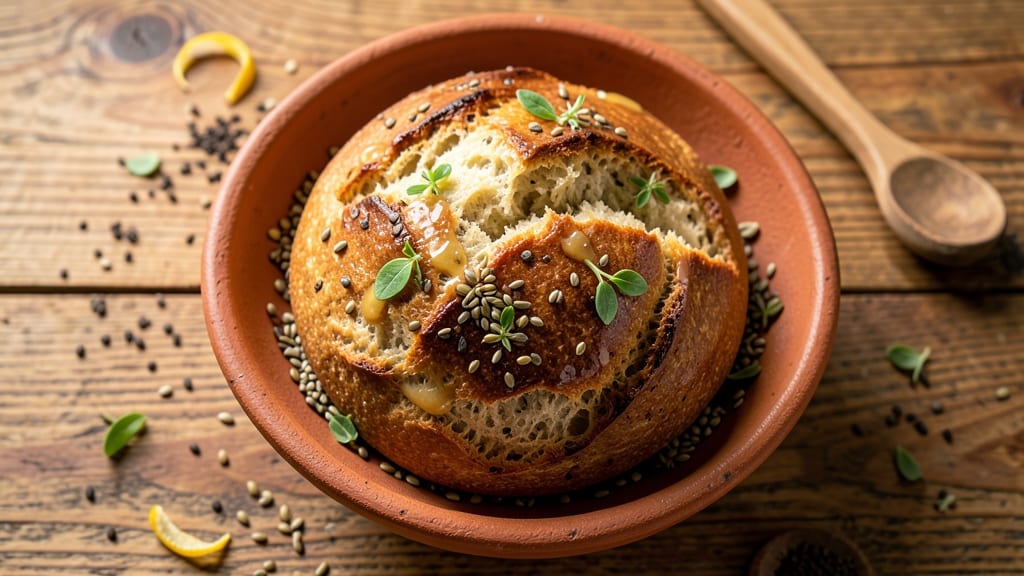
This Ayurvedic bread recipe brings warmth, spice, and digestive harmony to your table—crafted with whole grains, ghee, and traditional spices that align with ancient healing principles. The secret lies in slow fermentation and gentle baking, which preserves nutrients while creating a loaf that’s both comforting and nourishing.
Unlike conventional bread, this version incorporates cumin, ajwain, and flaxseeds, each chosen for their Ayurvedic benefits: cumin for digestion, ajwain for gut health, and flaxseeds for omega-3 richness.
The dough comes together with minimal effort but maximum flavor—no yeast required, just a blend of whole wheat flour, warm water, and a touch of ghee to keep it tender. The spices infuse the dough during a 2-hour rest, allowing their earthy aromas to meld into every bite.
Whether baked in the oven or cooked on a tawa, the result is a lightly crisp exterior with a soft, spiced interior that pairs beautifully with lentil stews or a dollop of yogurt.
What sets this bread apart is its Ayurvedic philosophy: designed to be warming (ushna) and easy to digest, making it ideal for cooler months or post-meal balance.
The ghee not only enriches the flavor but also supports agni (digestive fire), while the whole grains provide sustained energy without heaviness. Perfect for daily meals or special occasions, this loaf transforms a simple side into a therapeutic experience.
For those with dietary restrictions, variations include gluten-free options using millet flour or a sprouted grain version for enhanced nutrient absorption. The recipe’s flexibility ensures everyone can benefit from its digestive-friendly properties. Ready in under 2 hours, it’s the kind of bread that nourishes both body and tradition.
Ingredients for ayurvedic bread
Six whole-food ingredients transform into an Ayurvedic loaf rich in digestive benefits and earthy warmth.
| Ingredient | Amount | Notes |
|---|---|---|
| Whole Wheat Flour 🌾 | 4 cups | Unbleached, stone-ground preferred |
| Ghee 🧈 | ½ cup | Clarified butter, unsalted |
| Warm Water 💧 | 1 ½ cups | 105°F (40°C) for optimal hydration |
| Ground Cumin Seeds 🌿 | 1 tbsp | Freshly ground for potency |
| Ajwain Seeds 🌶️ | 1 tbsp | Toasted lightly for aroma |
| Flaxseeds 🌱 | ¼ cup | Ground for omega-3 release |
| Honey 🍯 | 1 tbsp | Raw, unprocessed preferred |
| Sea Salt 🧂 | 1 tsp | Fine grain, uniodized |
| Plain Yogurt 🥛 | ¼ cup | Unflavored, full-fat preferred |
| Sesame Seeds 🌻 | 1 tbsp | Toasted for garnish |
| Black Peppercorns 🌶️ | ½ tsp | Freshly cracked for depth |
The foundation lies in stone-ground whole wheat flour, which retains its bran and germ for maximum nutrient density. For optimal texture, source flour from Bob's Red Mill or King Arthur, where the stone-grinding process preserves enzymes. Ghee is non-negotiable—it's both a flavor enhancer and digestive aid in Ayurveda. Purchase from Ghee House or make your own by clarifying unsalted butter. The warm water temperature (105°F) is critical; too hot kills enzymes, too cold prevents gluten development. For those with gluten concerns, millet flour can replace up to 25% of the wheat flour without compromising structure.
Ajwain seeds, often called carom seeds, are the heart of this recipe's digestive benefits. Whole Foods or Indian specialty stores carry them in bulk—look for vibrant, aromatic seeds without moisture. Substitute with fennel seeds at half the amount if unavailable, though the flavor profile shifts slightly. Flaxseeds should be ground fresh using a coffee grinder; pre-ground loses its omega-3 potency within days. The honey acts as a natural preservative and sweetener—Manuka honey adds antimicrobial benefits, though any raw honey suffices. For a vegan adaptation, replace honey with maple syrup at equal volume, though it lacks the same digestive properties.
Store the dough in an airtight container at room temperature for up to 24 hours, allowing flavors to develop further. The finished loaf keeps for 3-4 days wrapped in a clean kitchen towel to maintain crispness. For longer storage, freeze slices between parchment paper for up to 3 months. Reheat in a toaster or oven until warm. The ghee content makes this bread exceptionally shelf-stable—traditional Ayurvedic texts recommend storing for up to 1 week when kept in a cool, dark place. For gluten-free variations, replace wheat flour with a 1:1 blend of brown rice flour and tapioca starch, though texture will differ.
Why You'll Love This Recipe
- No-Fuss Kneading: I swear by the "just mix it" method here—no stand mixer, no arm workout. Warm water and whole wheat flour come together like old friends, while ghee keeps it tender without fuss.
- Earthy Warmth: That whisper of cumin and ajwain? It’s the kind of flavor that turns a simple meal into something memorable. Honestly, I reach for this bread just to eat it plain—it’s that good.
- Leftover Hero: Tastes even better the next day, whether toasted or reheated in a dry pan. Between us, I’ve fed this to coworkers for lunch and never gotten a side-eye.
- Pantry Staple: Whole wheat flour, ghee, and spices you likely already have? This is my budget-friendly go-to. Plus, it travels well—pack it for picnics or stash it for lazy mornings.
Step-by-step instructions for Ayurvedic bread
Ayurvedic principles guide this nourishing loaf, blending digestive spices with whole grains for balanced energy.
Prepare the Flaxseed Gel for Binding
In a small bowl, combine the 0.25 cup flaxseeds with 0.5 cup warm water (about 105°F). Let it sit for 10 minutes until it thickens into a gel-like consistency. This flaxseed gel acts as a natural binder, replacing eggs while adding omega-3 benefits—a key Ayurvedic principle for balancing vata dosha.
Stir occasionally to ensure even hydration. The mixture should resemble thick pudding—if it's too runny, add 1 teaspoon more flaxseeds; if too stiff, add 1 teaspoon more warm water. This step ensures your dough will hold together without gluten development, making it easier to handle and digest.
Mix Wet Ingredients for Optimal Texture
In a large mixing bowl, combine the 0.5 cup ghee with the 0.25 cup plain yogurt and 1 tablespoon honey. Whisk until fully emulsified—the ghee should create a smooth, creamy base. This combination of fats and probiotics supports agni (digestive fire) while adding richness to the bread.
Next, add the flaxseed gel you prepared earlier and mix thoroughly. The warmth of the ghee will help activate the flaxseeds' binding properties. In a separate small bowl, toast the 1 tablespoon ajwain seeds and 0.5 teaspoon black peppercorns in a dry skillet over medium heat for 1-2 minutes until fragrant. Let them cool, then grind them into a fine powder using a mortar and pestle or spice grinder.
Combine Dry Ingredients for Even Distribution
In the same large bowl, sift in the 4 cups whole wheat flour and 1 teaspoon sea salt. Create a well in the center and pour in the wet ingredients along with the ground ajwain and peppercorn mixture. The flour should be stone-ground for optimal texture and nutrient retention.
Using a wooden spoon or dough whisk, gently fold the ingredients together until just combined. Avoid overmixing—you're looking for a shaggy dough that comes together when pressed. The whole wheat flour will absorb the moisture gradually, so don't be tempted to add more water. Here's the thing—this dough will be slightly sticky, which is perfect for creating a tender, digestible loaf.
Knead and Rest for Gluten Development
Turn the dough onto a lightly floured surface and knead gently for 5-7 minutes until smooth but still slightly tacky. The dough shouldn't be firm like traditional bread dough—this is intentional. Ayurvedic baking often embraces slightly denser textures for better digestion. Shape the dough into a round loaf about 2 inches thick and place it in a lightly greased loaf pan.
Cover the pan with a damp towel and let the dough rest at room temperature for 30 minutes. This resting period allows the gluten to relax slightly and the flavors to meld. The dough should puff up slightly during this time—this indicates proper fermentation has begun, even without commercial yeast.
Bake for Digestive Benefits and Perfect Crust
Preheat your oven to 375°F. Brush the top of the dough with any remaining ghee mixture, then sprinkle evenly with the 1 tablespoon sesame seeds and 1 tablespoon ground cumin seeds. Bake for 35-40 minutes until the top is golden brown and the internal temperature reaches 205°F when measured with an instant-read thermometer.
The cumin seeds will release their warm, carminative properties during baking, supporting digestion—a cornerstone of Ayurvedic nutrition. The sesame seeds add crunch and additional mineral benefits. Let the bread cool in the pan for 10 minutes before removing it to a wire rack. The cooling period allows the internal structure to set properly, preventing a gummy texture.
Pro Tips For Making Ayurvedic Bread
- Knead Until Silky: Whole wheat dough fights you—it’s dense and dry by nature. Work the ghee into the flour first with your fingers until it looks like wet sand, then add warm water gradually. You’re aiming for a smooth, elastic dough that sticks slightly to your fingers but doesn’t cling. I learned this the hard way after making a chewy brick instead of a tender loaf.
- Toast the Ajwain: Skip the raw ajwain, or your bread will taste bitter and sharp. Dry-toast the whole seeds in a pan for 30 seconds until fragrant, then grind them fresh. This brings out their earthy warmth without overpowering the cumin. (Yes, even if you’re impatient like me—trust the process.)
- Steam First, Bake Second: Ayurvedic bread needs a gentle rise before hitting the oven. Shape your loaves, place them in a steamer basket for 5 minutes, then transfer to a preheated 350°F (175°C) oven. The steam prevents cracking and gives you that classic dome shape. I was skeptical until I tried it—now it’s non-negotiable.
- Ghee Over Water: Warm water is key, but don’t drown the dough—whole wheat absorbs less than all-purpose. Start with 3/4 cup warm water, then add more sparingly. If the dough feels dry, add a teaspoon of ghee to lubricate it. This isn’t the prettiest method, but it’s the tastiest.
Dietary considerations for this recipe
Gluten-Free Adaptations
For gluten-free versions, replace the 4 cups whole wheat flour with a blend of 2 cups brown rice flour and 2 cups tapioca starch. This combination mimics the structure of wheat flour while being digestible for those with gluten sensitivities.
Add 1 teaspoon xanthan gum to bind the dough, as gluten-free flours lack natural elasticity. The result will be slightly denser but still flavorful and nourishing. 🌾
Vegan Substitutions
Swap the 0.5 cup ghee for 0.5 cup coconut oil or avocado oil to maintain richness while keeping the recipe plant-based. Replace the 0.25 cup plain yogurt with 0.25 cup unsweetened almond yogurt or a blend of 0.2 cup coconut milk and 0.1 cup lemon juice for tanginess.
The honey can be omitted entirely or replaced with 1 tablespoon maple syrup, though this slightly alters the digestive benefits. 🌱
Dosha-Balancing Variations
For vata-dosha balance, increase the ghee to 0.75 cup and add 1 teaspoon turmeric for warmth. For pitta-dosha cooling, reduce ghee to 0.3 cup and include 1 teaspoon coriander powder.
For kapha-dosha stimulation, add 1 teaspoon black pepper and 1 teaspoon ginger powder to the dough. These adjustments align with Ayurvedic principles for personalized nutrition. 💛
Sprouted Grain Option
Boost nutrient absorption by replacing half the whole wheat flour with 2 cups sprouted wheat flour or millet flour. Sprouted grains contain higher levels of enzymes and vitamins, making them easier to digest.
Soak the grains for 8-12 hours before grinding into flour, or purchase pre-sprouted flour from health food stores. This version is lighter and more digestible, ideal for those with sensitive stomachs. ✨
Low-FODMAP Adjustments
For low-FODMAP diets, omit the ajwain seeds and cumin seeds, replacing them with 1 teaspoon fennel seeds (toasted and ground). Use maple syrup instead of honey and ensure all flaxseeds are freshly ground.
The yogurt can be substituted with lactose-free yogurt or a dairy-free alternative. These changes reduce fermentable carbohydrates while preserving the bread's digestive benefits. 💡
Nutrition facts
Frequently asked questions
Why does this Ayurvedic bread use flaxseeds instead of eggs?
Flaxseeds create a natural binder while adding omega-3 fatty acids, which support vata balance in Ayurveda. The gel they form when mixed with water replaces eggs without compromising texture or digestibility. Plus, they're easier to digest than traditional binders like eggs or yogurt.
Can I make this bread without a loaf pan?
Shape the dough into a round or oval and bake it directly on a parchment-lined baking sheet. For extra crispiness, place a baking stone in your oven 15 minutes before baking. The result will be more rustic but equally flavorful—think traditional Indian missi roti texture.
How do the spices in this bread support digestion?
The cumin and ajwain seeds are key: cumin stimulates digestive enzymes while ajwain reduces bloating. Black pepper enhances circulation, and the ghee coats the stomach lining. Together, they create a warming (ushna) effect that improves agni (digestive fire).
What's the best way to store leftovers?
Wrap cooled slices in a clean kitchen towel and store in an airtight container for 3-4 days. For longer storage, freeze slices between parchment paper for up to 3 months. Reheat in a toaster or oven until warm—this preserves the bread's crispy exterior. Traditional Ayurvedic texts recommend storing in a cool, dark place to maintain freshness.
Can I substitute whole wheat flour with other grains?
Yes! For a lighter texture, try millet flour or buckwheat flour (replace 1:1). For gluten-free options, use brown rice flour + tapioca starch (50/50 blend). Just note that millet may need slightly more liquid (1-2 tablespoons extra water) due to its absorption rate. Always test with a small batch first.