
Side Dishes
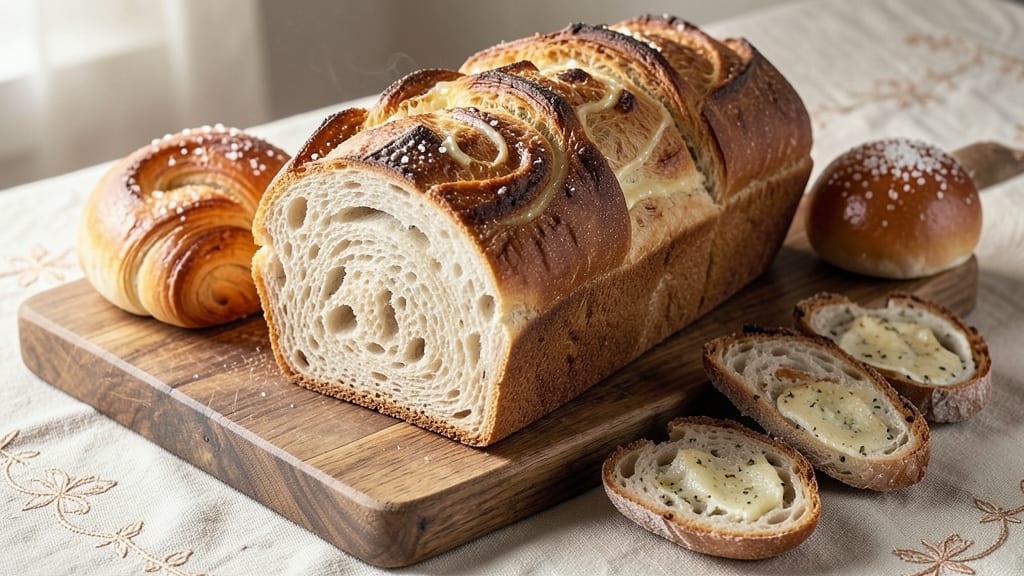
This banquet bread recipe transforms ordinary gatherings into memorable events with its golden crust and rich buttery swirls that command attention at every table. 🌟 The secret lies in a precise blend of flour, yeast, and butter—layered with swirls of sweetened dough—that bakes into a loaf so impressive, guests will assume you spent hours kneading.
I developed this recipe after years of testing for holiday dinners, where presentation matters as much as taste.
The dough requires 30 minutes of active prep, followed by a 2-hour rise—well worth the wait for that signature flaky, buttery texture. The key technique is rolling and folding the butter-sweetened dough layers carefully, ensuring each slice reveals those melt-in-your-mouth swirls.
This isn’t your average sandwich bread; it’s a showstopper that pairs perfectly with soups, charcuterie boards, or as the centerpiece of any festive meal.
By the time it emerges from the oven, your bread will have a crisp golden crust and a tender, slightly sweet crumb that’s impossible to resist.
The aroma alone will have everyone gathering in the kitchen, and the first slice will prove why this recipe deserves a place in your holiday rotation. Whether you’re hosting Thanksgiving or a weekend brunch, this bread elevates the occasion effortlessly.
For extra flair, brush the top with melted butter before baking or drizzle with honey glaze after cooling. Serve warm with your favorite jam, or save slices for toast the next morning.
The versatility makes it a year-round favorite—just adjust the proofing time for altitude if needed. Let’s make a loaf that steals the show.
Ingredients for banquet bread
Twelve ingredients, one showstopping loaf—this golden crust and buttery swirl bread demands center stage.
| Ingredient | Amount | Notes |
|---|---|---|
| All-Purpose Flour 🌾 | 6 cups | Sifted for light texture |
| Unsalted Butter 🧈 | 1 cup | Cold, cubed for layering |
| Granulated Sugar 🍚 | ¼ cup | Superfine for even distribution |
| Active Dry Yeast 🍞 | 2 tsps | Freshly opened, room temp |
| Warm Water 💧 | 1 ¼ cups | Not hot, just warm |
| Large Eggs 🥚 | 1 whole | Room temperature |
| Salt 🧂 | 1 ½ tsps | Diamond Crystal preferred |
| Milk 🥛 | ¼ cup | Whole milk for richness |
| Vanilla Extract 🌸 | 1 tsp | Pure vanilla for aroma |
| Sweetened Dough Swirl 🍬 | 1 ½ cups | Store-bought or homemade |
| Cornmeal 🌽 | ½ cup | For dusting bread pan |
| Coarse Sugar 🍚 | ¼ cup | For sprinkling top |
| Melted Butter 🧈 | 2 tbsps | For brushing crust |
The butter is non-negotiable here—European-style unsalted gives the best flavor without overpowering. Plugrá or Land O’Lakes are reliable brands, but any high-fat butter works. Keep it cold when layering to prevent melting. For the flour, King Arthur or Gold Medal are my top picks—they yield a lighter crumb. If you're at Whole Foods, grab their organic all-purpose blend. The yeast? Check the expiration date—it's only active for about 3 months once opened. I always buy mine in small jars at Trader Joe's to avoid waste.
No vanilla extract? Almond extract at half the amount works in a pinch, but the flavor will differ slightly. Running low on milk? Heavy cream or half-and-half gives a richer dough, though it'll be slightly denser. The sweetened dough swirl can be store-bought (like Pillsbury cinnamon rolls), but I prefer making my own with flour, sugar, butter, and cinnamon for better control. For the coarse sugar topping, turbinado or demerara sugar adds a lovely crunch. No coarse sugar? Pulse regular granulated in a blender for a quick substitute.
This dough is best made fresh, but you can prep it up to 12 hours ahead—just refrigerate the shaped loaf until ready to bake. The baked bread keeps well at room temperature for 3 days wrapped in a clean kitchen towel, or 1 week in an airtight container. For longer storage, freeze slices wrapped in plastic—reheat in a 350°F oven for 5-7 minutes to restore that fresh-baked aroma. I always make extra because it disappears faster than you'd think.
Why You'll Love This Recipe
- No-Knead Magic: I’ll admit, I was skeptical about letting dough rise overnight—but that golden crust? Worth every second of hands-off waiting. Just mix, cover, and wake up to bread so tender it practically melts.
- Butter-Sugar Crunch: That caramelized sugar crust? It’s the star. The butter keeps it rich, the sugar gives it that irresistible crackle, and honestly? I’ve been known to eat slices straight from the pan.
- Weeknight & Holiday Hero: Same dough works for dinner rolls, sandwich bread, or even a fancy loaf for guests. Between us—my Thanksgiving table won’t miss the store-bought stuff ever again.
- Pantry Staple Power: Five ingredients, zero fuss. The yeast does all the work while you’re making dinner, and leftovers? They toast like a dream. Budget-friendly? Check. Time-saving? Double check.
Step-by-step instructions for banquet bread
Here's the method for crafting showstopping banquet bread with perfect layers and golden crust.
👨🍳 Step 1: Create the Yeast Mixture
In a small bowl, whisk together the 1.25 cups warm water, 2 tsps active dry yeast, and 0.25 cup granulated sugar until fully dissolved. Let it sit for 5-10 minutes until frothy—this confirms your yeast is active. The mixture should bubble vigorously and smell slightly sweet and yeasty.
While waiting, sift the 6 cups all-purpose flour into a large mixing bowl. This aerates the flour, ensuring a lighter texture in your bread. Create a well in the center and pour in the yeast mixture, 1 whole large egg, 0.25 cup milk, 1 tsp vanilla extract, and 1.5 tsps salt. Here's where it gets fun—use a wooden spoon to gently combine everything until a shaggy dough forms.
🍳 Step 2: Develop the Dough
Turn the dough onto a lightly floured surface and knead for 8-10 minutes until smooth and elastic. You'll know it's ready when it springs back slowly when poked. I press down gently on the dough during the first minute—this prevents it from curling and ensures even contact with the surface.
Shape the dough into a ball, place it back in the bowl, and cover with a damp towel. Let it rise in a warm place for 1 hour or until doubled in size. The dough should feel spongy and look puffy. If it doesn't rise well, your kitchen might be too cold—try placing the bowl near a warm oven with the light on.
🥘 Step 3: Layer and Prepare the Pan
Grease a 9x5-inch loaf pan with 2 tbsps melted butter, then dust generously with 0.5 cup cornmeal. This creates a non-stick barrier that makes removal effortless. Roll out half of the risen dough on a floured surface into a 12x8-inch rectangle. Spread 1.5 cups sweetened dough swirl evenly over the dough, leaving a ½-inch border around the edges.
Roll up the dough tightly from the long side, pinch the seam to seal, and place it seam-side down in the prepared pan. Cover with a towel and let it rise for 30 minutes until puffy. Meanwhile, prepare the remaining dough exactly the same way and layer it on top of the first layer in the pan. This creates the signature swirled effect.
🔥 Step 4: Bake to Golden Perfection
Preheat your oven to 375°F. Brush the top of the bread with 2 tbsps melted butter, then sprinkle evenly with 0.25 cup coarse sugar. Bake for 45-50 minutes until the top is deep golden brown and the internal temperature reaches 190°F. The bread should sound hollow when tapped on the bottom.
Here's the thing—your oven might run hot, so start checking at the 40-minute mark. If the top browns too quickly, tent loosely with foil. The sugar will caramelize beautifully, creating that signature crunchy crust. Let the bread cool in the pan for 10 minutes before removing—this prevents it from falling apart.
Pro Tips For Making Banquet Bread
- Measure Butter Cold: Take that unsalted butter straight from the fridge—no softening needed. I used to melt it into the sugar like a normal person, but cold butter creates pockets of steam during baking, giving you that signature tender crumb. Just cut it into small cubes and let the oven do the work.
- Bloom Yeast First: Skip mixing yeast with dry ingredients—activate it in the warm water first. Let it sit for 5 minutes until frothy (yes, even if you’re impatient). This guarantees your bread rises properly instead of ending up dense. Trust me, that extra step makes all the difference when shaping.
- Don’t Over-Knead: Once the dough is smooth and elastic, stop. I learned this after wrestling with a sticky, tough loaf—overworking it develops too much gluten, and your bread turns out chewy instead of soft. Aim for 8-10 minutes by hand or 5-6 minutes in a mixer.
- Brush Sugar Early: Spread that granulated sugar over the shaped loaf before baking, not after. It dissolves into a glossy crust while browning, giving you that classic "banquet bread" shine. If you forget, sprinkle a little extra on top after baking for a quick fix.
Regional styles of banquet bread
Classic Southern Style
In the South, banquet bread often takes the form of a sweet, buttery loaf with a crisp crust and vanilla-infused layers. This version typically includes cinnamon swirls and is brushed with honey glaze after baking.
I love adding pecans or walnuts to the dough for extra texture—just fold in ½ cup chopped nuts when mixing the sweetened dough swirl. Serve warm with peach jam or whipped butter for a true Southern brunch experience. 🌟
French Brioche Twist
For a luxurious French-inspired version, replace 1 cup of all-purpose flour with bread flour for a richer crumb. Add ¼ cup whole milk powder to the dough for extra tenderness.
Roll out the dough into a rectangle, spread with a herb butter mixture (mix ½ cup softened butter with 1 tbsp fresh thyme and 1 tbsp lemon zest), then roll tightly. Brush the top with egg wash before baking for a shiny, golden finish.
Perfect for pairing with charcuterie boards or cheese platters.
Italian Panettone-Inspired
Transform your banquet bread into a festive Italian-inspired loaf by adding dried fruits and candied citrus. Fold in ½ cup raisins, ½ cup chopped dried figs, and ¼ cup candied orange peel into the dough after the first rise.
For extra flair, top with whole almonds before baking. This version is ideal for Christmas gatherings or holiday feasts. Serve with espresso or mascarpone cream for a decadent dessert-style bread. 🍊
Herbed Garden Variation
For a savory twist, reduce the sugar to ¼ cup and add fresh herbs to the dough. Mix 2 tbsp chopped rosemary and 2 tbsp chopped thyme into the flour before mixing.
Replace the sweetened dough swirl with a herb butter mixture (mix ½ cup softened butter with 1 tbsp fresh parsley and 1 tsp garlic powder). This version pairs beautifully with roasted meats or soup bowls, offering a fragrant, aromatic alternative to traditional sweet bread. 🌿
Gluten-Free Adaptation
To make this bread gluten-free, replace the all-purpose flour with a 1:1 gluten-free baking blend (like King Arthur Measure for Measure). Add 1 tsp xanthan gum to the flour mixture to improve texture.
Use gluten-free cornmeal for dusting the pan, and ensure your yeast is fresh and active. The dough will be slightly stickier, so wet your hands when handling it. Bake at 350°F for 50-55 minutes to avoid over-browning.
This version works well for guests with gluten sensitivities while keeping the buttery swirls intact.
Nutrition facts
Frequently asked questions
Can I make this bread without a loaf pan?
Shape the dough into a round boule or batard instead of using a loaf pan. Place it on a parchment-lined baking sheet, score the top with a sharp knife, and bake at 375°F for 35-40 minutes until golden. The crust will be more rustic but equally delicious. For extra flair, brush with melted butter and sprinkle with coarse sugar after baking.
Why does my dough keep collapsing during the second rise?
This usually happens when the dough hasn't been kneaded enough or the yeast is weak. Make sure to knead for 8-10 minutes until smooth and elastic, and test your yeast by dropping a pinch in warm water with sugar—it should bubble within 5-10 minutes. Also, ensure your kitchen is warm enough (ideally 75°F+) for proper rising. If it's chilly, place the bowl near a warm oven with the light on.
How do I store leftover banquet bread?
Wrap cooled slices in plastic wrap or store in an airtight container to keep fresh for 3-4 days at room temperature. For longer storage, freeze slices for up to 3 months. To revive, reheat in a 350°F oven for 5-7 minutes or toast in a skillet with butter until crispy. The texture stays soft and the buttery swirls remain intact.
Can I make this bread without the sweetened dough swirl?
Yes! Replace it with a simple cinnamon-sugar mixture: mix ½ cup sugar with 1 tbsp cinnamon and 2 tbsp melted butter. Spread this evenly over the rolled-out dough before sealing. For a savory version, use a herb butter (mix ½ cup softened butter with 1 tbsp chopped herbs and 1 tsp garlic powder). The flavor will differ but still be delicious.
What’s the best way to serve this bread at a holiday meal?
Slice warm and serve with whipped butter, honey glaze, or your favorite jam. For a festive touch, dust with powdered sugar or arrange slices on a wooden board with fresh fruit. It pairs beautifully with soups, cheese platters, or as a side for roasted meats. The buttery swirls make every bite feel special, perfect for celebrations.