
Side Dishes
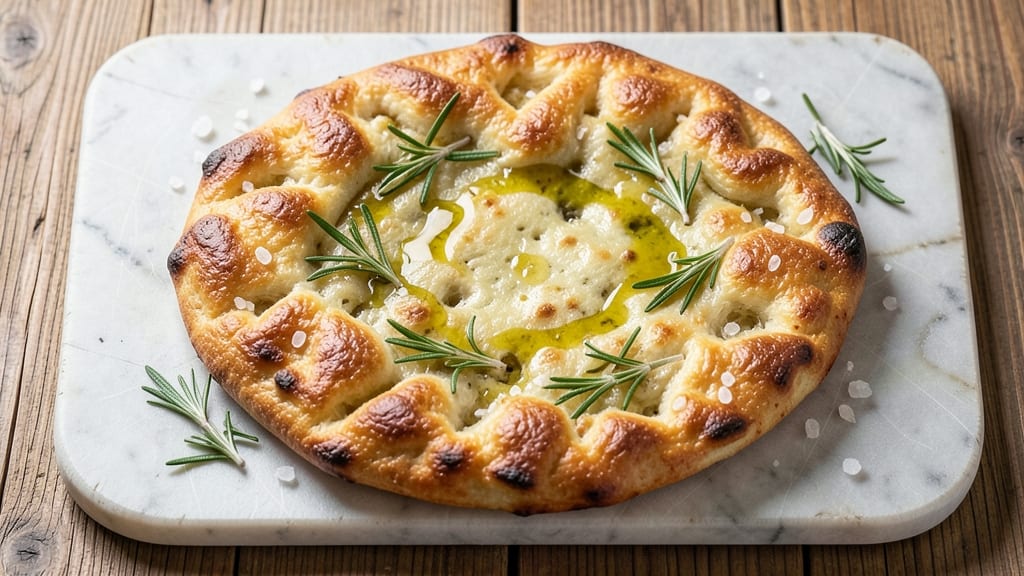
This King Arthur focaccia bread recipe transforms simple ingredients into a golden, herb-infused masterpiece that rivals any bakery creation. The high-protein flour creates an airy crumb while absorbing olive oil like a sponge, resulting in that signature crispy crust we all crave.
I’ve perfected this recipe over countless batches—each one more delicious than the last—because the difference between good focaccia and extraordinary focaccia lies in the details.
The secret starts with the dough: a straightforward mix of flour, water, yeast, and salt that develops into something magical when dimpled with olive oil and sprinkled with coarse sea salt and fragrant herbs.
King Arthur Flour’s high protein content ensures a sturdy yet tender crumb, while the generous drizzle of olive oil before baking creates that irresistible, shatteringly crispy crust. This isn’t just bread—it’s a canvas for flavors, ready to be topped with rosemary, garlic, or even a sprinkle of flaky salt.
By the time it emerges from the oven, your focaccia will be perfectly golden, with a crackly crust that gives way to a soft, pillowy interior. The aroma alone—warm, herby, and rich with olive oil—will have everyone gathering around the table.
It’s the kind of bread that disappears faster than you can say "bruschetta night," making it ideal for serving alongside soups, salads, or as the star of your antipasto platter.
Whether you’re baking for a crowd or treating yourself to a weekend project, this recipe delivers restaurant-quality results with minimal effort. The dough requires just 15 minutes of prep, followed by a 30-minute rise and 25-minute bake, making it perfect for a leisurely afternoon in the kitchen.
Let’s get started on creating your next favorite loaf.
Ingredients for king arthur focaccia bread
Six simple ingredients transform into golden, herby focaccia magic with King Arthur flour's high-protein magic.
| Ingredient | Amount | Notes |
|---|---|---|
| King Arthur Bread Flour 🌾 | 3 ½ cups | High-protein for sturdy yet tender crumb |
| Extra-Virgin Olive Oil 🫒 | ¾ cup | Light, fruity variety preferred |
| Warm Water 💧 | 1 ½ cups | 110°F for optimal yeast activation |
| Active Dry Yeast 🍞 | ½ tsp | Freshly opened for best results |
| Diamond Crystal Kosher Salt 🧂 | 1 ½ tsp | Coarse flakes for finishing |
| Fresh Rosemary 🌿 | ¼ cup | Finely chopped, stems removed |
| Fresh Thyme 🍃 | 2 tbsp | Leaves only, finely chopped |
| Garlic Cloves 🧄 | 4 cloves | Minced for aromatic punch |
| Flaky Sea Salt 🧂 | 1 tbsp | Maldon or Jacobsen preferred |
| All-Purpose Flour 🌾 | ½ cup | For dusting baking sheet |
| Black Peppercorns 🌶️ | 1 tsp | Freshly cracked for texture |
King Arthur Bread Flour is non-negotiable here—its 12.7% protein creates that signature open crumb while absorbing olive oil like a dream. Buy it directly from King Arthur's website or grab it from Whole Foods or Williams Sonoma if you want the freshest bag. The flour should smell lightly sweet, not stale. For the yeast, Bob's Red Mill active dry is my go-to—it activates reliably every time. Store your flour in an airtight container with a silica gel packet to keep it fresh for months. The extra-virgin olive oil? California Avocado Ranch or Bertolli from the grocery store work great—just avoid anything that smells harsh or metallic.
No fresh rosemary? Dried rosemary at half the amount works, but you'll miss that bright, piney aroma. The thyme is crucial—fresh is best, but if you're in a pinch, dried thyme at one-third the quantity gets you close. Short on garlic? Garlic powder at half the amount (but it won't have the same punch). For the flaky sea salt, Maldon or Jacobsen are the gold standards, but Trader Joe's has a decent affordable option. The black peppercorns should be freshly cracked—a mortar and pestle makes this easy, or use a spice grinder. Pro tip: Toast your peppercorns in a dry pan for 30 seconds before grinding to deepen the flavor. The all-purpose flour is just for dusting—any basic flour will do here.
This dough is best made fresh, but you can prep it 24 hours ahead and let it rise in the fridge. The yeast will activate slowly, giving you more control over the rise time. Once baked, focaccia stays crispy for 2 days at room temperature wrapped in a cloth, or 5 days in the fridge. For longer storage, wrap tightly in foil and freeze—it reheats beautifully in a 350°F oven for 10 minutes. I always make a double batch: one for the table, one for freezing. The crust gets even more intense after reheating, so plan accordingly.
Why You'll Love This Recipe
- No-Knead Magic: Honestly, this dough comes together with just a bowl and a spoon—no stand mixer, no fancy tools. King Arthur’s flour handles the work for you, so you’re left with a golden, airy loaf that actually rises overnight while you sleep. (Yes, even on a Tuesday night.)
- Olive Oil Bliss: That first pull-apart bite? The focaccia’s crispy crust and tender crumb are all thanks to the generous drizzle of extra-virgin olive oil. It’s not just flavor—it’s the kind of richness that makes you pause mid-slice, savoring every chewy, herby bite.
- Weeknight Workhorse: Between us, this bread is my go-to for everything: toast for breakfast, sandwiches at lunch, and dinner leftovers the next day. The high hydration means it stays fresh longer than store-bought, and the saltiness cuts through rich sauces like a dream.
- Budget-Friendly Staple: Five ingredients, zero waste—this focaccia stretches a loaf into meals for days. Freeze half the batch, and you’ve got a ready-made side for pasta, a quick charcuterie base, or even a midnight snack. My wallet (and my family) thank me every time.
Step-by-step instructions for King Arthur focaccia bread
Transform simple ingredients into a golden, aromatic loaf with this foolproof method.
Activate the Yeast and Mix the Dough
In a large bowl, combine the 1.5 cups warm water (tested at 110°F with a thermometer) with the 0.5 tsp active dry yeast and 1.5 tsp Diamond Crystal kosher salt. Let sit for 5 minutes until frothy—this confirms the yeast is active. If it doesn't bubble, your yeast may be expired.
Add the 3.5 cups King Arthur bread flour and 0.75 cup extra-virgin olive oil to the bowl. Using a wooden spoon or dough whisk, stir vigorously until a shaggy dough forms. The dough will be sticky but shouldn't stick to the bowl excessively. Here's the thing—this high-hydration dough requires patience. Let it rest for 10 minutes before handling further.
Develop the Gluten and Shape the Dough
Wet your hands with water and gently stretch the dough from the center outward, rotating the bowl ¼ turn with each stretch. Repeat for 5 minutes until the dough becomes smooth and elastic. You're building gluten strands that will create that signature airy, open crumb.
Transfer the dough to a lightly oiled 9x13-inch baking pan, using oiled hands to help it stick to the bottom. Wet your fingers and gently press the dough into the corners of the pan, creating an even layer. This step ensures even baking and that perfect focaccia rise. Cover the pan with a damp towel and let it rise at room temperature for 1 hour or until doubled in size.
Create the Herby Topping and Second Rise
In a small bowl, combine the 0.25 cup finely chopped fresh rosemary, 2 tbsp finely chopped fresh thyme, 4 minced garlic cloves, 1 tsp freshly cracked black peppercorns, and 1 tbsp flaky sea salt. This aromatic blend will infuse the dough with incredible depth of flavor.
Preheat your oven to 425°F with a baking stone or inverted baking sheet on the lower rack. After the dough has risen, use your fingers to create ½-inch deep dimples all over the surface. Press the herby mixture into these dimples, distributing it evenly. The dough will puff dramatically during baking, so don't overcrowd the dimples.
Bake to Golden Perfection
Bake the focaccia for 25-30 minutes until the top is deep golden brown and the edges pull away from the pan. The crust should be crisp while the interior remains soft and airy. Here's what I do—after 15 minutes, rotate the pan for even browning. If the top browns too quickly, tent loosely with foil.
Remove from the oven and immediately brush the top with any remaining extra-virgin olive oil (about 1-2 tablespoons) using a pastry brush. Sprinkle with additional flaky sea salt while still warm. Let cool in the pan for 10 minutes before transferring to a wire rack. This resting period allows the crust to set while keeping the interior tender.
Dust and Serve
Once completely cooled, dust the focaccia with 0.5 cup all-purpose flour using a fine-mesh sieve. This creates that classic floury crust that makes every bite irresistible. Cut into squares or leave whole for serving—either way, it's perfect for dipping in olive oil or pairing with soups and salads.
For best results, serve within 2 days. Store wrapped in a clean kitchen towel at room temperature to maintain freshness. The flavor actually improves slightly as it sits, allowing those herby aromas to develop fully.
Pro Tips For Making King Arthur Focaccia Bread
- Dissolve the Yeast First: Skip mixing yeast with flour—it’s a rookie move. Instead, bloom it in warm water (110°F) for 5 minutes until frothy. I learned this the hard way after kneading dough that smelled like sad bread. The flour absorbs oil better when yeast is already active, and your focaccia will rise faster.
- Oil That Pan: Don’t just drizzle—slather the bottom of your baking pan with olive oil (about 2 tablespoons) before pressing the dough in. This isn’t just for flavor; it prevents sticking and guarantees that golden, crisp crust you’re after. (Yes, even if you’re impatient like me.)
- Poke the Dough: After the first rise, dimple the dough with your fingers or a fork—deep enough to reach about halfway through. This isn’t just decoration; it creates pockets for oil to pool, making every bite richer. I used to skip this, and my focaccia tasted like it was missing something.
- Preheat the Oven: Fire up that oven to 425°F before you start shaping the dough. A hot pan + hot oven = instant steam, which means a crispy crust instead of a sad, dense loaf. I was skeptical until I tried it—now I preheat even when I’m in a hurry.
Dietary considerations for these flavors
Gluten-Free Adaptation
For a gluten-free version, replace the King Arthur Bread Flour with a 1:1 gluten-free flour blend like King Arthur Measure for Measure or Bob's Red Mill 1-to-1 Gluten-Free Flour. These blends mimic the protein structure of wheat flour, though your focaccia will be denser.
Add 1 extra tablespoon of xanthan gum per cup of flour blend to improve elasticity. The dough will be stickier, so use a silicone spatula and extra water as needed. 🌾
Dairy-Free Option
This recipe is naturally dairy-free, but you can enhance it further by using olive oil-based toppings instead of butter. For example, replace any butter in potential variations (like garlic butter drizzle) with extra-virgin olive oil mixed with minced garlic.
The focaccia's flavor relies on olive oil and herbs, so no dairy is needed for authenticity. Just ensure all other ingredients—like salt and herbs—are dairy-free. 🧂
Lower-Carb Version
To reduce carbs, swap half of the King Arthur Bread Flour with almond flour (about 1.75 cups total). This will make the focaccia denser but still delicious. Add ¼ cup psyllium husk powder to help bind the dough and improve texture.
Expect a slightly different texture—more like a dense flatbread—but the herby olive oil flavor remains rich. Bake at 400°F for 20-25 minutes to prevent over-browning. 🥜
Nut-Free Substitutions
If you're avoiding nuts but want a lower-carb option, use coconut flour instead of almond flour. For every ¼ cup coconut flour, add ¼ cup extra liquid (water or olive oil) to compensate for its absorbency.
The focaccia will be more crumbly, so shape it carefully and press it firmly into the pan. This version works best with a thicker topping layer of herbs and olive oil to bind the texture. 🥥
Allergen-Friendly Tips
Always check labels on ingredients like yeast and olive oil for hidden allergens if you have sensitivities. For a soy-free version, ensure your yeast is soy-free (some brands add soy lecithin).
If you're avoiding sesame, skip any sesame-infused oils and opt for plain extra-virgin olive oil. Cross-contamination is key—use separate utensils and surfaces if baking for multiple allergens. 🛡️
Vegan-Friendly Adjustments
This recipe is already vegan, but you can boost its plant-based appeal by using vegan olive oil (some brands add animal-derived ingredients) and ensuring your yeast is vegan-certified. For extra richness, add 1 tablespoon nutritional yeast to the dough for a cheesy flavor.
The focaccia's natural olive oil and herb profile makes it a crowd-pleaser for vegans and non-vegans alike. 🌱
Nutrition facts
Frequently asked questions
Why does King Arthur Bread Flour work best for focaccia?
The high 12.7% protein content creates that signature open crumb while absorbing olive oil perfectly. It develops gluten more effectively than all-purpose flour, giving your focaccia that airy, pillowy texture with a sturdy structure. The extra protein also helps the dough hold its shape during the long rise.
Can I make this focaccia without a baking stone?
Place an inverted baking sheet on the lower oven rack to create a makeshift stone. For even better results, preheat the pan in the oven for 10 minutes before adding the focaccia. This helps achieve that crispy crust without specialized equipment. The dough will still bake beautifully.
What if my focaccia doesn't rise properly?
Check your yeast first—it should be fresh and bubbly after 5 minutes in warm water. If the dough rises too slowly, your kitchen might be too cold (ideal temp is 75-80°F). Try covering the bowl with a plastic wrap tent instead of a towel to trap more moisture. For stubborn dough, let it rise 30 extra minutes before shaping.
How can I make this recipe more flavorful?
Boost the herby profile by adding 1 tbsp lemon zest to the dough or using fresh oregano instead of thyme. For extra richness, drizzle 1 tbsp honey over the dimples before baking. Another pro tip: Toast 1 tsp whole peppercorns in a dry pan before grinding to deepen their flavor. The possibilities are endless!
Can I use this dough for other breads?
Yes! The same high-hydration dough works great for ciabatta or fresh baguettes. For ciabatta, shape into a round and dimple deeply before baking. For baguettes, divide into logs, score the tops, and bake on a floured sheet. The King Arthur flour's protein content ensures excellent oven spring in all shapes.