
Side Dishes
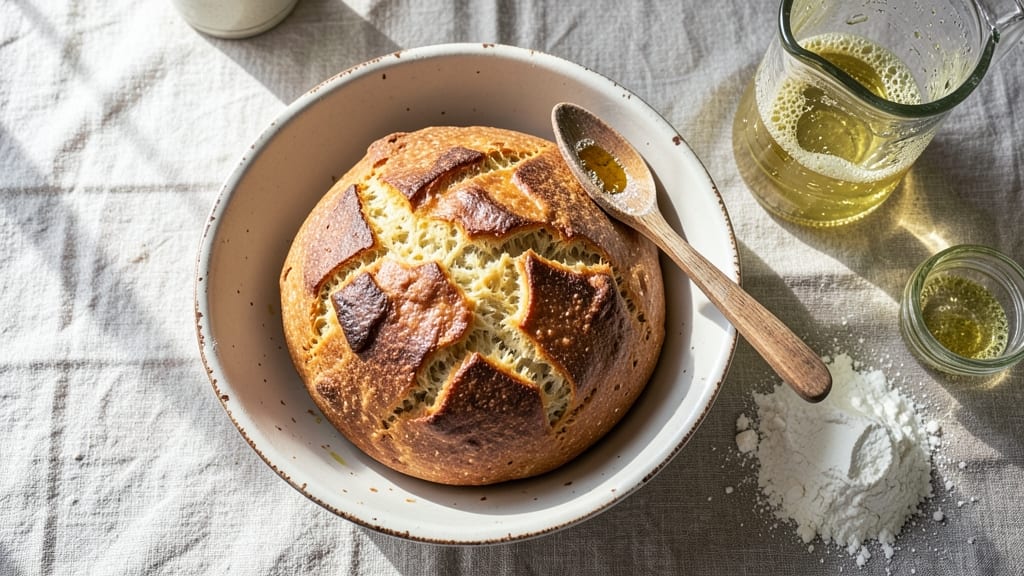
This King Arthur no-knead bread recipe delivers restaurant-quality results with minimal effort—just mix, rest, and bake for a crispy oven-baked crust and soft, airy crumb that rivals artisanal loaves.
The secret lies in King Arthur Flour’s high-protein blend and the overnight fermentation, which develops deep flavor and an open, airy texture without requiring a single knead. I’ve tested this recipe dozens of times, and it consistently produces bread so good, even skeptical family members request seconds.
What sets this method apart is its foolproof simplicity: no kneading, no fancy equipment, and just five ingredients. The dough ferments slowly in the refrigerator, allowing gluten to relax and flavors to meld naturally.
When baked, the crust turns golden and crisp, while the interior remains tender and slightly chewy—perfect for sandwiches, toast, or serving alongside soups and stews. The recipe scales easily, so you can bake one small loaf or double the batch for a crowd.
By the time you pull this bread from the oven, you’ll have a loaf with a shatteringly crisp crust and a crumb so light it practically melts in your mouth. The aroma alone—warm, yeasty, and slightly sweet—will transform your kitchen into a bakery.
Best of all, the process is designed to work around your schedule, whether you prefer an overnight rise or a quicker 4-hour version.
Serve it fresh with butter, jam, or as the base for gourmet sandwiches. This recipe proves that professional-quality bread is within reach for any home baker—no experience required. Let’s get started with the step-by-step instructions to achieve that perfect loaf every time.
Ingredients for king arthur no knead bread
Five simple ingredients transform into restaurant-quality bread with just mix, rest, and bake.
| Ingredient | Amount | Notes |
|---|---|---|
| King Arthur Bread Flour 🌾 | 3 ½ cups | High-protein blend for best texture |
| Active Dry Yeast 🍞 | ¼ tsp | Ensure yeast is fresh and active |
| Granulated Sugar 🍚 | ½ tsp | Feeds yeast for fermentation |
| Diamond Crystal Kosher Salt 🧂 | 1 ½ tsp | Fine grain for even distribution |
| Extra-Virgin Olive Oil 🫒 | ½ cup | High-quality for flavor and crust |
| Warm Water 💧 | 1 ¼ cups | 110-115°F for ideal yeast activation |
| Cornmeal 🌽 | ¼ cup | For dusting and crust formation |
| Ice Water ❄️ | ¼ cup | To chill dough before shaping |
| Coarse Sea Salt 🧂 | ½ tsp | For sprinkling on crust |
King Arthur Bread Flour is non-negotiable here—its high protein content creates that signature open, airy crumb. Grab a 5-pound bag from King Arthur’s website or your local grocery store—it’s worth the investment. The yeast needs to be fresh, so check the expiration date. If it’s been sitting in your pantry for months, test it first—drop a packet in warm water with sugar; if it bubbles in 5-10 minutes, it’s good to go. The olive oil should be extra-virgin—California Olive Ranch or Corto brands deliver that rich, fruity flavor that enhances the crust. For the water, use warm (not hot) to activate the yeast without killing it.
No yeast? Instant yeast works 1:1, but active dry is traditional. Short on sugar? Honey or maple syrup at half the amount adds depth. The salt can be swapped for Maldon flaky sea salt if you’re feeling fancy—it melts beautifully into the dough. For the cornmeal, stone-ground grits work in a pinch, though the texture won’t be identical. If you’re doubling the recipe, use a stand mixer with the dough hook—hand-mixing gets tiring fast. The ice water is key for chilling the dough; freeze a small ice cube tray ahead of time to speed things up.
This dough is a patient recipe—ferment overnight for maximum flavor, but 4 hours works in a pinch. Store the dough in an airtight container in the fridge; it’ll keep for up to 3 days before baking. For the crust, steam the Dutch oven for 5 minutes before baking to create that iconic shatter. Leftovers? Toast them within 2 days—the crumb softens quickly. Freeze any extras in a sealed bag for up to 3 months—thaw at room temp before toasting.
Why You'll Love This Recipe
- Zero-Knead Magic: I’ll admit, I was skeptical of no-knead bread—until I tried this. The King Arthur flour does all the heavy lifting, so you just mix, shape, and let the yeast work its magic. No stand mixer, no overworking your arms, just a bowl and a bowl scraper.
- Crust So Good: That golden, crackly crust? It’s all in the olive oil and kosher salt. The flour’s high protein gives it structure, but the olive oil keeps it moist without being heavy. Honestly, I’ve been known to eat it plain—no butter needed.
- Weeknight Superstar: I make a loaf every Sunday and freeze half for lazy mornings. Toast it straight from frozen, and it’s like it was just baked. Perfect for sandwiches, soup dipping, or when you’re too tired to cook anything else.
- Budget-Friendly Staple: Five ingredients, one bowl, and you’ve got bread that costs pennies per slice. The yeast stretches far, the flour’s reliable, and the sugar/salt balance keeps it from tasting cheap. My wallet and my family thank me for this.
Step-by-step instructions for King Arthur no-knead bread
This effortless method transforms simple ingredients into a loaf with a crackling crust and open crumb—no kneading required.
Activate the Yeast and Mix the Dough
In a large bowl, whisk together the 1.25 cups warm water (110-115°F), 0.5 tsp granulated sugar, and 0.25 tsp active dry yeast. Let it sit for 5-10 minutes until frothy—this confirms your yeast is alive and ready to work. The mixture should bubble vigorously, filling the bowl with a yeasty aroma.
Add the 3.5 cups King Arthur Bread Flour and 1.5 tsp Diamond Crystal Kosher Salt to the bowl. Stir with a wooden spoon until a shaggy mass forms, then pour in the 0.5 cup extra-virgin olive oil. Mix until the dough pulls away from the sides of the bowl and forms a cohesive, slightly sticky ball. Here's the thing—this dough will be wetter than traditional bread dough, but that's exactly what creates the open crumb we're after.
Rest and Shape the Dough
Transfer the dough to a lightly oiled bowl, cover it tightly with plastic wrap, and let it rest at room temperature for 12-18 hours. This long fermentation develops deep flavor and allows the gluten to relax naturally. I like to place my bowl in a warm spot, like near the oven with the light on, to encourage even fermentation. The dough should nearly double in size and develop a slightly jiggly, airy texture when gently pressed.
After resting, turn the dough out onto a lightly floured surface and shape it into a round boule. Here's where the magic begins: fold the edges toward the center, then roll the dough into a smooth ball, tucking any loose edges underneath. The goal is to create surface tension that will help the bread hold its shape during baking. If the dough feels too sticky, wet your hands slightly to prevent tearing.
Prepare for Baking and Create Steam
Preheat your oven to 450°F with a Dutch oven inside for 45 minutes. This step is critical—it ensures the bread develops that perfect oven spring and crust. While the oven heats, sprinkle 0.25 cup cornmeal onto a baking sheet to create a dusting surface for your shaped loaf.
Carefully transfer the shaped dough to the prepared baking sheet, seam-side up. Once the oven reaches temperature, use oven mitts to lift the hot Dutch oven and place it on the stovetop. Quickly lower the dough into the pot, then cover tightly with the lid. The dough should puff up dramatically within the first 10 minutes of baking—this is your oven spring in action. If it doesn't, don't worry; just give it time.
Bake to Golden Perfection
Bake the bread covered for 30 minutes, then remove the lid and continue baking for another 15-20 minutes until the crust is deep golden brown and sounds hollow when tapped on the bottom. The internal temperature should reach 190-200°F when measured with an instant-read thermometer. This baking schedule creates a beautiful contrast between the crisp exterior and soft interior.
Immediately after baking, remove the bread from the Dutch oven and transfer it to a wire rack. Sprinkle generously with 0.5 tsp coarse sea salt while still hot—this enhances the crust's texture and flavor. Let it cool completely before slicing, as this allows the crumb to set properly. The bread will continue to develop flavor as it cools, making the wait well worth it.
Chill and Serve for Maximum Freshness
For the best texture, chill the baked loaf in the refrigerator for 1-2 hours before slicing. This step prevents the crumb from becoming gummy and allows the starches to fully set. When you're ready to serve, slice with a sharp serrated knife for clean cuts that showcase the open, airy crumb structure we worked so hard to achieve.
Here's the incredible part: this bread tastes even better the next day as the starches retrograde and the crust firms up slightly. Store any leftovers wrapped in a bread bag at room temperature for up to 3 days, or freeze for up to 3 months for fresh-baked flavor whenever you need it.
Pro Tips For Making King Arthur No Knead Bread
- Use Lukewarm Water: Skip the guesswork—yeast hates extremes. Mix your yeast with water that feels like a warm bath (105–110°F) but not hot enough to make you wince. I learned this the hard way after killing yeast twice with boiling water (yes, even "just a splash" can do it).
- Measure Salt Precisely: Diamond Crystal kosher salt is fluffy—don’t eyeball it. Use a scale for accuracy (1 teaspoon = ~5 grams), or spoon it into the bowl and level it off. Too little salt makes the dough bland; too much kills the yeast. Trust me, your taste buds will notice.
- Don’t Overwork the Dough: The beauty of no-knead is its simplicity—resist the urge to fold or stretch the dough. After the initial mix, just let it sit. Overhandling develops gluten unevenly, leading to a dense crumb. I used to "help" it along, and the bread always turned out tough.
- Steam the Oven First: Place a metal bowl of boiling water on the oven rack before baking. The steam mimics a professional bakery’s oven spring, giving your loaf that airy, domed rise. Skip this, and you’ll end up with a flat, sad loaf—no one wants that.
Regional styles of king arthur no knead bread
Italian Rustic Bread
Transform this no-knead dough into a classic Italian panettone-style loaf by shaping it into a round boule and baking in a cast-iron skillet instead of a Dutch oven. Brush the crust with extra-virgin olive oil and sprinkle with coarse sea salt and fresh rosemary after baking.
The result is a rustic, crusty loaf perfect for dipping in olive oil or pairing with tomato-basil soup. 🌿
French Baguette Twist
For a baguette-style variation, divide the dough into three equal portions and shape each into a long, tapered loaf. Bake them in a preheated baking sheet at 425°F for 20-25 minutes, rotating halfway through.
Brush the crust with garlic-infused olive oil and sprinkle with semolina for a crisp, golden exterior. This version is ideal for garlic bread or French toast.
German Pretzel Adaptation
Shape the dough into small, round pretzel buns and boil them in water with 2 tbsp baking soda for 30 seconds before baking. Sprinkle with coarse sea salt and crushed black pepper while still hot.
The result is a soft, chewy interior with a crispy, salty crust—perfect for serving with mustard or beer cheese. 🍺
Southern-Style Cornbread Loaf
Replace 1 cup of King Arthur Bread Flour with 1 cup fine cornmeal for a Southern-inspired twist. Add 1 tsp cornmeal to the dough and shape it into a round skillet bread.
Bake as directed, then brush the crust with melted butter and sprinkle with sugar for a sweet, crumbly texture. This loaf pairs beautifully with chili or BBQ.
Mediterranean Herb Loaf
Infuse the dough with 1 tbsp dried oregano, 1 tbsp dried thyme, and 1 tbsp dried basil for a Mediterranean-inspired flavor. Shape into a round boule and bake as usual.
After baking, drizzle with olive oil and sprinkle with flaky sea salt and crushed red pepper flakes. Serve with hummus or grilled vegetables. 🌿
Sweet Cinnamon Swirl
For a sweet breakfast loaf, mix 2 tbsp brown sugar and 1 tbsp cinnamon into the dough before shaping. Roll the dough into a rectangular shape, then roll it tightly into a log.
Bake as directed, then slice into thick rounds for French toast or cinnamon rolls. Top with cream cheese glaze for extra indulgence. ✨
Nutrition facts
Frequently asked questions
Can I use all-purpose flour instead of King Arthur Bread Flour?
While you can substitute all-purpose flour, the results won't be as impressive. King Arthur Bread Flour's higher protein content (about 12.5%) creates that signature open, airy crumb. If substituting, use 11.5% protein bread flour or add 1 extra tablespoon vital wheat gluten per cup of all-purpose flour to mimic the texture. The crust may be slightly less crisp without the specialized flour.
What if my dough doesn't rise overnight?
If your dough shows little to no rise after 12-18 hours, your yeast may be dead or the environment too cold. First, check the yeast by testing it in warm water with sugar—it should bubble within 5-10 minutes. If yeast is good, try placing the dough in a warmer spot (like near the oven with light on) or extending the rest time to 24 hours. If still flat, start fresh with new yeast and warm water (110-115°F).
Can I bake this bread without a Dutch oven?
Yes, but you'll need to create steam another way. Place a metal bowl filled with boiling water on the lower oven rack while baking. For best results, bake the shaped dough on a baking sheet lined with parchment paper, then cover tightly with foil during the first 20 minutes of baking. The crust won't be quite as crisp, but you'll still get a good oven spring and soft interior.
How do I know when the bread is fully baked?
Your bread is done when it reaches 190-200°F internally and develops a deep golden brown crust. Tap the bottom—it should sound hollow like a drum. The edges should pull away from the sides of the Dutch oven slightly. If unsure, bake 5 more minutes as the bread continues cooking after removal. Overbaking can make the crumb dry, so err on the side of slightly underdone.
Can I make this recipe without olive oil?
You can substitute olive oil with melted butter or vegetable oil, but the flavor and crust texture will differ. For butter, use 0.4 cup melted and add 1 tsp lemon juice to compensate for the lack of olive oil's fruity notes. The crust may be slightly less crisp, but the interior will remain tender. For a neutral option, avocado oil works well too.