
Side Dishes
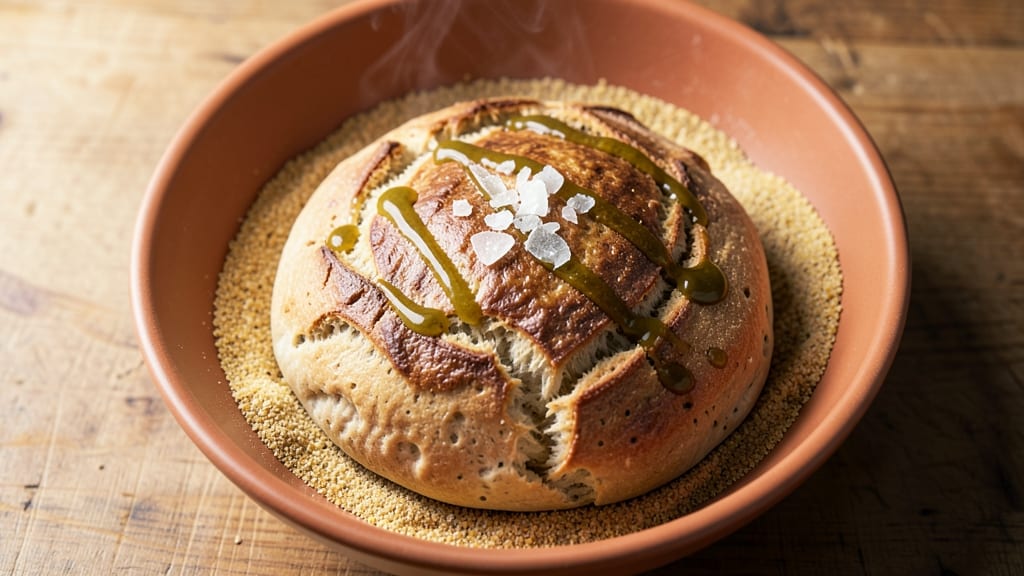
King Arthur's no-knead sourdough bread recipe delivers the perfect balance of a crusty crust and airy crumb with minimal effort—no kneading required. This method leverages King Arthur Flour’s high protein content to create a structure that rivals traditional sourdough while simplifying the process for home bakers.
The secret lies in precise fermentation times and hydration adjustments tailored to this flour’s unique properties, ensuring consistent results every time.
What sets this recipe apart is its ability to transform simple ingredients into a loaf with professional-quality texture and flavor. The dough develops naturally over time, allowing gluten to stretch and relax without physical kneading.
This approach not only saves time but also produces a loaf with an open crumb structure and a crisp, golden crust that’s impossible to resist. The recipe’s flexibility also makes it ideal for experimenting with whole wheat, seeds, or herbs.
By the time you pull that loaf from the oven, you’ll have a restaurant-worthy sourdough that’s crisp on the outside and tender on the inside, with a subtle tang that builds with each slice.
The no-knead method ensures foolproof success, even for beginners, while still delivering the depth of flavor and texture that defines authentic sourdough. This is bread that elevates any meal—whether served fresh or toasted the next day.
The beauty of this recipe lies in its adaptability. You can adjust hydration levels based on your environment, experiment with different flavorings, or even bake multiple loaves at once. Once you master this technique, you’ll never go back to store-bought bread again. Let’s get started on creating your perfect loaf.
Ingredients for king arthur no knead sourdough bread
King Arthur flour and active starter create the foundation for restaurant-quality sourdough with minimal effort.
| Ingredient | Amount | Notes |
|---|---|---|
| King Arthur Bread Flour 🌾 | 3 ½ cups | High-protein for optimal gluten development |
| Active Sourdough Starter 🍞 | ½ cup | 100% hydration, bubbly and active |
| Warm Water 💧 | 1 ½ cups | 95°F-105°F for ideal fermentation |
| Sea Salt 🧂 | 1 ½ tsp | Diamond Crystal preferred for purity |
| Extra-Virgin Olive Oil 🫒 | 1 tbsp | For dough shaping and crust |
| Cornmeal 🌽 | ½ cup | For dusting and crust development |
| Instant Yeast 🍞 | ¼ tsp | Optional for faster fermentation |
| Honey 🍯 | 1 tbsp | Enhances crust browning |
| Coarse Sea Salt 🧂 | 1 tbsp | For final crust sprinkle |
| Ice Water ❄️ | ¼ cup | For shaping and temperature control |
| Semolina Flour 🌾 | ¼ cup | For enhanced crust texture |
| Dried Herbs (optional) 🌿 | 1 tbsp | Rosemary or thyme for flavor variation |
The King Arthur Bread Flour is non-negotiable here—its high protein content (12.7%) creates the ideal gluten structure for no-knead sourdough. King Arthur's website recommends using their Signature Flour for this recipe specifically. For your starter, ensure it's at 100% hydration and actively bubbling; discard half before using. Bulk bins at Whole Foods often carry high-quality starters if you're starting from scratch. The Diamond Crystal sea salt contains larger crystals, so use it sparingly—it dissolves more slowly than table salt, enhancing flavor development. For the olive oil, California Avocado Ranch or Colavita brands provide excellent fruity notes that complement the sourdough tang.
No active starter? Instant yeast at half the amount will kickstart fermentation, though the flavor won't develop the same depth. Substituting whole wheat flour for 1 cup of the bread flour adds nutrients but may slightly reduce oven spring. For the water, filtered or spring water works best—avoid distilled, as it lacks minerals that aid fermentation. The honey substitution? Maple syrup in equal amounts works beautifully. If you're baking in a dry climate, increase water by 1 tbsp to maintain proper dough consistency. The semolina flour can be swapped for more bread flour if unavailable, though it won't provide the same crisp crust texture.
This dough ferments best at 75°F-78°F—use a proofing box or warm oven with a bowl of hot water if your kitchen runs cold. The shaped loaf keeps 3 days at room temperature wrapped in a clean kitchen towel, or 1 week refrigerated in an airtight container. For longer storage, freeze the baked loaf up to 3 months—thaw at room temperature before slicing. The crust develops best when sliced fresh, but toasted slices reheat beautifully. For a crispier crust, bake with a steam pan in the oven or spray the loaf with water before baking.
Why You'll Love This Recipe
- No-Knead Magic: I mix, wait, and bake—no punching, no fuss. The King Arthur flour handles all the heavy lifting while I sip coffee and scroll.
- Tangy Crust, Soft Core: That first bite? Crispy salted crust with a chewy, airy center—thanks to the sourdough starter and olive oil’s richness. Honestly, it’s the kind of bread that makes store-bought taste like cardboard.
- Weeknight Workhorse: Toss it in a Dutch oven for dinner rolls, slice it for sandwiches, or freeze half for lazy mornings. My kids even ask for it plain—no butter needed.
- Budget-Friendly Staple: A few dollars of flour and a little time yield a loaf that lasts days. I’ve fed a houseful with one batch, and the leftovers? Perfect for toast, croutons, or crumbs for meatballs.
Step-by-step instructions for King Arthur's no-knead sourdough bread
This method delivers a professional-quality loaf with minimal effort and maximum flavor development.
Mix and Hydrate the Dough
In a large mixing bowl, combine the 3.5 cups King Arthur Bread Flour, 0.5 cup Active Sourdough Starter, and 1.5 tsp Sea Salt. Create a well in the center and pour in the 1.5 cups Warm Water (between 95°F-105°F). The dough will be shaggy at first—this is normal with high-hydration doughs.
Using a wooden spoon or dough whisk, gently fold the ingredients until just combined. Avoid overmixing, as this develops gluten prematurely. The dough should be sticky but manageable. Cover the bowl with a damp kitchen towel and let rest at room temperature for 8-12 hours. This slow fermentation builds complex flavors and optimal gluten structure. You'll know it's ready when the dough has risen by about 50% and shows bubbles on the surface.
Shape and Prepare for Final Rise
Lightly dust a clean work surface with 0.25 cup Semolina Flour. Scrape the dough onto the surface and gently fold it onto itself 3-4 times to strengthen the gluten without overworking. Shape into a loose round by pulling the edges toward the center, creating surface tension. This isn't a tight boule—just a rough circle that holds together.
Place the shaped dough seam-side up in a lightly oiled bowl. Cover again and refrigerate for 12-16 hours (or up to 24 hours). This cold fermentation enhances flavor development and improves oven spring. The dough should rise slowly in the fridge, doubling in size. If using the optional 1 tbsp Dried Herbs, sprinkle them over the dough before covering for added aroma.
Score and Bake for Maximum Crust Development
Preheat your oven to 450°F with a Dutch oven inside for 45 minutes. Remove the hot Dutch oven using oven mitts. Carefully transfer the dough to a piece of parchment paper, then invert it into the hot Dutch oven. The dough will puff slightly as it hits the hot surface.
Immediately score the top with a razor blade or sharp knife, making a ½-inch deep cut down the center. This prevents over-expansion and creates a dramatic crust. Bake covered for 20 minutes, then remove the lid and continue baking for 20-25 minutes until the crust is deep golden brown and the internal temperature reaches 205°F. The bread should sound hollow when tapped on the bottom.
Enhance Crust and Rest Before Slicing
Remove the bread from the Dutch oven and immediately brush the crust with 1 tbsp Honey mixed with 1 tbsp Extra-Virgin Olive Oil. Sprinkle generously with 1 tbsp Coarse Sea Salt while still warm. Transfer to a wire rack and let cool completely for at least 2 hours. This resting period allows the crumb to set and the flavors to fully develop.
For best results, store the bread wrapped in a clean kitchen towel at room temperature. The crust will continue to crisp up over the next 24 hours, while the crumb remains tender and airy. Slice with a serrated knife for clean cuts through that beautiful open crumb structure.
Pro Tips For Making King Arthur No Knead Sourdough Bread
- WEIGH YOUR WATER: The King Arthur flour calls for precise measurements, but I learned the hard way—eyeballing warm water ruins hydration consistency. Use a kitchen scale for 110g water per 100g flour (or 220g total for the recipe), and measure it after heating. Cold water throws off fermentation timing, and lukewarm (not hot) keeps the starter happy without shocking it.
- STRETCH NOT KNEAD: This isn’t a no-work recipe—give the dough a gentle stretch-and-fold every 30 minutes during bulk fermentation. After mixing, flip the bowl, grab one edge, and pull it up and over the center (no force!). Repeat 3-4 times per session. I skipped this once and ended up with a dense loaf that looked like a brick. Do it twice daily for 2 hours total, and you’ll get that open crumb.
- SALT THE BOWL: Add the sea salt directly to the flour before mixing, not to the water. I used to dissolve it first, thinking it’d distribute better—wrong. The salt needs to interact with the gluten strands from the start. Sprinkle it evenly over the flour, then make a well. This guarantees even flavor and prevents clumpy dough. (Yes, even if you’re impatient like me—don’t skip this.)
- STEAM THE OVEN: Preheat your Dutch oven with the lid on for 30 minutes at 475°F (245°C). Then, before baking, place a metal tray on the bottom rack, add 1 cup boiling water, and slam the lid back on. The steam mimics a professional oven’s humidity—critical for that shatteringly crisp crust. I tried skipping this once and got a loaf that looked dry. The extra 5 minutes upfront saves you from a sad, flat-topped disaster.
Wine and beer pairings for these flavors
Crisp White Wine
For this artisanal sourdough, I reach for a dry, crisp white wine with bright acidity to cut through the rich, tangy flavors. A Sauvignon Blanc from New Zealand—like Kim Crawford or Cloudy Bay—works beautifully with its citrus notes and herbal undertones.
The zesty finish mirrors the bread's subtle sourness, creating a perfect balance. 🍷
If you prefer a lighter option, Pinot Grigio from Italy or Slovenia offers a delicate, mineral-driven profile that won’t overpower the bread’s natural flavors. Look for bottles with 12-13% ABV to complement rather than compete with the sourdough’s complexity.
Light Lager Pairing
A crisp, refreshing lager is my go-to beer pairing for this bread. Peroni or Heineken provide a clean, slightly malty backbone that contrasts the tangy sourdough without overwhelming it. The effervescence helps cleanse the palate between bites, making it ideal for casual gatherings. 🍺
For a craft beer twist, try a Belgian Witbier like Hoegaarden or Allagash White. The coriander and orange peel notes in these beers echo the bread’s crusty, caramelized flavors while adding a refreshing citrus lift.
Red Wine for Bold Lovers
If you prefer red wine, a light-bodied, fruity Pinot Noir from Oregon or Burgundy pairs surprisingly well. The Willamette Valley produces excellent options like Domaine Serene or La Crema, with bright cherry and raspberry notes that complement the bread’s crust without clashing. 🍇
For a bolder red, Chianti Classico offers earthy undertones and moderate tannins that stand up to the sourdough’s tang. Avoid heavy, oaky wines like Cabernet Sauvignon—they’ll overpower the delicate flavors of this no-knead loaf.
Non-Alcoholic Options
Skip the alcohol? A sparkling apple cider like Martinelli’s or a ginger beer from Brew Dr. Brown’s adds effervescence and subtle sweetness to balance the sourdough’s tang. The carbonation mimics wine’s cleansing effect, making it a great alternative. 🍏
For a more sophisticated non-alcoholic choice, try a sparkling water with a splash of lemon juice and a pinch of sea salt. The acidity and salt enhance the bread’s crust, while the bubbles keep your palate fresh between bites.
Nutrition facts
Frequently asked questions
Why does King Arthur Flour work so well for no-knead sourdough?
The high protein content (12.7%) in King Arthur Bread Flour creates the perfect gluten structure for no-knead doughs. Its ability to absorb moisture while maintaining elasticity makes it ideal for high-hydration recipes, producing a crusty crust and open crumb without requiring kneading. The flour's consistent quality also ensures reliable fermentation times.
Can I use this recipe without a Dutch oven?
Yes, but your crust may be less dramatic. Place the shaped dough on a baking sheet lined with parchment paper and bake at 450°F for 30-35 minutes, covering loosely with foil for the first 20 minutes to trap steam. The bread will still be delicious but may lack the crispy, shingled crust of a Dutch oven bake. For extra crunch, brush with olive oil before baking.
What if my dough doesn't rise properly?
Check your starter first—it should be bubbly and active. If the dough stays flat after 12 hours, try these fixes: increase warm water by 1 tbsp, move the bowl to a warmer spot (75°F-78°F ideal), or add ¼ tsp instant yeast to boost fermentation. Cold kitchens often need longer proofing times—don't rush it!
How do I store this bread to keep it fresh?
Wrap the cooled loaf in a clean kitchen towel and store at room temperature for 3 days. For longer storage, refrigerate in an airtight container for 1 week or freeze for 3 months. To revive stale bread, warm slices in a 350°F oven for 5-10 minutes with a splash of water. The crust stays crispy when stored properly!
Can I add mix-ins like seeds or nuts?
Replace ¼ cup of flour with seeds (sesame, flax, or pumpkin) or nuts (walnuts, pecans) before mixing. For whole grains, substitute 1 cup of flour with whole wheat, but reduce hydration by 1 tbsp water since whole wheat absorbs more moisture. Add mix-ins during the final fold before shaping for even distribution.