
Side Dishes
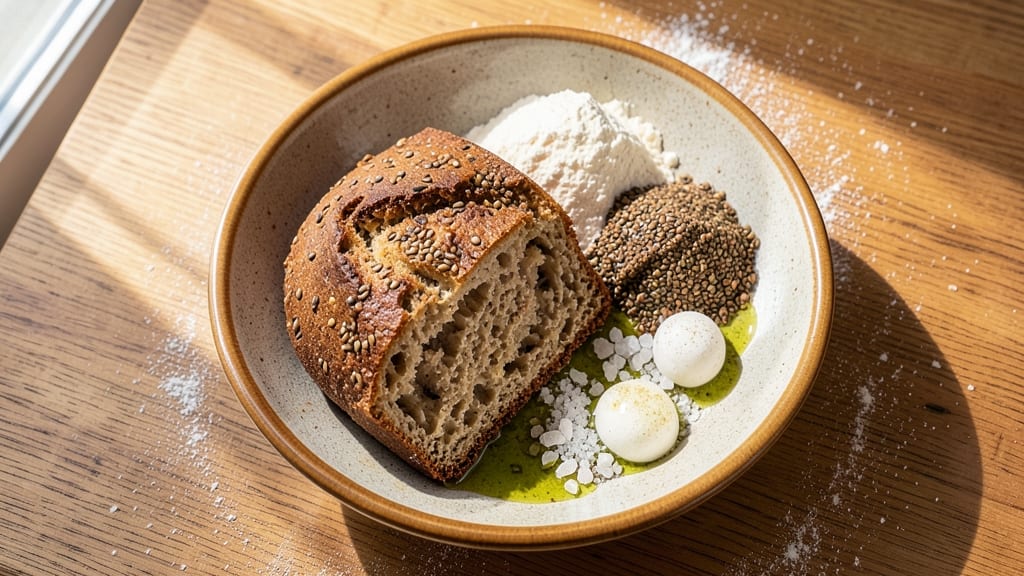
This linseed bread recipe delivers the perfect balance of crusty exterior and soft interior—all thanks to the magic of ground linseeds. The seeds add a nutty depth while boosting fiber and omega-3s, creating a loaf that’s both satisfying and nutritious.
I’ve perfected this recipe after years of baking experiments, ensuring every slice has that ideal texture.
The secret lies in the dough’s hydration and the linseeds’ role—they absorb moisture, creating a tender crumb while contributing to the bread’s signature crunch. This recipe requires no special equipment, just patience during proofing for that airy, open crumb structure.
The result? A loaf that’s hearty enough for sandwiches but light enough to enjoy on its own.
What you’ll achieve is a golden-brown crust with a satisfying crackle, hiding a soft, slightly chewy interior speckled with linseeds. The aroma alone will fill your kitchen with warmth, while the flavor—nutty, slightly sweet, and subtly earthy—makes this bread a standout.
Perfect for breakfast toast, sandwiches, or as a side to soups.
This recipe also works beautifully as a vegan option, requiring no butter or eggs—just flour, water, yeast, and linseeds. The fermentation process enhances flavor, and the seeds add texture without overpowering the bread’s natural taste. Let’s get started on creating your perfect loaf.
Ingredients for linseed bread
Nine essential ingredients transform into a loaf with golden crust and nutty, tender crumb.
| Ingredient | Amount | Notes |
|---|---|---|
| Bread Flour 🌾 | 3 ½ cups | High-protein for structure |
| Ground Flaxseeds 🌰 | ½ cup | Freshly ground for texture |
| Active Dry Yeast 🍞 | 2 ¼ tsp | Freshly opened, not expired |
| Granulated Sugar 🍯 | ¼ cup | Feeds yeast for fermentation |
| Salt 🧂 | 1 ½ tsp | Diamond Crystal preferred |
| Extra-Virgin Olive Oil 🫒 | ½ cup | High-quality, fruity variety |
| Warm Water 💧 | 1 ½ cups | 110°F for yeast activation |
| Whole Flaxseeds 🌰 | ¼ cup | For topping, toasted lightly |
| Cornmeal 🌽 | ¼ cup | For dusting loaf pan |
| Sesame Seeds 🌻 | 1 tbsp | Optional for extra crunch |
The flaxseeds are non-negotiable—they’re the soul of this bread. Bob’s Red Mill or Trader Joe’s carry freshly ground flaxseed meal that’s perfect for this recipe. If you’re grinding your own, pulse them in a high-speed blender until powdery (no chunks!). The yeast? Fresh is key—test it by dropping a pinch in warm water with sugar; if it bubbles in 5 minutes, it’s active. For the flour, King Arthur or Caputo bread flour gives the best structure. The olive oil should be fruity and peppery—California brands like Corto or Colavita are my go-to.
No flaxseeds? Sunflower seeds or pumpkin seeds work in a pinch, but grind them extra fine. Running out of bread flour? All-purpose plus 1 tbsp vital wheat gluten mimics the protein content. The sesame seeds are optional, but if you skip them, toasted poppy seeds add a similar crunch. For the yeast, if you’ve got instant yeast, use the same amount—no need to dissolve it first. The sugar can be swapped for maple syrup or agave, but granulated dissolves most evenly. And if your water’s hard, filtered or bottled prevents mineral buildup that can inhibit yeast.
This dough needs time—at least 2 hours of proofing at room temp or overnight in the fridge. The longer it ferments, the more flavor develops. For storage, wrap the cooled loaf in beeswax wrap or foil—keeps it fresh for 3-4 days. Freeze slices for up to 3 months by wrapping individually. Toasting? High heat for 3-4 minutes brings out the nutty depth. The crust stays crisp for hours, but if it softens, reheat at 350°F for 5 minutes.
Why You'll Love This Recipe
- No-Knead Magic: I swear by this dough—just mix, let it rise, and bake. The ground flaxseeds add a nutty depth without extra effort, and the yeast does all the work while I sip coffee.
- Nutty Crunch Surprise: That first bite? The flaxseeds give it a subtle, toasty crunch that disappears into a soft, slightly sweet crumb. Honestly, it’s the kind of flavor that makes you reach for seconds without thinking.
- Meal Prep MVP: Slice it fresh or toast it ahead—this bread stays crisp for days. I pack it for lunches, freeze slices for quick breakfasts, or serve it with jam when company drops by. It’s my go-to for anything.
- Budget-Friendly Staple: Flour, flax, yeast—all pantry basics that stretch into a loaf with serious staying power. Between us, this recipe turns cheap ingredients into something that feels like a treat, and the leftovers? They’re the real MVP.
Step-by-step instructions for linseed bread
Transform simple ingredients into a masterpiece of texture with this foolproof method.
Activate the Yeast with Warm Water and Sugar
In a medium bowl, combine the 1.5 cups warm water (about 110°F) with the 0.25 cup granulated sugar and 2.25 teaspoons active dry yeast. Let this mixture sit for 5-10 minutes until it becomes frothy and bubbly—this confirms the yeast is alive and ready to work its magic.
Here's the thing—yeast thrives at this precise temperature. If your water is too hot, you'll kill the yeast; too cold, and it won't activate properly. The bubbles should form within 5 minutes, but if nothing happens after 10 minutes, your yeast may be expired. Start fresh with a new packet if this occurs.
Mix the Dough with Flour, Flaxseeds, and Olive Oil
In a stand mixer fitted with the dough hook attachment, add the 3.5 cups bread flour, 1.5 teaspoons salt, and 0.5 cup ground flaxseeds. Mix on low speed for 1 minute to combine the dry ingredients thoroughly. This creates a uniform base for the dough's structure.
With the mixer still running on low, gradually pour in the 0.5 cup extra-virgin olive oil while scraping down the sides of the bowl as needed. The dough will begin to pull away from the sides of the bowl, forming a shaggy mass. Add the yeast mixture all at once and mix on medium speed for 3-4 minutes until the dough comes together into a smooth, elastic ball.
Knead Until Elastic and Smooth
Continue kneading the dough on medium speed for an additional 5-7 minutes until it becomes smooth and elastic. You'll notice it pulls cleanly away from the sides of the bowl and forms a windowpane when stretched—this indicates proper gluten development.
I always do a quick windowpane test: stretch a small piece of dough between my fingers. If it thins out to the point where you can see light through it without tearing, you've kneaded it enough. If it tears immediately, knead for another 2 minutes. Over-kneading can make the bread tough, so aim for just the right balance of elasticity.
First Rise and Prepare the Loaf Pan
Lightly grease a 9x5-inch loaf pan with olive oil, then dust it generously with 0.25 cup cornmeal. This prevents sticking and gives the bread a beautiful crust. Place the dough in the prepared pan and cover it tightly with plastic wrap or a damp kitchen towel.
Let the dough rise in a warm place for 1-1.5 hours until it has nearly doubled in size. You'll see the top of the dough dome above the pan's edges—this is your signal that fermentation is working. If your kitchen isn't warm enough, place the pan near a turned-off oven with the light on for gentle warmth. The dough should feel light and springy when pressed gently with a fingertip.
Shape, Top, and Bake to Golden Perfection
Preheat your oven to 375°F and place a baking sheet on the lower rack. Once the dough has risen, carefully transfer it to the prepared baking sheet. Lightly score the top with a sharp knife in a simple crosshatch pattern—this guides the expansion and creates that classic linseed bread crust.
Sprinkle the 0.25 cup whole flaxseeds evenly over the top, pressing them lightly into the dough. If using, add the 1 tablespoon sesame seeds in a decorative pattern. Bake for 35-40 minutes until the bread is deep golden brown and sounds hollow when tapped on the bottom.
For that signature crunch, I like to turn the oven to broil for the final 2-3 minutes of baking. Keep a close eye on it—you want the seeds to toast beautifully without burning. The internal temperature should reach 190-200°F when tested with an instant-read thermometer. Let the bread cool in the pan for 10 minutes before transferring to a wire rack to cool completely.
Pro Tips For Making Linseed Bread
- Mix Flaxseeds Last: Stir the ground flaxseeds into the dough after the yeast has proofed—otherwise, they’ll absorb moisture and slow fermentation. I learned this the hard way when my first batch took twice as long to rise.
- Use Warm Water: Dissolve the yeast and sugar in water heated to 105–110°F (40–43°C)—lukewarm, not hot. Too cold and it sleeps; too hot and it dies. Test with your finger: barely warm to the touch.
- Skip Over-Kneading: This dough doesn’t need a punishing workout. Knead just until the flaxseeds are evenly distributed—about 5–7 minutes by hand. Overwork it, and the bread turns dense. (Yes, even if you’re eager to prove your strength.)
- Proof Until Doubled: Don’t rush the rise—wait until the dough puffs to about twice its size (or until it jiggles slightly when shaken). The flaxseeds make it heavier, so it’ll take longer than regular bread. Patience here means a lighter loaf.
Regional styles of this dish
Scandinavian Rye Style
In Sweden and Norway, linseed bread often incorporates rye flour for a denser, heartier loaf. Replace 1 cup of the bread flour with rye flour and add 1 teaspoon caraway seeds to the dough for a Nordic twist.
The rye adds a deep, earthy flavor that pairs beautifully with the linseeds. I like to bake this version in a cloche or Dutch oven for an even crispier crust. 🌍
German Seed Bread
Germany’s Körnerbrot tradition features a mix of seeds, and linseeds are a staple. Combine 0.25 cup ground linseeds with 0.25 cup sunflower seeds and 0.25 cup pumpkin seeds in the dough.
Top with a mix of seeds before baking for a textured, rustic loaf. German bakers often add 1 tablespoon honey to the dough for subtle sweetness. 🌰
Italian Olive Oil Focus
Southern Italy embraces linseed bread with an emphasis on extra-virgin olive oil, using up to 0.75 cup instead of 0.5 cup. Add 1 tablespoon dried rosemary to the dough and top with coarse sea salt flakes before baking.
The Mediterranean flavors shine through, creating a bread perfect for dipping in olive oil. I love this version with San Marzano tomatoes for a rustic Italian meal. 🫒
American Whole Grain Twist
For a heartier American-style loaf, swap 1 cup of the bread flour for whole wheat flour and add 0.5 cup rolled oats to the dough. Top with a mix of whole flaxseeds and chopped walnuts before baking.
This version has a nuttier crunch and pairs well with apple butter or almond butter for breakfast toast. 🌾
Japanese Miso Linseed Bread
In Japan, linseed bread often incorporates miso paste for umami depth. Dissolve 1 tablespoon white miso paste in the warm water before mixing with yeast. Add 1 teaspoon grated ginger to the dough for a subtle kick.
The result is a bread with a savory-sweet profile that’s perfect with miso soup or grilled fish. 🍜
French Linseed Brioche
For a richer, sweeter variation, increase the olive oil to 0.75 cup and add 2 tablespoons honey or maple syrup to the dough. Fold in 0.25 cup chopped pistachios alongside the linseeds. This French-inspired brioche-style bread has a buttery texture and pairs beautifully with chocolate spread or jam. 🥖
Nutrition facts
Frequently asked questions
Why does linseed bread have such a unique texture?
The linseeds create a magical contrast—they absorb moisture during kneading, resulting in a tender crumb while their outer shells contribute to the crispy crust. The seeds also add a satisfying nutty crunch when toasted. This dual texture makes every slice exciting, whether you're eating it fresh or toasted.
Can I make this bread without a stand mixer?
Mix the dough by hand in a large bowl, using a wooden spoon first to combine ingredients, then your hands to knead. Work the dough for 8-10 minutes until smooth and elastic. The kneading process develops gluten, which gives the bread its structure—just be patient and keep pressing and folding.
How do I know when the dough is properly proofed?
Look for two key signs: the dough should nearly double in size and feel light when pressed gently with a fingertip. It should spring back slowly (not immediately) when poked. If your kitchen is cold, place the pan near a turned-off oven with the light on for gentle warmth. Underproofed dough leads to dense bread, while overproofed dough collapses during baking.
What if my bread turns out too dense?
Dense bread usually means underproofing or insufficient kneading. For next time, let the dough rise 10-15% longer (until it's clearly puffy) and ensure you knead until it passes the windowpane test. Also check your yeast—if it's expired, it won't activate properly. For immediate fixes, slice the bread thinly and toast it—this can improve texture slightly.
Can I substitute ground flaxseeds with chia seeds?
Yes, but with adjustments! Use the same amount of chia seeds, but mix them with 1 tablespoon extra water first to form a gel (like flax eggs). Chia seeds have a slightly different flavor profile but work well. For best results, toast the seeds before adding them to the dough for enhanced nuttiness. The texture will be similar but with a milder crunch.