
Side Dishes
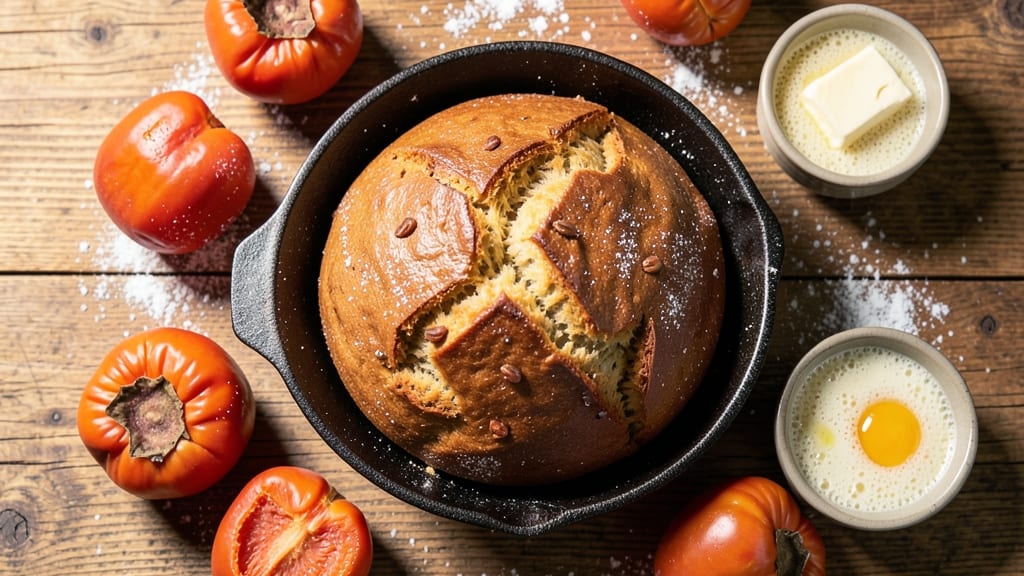
This old-fashioned persimmon bread recipe delivers a perfect balance of spiced warmth and tender crumb—just like Grandma used to make. The secret lies in ripe persimmons blended into a smooth puree that infuses the yeast dough with natural sweetness and vibrant color.
I’ve perfected this recipe over years of baking, ensuring every slice offers that ideal mix of moist texture and aromatic spices.
The dough rises slowly to develop deep flavor, while the persimmon puree keeps it tender rather than dry. Traditional recipes called for fresh persimmons, but modern adaptations use canned or frozen fruit for convenience without sacrificing quality.
The result? A loaf with a golden crust and a crumb so inviting you’ll want to slice it before it even cools.
This bread is versatile enough for breakfast toast or a cozy dessert, especially when paired with a light glaze of powdered sugar and cinnamon. The spices—cinnamon, nutmeg, and allspice—create warmth that lingers with every bite, making it a comforting staple for holidays or everyday treats.
Whether you’re baking for a family gathering or simply craving a taste of nostalgia, this recipe delivers restaurant-quality results with minimal effort. The key is patience—letting the dough rise fully and baking until the internal temperature reaches 190°F ensures that perfect texture we all love.
Ingredients for old fashioned persimmon bread
Fourteen simple ingredients for a loaf that tastes like nostalgia.
| Ingredient | Amount | Notes |
|---|---|---|
| Active Dry Yeast 🍞 | 2 ¼ tsp | Ensure yeast is fresh and active |
| Granulated Sugar 🍚 | ¼ cup | Divided for dough and glaze |
| Ripe Persimmons 🍎 | 1 ½ cups | Pureed, about 2 medium fruit |
| Unsalted Butter 🧈 | ½ cup | Cold, cubed for dough |
| Large Eggs 🥚 | 2 whole | Room temperature preferred |
| All-Purpose Flour 🌾 | 4 cups | Plus 1 tbsp for dusting |
| Ground Cinnamon 🍃 | 1 ½ tsp | Freshly ground preferred |
| Ground Nutmeg 🍃 | ½ tsp | Freshly grated nutmeg better |
| Ground Allspice 🌶️ | ½ tsp | For warm spice depth |
| Salt 🧂 | ½ tsp | Kosher or sea salt |
| Milk 🥛 | ½ cup | Warmed for yeast activation |
| Powdered Sugar 🍚 | 2 tbsp | For post-bake glaze |
| Vanilla Extract 🥄 | 1 tsp | Pure vanilla preferred |
Persimmons are the heart of this recipe—Fuyu or Hachiya varieties work best, but Trader Joe's or Whole Foods often carry pre-packaged puree if you're short on time. Ripe fruit should be soft to the touch, almost jelly-like when squeezed. I've used both fresh and canned puree, but fresh gives that vibrant color and deeper flavor. For the yeast, check the expiration date—old yeast won't activate properly, and there's nothing worse than a flat loaf. The spices? Penzeys or bulk bins at natural food stores have the freshest ground options, but regular grocery store jars work fine if they're not ancient.
No ripe persimmons? Substitute 1.5 cups of unsweetened applesauce, but the bread will lack that signature persimmon depth. Short on vanilla? Almond extract at half the amount works in a pinch, though it has a different flavor profile. The butter should be cold—microwave it 15 seconds if it's too soft, just until it's pliable but not melted. For the flour, King Arthur or Gold Medal brands yield the best texture, but any all-purpose will do. Want extra richness? Add 1 tbsp sour cream to the dough—it keeps the crumb tender and adds a subtle tang.
This dough needs time—at least 2 hours for the first rise, then another hour after shaping. Store the dough in the fridge overnight if you're baking the next day—the flavor develops even more. The baked loaf keeps well at room temperature for 3 days, wrapped in a clean kitchen towel. For longer storage, slice and freeze portions—toast straight from frozen for a cozy breakfast. The glaze? Make it fresh—powdered sugar and a splash of milk keeps it light and dusty.
Why You'll Love This Recipe
- Here’s what sold me: that first slice, still warm, with the crumb melting in your mouth and a whisper of caramelized sugar from the persimmons. The butter keeps it rich without being heavy, and the eggs give it that tender, cake-like crumb—like a cross between bread and dessert that somehow works perfectly.
- Fewer Ingredients, Same Magic: I swear by this recipe because it’s one of those rare loaves where you don’t need a pantry full of specialty items—just yeast, sugar, butter, eggs, and the sweetest ripe persimmons you can find. That’s it. No fussing with multiple dry mixes or obscure spices; the persimmons do all the flavor work.
- Buttery-Sweet Payoff: Here’s what sold me: that first slice, still warm, with the crumb melting in your mouth and a whisper of caramelized sugar from the persimmons. The butter keeps it rich without being heavy, and the eggs give it that tender, cake-like crumb—like a cross between bread and dessert that somehow works perfectly.
- Breakfast or Snack Star: Between us, this bread is my go-to for lazy mornings or after-school snacks. Toast it with a smear of butter and you’ve got a breakfast that feels fancy. Or pack slices for lunch—it holds up better than most breads, and the persimmon flavor actually improves the next day. (Yes, even on a Tuesday.)
Step-by-step instructions for old fashioned persimmon bread
Here's how to make this classic bread with a moist crumb and perfect spice balance.
Activate the Yeast with Warm Milk and Sugar
In a small bowl, combine the 0.5 cup warm milk (about 110°F) with 0.25 cup granulated sugar and 2.25 tsp active dry yeast. Let this sit for 5-10 minutes until it becomes frothy and bubbly—this tells you your yeast is alive and ready to work. If it doesn't bubble, your yeast might be old, and you'll need to start over.
Here's the thing—warm milk activates the yeast without cooking it. Too hot and you kill it; too cold and it won't wake up. A quick way to test temperature is to dip your finger in—it should feel warm but not hot. Once bubbly, proceed immediately to the next step before the yeast loses energy.
Mix the Dough Ingredients Until Combined
In a large mixing bowl, combine the 4 cups all-purpose flour, 1.5 tsp ground cinnamon, 0.5 tsp ground nutmeg, 0.5 tsp ground allspice, and 0.5 tsp salt. Stir these dry ingredients together to distribute the spices evenly throughout the flour.
Create a well in the center and add the yeast mixture, 2 whole large eggs, 0.5 cup cold unsalted butter (cut into small cubes), 1.5 cups pureed ripe persimmons, and 1 tsp vanilla extract. Using a wooden spoon or dough whisk, gently mix everything until just combined—you'll still see flour streaks, and that's perfect. Overmixing develops gluten and makes the bread tough.
Knead the Dough Until Smooth and Elastic
Turn the dough onto a lightly floured surface and knead for 8-10 minutes until smooth and elastic. You'll know it's ready when it springs back slightly when pressed. I like to use my hands for this—push, fold, and turn the dough while pulling it away from you. This builds strength in the gluten structure that helps the bread rise properly.
If the dough feels too sticky, add 1 tablespoon flour at a time until it comes together cleanly. Don't add too much extra flour or the bread will be dense. Once kneaded, place the dough in a lightly greased bowl, cover it with a damp towel, and let it rise in a warm place for 1-1.5 hours or until doubled in size. A good trick is to place the bowl on top of your turned-off oven with the light on for consistent warmth.
Shape, Proof, and Bake to Golden Perfection
Punch down the risen dough to release air, then shape it into a 9x5-inch loaf pan. Brush the sides of the pan with softened butter to prevent sticking. Cover the dough again and let it rise for another 30-45 minutes until it domes slightly above the pan—this final proofing ensures a light texture.
Preheat your oven to 350°F. Bake the bread for 50-55 minutes until the top is golden brown and a toothpick inserted in the center comes out clean. Here's where patience pays off—don't open the oven door during baking or the bread will sink. The persimmons add natural sweetness, so resist the urge to overbake. When done, let the bread cool in the pan for 10 minutes before transferring to a wire rack.
Glaze and Serve Warm
While the bread is still warm, mix 2 tbsp powdered sugar with 1-2 tablespoons milk to create a simple glaze. Brush this over the top of the cooled bread for a sweet finish. The glaze should be thin enough to spread easily but thick enough to stick—think of it like icing sugar mixed with just enough liquid to make it paintable.
Slice the bread when it's completely cool, and you'll see that beautiful moist crumb with flecks of persimmon throughout. The spices should be warm and aromatic, not overpowering. Serve with butter or jam, and you've got a classic that tastes like home.
Pro Tips For Making Old Fashioned Persimmon Bread
- Test the yeast first: Skip the guesswork—mix 1 teaspoon of yeast with ¼ cup warm water (105°F) and 1 teaspoon sugar. If it foams in 5 minutes, your yeast is alive. I learned this the hard way after baking a dense brick of bread because mine was expired.
- Purée persimmons smooth: No lumps, no grittiness—blend ripe persimmons with 1 tablespoon of the butter first, then strain through a fine-mesh sieve if needed. That extra step keeps your bread tender instead of chewy.
- Don’t overmix the dough: Stir just until combined, then let the yeast do the work. I used to punch and fold like I was kneading bread dough, and it came out tough. This recipe relies on a quick, sticky batter—resist the urge to overwork it.
- Bake until golden, not just set: The bread’s done when the top is deep golden brown, not just pale. I used to pull it out too soon because the center looked done, only to have it collapse later. A toothpick should come out clean, but the crust should crackle.
Pro cooking tips for perfect results
Persimmon Puree Perfection
The quality of your persimmon puree makes all the difference in this bread. I recommend using Fuyu persimmons—they’re less astringent than Hachiya and ripen to a jelly-like texture when fully ripe. To test ripeness, gently squeeze the fruit; it should give slightly like a ripe avocado.
Blend 1.5 cups of puree (about 2 medium persimmons) until completely smooth, then strain if you prefer an ultra-silky texture. 🍎
For convenience, store-bought puree works too—look for brands like Trader Joe’s or Whole Foods that offer organic options. If using canned persimmons, drain them well and blend with 1 tablespoon of water to thin the consistency.
Never skip the straining step if you’re using fresh fruit; tiny seeds can make the bread grainy. The puree should be vibrant orange—this color translates to a beautiful loaf!
Yeast Activation Secrets
Activating your yeast properly is the foundation of a good rise. I always use warm milk (around 110°F) to dissolve 2.25 teaspoons of yeast and 0.25 cup sugar. Let it sit for 5-10 minutes until frothy—if it doesn’t bubble, your yeast is likely dead, and you’ll need fresh.
A quick trick: Dip your finger in the milk—it should feel warm but not hot to the touch. 🌡️
Once activated, work quickly! Yeast loses energy fast, so mix it into the dough within 10 minutes of the bubbles forming. For extra insurance, I keep a small jar of active dry yeast in the fridge—it stays fresh longer than the pantry packet.
If your kitchen is cold, place the bowl of yeast mixture in a warm spot (like the oven with the light on) to speed up activation.
Kneading Like a Pro
Kneading develops gluten, which gives the bread structure—but don’t overdo it! Work the dough for 8-10 minutes on a lightly floured surface until it springs back when pressed. I use my knuckles to test elasticity: Press down gently, then lift—if the dough bounces back, it’s ready.
If it sticks or feels gummy, add 1 tablespoon flour at a time until it comes together cleanly. 💪
Avoid using a stand mixer for this dough—it can overwork the gluten and make the bread tough. Instead, use a dough whisk or your hands to fold and stretch the dough.
For a rustic touch, I sometimes leave a few small air pockets in the dough; they create beautiful texture variations in the baked loaf. Cover the kneaded dough with a damp towel and let it rise in a warm place until doubled in size.
Baking for Moisture
The persimmons add natural moisture, so resist the urge to overbake. Preheat your oven to 350°F and bake the loaf for 50-55 minutes until the internal temperature reaches 190°F. A toothpick should come out clean, but the bread will still be slightly soft—this is ideal!
Open the oven door only once during baking to check for browning; frequent peeking causes the bread to sink. 🔥
For extra shine, brush the loaf with melted butter right after removing it from the oven. This enhances the crust’s color and adds richness. Let the bread cool in the pan for 10 minutes before transferring to a wire rack—this prevents it from collapsing.
The longer it cools, the more the flavors meld together, making each slice even more delicious.
Nutrition facts
Frequently asked questions
Can I use unripe persimmons for this bread?
No, unripe persimmons are far too astringent and will make your bread taste bitter. Always use fully ripe fruit that's soft to the touch—like a ripe avocado. For Hachiya varieties, they should be jelly-like when squeezed. If you can't find ripe ones, store-bought puree works perfectly.
How do I know when the bread is fully baked?
Your bread is done when the internal temperature reaches 190°F and a toothpick inserted in the center comes out clean. The crust should be golden brown, but don't overbake—the persimmons keep it moist. The bread will still feel slightly soft when done, which is ideal for that tender crumb.
Can I make this bread without yeast?
Yes, you can make a quick bread version by replacing the yeast with 2 teaspoons baking powder and 1 teaspoon baking soda. Reduce the milk to 0.25 cup and omit the first rise. The texture will be denser but still delicious. This works well if you're short on time!
Why did my bread turn out dense?
Dense bread usually means the yeast didn't activate properly, the dough wasn't kneaded enough, or it didn't rise long enough. Always check your yeast is fresh (it should bubble in warm milk), knead for 8-10 minutes, and let it rise until doubled in size. Cold kitchens can slow yeast activity—try placing your bowl on the oven light for warmth.
How should I store and reheat persimmon bread?
Keep the bread wrapped in a clean kitchen towel at room temperature for up to 3 days. For longer storage, slice and freeze portions—reheat straight from frozen in the oven at 300°F for 5-7 minutes until warmed through. The glaze will soften slightly when reheated, so add fresh glaze after warming.