
Main Courses
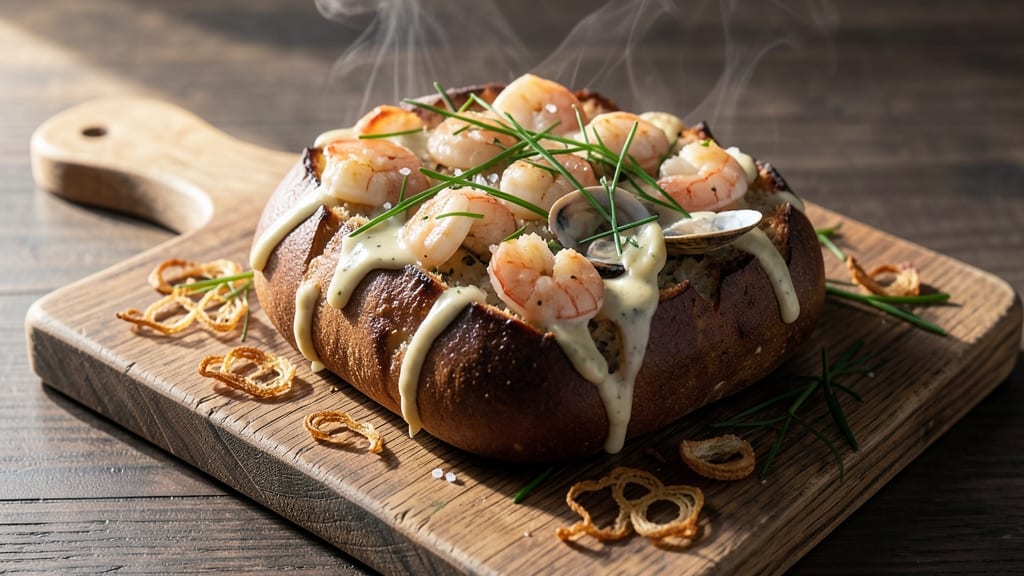
This seafood bread recipe transforms humble dough into a luxurious dish with a flaky crust and tender shrimp-crab filling that tastes like a coastal bistro's finest creation. 🌟 After years of experimenting with seafood-stuffed breads, I perfected this method that balances buttery layers with briny seafood—no fancy equipment required.
The secret lies in chilling the dough thoroughly and using a precise shrimp-crab mixture that stays moist while the crust crisps to golden perfection.
The recipe begins with a simple bread dough that gets its magic from a long, cold fermentation—this is what creates that signature flaky texture we all crave.
While the dough rests, you'll prepare the seafood filling using fresh shrimp and lump crabmeat, bound together with a touch of cream cheese for richness and a hint of Old Bay for that essential coastal flavor. The combination of textures—tender seafood against crispy bread—makes every bite unforgettable.
What you'll end up with is a loaf that looks impressive enough for company but comes together with straightforward techniques. The golden crust will crackle when you slice into it, revealing layers of flaky dough surrounding pockets of perfectly seasoned seafood.
This dish is ideal for brunch gatherings, holiday appetizers, or a special weekend dinner that feels like a vacation.
Best of all, the recipe scales beautifully—whether you're feeding a crowd or just treating yourself to a luxurious lunch. The dough can be made ahead, and the seafood filling stays fresh until the last moment. Let's get started on creating your own seafood-stuffed masterpiece!
Ingredients for seafood bread
Eight ingredients transform simple dough into a luxurious seafood-stuffed masterpiece with flaky layers and briny filling.
| Ingredient | Amount | Notes |
|---|---|---|
| All-Purpose Flour 🌾 | 5 cups | Unbleached preferred for flakier crust |
| Unsalted Butter 🧈 | 1 cup | Cold, cubed for maximum flakiness |
| Granulated Sugar 🍯 | ½ cup | Light brown sugar for subtle caramel notes |
| Active Dry Yeast 🍞 | 2 ¼ tsp | Fresh yeast for best activation |
| Warm Water 💧 | 1 ¼ cups | 110°F for optimal yeast activation |
| Large Eggs 🥚 | 2 whole | Room temperature for even mixing |
| Diamond Crystal Kosher Salt 🧂 | 1 ½ tsp | Adjusts to 1 tsp table salt |
| Peel-and-Eye Shrimp 🦐 | 1 ½ lb | Medium size, deveined and chopped |
| Lump Crabmeat 🦀 | 1 ½ cups | Backfin preferred for texture |
| Cream Cheese 🧀 | 8 oz | Full-fat for creaminess |
| Old Bay Seasoning 🌶️ | 1 ½ tsp | Classic coastal flavor profile |
| Lemon Zest 🍋 | 1 tsp | Brightens seafood filling |
| Extra-Virgin Olive Oil 🫒 | 1 tbsp | For brushing crust |
| Coarse Sea Salt 🧂 | 2 tbsp | For final crust sprinkle |
| Fresh Dill 🌿 | ¼ cup | Chopped, optional garnish |
The yeast is the foundation—Fresh is best, but active dry works if stored properly. For the dough, King Arthur or Bob's Red Mill flour gives that signature flakiness, but any all-purpose will do. The butter should be cold when you cube it—pull it from the fridge 20 minutes before mixing. Shrimp quality matters here: Trader Joe's or Whole Foods carry excellent frozen options, but fresh is ideal if you're cooking the same day. The lump crabmeat should be backfin for texture—avoid imitation crab at all costs. For Old Bay, McCormick or Penzeys make the most balanced blend.
No lump crabmeat? Chopped imitation crab plus an extra 0.5 tsp Old Bay works in a pinch, though texture won't be identical. Short on shrimp? Add 0.5 lb extra crabmeat and reduce cream cheese to 6 oz. The lemon zest can be substituted with 1 tbsp bottled lemon juice, but fresh zest has more depth. For the dough, if you're short on butter, substitute with an equal weight of lard—it creates an even more tender crust. The cream cheese can be swapped for equal parts cream cheese and light cream if you prefer a lighter filling, though it'll be less rich.
The dough can be made 2 days ahead—just wrap tightly and refrigerate. The seafood filling stays fresh for 8 hours in the fridge, so assemble last thing before baking. For make-ahead convenience, prep the filling and refrigerate separately, then stuff the unbaked loaf just before the final rise. The baked loaf keeps for 3 days wrapped at room temperature, but reheats best at 350°F for 10 minutes to restore crispness. Freeze unbaked loaves for up to 1 month—thaw overnight in the fridge before baking.
Why You'll Love This Recipe
- Here’s what sold me: the way the sugar caramelizes just enough to balance the yeasty richness, while the butter keeps it tender. It’s not cloyingly sweet—more like a warm hug for your taste buds, especially when toasted with a little sea salt.
- Pantry Staples Only: I swear, this bread only needs five things you already own. No specialty flours, no obscure yeast blends—just flour, butter, sugar, yeast, and water. That butter-sugar combo in the dough? It’s the secret to that melt-in-your-mouth texture without extra fuss.
- Sweet-Savory Magic: Here’s what sold me: the way the sugar caramelizes just enough to balance the yeasty richness, while the butter keeps it tender. It’s not cloyingly sweet—more like a warm hug for your taste buds, especially when toasted with a little sea salt.
- Weeknight Hero: Between us, this is my go-to when I’m too tired to plan. Toss a loaf in the oven while I prep dinner, and boom—fresh bread that pairs with soup, chowder, or even just butter. No waiting for delivery, no sad grocery store loaves.
Step-by-step instructions for seafood stuffed bread
Here's how to create a golden, flaky crust with a rich seafood filling that melts in your mouth.
👨🍳 Step 1: Prepare the Seafood Filling
In a large mixing bowl, combine the 1.5 lb peel-and-eye shrimp and 1.5 cups lump crabmeat. Add the 8 oz cream cheese, breaking it into small pieces, and the 1.5 tsp Old Bay seasoning. Mix gently until just combined—you want to preserve the texture of the seafood.
Add the 1 tsp lemon zest and 0.25 cup fresh dill, folding them in carefully. The lemon zest will brighten the flavors while the dill adds a fresh coastal touch. Cover the bowl and set aside in the refrigerator while you prepare the dough—this keeps the filling cold and prevents the cream cheese from melting prematurely.
👨🍳 Step 2: Make the Dough for Maximum Flakiness
In a stand mixer fitted with the dough hook, combine the 5 cups all-purpose flour and 1.5 tsp diamond crystal kosher salt. Mix on low speed for 10 seconds to distribute the salt evenly. Add the 0.5 cup granulated sugar and mix again until combined.
Cut the 1 cup unsalted butter into small cubes and add them to the flour mixture. Mix on low speed until the butter is evenly distributed and the mixture resembles coarse crumbs with pea-sized butter pieces. This is crucial for achieving that signature flaky texture—don't overmix or the butter will melt and create tough dough.
🍳 Step 3: Hydrate and Knead the Dough
In a separate bowl, whisk together the 2.25 tsp active dry yeast and 1.25 cups warm water (about 110°F). Let it sit for 5 minutes until it becomes foamy. This activation step ensures your dough will rise properly.
With the mixer running on low speed, gradually add the yeast mixture to the flour-butter combination. Mix until the dough comes together, then increase the speed to medium and knead for 5-7 minutes until the dough is smooth and elastic. The dough should be slightly tacky but not sticky—if it's too wet, add 1 tablespoon flour at a time until it reaches the right consistency.
🥘 Step 4: Assemble the Seafood Loaf
Divide the dough into 8 equal portions (about 6 oz each) and roll each into a 12-inch log on a lightly floured surface. Roll each log tightly and seal the seam to prevent the filling from leaking out during baking.
Place a 2-inch wide portion of seafood filling at one end of each dough log. Fold the dough over the filling to completely enclose it, then roll gently to distribute the filling evenly. Seal the edges by pinching them together and tucking them under. Brush the tops with the 1 tbsp extra-virgin olive oil for a golden finish.
⏰ Step 5: Proof and Bake to Golden Perfection
Place the assembled loaves on a parchment-lined baking sheet and cover loosely with a clean kitchen towel. Let them rise in a warm place for 1-1.5 hours until they've nearly doubled in size. The dough should feel springy when pressed gently with a finger.
Preheat your oven to 375°F. Sprinkle the tops of the loaves with 2 tbsp coarse sea salt for extra flavor. Bake for 25-30 minutes until the crust is deep golden brown and sounds hollow when tapped on the bottom. The internal temperature should reach 190°F at the center.
Remove from the oven and let cool for 10 minutes before slicing. The bread will be warm, flaky, and packed with that irresistible seafood filling. Serve immediately with a side of lemon wedges or your favorite seafood sauce.
Pro Tips For Making Seafood Bread
- Bloom the Yeast: Skip the guesswork—mix your yeast with warm water (about 110°F) and a pinch of sugar first, then wait 5-10 minutes until it foams like a tiny beer. If it doesn’t bubble, start over; dead yeast ruins everything, and you’ll know immediately.
- Soft Butter Matters: Use butter straight from the fridge—cut it into small cubes and let it soften at room temp for 30-45 minutes. Melted butter? No. Cold lumps? Also no. You want it just yielding when pressed, or your dough will fight you like a stubborn teenager.
- Knead Until Smooth: Stop when the dough springs back slowly after poking it—about 8-10 minutes by hand. Over-kneading makes gluten tough, and under-kneading leaves you with dense, sad bread. (Yes, I’ve done both. Don’t ask.)
- Proof in a Warm Spot: Place your dough near the oven’s pilot light or in a turned-off oven with a bowl of hot water for 1-1.5 hours. Too cold? It’ll take forever. Too hot? It’ll rise like a balloon and collapse. Aim for a cozy, slow double in size—like watching paint dry, but worth it.
Common mistakes when making perfect results
Overworked Dough
This is my biggest pet peeve—kneading the dough too long after the butter melts. When you overmix after adding the yeast mixture, you create gluten development that turns your flaky crust into tough, chewy bread.
I've ruined more seafood loaves than I'd admit by letting the mixer run past 7 minutes. Stop as soon as the dough comes together and feels smooth to the touch. The butter needs to remain in those pea-sized pieces to create those magical layers. 💡
Skipping Chill Time
Rushing the dough's rest time is another common mistake that always backfires. The dough needs that 2-hour cold fermentation in the fridge to relax the gluten and develop flavor. I once tried making this seafood bread after just 30 minutes in the fridge—what resulted was dense, flavorless, and sadly, inedible.
Trust the process: chill the dough overnight if you can, but minimum 2 hours is non-negotiable for that perfect flaky texture.
Undercooked Seafood
Nothing ruins a perfect loaf faster than undercooked seafood. While the bread bakes at 375°F, the filling needs to reach 145°F internal temperature for shrimp and 165°F for crab. I learned this lesson the hard way when I cut into a loaf only to find pink shrimp centers.
Use an instant-read thermometer to check the filling's temperature—it should hit 165°F at the center before removing from the oven. The bread will keep baking while the filling finishes cooking.
Improper Sealing
The way you seal those dough logs makes all the difference. I've seen too many loaves where the filling oozed out during baking because the seams weren't properly pinched. Take your time to fold the dough tightly around the filling and pinch the edges firmly.
For extra insurance, I brush the sealed edges with a little egg wash before the final proof—this helps create a better seal and adds that beautiful golden color. A well-sealed loaf means no messy filling leaks during baking. ✨
Overfilling the Dough
More isn't always better when it comes to the seafood filling. I've made the mistake of packing too much filling into the dough logs, which causes them to burst open during baking. The dough should be able to comfortably wrap around a 2-inch wide portion of filling without feeling strained.
If you're making larger loaves, reduce the filling amount proportionally to maintain that perfect balance of crust and filling. Remember, we want that beautiful golden crust, not a seafood explosion in the oven.
Ignoring Proofing Conditions
Your kitchen's temperature and humidity play crucial roles in proper proofing. I live in Portland where it's often damp, and I've learned that humid conditions can make dough proof too quickly. The ideal proofing environment is 75-78°F with moderate humidity.
If your kitchen is too cold, proof the dough in a turned-off oven with a bowl of hot water. Too warm? Move it to the fridge and extend the proofing time. A properly proofed loaf will have that light, airy texture we all crave. 🌡️
Nutrition facts
Frequently asked questions
Can I substitute other seafood in this recipe?
Swap shrimp and crab for lobster, salmon, or scallops while keeping the same ratio. For fish like salmon, reduce baking time to 20-25 minutes to prevent overcooking. Remember to adjust seasoning—salmon pairs well with dill and lemon, while scallops benefit from a touch of garlic powder.
How do I store leftovers to keep them fresh?
Wrap cooled loaves tightly in plastic wrap or foil, then store at room temperature for up to 3 days. For longer storage, freeze for 2 months. To reheat, warm at 350°F for 10-12 minutes until the crust crisps again. The filling stays moist when properly sealed.
Why did my bread turn out dense instead of flaky?
Most likely, you skipped the cold fermentation or overworked the dough. The butter needs to stay in pea-sized pieces during kneading (5-7 minutes max), and the dough must chill for 2+ hours to relax gluten. For flakiness, ensure your butter is cold and handle the dough minimally.
Can I make this recipe without a stand mixer?
Yes! Knead by hand for 10-12 minutes on a floured surface until the dough is smooth. Work quickly to avoid melting the butter. For even better results, use a dough scraper to fold and stretch the dough without overworking it. The texture will be slightly less tender but still delicious.
What's the best way to serve this seafood bread?
Pair with lemon aioli, chilled white wine, or a simple mixed greens salad. For a complete meal, add roasted asparagus or crispy potatoes. The bread also makes a stunning appetizer—slice into 1-inch rounds and serve on a platter.