
Main Courses
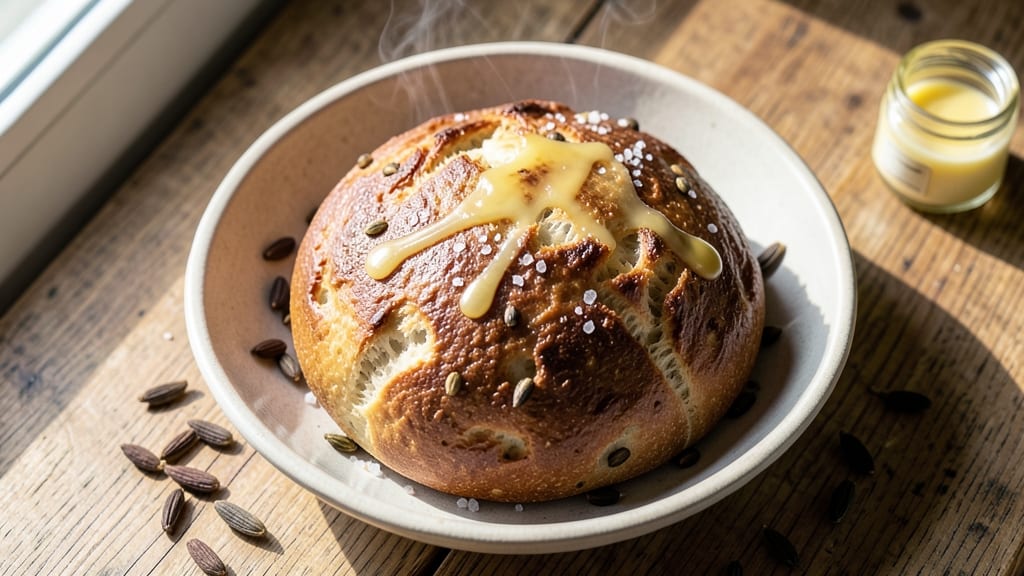
This Swedish cardamom bread recipe brings the heart of Scandinavia to your kitchen with its signature rustic crust and fragrant sweetness. The warm, spiced aroma of cardamom—Sweden's beloved baking spice—transforms simple flour and yeast into something extraordinary.
I've perfected this technique over years of baking, ensuring every loaf delivers that perfect balance of crispy crust and tender crumb. The secret lies in the slow fermentation and precise shaping that gives it that iconic rustic texture.
The beauty of this recipe is its versatility—whether you prefer a lightly sweetened loaf or a savory version with seeds and herbs. Swedish bakeries often use malt syrup or saffron for depth, but I've simplified it without sacrificing authenticity.
With just a few key ingredients and about 4 hours of hands-off time, you'll have a loaf that smells like a Swedish fika (coffee break) and tastes like home. The dough requires patience, but the results are worth every minute of waiting.
What makes this bread truly special is how it elevates any meal—serve it warm with butter, pair it with smoked salmon for breakfast, or use it to make open-faced sandwiches. The cardamom's floral notes linger on your palate, while the crust provides satisfying crunch.
This isn't just bread; it's a flavor experience that connects you to Swedish baking traditions. Let's get started on creating your own rustic masterpiece.
For those new to Swedish baking, don't worry—the process is simpler than it seems. We'll cover everything from mixing the dough to achieving that perfect oven spring.
Whether you're baking for a family gathering or treating yourself to a special loaf, this recipe delivers professional-quality results with just a few pantry staples. The key is attention to detail during proofing and baking, which I'll guide you through step by step.
Ingredients for swedish bread
Four cups flour, a pinch of cardamom, and patience—this is all you need for Swedish cardamom bread.
| Ingredient | Amount | Notes |
|---|---|---|
| All-Purpose Flour 🌾 | 4 cups | Use bread flour for chewier texture |
| Active Dry Yeast 🍞 | 0.01 oz | Or 2 1/4 tsp, ensure fresh |
| Granulated Sugar 🍚 | ¼ cup | Light brown sugar for deeper flavor |
| Cardamom Pods 🌿 | 1 tsp | Ground seeds preferred, organic if possible |
| Unsalted Butter 🧈 | ½ cup | Cold, cubed for better texture |
| Large Eggs 🥚 | 1 whole | Room temperature for easier mixing |
| Warm Milk 🥛 | ¾ cup | Whole milk, 100-110°F |
| Kosher Salt 🧂 | 1 ½ tsp | Diamond Crystal preferred |
| Cornmeal 🌽 | ¼ cup | For dusting baking sheet |
| Malt Syrup 🍯 | 1 tbsp | Optional, for extra depth |
| Coarse Sea Salt 🧂 | 1 tsp | For sprinkling on crust |
| Sesame Seeds 🌱 | 1 tbsp | Optional topping |
Cardamom is the star here, so don't skimp. I grab mine from Penzeys or the bulk bin at Whole Foods—organic pods keep for months in a sealed jar. The yeast? Check the expiration date—old yeast won't rise properly. For the flour, King Arthur or Bob's Red Mill are my go-tos, but any all-purpose works. The butter needs to be cold—press it between parchment paper to flatten if it's too soft. And that malt syrup? Trader Joe's has a great affordable version, but you can skip it if you're keeping this strictly sweetened.
No cardamom pods? Ground cardamom works at double the amount, but whole pods give better flavor. Out of malt syrup? A splash of honey or maple syrup does the trick. Using bread flour instead of all-purpose? Add 1 tbsp extra flour—it absorbs more moisture. The milk should be warm to the touch but not hot—microwave for 30 seconds if it's cold straight from the fridge. And if you're feeling fancy, swap the sesame seeds for poppy seeds or flaxseeds for a different crunch.
This dough needs time—at least 2 hours of rising at room temp. Cover it with a damp towel so it doesn't dry out. Once shaped, let it proof another 30-60 minutes before baking. The bread keeps well for 3-4 days at room temp, wrapped in a towel, or 1 week in the fridge. For longer storage, freeze the baked loaf for up to 3 months. Toast slices before serving to revive that crusty texture.
Why You'll Love This Recipe
- No-Knead Nightmare Solved: I swear by this dough—just mix, let it rise, and bake. No punishing kneading, no waiting hours for a stiff loaf. The yeast and butter do all the work while you sip coffee.
- Cardamom Magic: That crushed pod in the dough? It’s like a warm hug in every bite. Sweet, earthy, and just enough to make you crave another slice—no syrup needed.
- Breakfast to Brunch: Toast it for morning, slice it for sandwiches, or serve it with jam for guests. Honestly, I’ve used it for everything from French toast to dessert crumbs, and it never lets me down.
- Budget-Friendly Staple: A few cents of cardamom and butter stretch into a whole loaf. Freeze half for later—no waste, no stress. My wallet and freezer thank me every time.
Step-by-step instructions for Swedish cardamom bread
This rustic loaf delivers a perfect balance of sweet cardamom aroma and crispy crust every time.
Activate the Yeast with Warm Milk and Sugar
In a small bowl, combine the 0.75 cup warm milk (between 100-110°F) with the 0.25 cup granulated sugar and 0.014 oz active dry yeast. Let this sit for 5-10 minutes until it becomes frothy and bubbly—this tells you the yeast is alive and ready to work. If it doesn't bubble, your yeast might be old, and you'll need to start over. Here's the thing—yeast is finicky, but this quick test saves you from a flat loaf later.
While waiting, lightly crush the 1 tsp cardamom pods in a mortar and pestle or between two spoons. You want to release the seeds' aroma but not turn them into powder. The flavor comes from those tiny seeds, not the pods themselves. Set this aside for later.
Mix the Dough and Knead Until Elastic
In a large mixing bowl, whisk together the 4 cups all-purpose flour and 1.5 tsp kosher salt. Create a well in the center and pour in the yeast mixture, 1 whole large egg, and the crushed cardamom. Using a wooden spoon, gently combine until a shaggy dough forms.
Turn the dough onto a lightly floured surface and knead for 8-10 minutes by hand, or use a stand mixer with a dough hook for 5-6 minutes on medium speed. You're looking for smooth, elastic dough that springs back when poked—this means the gluten has developed properly. If it feels sticky, add flour 1 tablespoon at a time, but don't overdo it. Too much flour makes the bread dense instead of light and airy.
First Rise and Shape the Loaf
Lightly grease a large bowl with a bit of the 0.5 cup unsalted butter, then place the dough inside. Cover with a damp towel or plastic wrap and let it rise in a warm place for 1-1.5 hours, or until it has nearly doubled in size. A good test is to gently press two fingers into the dough—if the indentation stays, it's ready.
Once risen, punch down the dough to release air, then shape it into a round loaf. Place it seam-side up on a baking sheet dusted with 0.25 cup cornmeal—this prevents sticking and adds a subtle crunch. Cover again and let it rise for another 30-45 minutes while you preheat your oven to 375°F. This second rise gives the bread its signature height and texture.
Bake to Golden Perfection
Brush the loaf with the remaining 0.5 cup unsalted butter, then drizzle the 1 tbsp malt syrup evenly over the top. Sprinkle with 1 tsp coarse sea salt and 1 tbsp sesame seeds for that classic Swedish touch. Bake for 30-35 minutes until the crust is deep golden brown and sounds hollow when tapped on the bottom.
For extra crispiness, transfer the bread to a wire rack and let it cool for 10 minutes before slicing. The malt syrup adds a subtle caramelized sweetness, while the sesame seeds give a nutty crunch that contrasts beautifully with the soft interior. Real talk—this is where the magic happens. The combination of cardamom's warm spice and the buttery crust makes every slice irresistible.
Pro Tips For Making Swedish Bread
- Toast Cardamom First: Crack open those pods and let the seeds toast in a dry pan for 30 seconds—just until you smell that warm, aromatic punch. Cold cardamom tastes like nothing; toasted seeds wake up the whole loaf.
- Use Warm Butter: Melt your unsalted butter until it’s just slightly cooler than body temperature (about 100°F/38°C). Cold butter won’t incorporate well; too-hot butter kills the yeast. Test with your finger—should feel like a warm bath, not a sauna.
- Skip the Over-Knead: Swedish bread doesn’t need a punishing workout. Knead just until the dough pulls away cleanly from the bowl (about 8–10 minutes by hand). Overwork it, and you’ll end up with a dense brick instead of that signature light crumb.
- Proof in Two Stages: Let the dough rise once until puffy (about 1 hour), then punch it down and refrigerate overnight. The cold slows fermentation, deepens flavor, and makes shaping easier—no more sticky, sad dough. (Yes, even if you’re impatient like me.)
Troubleshooting this recipe
Dough Didn't Rise
If your dough fails to rise properly, check your yeast first—it might be expired or not activated correctly. I’ve had this happen when the milk wasn’t warm enough (100-110°F) or when the yeast was stored in the fridge too long.
Try this fix: dissolve the yeast in ¼ cup warm water with 1 tsp sugar and wait 5-10 minutes for bubbles. If nothing happens, your yeast is dead—replace it.
Also, ensure your dough is in a warm spot (like near the oven with the light on) and covered with a damp towel to retain moisture.
Another common issue is over-kneading or adding too much flour, which weakens the gluten structure. Knead just until the dough is smooth and elastic—about 8-10 minutes by hand. If it’s still flat after the first rise, let it rest for 20 minutes before shaping, then try rising again.
Patience is key here—rushing the process leads to dense bread. 💡
Crust Too Pale
A pale crust usually means the bread didn’t bake long enough or the oven wasn’t hot enough. Preheat your oven to 375°F for at least 20 minutes before baking—cold ovens slow down the process.
For extra color, brush the loaf with melted butter right after it goes in the oven, then sprinkle with coarse sea salt. The butter helps create a golden-brown crust through the Maillard reaction.
If your oven runs hot, reduce the temperature to 350°F and check the bread after 25 minutes.
For a deeper color, try baking on the middle rack instead of the bottom. The top heat helps crisp the crust faster. If your bread still looks pale, broil it for 1-2 minutes at the end, watching closely to avoid burning.
A dark crust doesn’t always mean overbaking—it’s often a sign of proper browning. 🔥
Dense or Heavy Texture
Dense bread usually stems from over-kneading or under-proofing. If your dough feels tough or rubbery after kneading, you’ve likely developed too much gluten. Stop when the dough springs back slowly when poked—it should feel smooth, not stiff.
For under-proofing, let the dough rise until it doubles in size during both rises. If it’s not rising enough, try placing it in a warmer spot (like a turned-off oven with the light on) or covering it with a plastic wrap to trap heat.
Another culprit is too much flour during kneading. If the dough feels dry or crumbly, add just 1 tablespoon of water at a time to hydrate it. For extra lightness, let the dough undergo a cold proof in the fridge overnight—this slow fermentation enhances flavor and texture.
Avoid skipping the second rise, as it’s crucial for oven spring. ⚡
Uneven Baking
If one side of your bread is underbaked or pale, your oven might have hot spots. Rotate the baking sheet halfway through baking (after 15-18 minutes) to ensure even heat distribution.
I also recommend using an oven thermometer—many home ovens are off by 25-50°F. If your bread bakes unevenly, try placing a baking stone on the middle rack to improve heat circulation.
For a more consistent bake, shape your loaf into a round boule instead of a flat oval—this helps it rise more evenly. If the crust browns too quickly on one side, tent the bread with aluminum foil after 10 minutes to slow browning while the center cooks.
A properly shaped loaf with even steam distribution bakes more uniformly. 💫
Nutrition facts
Frequently asked questions
What makes Swedish cardamom bread different from regular bread?
The signature difference lies in the cardamom and traditional techniques. Swedish bakers often use malt syrup or saffron for depth, and the dough undergoes slow fermentation (1-2 hours) for better flavor development. The crust gets its rustic texture from shaping and baking without a pan, while the crumb stays tender from proper proofing.
Can I substitute ground cardamom for whole pods?
Yes, but use double the amount (2 tsp ground instead of 1 tsp pods). Whole pods release flavor more gradually during baking, but ground cardamom works in a pinch. For best results, lightly toast the pods in a dry pan for 30 seconds to enhance aroma before crushing.
How do I know when the dough is fully proofed?
Press two fingers gently into the dough—if the indentation stays (not springs back), it's ready. For the first rise, this takes 1-1.5 hours at room temperature. The dough should look puffy and feel 25-50% larger than when you started. If it's slow rising, try a warmer spot (like near the oven light) or cover it with plastic wrap to trap heat.
What's the best way to store leftover Swedish cardamom bread?
Wrap the cooled loaf in a clean kitchen towel and store at room temperature for 2-3 days. For longer storage, place it in a paper bag in the fridge for up to 1 week. To revive stale bread, warm slices in a 350°F oven for 5-7 minutes or toast until crispy. Freezing works too—wrap slices individually and freeze for up to 3 months.
Can I make this bread without butter?
Yes, but texture will differ. Replace the 0.5 cup butter with 0.5 cup neutral oil (like vegetable or canola) or 0.4 cup coconut oil (solid). For flavor, add 1 tsp vanilla extract to compensate. The bread will be less rich but still delicious—just expect a slightly denser crumb. For a dairy-free version, use plant-based butter in equal amounts.