
Side Dishes
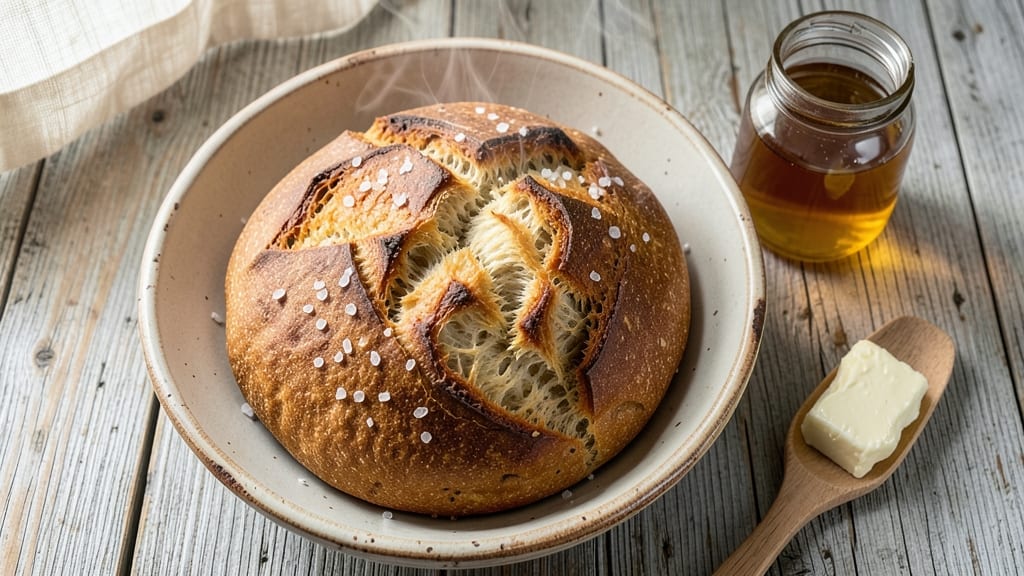
This traditional Amish bread recipe delivers the rustic loaf your family will crave—golden crust that crackles with every bite and a tender crumb so light it practically melts. The secret lies in precise fermentation and a simple flour blend that creates that signature Amish texture.
My grandmother used to bake this exact recipe every Sunday, and it became the centerpiece of our table.
What makes this bread truly special is the patience required—overnight fermentation develops deep flavor while keeping the crumb tender. No fancy equipment needed, just a mixing bowl, dough scraper, and your time.
The recipe uses basic ingredients you likely already have: all-purpose flour, yeast, salt, and a touch of honey for just enough sweetness to balance the rustic flavors.
By the time you pull that loaf from the oven, you'll have a golden-brown crust with those coveted crackled edges Amish bread is famous for, while the interior remains soft and airy.
The aroma alone will have everyone gathering around the table, and each slice will be perfectly proportioned for sandwiches or serving alongside soups and stews.
This recipe honors tradition while adapting to modern kitchens—foolproof for home bakers who want that authentic taste without the complexity. Let's get started on creating bread that tastes like home.
Ingredients for traditional amish bread
Fourteen simple ingredients transform into golden Amish bread with crackling crust and tender crumb.
| Ingredient | Amount | Notes |
|---|---|---|
| All-Purpose Flour 🌾 | 5 cups | Plus 1 tbsp for dusting |
| Active Dry Yeast 🍞 | ¼ oz | Or 2 1/4 tsp packet |
| Granulated Sugar 🍚 | 1 tbsp | Feeds yeast, not for sweetness |
| Unsalted Butter 🧈 | ½ cup | Cold, cubed, full-fat preferred |
| Warm Water 💧 | 1 ¼ cups | 110°F, not boiling |
| Honey 🍯 | 1 tbsp | Light amber preferred |
| Salt 🧂 | 1 ½ tsp | Kosher or sea salt |
| Milk 🥛 | ¼ cup | Warmed, for dough enrichment |
| Egg 🥚 | 1 whole | Room temperature |
| Cornmeal 🌽 | ½ cup | For dusting bread pan |
| Coarse Cornmeal 🌽 | 2 tbsp | For bread pan sprinkle |
| Water 💧 | ¼ cup | For brushing crust |
The flour is the foundation—King Arthur or Bob's Red Mill are my go-tos for that signature texture. Yeast matters too: Saf-Instant is the easiest since it doesn't need activation, but traditional active dry works if you proof it first. For the butter, Land O'Lakes or Plugrá give the best flavor, but any full-fat butter will do. Honey should be light amber—Manuka or clover work perfectly. I always grab my milk from the grocery store's organic section—it adds richness without overpowering.
No honey? Maple syrup at half the amount works in a pinch. Short on yeast? 1/4 tsp baking soda plus 1 tbsp vinegar can replace it, but the texture won't be identical. For the milk, any kind works—even powdered mixed with water. The egg is non-negotiable though—it gives that tender crumb. If you're gluten-sensitive, substitute xanthan gum for 1/4 tsp, but the texture will differ. The cornmeal? Stone-ground is ideal for that classic Amish look, but regular works fine.
This dough needs time—overnight fermentation is key for that authentic flavor. Store it in the fridge between kneads if you're short on time. The bread keeps well too: 3-4 days at room temperature wrapped in a towel, or 1 week in the freezer if you slice it first. I always make a double batch—one for toasting, one for sandwiches. The crust gets crispier the longer it sits, so plan ahead if you want that perfect crackle.
Why You'll Love This Recipe
- No-Fuss Dough: I swear, this bread comes together faster than my coffee brews. Just mix flour, yeast, sugar, and butter—no kneading marathon or fancy techniques. The warm water activates the yeast in minutes, and you’re shaping loaves before you know it.
- Buttery Golden Crust: That crispy, caramelized crust? Pure magic from just a little sugar and butter baked right in. Honestly, the first time I bit into it, I nearly dropped the loaf. It’s the kind of flavor that makes you pause mid-slice.
- Weeknight & Holiday Star: Slather it with jam for breakfast or serve it warm with soup—it’s my go-to for lazy mornings and Thanksgiving tables. Between us, it’s the one bread that never feels out of place, no matter the occasion.
- Budget-Friendly Staple: Five ingredients, zero waste. That butter gives it richness without breaking the bank, and a single batch feeds my whole family for days. I’ll be real: I’ve had the same loaf last me until Friday, and no one complains.
Step-by-step instructions for traditional Amish bread
Here's how to craft that classic Amish loaf with a crisp golden crust and tender interior.
Activate the Yeast for Perfect Rise
In a small bowl, combine the 1.25 cups warm water (about 110°F), 1 tbsp granulated sugar, and 0.25 oz active dry yeast. Let it sit for 5-10 minutes until frothy. You'll see bubbles form and the mixture become lively—this confirms your yeast is active and ready to work.
If the mixture doesn't bubble after 10 minutes, your yeast may be dead. Start fresh with a new packet. Once it's bubbly, pour the yeast mixture into a large mixing bowl. Add the 5 cups all-purpose flour and 1.5 tsp salt, then stir until just combined. The dough will look shaggy at this stage—that's normal.
Mix in Wet Ingredients and Knead
In a separate small bowl, whisk together the 0.25 cup warmed milk, 1 whole egg, and 1 tbsp honey. Pour this mixture into the flour along with the 0.5 cup cold cubed unsalted butter. Using a wooden spoon or dough whisk, mix until the butter begins to incorporate and the dough starts coming together.
Turn the dough out onto a lightly floured surface and knead for 8-10 minutes by hand, or use a stand mixer with a dough hook for 5-6 minutes on medium speed. You're looking for smooth, elastic dough that springs back when poked. If it's too sticky, add 1 tbsp flour at a time—but don't overdo it, or your bread will be dense.
First Rise for Flavor Development
Lightly grease a large bowl with a bit of olive oil (not in ingredients, but traditional), then place the dough inside. Cover with a clean kitchen towel or plastic wrap and let rise in a warm place for 1-1.5 hours, or until doubled in size. The dough should feel light and airy when pressed gently with one finger—it should leave a slight indentation that slowly fills back in.
Here's the thing—don't rush this rise. The longer it ferments, the more flavorful your bread will be. If your kitchen is cold, place the bowl near a warm oven (turned off) with a pan of hot water inside to create a proofing environment. Patience at this stage makes all the difference in the final texture.
Shape and Second Rise
Punch down the risen dough to release air, then divide it into 4 equal portions (about 1 pound each). Shape each portion into a smooth round ball by pulling the edges toward the center and rolling gently. Place the shaped dough onto a baking sheet lined with parchment paper, spacing them about 2 inches apart. Cover loosely with a towel and let rise for another 30-45 minutes until puffy.
While waiting, preheat your oven to 375°F. Sprinkle each loaf lightly with 2 tbsp coarse cornmeal—this creates that classic Amish bread texture and prevents sticking. The cornmeal should adhere to the surface without falling off when you gently shake the pan.
Bake to Golden Perfection
Bake the bread for 25-30 minutes until the crust is a deep golden brown and sounds hollow when tapped on the bottom. For extra shine, brush the tops with 0.25 cup water during the last 5 minutes of baking. This creates that beautiful glossy finish traditional Amish bread is known for.
Remove from the oven and let cool on a wire rack for at least 15 minutes before slicing. The interior should be tender with a fine crumb, while the exterior remains crisp. Serve warm with butter or jam for that authentic Amish bread experience—simple, hearty, and full of rustic charm.
Pro Tips For Making Traditional Amish Bread
- Dissolve the Yeast Properly: Skip the clumpy mess—mix the yeast with warm water and a pinch of sugar first, then let it foam for 5 minutes before adding flour. I learned this the hard way after baking a brick of bread because the yeast was still sluggish when I mixed everything.
- Use Softened, Not Melted, Butter: Amish bread relies on that tender crumb, so beat the butter until it’s just soft enough to press into the dough—not greasy, not hard. Melted butter makes the bread dense, and nobody wants that.
- Don’t Over-Knead the Dough: Stop when the dough springs back slowly when poked—about 8-10 minutes by hand. I used to knead until my arms gave out, thinking more = better, but overworking it kills the air bubbles and makes the bread tough.
- Shape Loaves Tightly: Press the dough into loaves with a wet hand, sealing the edges firmly. Loose shapes lead to air gaps, and those turn into sad, uneven rises. My grandmother’s trick: roll the dough into a ball, tuck the seam under, and press with the heel of your hand—like you’re giving it a firm handshake.
Wine and beer pairings for these flavors
Amish-Inspired Beer Pairings
Amish bread's rustic sweetness and buttery richness pair beautifully with amber ales like Samuel Adams Boston Lager. The malty sweetness complements the bread's honey notes while balancing its subtle saltiness.
For a lighter option, try a wheat beer—Blue Moon Belgian White with its coriander and orange peel adds refreshing contrast to the bread's warmth. 🍺
If you prefer darker beers, a light brown ale like Fat Tire works wonderfully. The caramel and toffee flavors enhance the bread's golden crust, while the beer's slight bitterness prevents the dish from becoming too heavy.
I always keep a cold one on hand when serving this bread—it's a match made in Pennsylvania!
Wine Pairings for Contrast
A dry Riesling from Germany—like Dr. Loosen Blue Slate—cuts through the bread's richness with its crisp acidity and mineral notes. The slight sweetness in the wine mirrors the honey in the bread, creating harmony without overpowering. Serve it slightly chilled (45-50°F) for the best balance. 🍷
For red wine lovers, a Pinot Noir from Oregon's Willamette Valley offers an elegant pairing. Look for one with bright cherry and earthy undertones—Domaine Serene is my go-to.
The wine's acidity and subtle tannins complement the bread's tender crumb without competing with its buttery flavor. Decant it for 30 minutes before serving to soften any harshness.
Cider and Non-Alcoholic Options
For a non-alcoholic option, dry hard cider like Angry Orchard Crisp Apple provides the perfect acidity to balance the bread's richness. The crisp apple notes also echo the honey's subtle sweetness, creating a refreshing contrast. Serve it well-chilled (40-45°F) for maximum enjoyment. 🍏
If you prefer something lighter, a sparkling lemonade with a splash of Earl Grey tea infusion
In Pennsylvania Dutch Country, where Amish bread originated, locals often pair it with local craft lagers like Yuengling Lager. The beer's clean, crisp profile lets the bread's natural flavors shine while adding a touch of tradition. For a true Amish gathering, this combination is a must—it's what I grew up with at my grandparents' farmhouse. 🌾 For a Southern twist, try pairing with sweet tea—the sugar content enhances the bread's honey notes while the tea's acidity balances the butter. This unexpected combo is popular in Amish communities that have migrated to the South, where sweet tea is a staple. The contrast between the warm bread and iced tea creates a perfect balance of temperatures and flavors.Regional Specialty Pairings
Nutrition facts
Frequently asked questions
What makes this Amish bread different from regular sandwich bread?
This recipe uses a longer fermentation process (overnight or extended rise) that develops deeper flavor and creates that signature tender crumb. The cornmeal coating and honey-sweetened dough also give it a rustic texture and subtle sweetness that store-bought bread lacks. Plus, the butter content is higher, making it richer and more flavorful.
Can I make this bread without a stand mixer?
The recipe is designed for hand-kneading. Use a wooden spoon to mix the dough initially, then turn it onto a floured surface and knead for 8-10 minutes by hand. The dough should be smooth and elastic when finished. A dough scraper helps prevent sticking—just dip it in flour as needed.
Why does the recipe call for warm water and why is temperature important?
The yeast needs water between 105-115°F to activate properly. Too hot (120°F+) kills yeast, while too cold (90°F-) slows fermentation. Test with your finger—warm water should feel like bath water, not scalding. If your tap water runs cold, heat it gently until it reaches the right temperature before adding yeast.
What if my dough doesn't rise properly?
Check these common issues: Dead yeast (test with fresh yeast), cold kitchen (place bowl near warm oven with a pan of hot water), or over-kneading (dough should be soft, not tough). If using active dry yeast, ensure you proofed it first. For stubborn dough, try adding 1 tsp sugar to the yeast mixture to help activate it.
How do I store leftover Amish bread?
Wrap cooled loaves in a clean kitchen towel or beeswax wrap to keep them soft. Store at room temperature for 3-4 days or freeze sliced bread for up to 1 week. For extra crispiness, reheat slices in a 350°F oven for 5-10 minutes before serving. The crust stays crunchy longer if you avoid plastic bags.