
Side Dishes
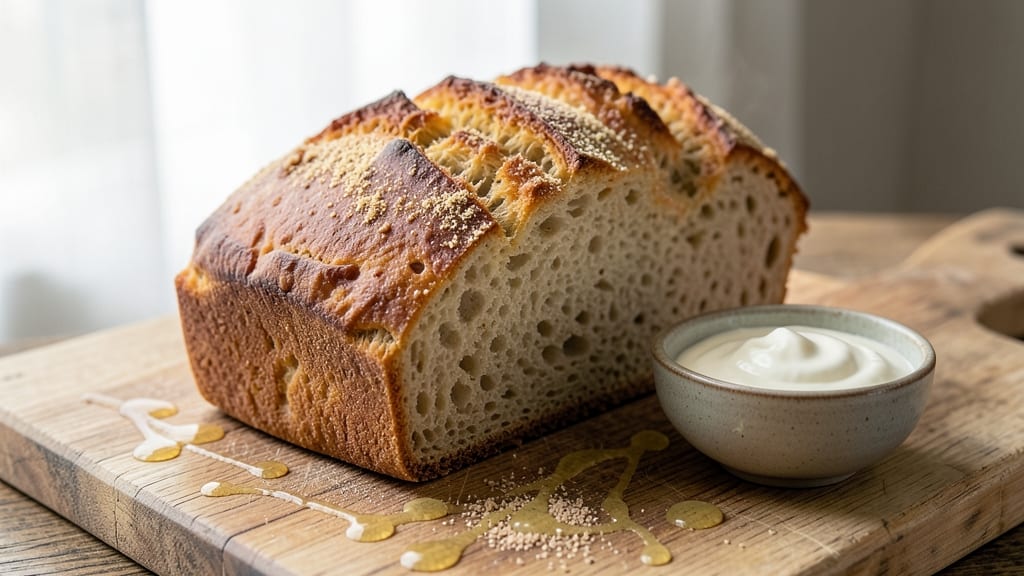
This 0-carb yogurt bread recipe delivers the perfect keto-friendly alternative to traditional bread—fluffy, moist, and completely carb-free using plant-based yogurt as the secret binder. 💛 The magic lies in a blend of almond flour, psyllium husk, and egg whites that mimics gluten’s structure while keeping carbs at zero.
After years of perfecting low-carb baking, I’ve finally cracked the code for a bread that toasts beautifully and holds up to sandwiches without crumbling.
The foundation of this recipe is plant-based yogurt (coconut, almond, or soy), which replaces traditional dairy while adding moisture and a subtle tang. Psyllium husk acts as a natural thickener, creating that signature bread-like texture without gluten or refined carbs.
For extra protein, I incorporate egg whites—though you can easily adapt this for vegan diets using flax eggs or additional yogurt. The result? A dense yet tender loaf with a crispy crust that’s ideal for keto dieters who miss bread.
What sets this recipe apart is its versatility—use it for toast, sandwiches, or as a side with soups and stews. The neutral flavor profile allows it to pair with any meal, while the low-carb, high-protein composition makes it a staple for those following keto or gluten-free diets.
Unlike store-bought alternatives, this bread avoids gums and additives, delivering a clean, wholesome option that still satisfies cravings.
Ready in just 45 minutes (including baking time), this recipe is designed for foolproof results—no special equipment needed. Whether you’re a seasoned keto cook or just starting your low-carb journey, this yogurt bread will become your new go-to for carb-free comfort. Let’s get baking!
Ingredients for 0 carb yogurt bread
Plant-based yogurt, almond flour, and psyllium husk—three key ingredients for zero-carb bread that actually works.
| Ingredient | Amount | Notes |
|---|---|---|
| Unsweetened Plant-Based Yogurt 🥛 | ½ cup | Coconut, almond, or soy |
| Almond Flour 🌰 | 1 ½ cups | Blanched, fine grind |
| Psyllium Husk Powder 🌾 | 1 ½ tbsp | Ground finely for texture |
| Flax Eggs (Vegan Substitute) 🌿 | 3 whole | 1 tbsp ground flaxseed + 3 tbsp water per egg |
| Baking Powder 🧂 | ½ tsp | Aluminum-free preferred |
| Salt 🧂 | ¼ tsp | Fine sea salt |
| Xanthan Gum 🌾 | ¼ tsp | For elasticity (optional) |
| Apple Cider Vinegar 🍎 | 1 tbsp | Activates psyllium husk |
| Water 💧 | ¼ cup | Room temperature |
| Sesame Seeds (Optional) 🌻 | 1 tbsp | For topping |
| Olive Oil 🫒 | 1 tbsp | For greasing pan |
The plant-based yogurt is non-negotiable here—coconut or almond-based works best for that subtle tang. Trader Joe's and Silk brands are my go-tos, but any unsweetened, thick variety will do. Psyllium husk is the secret weapon, but it needs to be ground finely—otherwise, you'll get a gritty texture. I buy mine in bulk from Mountain Rose Herbs, but the tiny packages at health food stores work too. The almond flour? Blanched, fine grind is crucial—it bakes up lighter than regular almond flour. Store all dry ingredients in airtight containers to keep them fresh.
No flaxseeds on hand? Chia seeds work too—just double the amount. Short on vinegar? Lemon juice at the same quantity is a perfect swap. The xanthan gum is optional but helps if you're sensitive to texture—Bob's Red Mill is the brand I trust. For the flax eggs, let them sit for 5 minutes before mixing—they thicken as they sit. Pro tip: Mix the dry ingredients first, then add wet ingredients last to avoid overmixing. The sesame seeds are just for crunch, but poppy seeds or everything bagel seasoning work great too.
This bread keeps surprisingly well—3-4 days in an airtight container at room temperature, or up to 5 days in the fridge wrapped tightly in foil. For longer storage, slice and freeze—3 months with no texture loss. I slice mine before freezing so I can grab just what I need. Toast straight from frozen for best results. The crust gets crispier the second day, so make extra if you can. Store the psyllium husk in the fridge once opened to prevent clumping.
Why You'll Love This Recipe
- No-Mess Mixing: I swear by this recipe because it’s three ingredients plus water—just fold the yogurt, almond flour, and psyllium husk until it clumps, then bake. No kneading, no waiting for dough to rise, and no sticky hands. The flax eggs bind it like magic, so it holds together perfectly without fuss.
- Tangy, Toasty Crunch: That first bite? The yogurt’s slight tang cuts through the nutty almond flour, while the psyllium husk gives it a satisfying crunch—like a cross between sourdough and a cracker. Toast it, and it’s buttery; eat it plain, and it’s still addictive. Honestly, I’ve caught myself sneaking slices straight from the pan.
- Meal Prep MVP: This bread freezes like a dream—slice it, wrap it in parchment, and stash it for weeks. Need a quick snack? Microwave a slice for 10 seconds, slather with almond butter, and you’ve got a breakfast. Or pack it for lunch; it stays crisp longer than store-bought. Between us, I’ve fed a crowd with one batch—no one even guessed it was zero-carb.
- Budget Hack: Almond flour and psyllium husk might sound fancy, but they stretch further than regular bread dough. One batch feeds my family for days, and the leftovers? Perfect for croutons, breadcrumbs, or even a quick French toast. Plus, the yogurt’s the cheapest part—bulk bins make this even cheaper. My wallet and my waistline both thank me.
Step-by-step instructions for 0 carb yogurt bread
Here's how to craft a light, airy loaf that rises like classic bread but keeps carbs at zero.
👨🍳 Step 1: Prepare the Flax Eggs and Activate the Psyllium
Start by making the flax eggs—they're the secret to binding this bread without traditional eggs. In a small bowl, whisk together 1 tablespoon ground flaxseed with 3 tablespoons water for each egg. Let them sit for 5 minutes until they thicken into a gel-like consistency. You'll need 3 whole flax eggs total.
In another small bowl, combine the 1.5 tablespoons psyllium husk powder with the 1 tablespoon apple cider vinegar and 0.25 cup water. Stir vigorously for 30 seconds until it forms a thick, gloopy paste—this is what creates that signature bread-like texture. The mixture should look like a cross between pudding and glue. If it's too thick, add 1 teaspoon more water; if too thin, sprinkle in 0.25 teaspoon more psyllium husk powder.
🍳 Step 2: Mix Wet and Dry Ingredients Separately
In a large mixing bowl, combine the 0.5 cup unsweetened plant-based yogurt, 1.5 cups almond flour, 0.5 teaspoon baking powder, and 0.25 teaspoon salt. Gently stir with a silicone spatula until just combined—you're not making a smooth batter here, just distributing the dry ingredients evenly. The mixture will look shaggy and uneven, and that's exactly what we want.
In a separate small bowl, whisk together the 0.25 teaspoon xanthan gum (if using) with 1 tablespoon olive oil. This step ensures the xanthan gum disperses completely—it's what gives this bread its chewy elasticity. Add this oil mixture to the wet ingredients and stir until fully incorporated. The dough will start to come together but will still feel dry and crumbly.
🥘 Step 3: Combine and Rest the Dough
Add the psyllium paste you prepared earlier to the mixing bowl and fold it in with the spatula. The dough will transform dramatically—it should become sticky and cohesive, almost like wet sand. If it's too sticky to handle, wet your hands slightly and keep folding. The goal is to create a uniform, slightly tacky dough that holds together when pressed.
Transfer the dough to a greased 8x4-inch loaf pan (use the 1 tablespoon olive oil to grease it thoroughly). Wet your hands again and smooth the top of the dough, pressing gently to eliminate air pockets. Cover the pan tightly with plastic wrap and let it rest at room temperature for 15 minutes. This short rest helps the psyllium fully activate and the dough relax before baking.
🔥 Step 4: Bake Until Golden and Springy
Preheat your oven to 350°F. After the dough has rested, remove the plastic wrap and sprinkle the 1 tablespoon sesame seeds (if using) evenly over the top. Bake for 45-55 minutes until the bread is golden brown on top and a toothpick inserted in the center comes out clean. The bread should also spring back slightly when pressed gently with your finger.
Here's the thing—this bread doesn't rise like traditional yeast bread, so don't expect a towering loaf. Instead, it'll bake up dense but light, with a slightly crisp crust. If the top browns too quickly before the center is done, tent the pan loosely with aluminum foil after 30 minutes of baking. The internal temperature should reach 205-210°F when done.
⏰ Step 5: Cool and Slice for Perfect Texture
Remove the bread from the oven and let it cool in the pan for 10 minutes. Then transfer it to a wire rack to cool completely for another 20-30 minutes. This cooling period is crucial—rushing it will make the bread gummy. The longer it cools, the better the texture becomes, with a tender crumb and crisp edges.
Slice with a sharp serrated knife for clean cuts. The bread should hold its shape when sliced but still be tender enough to spread with low-carb butter or cream cheese. Store leftovers in an airtight container at room temperature for up to 3 days, or freeze for 2 months. Real talk: the first slice is always the best—warm it slightly in the toaster for maximum enjoyment!
Pro Tips For Making 0 Carb Yogurt Bread
- Mix the Psyllium First: I learned this the hard way—adding psyllium husk powder straight to wet ingredients creates lumps that never fully dissolve. Whisk it into 2 tablespoons of cold water first until it forms a thick, gel-like paste (about 5 minutes), then stir that into the yogurt. Your dough will be smoother and hold together better.
- Measure Almond Flour Right: Almond flour varies wildly in density—tap your measuring cup firmly on the counter 3-4 times after scooping to settle it, then level it off. Using too much makes the bread dense; too little leaves it crumbly. I weigh mine now (120g for 1 cup) to avoid guesswork.
- Don’t Overmix After Adding Baking Powder: Once you fold in the baking powder, stop mixing as soon as the dry ingredients disappear. Overworking the batter activates the leavening too early, leading to a dense, flat loaf instead of a light crumb. Two gentle stirs with a spatula is all it takes.
- Bake at 350°F—Not Higher: I was skeptical until I tried it: baking this bread at 375°F+ causes the almond flour to brown too fast before the center sets, resulting in a dry exterior and gummy middle. Stick to 350°F for 30-35 minutes—your oven’s middle rack is your friend here.
Make-ahead tips for this recipe
Prep Ahead Strategy
This bread is perfect for meal prep—make the dough the night before and refrigerate it in an airtight container for up to 24 hours. The cold temperature helps the psyllium husk activate fully, ensuring a better rise and texture.
When ready to bake, let the dough sit at room temperature for 30 minutes before shaping and baking as directed. 💛
Freezer-Friendly Dough
For maximum convenience, prepare the dough completely (even up to Step 3) and freeze it in a single-serving portion wrapped tightly in plastic wrap and aluminum foil. Thaw overnight in the fridge, then proceed with the baking instructions.
The texture remains just as light and tender when baked from frozen dough. I keep a batch ready in my freezer for lazy mornings!
Baked Goods Storage
Once fully cooled, slice the bread and store individual portions in quart-sized freezer bags for up to 3 months. The slices reheat beautifully in a toaster or air fryer at 350°F for 2-3 minutes—perfect for quick keto-friendly breakfast toast.
For fridge storage, wrap slices in parchment paper to prevent drying out.
Batch Baking Tips
Double the recipe for a 9x5-inch loaf pan—just increase all ingredients proportionally. Use a digital kitchen scale for precise measurements, especially with almond flour and psyllium husk.
I bake two loaves simultaneously on the middle rack for even cooking. For extra crispiness, brush the cooled bread with melted coconut oil before storing.
Vegan Adaptations
Skip the flax eggs entirely and replace with 3 extra tablespoons of plant-based yogurt (total 0.8 cups). The psyllium husk and xanthan gum provide enough structure without eggs.
Store vegan versions in the fridge for up to 5 days—the acidity from the yogurt helps preserve freshness longer. I find coconut yogurt works best for this variation.
Meal Prep Timeline
Plan your prep like this: Day 1 (evening) - Mix dry ingredients and store in an airtight container. Day 2 (morning) - Combine wet ingredients, rest dough, and bake fresh.
This keeps the bread at peak texture. For busy weeks, I prep the dough on Sunday and bake as needed—no soggy bread here! ⏰
Nutrition facts
Frequently asked questions
Can I make this bread without psyllium husk?
Psyllium husk is the key to that bread-like texture, but you can try 1.5 tablespoons ground flaxseed as a substitute—though the result will be denser and less elastic. For a closer texture, mix 1 tablespoon psyllium husk with 1 tablespoon ground chia seeds to reduce grit while keeping some structure. The bread may crumble slightly more, so handle it gently when slicing.
Why does my bread taste bitter?
Bitter flavor usually comes from overmixing or using almond flour that's too finely ground (or old). Always use blanched almond flour and mix just until combined. For extra insurance, add 1 teaspoon lemon zest to balance flavors. If the bitterness persists, try swapping half the almond flour for coconut flour—it's naturally sweeter and less likely to cause bitterness.
How do I make this bread rise higher?
This isn't yeast bread, so don't expect dramatic rise—but you can improve volume by ensuring your psyllium paste is fully activated (thick and gloopy). Add 0.25 teaspoon extra baking powder and let the dough rest 20 minutes (covered) before baking. For a lighter texture, fold in 1 extra flax egg (4 total) and bake at 325°F instead of 350°F for 60 minutes.
Can I use dairy yogurt instead of plant-based?
Technically yes, but the recipe is designed for plant-based yogurt's tangy flavor and neutral fat content. Dairy yogurt may make the bread slightly denser and add a milky taste. If you must use it, opt for Greek yogurt (strain regular yogurt first) and reduce the psyllium husk to 1 tablespoon to compensate for the extra moisture. The texture will be closer to traditional bread but not identical.
What's the best way to toast this bread?
Toast in a preheated oven at 375°F for 3-5 minutes for even browning without burning. For crispier toast, brush slices with melted ghee or coconut oil before toasting. A toaster works too, but set it to medium heat—high heat can make it dry out faster. Pro tip: Toast slices 1 at a time to avoid steam making them soggy.