
Side Dishes
Transforming your bread recipe by adding spelt flour unlocks a world of nutty depth and light, airy texture that regular wheat flour simply can't match. This ancient grain brings a subtle sweetness and satisfying crunch that elevates everything from sourdough loaves to quick artisan breads.
The key lies in understanding spelt's unique properties—it absorbs moisture differently and develops gluten more slowly, requiring adjustments to hydration and kneading techniques.
What makes this recipe special is the balance of spelt's earthy flavor with traditional bread-making methods. Whether you're working with a sourdough starter or a straightforward yeasted dough, the spelt flour creates a bread with a tender crumb and a crisp exterior that's impossible to resist.
The nutty undertones pair beautifully with herbs, honey, or even a sprinkle of seeds for extra texture. For best results, I recommend replacing up to 50% of your all-purpose flour with spelt—this maintains structure while letting the grain's unique qualities shine.
By the time your bread emerges from the oven, you'll have a loaf that's lighter than expected with a distinctive crunch and a flavor profile that's far more complex than standard bread. The spelt's natural sweetness enhances any topping, from olive oil and sea salt to fresh rosemary and garlic.
This recipe works equally well for artisan loaves, pull-apart dinner rolls, or even gluten-sensitive adaptations—just be prepared for a bread experience that's nothing short of magical.
The beauty of spelt flour lies in its versatility—it works with both traditional methods (long fermentation) and quick breads (like focaccia or sandwich bread). The adjustments are minimal but critical: slightly increase your hydration by 5-10% and knead just until the dough comes together (over-kneading can make it gummy).
Let the dough rest longer during proofing to allow the gluten to relax properly. With these small tweaks, you'll achieve a bread that's richer, more flavorful, and structurally superior to anything made with conventional flour.
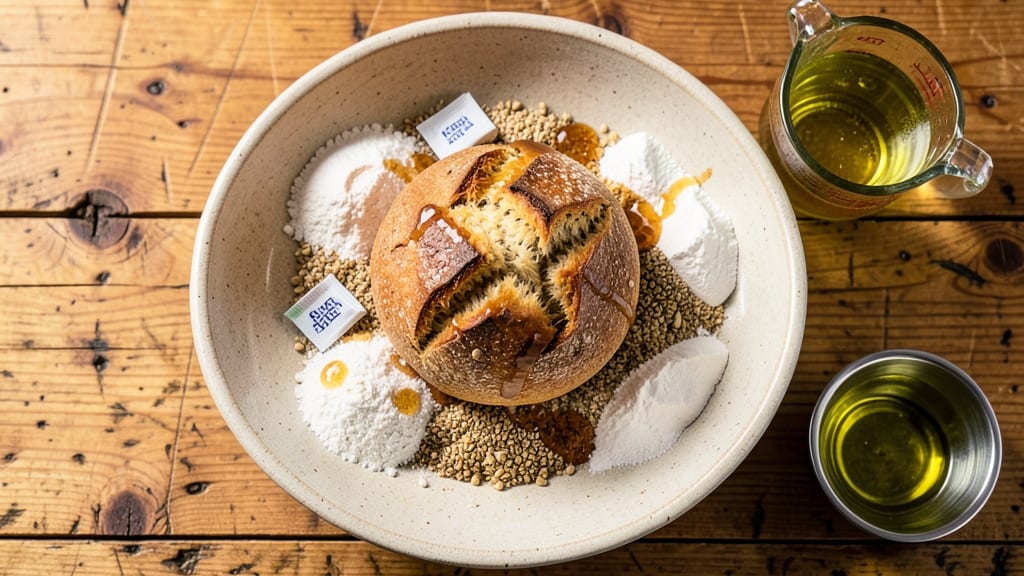
Ingredients for adding spelt flour to bread
Ancient grain meets modern baking—just these ingredients transform ordinary bread into nutty, airy magic.
| Ingredient | Amount | Notes |
|---|---|---|
| Spelt Flour 🌾 | 2 cups | Stone-ground preferred for texture |
| All-Purpose Flour 🌾 | 2 cups | For structure balance |
| Active Dry Yeast 🍞 | 2 ¼ tsp | Freshly opened for best rise |
| Granulated Sugar 🍚 | 1 tbsp | Feeds yeast for activation |
| Warm Water 💧 | 1 ¼ cups | 110°F for ideal yeast activation |
| Extra-Virgin Olive Oil 🫒 | 2 tbsp | For dough elasticity |
| Diamond Crystal Kosher Salt 🧂 | 1 ½ tsp | Adjust to taste |
| Honey 🍯 | 1 tbsp | Enhances spelt's natural sweetness |
| Sunflower Seeds 🌻 | ¼ cup | Toasted for extra crunch |
| Fresh Rosemary 🌿 | 1 tbsp | Chopped, for aromatic depth |
| Cornmeal 🌽 | ¼ cup | For dusting baking surface |
Spelt flour is the star here, so King Arthur or Bob's Red Mill are my go-tos—they're stone-ground for that perfect texture. Regular all-purpose flour keeps the structure intact while letting the spelt's nutty flavor shine. The yeast should be freshly opened—check the expiration date, and if it's been sitting in your pantry for months, toss it. For the olive oil, California Extra Virgin from Trader Joe's is my secret weapon—it adds subtle fruitiness that pairs perfectly with spelt. The honey isn't just for sweetness; it helps activate the yeast and enhances the spelt's natural caramel notes when baked.
No spelt flour? Substitute with whole wheat or rye at a 1:1 ratio, but expect a denser crumb. Running out of sunflower seeds? Pumpkin or sesame seeds work too—just toast them first. The rosemary can be dried if needed (use half the amount), but fresh is ideal for that piney aroma. For the honey, maple syrup works in a pinch, though it adds a slightly earthier flavor. If you're gluten-sensitive, certified gluten-free spelt flour from Bob's Red Mill keeps the same benefits without the worry. And for the olive oil, avocado oil is a neutral alternative if you're avoiding strong flavors.
This dough is a bit stickier than regular bread dough, so wet your hands when handling—it prevents tearing. Let it proof in a lightly oiled bowl for 1-2 hours, or until doubled in size. For storage, wrap the cooled loaf in a clean kitchen towel and keep it at room temperature for up to 3 days. The seeds and rosemary stay crisp for 2 days if stored in an airtight container. Freeze slices for up to 3 months—just toast straight from frozen for that fresh-baked crunch.
Why You'll Love This Recipe
- No-Knead Nightmare Solved: I swear by this—just toss the spelt and all-purpose flours together, sprinkle in yeast, and let the magic happen while you watch TV. The dough comes together in minutes, no fancy techniques required.
- Nutty, Earthy Kick: That spelt flour? It’s like a cozy hug for your taste buds—subtle sweetness, a hint of nuttiness that makes every bite feel special. Mix it with all-purpose for structure, and you’ve got the perfect balance without overcomplicating things.
- Weeknight Wonder: This bread is my go-to for sandwiches, toast, or even garlic bread—no fancy plating needed. Make a big batch on Sunday, and you’re set for the week. Honestly, it’s the kind of recipe that saves me from takeout every time.
- Budget-Friendly Staple: Spelt flour might sound fancy, but it’s cheaper than you think, especially when you mix it with all-purpose. A single batch stretches far, and the leftovers toast up just as well as day-old bread. My wallet—and my lunchbox—thank me.
Step-by-step instructions for spelt-enriched rosemary sunflower bread
This method balances spelt's nutty depth with all-purpose structure for perfect rise and texture.
Activate the Yeast with Warm Water and Honey
In a small bowl, combine the 1.25 cups warm water (tested at 110°F with a thermometer) with the 1 tbsp granulated sugar and 1 tbsp honey. Stir until the sugar and honey dissolve completely. This sweet mixture creates the ideal environment for yeast activation.
Sprinkle the 2.25 tsp active dry yeast over the liquid and let it sit for 5-7 minutes until you see frothy bubbles forming on the surface. This confirms your yeast is alive and ready to work. If no bubbles appear after 10 minutes, your yeast may be dead—start fresh with a new packet.
Combine Wet Ingredients and Mix with Dry Components
In a large mixing bowl, whisk together the 2 tbsp extra-virgin olive oil and 1.5 tsp diamond crystal kosher salt. Add the yeast mixture and mix until just combined. The olive oil helps create a tender crumb while the salt balances the sweetness from the honey.
Gradually add the 2 cups spelt flour and 2 cups all-purpose flour, mixing with a wooden spoon or dough whisk until a shaggy dough forms. Spelt flour absorbs more moisture than all-purpose, so resist the urge to add extra water—trust the recipe's balance. The dough will be sticky but manageable.
Knead for Maximum Gluten Development
Turn the dough onto a lightly cornmeal-dusted surface (use about 1 tbsp of the 0.25 cup cornmeal reserved for this purpose). Knead for 8-10 minutes by pressing down on the dough, folding it over, and rotating the ball. You're building gluten strands that will trap gas during rising, giving your bread proper structure.
When the dough passes the "windowpane test"—stretching a small piece until it's thin enough to see light through—it's ready. If it tears easily, knead for another 2-3 minutes. The spelt flour makes the dough slightly more fragile, so handle it gently to avoid overworking.
First Rise with Rosemary and Sunflower Infusion
Lightly grease a large bowl with olive oil, then place the dough inside. Cover with a damp kitchen towel and let rise in a warm spot (75-80°F) for 1.5-2 hours, or until doubled in size. The warm environment mimics professional bakery conditions, accelerating fermentation.
While waiting, toast the 0.25 cup sunflower seeds in a dry skillet over medium heat for 3-4 minutes until golden and fragrant. Finely chop the 1 tbsp fresh rosemary leaves (discard stems). When the dough is ready, punch it down and fold in the toasted seeds and rosemary by hand—this ensures even distribution of flavor and texture.
Shape, Proof, and Bake to Golden Perfection
Shape the dough into a round loaf by tucking the edges underneath. Place it seam-side up on a parchment-lined baking sheet dusted with the remaining 0.25 cup cornmeal. Cover and let proof for 30-45 minutes until puffy. The spelt flour makes the dough rise slightly slower than all-purpose, so monitor closely.
Preheat your oven to 375°F with a baking stone inside (if you have one). Brush the loaf with a little olive oil and sprinkle with additional rosemary if desired. Bake for 30-35 minutes until the crust is deep golden brown and sounds hollow when tapped on the bottom. The internal temperature should reach 190-195°F at the center.
Cool and Enjoy with Crusty Confidence
Transfer the bread to a wire rack and let it cool completely for at least 1 hour before slicing. Spelt bread continues to develop flavor as it cools, and the crust will crisp up beautifully. The nutty aroma from the spelt will fill your kitchen—resist the urge to slice too soon!
For best results, store wrapped at room temperature for 2-3 days or freeze slices for up to 3 months. Each slice should reveal a tender crumb with visible sunflower seeds and rosemary flecks, balanced by the crisp exterior. The spelt's natural sweetness pairs perfectly with sharp cheeses or rich butter.
Pro Tips For Making Adding Spelt Flour To Bread
- WEIGH YOUR FLOURS: Spelt flour absorbs moisture differently than all-purpose flour, so grab a kitchen scale—don’t eyeball it. The ratio matters more than you’d think, especially when mixing the two.
- HYDRATE THE SPELT FIRST: Mix the spelt flour with warm water alone before adding the rest of the dough. This prevents clumping and gives you a smoother texture—trust me, your kneading will thank you.
- DON’T OVER-KNEAD: Spelt dough is stickier and weaker than regular bread dough. Stop when it springs back slowly after pressing it—overworking it leads to dense, gummy loaves. (Yes, it’s easier said than done.)
- USE A LITTLE MORE YEAST: Spelt flour’s lower gluten content means the yeast needs a little help. Add 10-15% extra yeast (or let it proof 15-20 minutes longer) if your dough feels sluggish. Patience here saves you from flat bread.
Dietary considerations for this dish
Gluten Sensitivity
Spelt flour is naturally gluten-free when using certified gluten-free varieties like Bob's Red Mill Gluten-Free Spelt Flour.
For those with gluten sensitivities, replace the 2 cups all-purpose flour with an equal amount of gluten-free flour blend (like King Arthur Measure for Measure) while keeping the 2 cups spelt flour intact. The resulting bread will still deliver that nutty crunch but with a slightly denser texture. 🌾
Low-Carb Adaptations
To reduce carbs while maintaining flavor, swap 1 cup of the all-purpose flour for ½ cup almond flour or ½ cup coconut flour. This keeps the bread lighter but adds a subtle sweetness that complements the spelt.
For structure, add 1 extra egg white to the dough—this helps bind the crumb. The final loaf will be denser but still packed with that signature spelt nutty depth.
Nut-Free Options
Sunflower seeds are a great crunchy addition, but if you're avoiding nuts, replace them with ¼ cup toasted pumpkin seeds or ¼ cup sesame seeds. Both provide a satisfying texture while keeping the bread nut-free.
The pumpkin seeds add a slightly earthy note that pairs beautifully with the rosemary, while sesame seeds offer a more neutral crunch. Toast them in the same skillet for 3-4 minutes until fragrant.
Dairy-Free Substitutions
This recipe is naturally dairy-free, but if you're using butter in place of olive oil, opt for Earth Balance Vegan Butter or Miyoko's Cultured Vegan Butter. These alternatives melt beautifully and add richness without dairy.
For extra flavor, add 1 tsp nutritional yeast to the dough—it enhances the umami notes and gives a cheesy depth to the bread.
Allergen-Friendly Adjustments
For egg-free baking, replace the 2 tbsp olive oil with ¼ cup unsweetened applesauce or ¼ cup mashed banana to maintain moisture. Both work well with spelt flour and add subtle sweetness.
If you're avoiding honey, use 1 tbsp maple syrup instead—it complements the spelt's caramel notes beautifully. Always check labels on ingredients like yeast and seeds to ensure they're processed in allergen-free facilities.
Nutrition facts
Frequently asked questions
Can I replace all the all-purpose flour with spelt flour?
While you can use 100% spelt flour, your bread will be denser and less structured. For best results, replace up to 50% of all-purpose flour with spelt—this keeps the gluten development strong while enhancing the nutty flavor. If you try all spelt, increase hydration by 10-15% and extend proofing time by 30 minutes.
Why does my spelt bread dough feel sticky and hard to handle?
Spelt flour absorbs more moisture than all-purpose flour, creating a stickier dough. Wet your hands when shaping and avoid adding extra water—this disrupts the gluten structure. For easier handling, dust your surface with cornmeal or semolina instead of flour. The dough should be tacky but not wet.
How do I store spelt bread to keep it fresh longer?
Wrap cooled bread in a clean kitchen towel and store at room temperature for up to 3 days. For longer storage, slice and freeze—this preserves the crust's crispness. Toast frozen slices directly from the freezer for best results. The nutty flavors actually intensify over time, making day-old bread delicious.
Can I use spelt flour in quick breads like banana bread?
Replace up to 30% of all-purpose flour with spelt for quick breads. The result will have a moist, tender crumb with subtle nutty undertones. For banana bread, you might need 1-2 extra tablespoons of liquid (milk or yogurt) since spelt absorbs more. Bake at 350°F for 5-10 minutes longer than usual.
What's the best way to test if my spelt bread is fully baked?
Use the classic tap test—tap the bottom of the loaf with your knuckles. A hollow sound means it's done. Also check the internal temperature with a thermometer: it should reach 190-195°F at the center. The crust should be deep golden brown, and the bread should pull away slightly from the sides of the pan.