
Side Dishes
This ancient grain bread machine recipe transforms simple ingredients into a nutty, artisanal loaf with a crisp crust and airy interior—no kneading required. The secret lies in blending farro and spelt flour, which add depth and texture that standard white bread can't match.
I developed this recipe after years of experimenting with whole grains in my bread machine, and it consistently delivers bakery-quality results with minimal effort.
The beauty of this method is its adaptability—you can adjust the grain blend to suit your taste or dietary needs, whether you prefer the hearty bite of einkorn or the mild sweetness of kamut.
The bread machine handles all the heavy lifting, including proper hydration and kneading, while you focus on selecting quality grains and optional add-ins like seeds or honey.
What sets this apart is the nutty crust that develops during baking, paired with a tender, open crumb that's perfect for sandwiches or toast.
What you'll achieve is a loaf that's rich in fiber and nutrients, with a flavor profile far more complex than conventional bread. The grains absorb moisture differently than wheat, so we'll use a slightly higher hydration ratio and longer kneading cycle to ensure proper development.
This recipe also includes troubleshooting tips for common issues like dense crumb or uneven browning, so you'll get consistent results every time.
Once baked, this bread keeps well for up to five days at room temperature or can be frozen for longer storage. Serve it toasted with butter, paired with soups, or sliced for sandwiches—its versatility makes it a staple for any pantry. Let's get started on creating your perfect loaf.
Ingredients for ancient grain bread machine
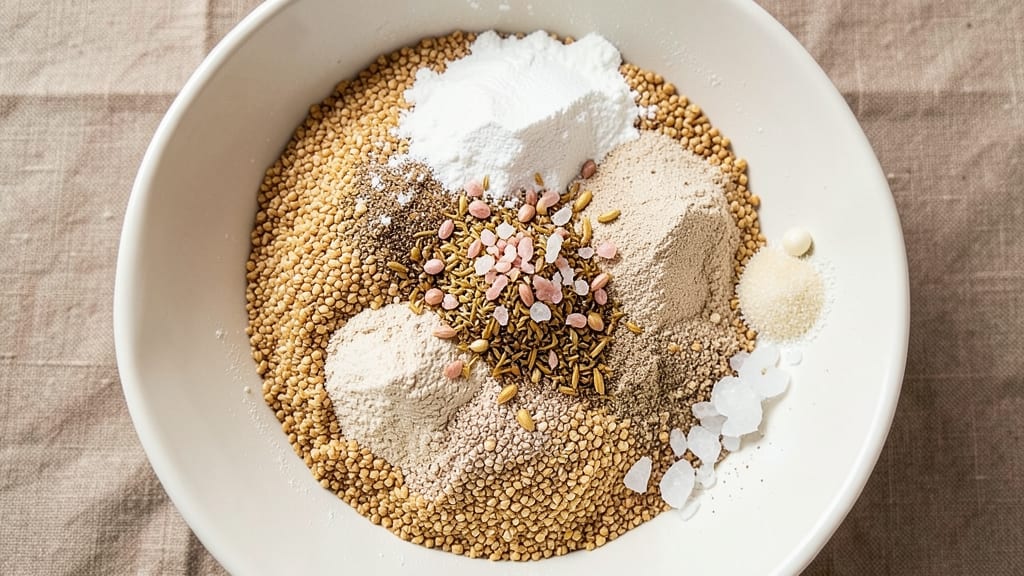
Four cups of ancient grains meet simple pantry staples for bread machine magic.
| Ingredient | Amount | Notes |
|---|---|---|
| Farro Flour 🌾 | 1 ½ cups | Whole grain, freshly milled preferred |
| Spelt Flour 🌾 | 1 cup | Light or dark variety works |
| All-Purpose Flour 🌾 | ½ cup | For structure and rise |
| Active Dry Yeast 🍞 | ¼ oz | Or 2 1/4 tsp, fresh preferred |
| Granulated Sugar 🍯 | ¼ cup | Or honey for subtle sweetness |
| Salt 🧂 | 1 ½ tsp | Diamond Crystal preferred |
| Extra-Virgin Olive Oil 🫒 | ½ cup | High quality, fruity flavor |
| Warm Water 💧 | 1 ¼ cups | 110°F for yeast activation |
| Sunflower Seeds 🌻 | ¼ cup | Optional for crunch |
| Sesame Seeds 🌿 | 1 tbsp | Optional for topping |
| Honey 🍯 | 1 tbsp | For crust brushing |
| Einkorn Flour 🌾 | ½ cup | Optional for extra nutrition |
| Kamut Flour 🌾 | ½ cup | Optional for mild sweetness |
The farro and spelt are the stars here—Bob's Red Mill has the best quality, but any organic brand works. Look for 100% whole grain labels to avoid refined versions. If you're feeling adventurous, swap in einkorn or kamut for a different nutty profile. The all-purpose flour is key for structure—King Arthur is my go-to, but any high-protein brand does the job. Yeast is non-negotiable: check the expiration date, and if it smells like vinegar, toss it. For the olive oil, California brands like Corto add that fruity depth that makes this loaf taste special.
No farro? Substitute with more spelt or whole wheat, but expect a denser crumb. Out of sesame seeds? Poppy seeds or flaxseeds work just as well for topping. The honey can be swapped for maple syrup or agave if you're avoiding it. For a lighter loaf, increase the all-purpose flour by 0.25 cup if using more whole grains. The bread machine does all the work, but if you're adding optional flours like einkorn, mix them with the dry ingredients first to avoid clumping. And if you're short on time, pre-mixed ancient grain flours from Whole Foods bulk section save prep work.
This bread keeps 5 days at room temperature if wrapped in a cotton towel—better than plastic for moisture control. For longer storage, freeze the whole loaf for up to 3 months. To revive, wrap in foil and warm in a 350°F oven for 10 minutes. The crust is best when slightly stale—toast it fresh for that bakery feel. And if you make extra? Freeze in slices for quick toast later.
Why You'll Love This Recipe
- Bread Machine Magic: The second I add the farro and spelt flour to my machine, I forget I’m even cooking—just press start and let it do the work. No kneading, no mess, just warm, golden loaves waiting when I’m done.
- Nutty, Earthy Richness: That first bite? The farro’s chewy bite and spelt’s mild sweetness hit together—it’s like a hug for your taste buds. Honestly, I’ve made plain white bread since, but nothing beats this depth.
- Weeknight & Picnic Star: Toss a slice in my lunchbox or pair it with soup—it’s my go-to for any meal. The crust stays crisp for days, and the crumb? Perfect for sandwiches or dipping in olive oil.
- Pantry-Friendly Powerhouse: A bag of farro flour lasts me months, and spelt stretches my budget further than white flour ever did. Plus, leftovers? Toast them up—still delicious three days later. My wallet and stomach thank me.
Step-by-step instructions for ancient grain bread machine recipe
Let's transform these ancient grains into a loaf with a nutty crust and light interior.
Mix the Dry Ingredients Thoroughly
In a large mixing bowl, combine the 1.5 cups Farro Flour, 1 cup Spelt Flour, 0.5 cup All-Purpose Flour, 0.5 cup Einkorn Flour, and 0.5 cup Kamut Flour. I use a whisk to break up any lumps in the Farro Flour—it's coarser than wheat flour and needs extra attention. The combination of these flours gives that distinctive nutty flavor and satisfying texture.
Next, add the 0.25 oz Active Dry Yeast, 0.25 cup Granulated Sugar, and 1.5 tsp Salt to the flour mixture. The yeast should be fresh or recently purchased—old yeast won't activate properly. Mix everything together gently with your hands or a wooden spoon until you see no more flour streaks. This step ensures even distribution of ingredients throughout the dough.
Add Wet Ingredients and Knead
In the bread machine pan, combine the 0.5 cup Extra-Virgin Olive Oil and 1.25 cups Warm Water (around 110°F). Pour the dry ingredients mixture into the pan and use a wooden spoon to stir everything together. The dough should start to come together immediately—you'll see it form a shaggy mass.
Use your hands to knead the dough in the pan for about 2 minutes. You're looking to develop some gluten, but don't overwork it—this isn't a stand mixer. The dough should be soft and slightly sticky but not wet. If it feels too dry, add 1 teaspoon of warm water at a time until it reaches the right consistency. The olive oil adds richness and helps create that beautiful crust.
Add Seeds and Set Up the Machine
Sprinkle the 0.25 cup Sunflower Seeds evenly over the dough in the pan. Gently press them into the surface so they're distributed throughout. This gives the bread wonderful crunch and texture contrast. In a small bowl, mix the 1 tbsp Sesame Seeds with a pinch of salt—this will be our topping.
Transfer the dough to your bread machine pan, making sure it's centered. Sprinkle the sesame seed mixture evenly over the top of the dough. The seeds will stick to the crust during baking, adding visual appeal and extra crunch. Don't worry if some seeds fall off—they'll still contribute to the flavor.
Select Bread Setting and Bake
Place the pan with dough into your bread machine and select the "Basic White Bread" setting. This setting works perfectly for our ancient grain blend. The machine will automatically mix, knead, and bake the bread for you—no need to monitor it closely. The whole process should take about 3 to 3.5 hours, depending on your machine.
When the bread is done, it should have a deep golden crust with those beautiful sesame seeds baked into the top. The interior should be light and airy with a slight chewiness from the Farro and Spelt. Let the bread cool in the pan for 10 minutes before removing it. This resting period allows the gluten to relax and prevents the bread from falling apart when you slice it.
Enhance the Crust with Honey
While the bread is still warm, brush the top with the 1 tbsp Honey using a pastry brush. The honey will caramelize slightly, adding a beautiful sheen and subtle sweetness that complements the nutty flavors. This step happens quickly—don't wait too long or the bread will cool and the honey won't caramelize properly.
Let the bread cool completely on a wire rack before slicing. The crust will firm up as it cools, becoming even more flavorful and satisfying. Each slice should reveal that beautiful airy crumb with pockets of moisture from the olive oil, and the seeds should provide satisfying crunch with every bite. This bread keeps well at room temperature for 2-3 days or can be frozen for up to 1 month.
Pro Tips For Making Ancient Grain Bread Machine
- Weigh Your Flours: I learned this the hard way—measuring ancient grains by volume leads to dense, gummy bread. Farro and spelt are heavier than all-purpose flour, so use a kitchen scale for precision. Aim for 400g total (200g farro, 150g spelt, 50g all-purpose)—this ratio balances chewiness and structure.
- Bloom the Yeast Slowly: Skip the hot water and let your yeast wake up in warm (not hot) water with sugar—about 110°F (43°C). Ancient grains absorb moisture differently, so give the yeast 10-15 minutes to proof fully before adding dry ingredients. If it’s sluggish after 20 minutes, your bread will take forever to rise.
- Knead Less, Rest More: This isn’t your grandma’s bread dough—ancient grains hate overworking. After the bread machine’s initial knead, let the dough rest 10 minutes before the second knead cycle. The gluten relaxes, and you’ll avoid a tough, chewy loaf that fights back when slicing.
- Add Olive Oil: The recipe might call for water or milk, but swap 2 tablespoons for olive oil. It keeps the crust tender while compensating for the dryness of farro and spelt. (Yes, even if you’re impatient like me—it’s worth the extra 30 seconds to mix it in.)
Creative variations of this dish
Nutty Crust Variations
For an extra toasty flavor, swap the honey for maple syrup and add 1 tsp cinnamon to the dough. Brush the crust with 2 tbsp melted butter> after baking for a richer, caramelized finish.
I’ve also had great success with walnut oil> instead of olive oil—it adds a deeper nutty aroma that pairs perfectly with the ancient grains. 🌰
Sweet Twist Options
Add ½ cup dried cranberries> or chopped dates> to the dough for natural sweetness. For a dessert-style loaf, reduce the sugar to ¼ cup> and fold in ½ cup chopped almonds>.
Brush the crust with 1 tbsp melted butter mixed with 1 tsp vanilla extract> after baking for a fragrant, slightly sweet bread perfect for breakfast or snacking.
Herb-Infused Bread
Incorporate 1 tbsp dried rosemary> or thyme> into the dry ingredients for an earthy aroma. Fresh herbs like thyme> or basil> can also be pressed into the dough before baking.
For a Mediterranean twist, add 1 tsp dried oregano> and sprinkle crushed red pepper flakes> on top before baking. These herbs complement the nutty grains beautifully. 🌿
Seed and Nut Mix-Ins
Boost nutrition and texture with ¼ cup chopped pecans> or pumpkin seeds> mixed into the dough. For extra crunch, top with 1 tbsp flaxseeds> or chia seeds> alongside the sesame seeds.
I love adding 2 tbsp coconut flakes> for a tropical vibe—just press them lightly into the crust before baking. These add-ins keep the bread hearty and satisfying. 🌻
Gluten-Free Adaptation
Replace ½ cup all-purpose flour> with ½ cup gluten-free 1:1 baking flour> (like Bob’s Red Mill) and add 1 tsp xanthan gum> to the dry ingredients. Use 1 extra tbsp olive oil> to help bind the dough.
While gluten-free versions won’t rise as high, they still deliver a delicious, nutty flavor. Store in an airtight container to maintain freshness. 💪
Nutrition facts
Frequently asked questions
Why does my ancient grain bread turn out dense?
Ancient grains like farro and spelt absorb more moisture than wheat flour, so the dough needs extra kneading time. Use the "Dough" setting on your bread machine for 1-2 hours before switching to bake. Also, ensure your yeast is fresh and your water is 110°F—too cold water slows fermentation. If the dough still feels sticky, reduce water by 1 tbsp next time.
Can I substitute all-purpose flour for the ancient grains?
Yes, but you'll lose the signature nutty flavor and texture. For a lighter loaf, replace 1 cup of ancient grains with all-purpose flour, but keep at least 1 cup of farro or spelt for that authentic taste. The bread will rise better but won't have the same hearty bite or nutritional benefits.
How do I store this bread to keep it fresh longer?
Wrap the cooled loaf in a cotton towel (not plastic) and store at room temperature for 5 days. For longer storage, freeze the whole loaf for up to 3 months. To revive, thaw overnight in the fridge or warm in a 350°F oven for 10 minutes wrapped in foil. The crust stays crispy when slightly stale—perfect for toasting!
What's the best way to reheat slices?
For crispy toast, spread slices with butter and warm in a 375°F oven for 5-7 minutes. For sandwiches, lightly toast in a dry pan over medium heat for 1-2 minutes per side. Avoid the microwave—it makes the crust soggy. Pro tip: Spritz slices with water before toasting for extra crispiness.
Can I make this recipe without a bread machine?
Mix the dough as directed, then let it rise for 1-2 hours until doubled. Punch down, shape into a loaf, and bake at 375°F for 30-35 minutes until golden. The texture will be slightly denser since you can't control the kneading time precisely. Use a Dutch oven for a crispier crust.