
Side Dishes
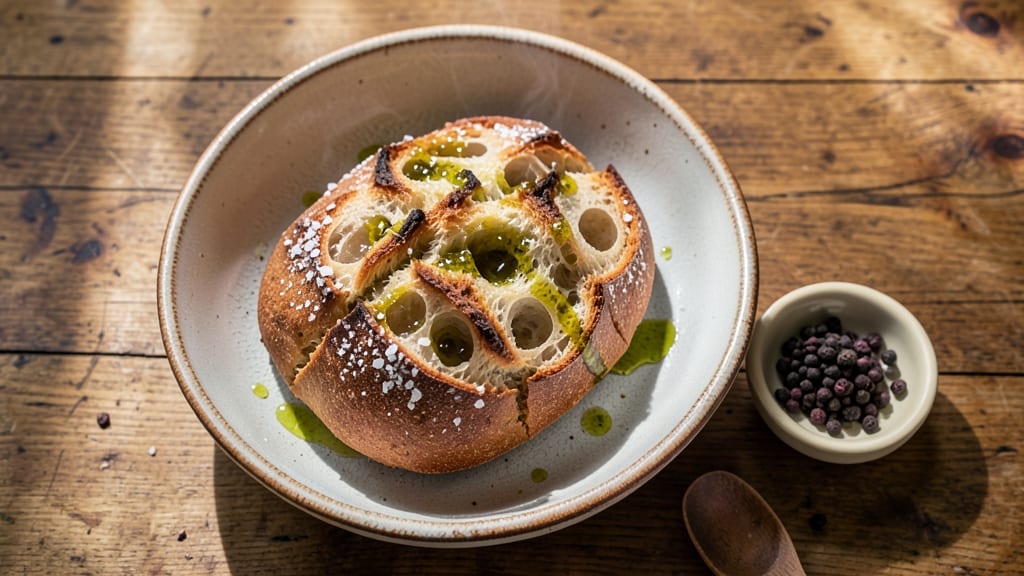
This airy ciabatta bread recipe delivers the perfect balance of pillowy softness and crispy crust—just like the bread you'd find in an Italian bakery. The secret lies in high hydration and proper fermentation, which create those signature air pockets and chewy texture.
I've refined this method over years of baking, and it consistently produces a loaf that's light enough to melt in your mouth yet sturdy enough to hold up to hearty sandwiches.
The process starts with a simple dough of flour, water, yeast, and olive oil, but the magic happens in the kneading and proofing stages. Unlike dense breads, ciabatta relies on gentle handling and long fermentation to develop its signature texture.
For best results, I recommend using a no-knead technique or autolyse to simplify the process while still achieving professional-quality results. This method reduces active kneading time, making it accessible even for beginners.
By the time it bakes, you'll have a loaf with an open, irregular crumb and a golden, crackly crust that's impossible to resist. The interior stays soft and airy, while the exterior develops a satisfying crunch.
This bread is ideal for sandwiches, dipping in olive oil, or serving alongside soups and salads. The best part? Once you master the technique, you can adjust the hydration or fermentation time to suit your preferences.
Ready to bake a loaf that rivals your favorite bakery? Here's everything you need to create restaurant-quality ciabatta at home, with tips to ensure success every time. Let's get started!
Ingredients for airy ciabatta bread
Nine simple ingredients transform into bakery-style ciabatta with crispy crust and airy crumb.
| Ingredient | Amount | Notes |
|---|---|---|
| Bread Flour 🌾 | 4 cups | High-protein for chewy texture |
| Extra-Virgin Olive Oil 🫒 | ½ cup | Fruity, not bitter |
| Active Dry Yeast 🍞 | ½ tsp | Freshly opened for best results |
| Granulated Sugar 🍚 | 1 tbsp | Feeds yeast for fermentation |
| Salt 🧂 | 1 ½ tsp | Kosher or sea salt preferred |
| Warm Water 💧 | 2 ½ cups | 110°F for yeast activation |
| Cornmeal 🌽 | ¼ cup | For dusting baking sheet |
| Semolina Flour 🌾 | ¼ cup | For dusting loaf |
| Coarse Sea Salt 🧂 | 1 tsp | For sprinkling crust |
The bread flour is non-negotiable here—King Arthur or Caputo are my go-tos for that signature chew. Bulk bins at Whole Foods or World Market often carry Caputo if you want to splurge. Olive oil should be fruity and peppery—California Olive Ranch or Colavita are reliable. The yeast? Freshly opened is key—check the date on the package. Warm water is crucial: too hot kills yeast, too cold makes it sluggish. 110°F is perfect—test with your finger (should feel like bathwater).
No bread flour? All-purpose plus 1 tbsp vital wheat gluten works in a pinch. Swap the fruity olive oil for light olive oil if that's what you've got, but the flavor won't be as rich. Running out of semolina? Unbleached all-purpose flour does the job, though it won't give that same rustic texture. For the sugar, honey or maple syrup can substitute at half the amount. And if you're out of coarse sea salt? Flaky Maldon is ideal, but regular coarse salt works too—just sprinkle generously.
Mix your dough, let it rest, then shape it like a baguette—no rolling needed. Proof at room temp for 1-2 hours until doubled, then bake at 425°F for 25-30 minutes. The crust should be golden and crackly. Store wrapped at room temp for 2 days, or freeze sliced for up to 3 months. Toasting revives stale slices—3 minutes in a hot pan brings back that bakery-fresh crunch.
Why You'll Love This Recipe
- No-Knead Magic: I swear by this—just mix, let it rise, and bake. The bread flour handles all the heavy lifting while you sip coffee or scroll. No stand mixer, no fancy techniques, just one bowl and patience.
- Olive Oil Luxe: That first pull-apart moment? Pure satisfaction. The extra-virgin olive oil doesn’t just flavor—it makes every bite buttery and crispy without a single drop of butter. Honestly, I’d call it "fancy" if I didn’t burn the loaves so often.
- Weeknight Swiss Army: Tear it for garlic bread, toast it for bruschetta, freeze slices for quick sandwiches. I’ve used it to soak up pasta sauce, stuff into soups, and even as a makeshift plate. (Yes, even on a Tuesday night.)
- Budget-Friendly Staple: Five ingredients, endless uses. A single batch feeds my family for days—leftovers turn into croutons, breadcrumbs, or French toast. My wallet and my kids both thank me.
Step-by-step instructions for airy ciabatta bread
Here's how to craft that signature pillowy crumb and irresistible crust—every time.
Activate the Yeast and Mix the Dough
In a large bowl, combine the 2.5 cups warm water (about 110°F) with the 1 tbsp granulated sugar and 0.5 tsp active dry yeast. Let sit for 5-10 minutes until frothy—this confirms your yeast is alive and ready to work. If it doesn't bubble, start over with fresh yeast.
Add the 4 cups bread flour and 1.5 tsp salt to the bowl. Using a wooden spoon or dough whisk, mix until a shaggy dough forms. Then add the 0.5 cup extra-virgin olive oil and stir until fully incorporated. The dough will be sticky but manageable—this is normal for ciabatta's signature airiness.
Knead and Rest for Maximum Flavor
Turn the dough onto a lightly floured surface and knead gently for 2-3 minutes—just enough to develop some gluten without overworking it. The dough should be soft and slightly tacky. Place it back in the bowl, cover with a damp towel, and let it rise at room temperature for 1-2 hours or until doubled in size.
Here's where the magic happens: the dough should feel light and airy, with visible bubbles on the surface. If it doesn't rise much, your kitchen might be too cold—try placing the bowl near a warm spot (like the oven with the light on) to speed up fermentation.
Shape and Second Rise for Open Crumb
Lightly flour a clean surface and turn out the dough. Gently fold it over itself 2-3 times to create surface tension—this is what gives ciabatta its signature holes. Shape into a loose log (don't press too hard) and place it on a baking sheet dusted with 0.25 cup cornmeal. Cover and let rise for another 30-60 minutes until puffy.
For that classic ciabatta look, stretch the dough slightly before baking—this opens up those beautiful air pockets. The dough should spring back slowly when poked, indicating it's ready. Preheat your oven to 425°F while the dough rises.
Bake for Crusty Exterior and Pillowy Crumb
Bake the ciabatta for 20-25 minutes until deep golden brown. For extra crustiness, brush the top with water after 10 minutes in the oven. The bread is done when it sounds hollow when tapped on the bottom and reaches an internal temperature of 190-200°F.
Let it cool on a wire rack for at least 30 minutes before slicing—this prevents a gummy crumb. The interior should be soft and airy, with those signature large holes, while the exterior remains crisp. Sprinkle with 1 tsp coarse sea salt while still warm for that authentic touch.
Store for Maximum Freshness
Wrap cooled ciabatta loosely in a cotton towel or plastic bag and store at room temperature for 2-3 days. For longer storage, freeze slices wrapped in plastic—just thaw at room temperature before serving. The bread continues to develop flavor as it sits, making it even more delicious the next day.
This recipe yields 4 generous servings—perfect for sharing with friends or enjoying with your favorite toppings. The secret to success? Patience and proper shaping—don't rush the rising times, and handle the dough gently to preserve those air pockets.
Pro Tips For Making Airy Ciabatta Bread
- Use Warm Water: That yeast packet says room temp, but I learned the hard way—lukewarm (105-110°F) gets it going faster. Toss the yeast into the water first, let it froth for 5 minutes before adding flour. If it’s sluggish, your oven’s lightbulb (or a microwave) works in a pinch.
- Knead Less, Stretch More: Ciabatta’s all about those holes, not brute force. After the initial knead (5-7 minutes by hand), switch to stretching—grab the dough, fold it over itself, and let surface tension do the work. Over-kneading turns it tough; under-stretching kills the air.
- Skip the Overproofing: Your dough’s ready when it springs back slowly when poked—like a sad balloon, not a bouncy one. I used to wait until it doubled again, and my loaves collapsed like wet paper. Aim for 1.5x the original size, then bake. (Yes, even if your kitchen’s cold.)
- Oil the Loaf Pan: That olive oil isn’t just for the dough—coat the pan generously with extra-virgin before shaping. The crust’s crispness depends on it sticking just enough to rise, not gluing itself to the pan. (Trust me, you’ll curse if you skip this.)
Make-ahead tips for this airy ciabatta bread
Dough Prep Ahead
Mix your ciabatta dough up to 24 hours before baking and store it in the fridge. The cold slows fermentation, giving you more control over timing. When ready to bake, let the dough sit at room temperature for 1-2 hours until it's puffy and springy.
This trick is perfect for busy mornings or holiday baking—just pull it out when you're ready to shape and bake. 💪
Proofing Shortcuts
If you're short on time, use the oven method for proofing. Place your shaped dough in a warm oven (70°F) with the light on for 30-60 minutes. This creates a consistent environment without needing to monitor room temperature.
For even faster results, try a proofing box—I love the Breville Smart Oven Air Fryer with proofing function for precise control. ⏰
Baking in Advance
Bake your ciabatta a day ahead and store it at room temperature. The crust stays crispy while the interior remains soft. To revive stale slices, wrap them in foil and heat in a 350°F oven for 5-7 minutes.
This works wonders for sandwiches or toast. For maximum freshness, freeze baked loaves wrapped in plastic—just thaw at room temperature before serving. ❄️
Freezing Dough
You can freeze your ciabatta dough before the final rise for make-ahead convenience. Shape the dough, wrap it tightly in plastic, and freeze for up to 3 months. When ready to bake, thaw in the fridge overnight, then let it rise at room temperature as usual.
This is my go-to method for meal prep Sundays—just pull out the dough when I'm ready to bake. 🍞
Batch Baking Tips
Double the recipe and bake two loaves at once for parties or meal prep. Use a half-sheet pan for even baking. For extra-large batches, divide the dough into 4 smaller loaves—this ensures even cooking and prevents overcrowding.
Label your baked loaves with dates and store them in airtight containers for up to 5 days at room temperature. 💫
Reviving Stale Bread
If your ciabatta loses its crispness, don't toss it! Spritz with water, wrap in foil, and heat at 375°F for 5 minutes to restore texture. For a quick fix, toast slices in a dry pan over medium heat for 1-2 minutes per side—this brings back that bakery-fresh crunch instantly.
I keep a loaf on hand just for this purpose! 🔥
Nutrition facts
Frequently asked questions
Why does my ciabatta turn out dense instead of airy?
Over-kneading or skipping the autolyse step are common culprits. Ciabatta relies on gentle handling—knead just until the dough comes together (2-3 minutes) to avoid developing too much gluten. Also, ensure your yeast is active (it should bubble within 5-10 minutes in warm water) and that your kitchen is warm enough (75°F+) for proper fermentation. A cold environment slows yeast activity, leading to dense results.
Can I substitute bread flour in this recipe?
Yes, but expect slightly different texture. Use all-purpose flour plus 1 tbsp vital wheat gluten for a 1:1 swap. For a lighter crumb, try 50% bread flour and 50% all-purpose flour. Keep in mind that bread flour's higher protein content (12-14%) creates that signature chewy texture—without it, your ciabatta may be softer but less open-pocketed.
How do I get that crackly crust without burning the inside?
Create steam during baking by placing a metal tray filled with boiling water on the oven rack below your bread. Brush the loaf with water after 10 minutes in the oven, then sprinkle with coarse sea salt for extra crunch. Bake at 425°F for 20-25 minutes, rotating the pan halfway through. The internal temperature should reach 190-200°F—use an instant-read thermometer to avoid guesswork.
Is it okay if my dough doesn't double in size?
Not doubling isn't necessarily a failure—it depends on your environment. In cooler kitchens (68°F or below), fermentation slows naturally. Try these fixes: place the dough near a warm spot (like the oven with the light on), use slightly more yeast (0.6 tsp instead of 0.5 tsp), or extend the rising time by 30-60 minutes. If the dough still doesn't rise much, it might be overproofed—bake it immediately for a denser but still tasty loaf.
Can I make ciabatta without olive oil?
While olive oil adds flavor, you can substitute with melted butter (same amount) or neutral oil like vegetable oil. For a richer taste, combine ¼ cup olive oil with ¼ cup melted butter. Just note that olive oil's fruity notes contribute to ciabatta's authentic flavor profile. If using butter, add it to the dough after mixing the wet ingredients to prevent premature melting.