
Side Dishes
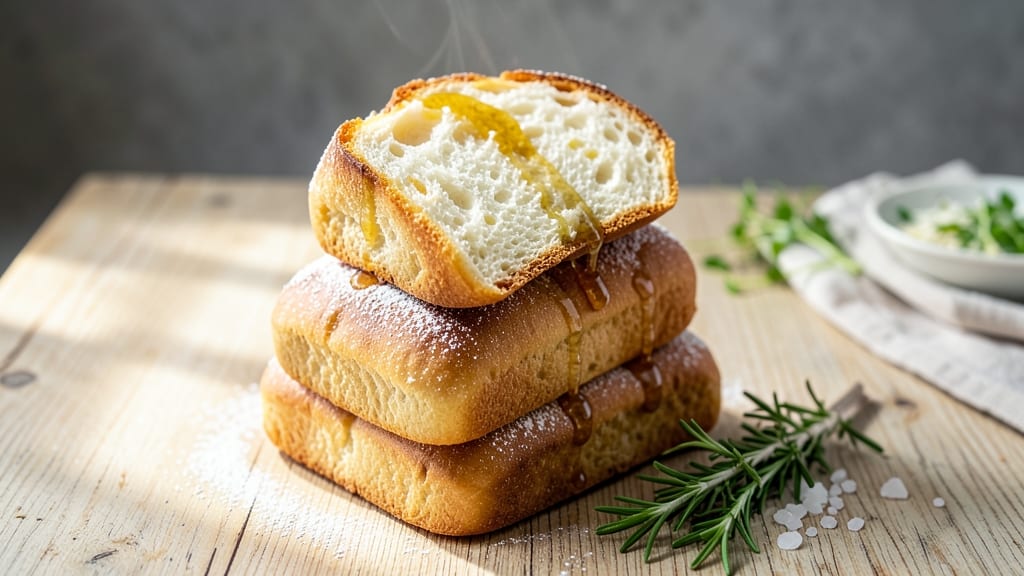
This airy sandwich bread recipe delivers the perfect balance of pillowy softness and a satisfying crusty bite—the kind of bread that makes every sandwich feel special. ✨ The secret lies in precise hydration, proper kneading, and controlled proofing, which transform simple ingredients into bread with an open, airy crumb and a golden crust that stays fresh for days.
What sets this recipe apart is the foolproof technique that ensures consistent results, even for home bakers. Using a mix of bread flour and vital wheat gluten creates that signature airiness, while a touch of honey and butter enriches the flavor without overpowering the bread's natural taste.
The dough develops slowly during proofing, creating those signature open crumbs that make every slice irresistible.
By the time it emerges from the oven, you'll have a loaf with a crisp exterior and a soft, open interior—ideal for sandwiches, toast, or serving with butter. The bread stays fresh longer than store-bought varieties, making it perfect for meal prep or gifting.
Whether you're making it for a family dinner or a picnic, this recipe ensures every bite is a delight.
For added versatility, you can easily adapt the recipe with whole wheat flour or a sourdough starter. The instructions are designed to guide you through each step, from mixing to baking, so you can achieve professional-quality results in your own kitchen. Let's get started!
Ingredients for airy sandwich bread
Simple ingredients transform into bread with perfect pillowy softness and satisfying crusty bite.
| Ingredient | Amount | Notes |
|---|---|---|
| Bread Flour 🌾 | 3 cups | High-protein preferred for structure |
| Vital Wheat Gluten 🌾 | ½ cup | For signature airy texture |
| Granulated Sugar 🍚 | ¼ cup | Balances yeast activation |
| Instant Yeast 🍞 | 2 tsp | Ensures reliable fermentation |
| Salt 🧂 | 1 ½ tsp | Diamond Crystal preferred |
| Unsalted Butter 🧈 | ½ cup | Cold, cubed for flavor |
| Honey 🍯 | 2 tbsp | Enhances browning |
| Large Eggs 🥚 | 2 whole | Room temperature for mixing |
| Whole Milk 🥛 | ½ cup | Warmed to 90°F for activation |
| Water 💧 | ¾ cup | Lukewarm for optimal yeast |
The bread flour and vital wheat gluten combo is non-negotiable for that signature airiness. King Arthur or Bob's Red Mill are my go-tos for bread flour—high protein content means better structure. Vital wheat gluten is available in the baking aisle at Whole Foods or Wegmans, or online if your local store doesn't carry it. For the butter, Land O'Lakes unsalted is my standard, but any good-quality brand works. The honey should be pure, not that fake corn syrup stuff—local raw honey adds subtle floral notes that elevate the bread.
No bread flour? All-purpose plus 1 tbsp extra flour gets you close, though the crumb won't be quite as open. Short on vital wheat gluten? Add 1 tbsp extra bread flour and accept slightly denser bread. The milk can be any kind—2% or whole both work, but avoid skim. Eggs? Duck eggs work perfectly if you have them, or use flax eggs (1 tbsp ground flax + 3 tbsp water per egg) for vegan adaptation. The water needs to be lukewarm (90°F)—cold water kills yeast, hot water activates it too fast. If you're in a pinch, use warm tap water and add a pinch of sugar to help yeast activate.
The dough keeps for 24 hours in the fridge, covered tightly. For longer storage, wrap tightly in plastic and freeze for up to 3 months. To revive, let it sit at room temperature for 1-2 hours before shaping. The butter cubes stay firm in the dough—no need to soften them ahead of time. Freshly baked loaves last 5-7 days at room temperature if wrapped in a clean kitchen towel. For extra freshness, slice and freeze—toast straight from frozen for crispy results.
Why You'll Love This Recipe
- No-Knead Magic: I swear by this—just mix, let it rise, and bake. The vital wheat gluten gives it that unreal lightness without a single punch or stretch. My lazy Sundays just got a whole lot easier.
- Sweet & Salty Crust: That touch of granulated sugar caramelizes into a golden crust while keeping the inside pillowy. Honestly? It’s the kind of bread that makes toast taste like a bakery secret.
- Weeknight Sandwich Savior: Freezes like a dream for quick lunches, and the neutral flavor lets it star in anything—grilled cheese, charcuterie, or even a fancy tea sandwich. (Yes, even on a Tuesday night.)
- Budget-Friendly Staple: A loaf costs less than store-bought, and the yeast + gluten combo stretches a little flour so far. I bake two loaves, freeze one, and never stress about stale bread again.
Step-by-step instructions for airy sandwich bread
Here's how to achieve that signature sandwich bread texture—light, airy crumb with a satisfying crust.
👨🍳 Step 1: Mix the Dough Base
In a stand mixer fitted with the dough hook, combine the 3 cups bread flour, 0.5 cup vital wheat gluten, 0.25 cup granulated sugar, 2 tsp instant yeast, and 1.5 tsp salt. Mix on low speed for 30 seconds to distribute the ingredients evenly. The vital wheat gluten is key here—it develops gluten strands that give this bread its signature airy texture.
Add the 0.5 cup cold cubed butter and mix on medium speed for 2-3 minutes until the butter is fully incorporated and the mixture resembles coarse crumbs. The butter should be cold to prevent over-development of gluten, which would make the bread dense. You'll see small butter pieces still visible at this stage—that's perfect.
🍳 Step 2: Hydrate and Knead
In a separate bowl, warm the 0.5 cup whole milk to 90°F and the 0.75 cup water to lukewarm (about 85°F). Add the warm milk and water to the mixer along with the 2 whole room-temperature eggs and 2 tbsp honey. Mix on medium speed for 5-7 minutes until the dough comes together and begins to pull away from the sides of the bowl.
Switch to low speed and scrape down the sides of the bowl with a silicone spatula. The dough should be smooth and elastic, forming a soft ball that leaves clean sides on the bowl. If it's too sticky, add 1 tablespoon bread flour at a time until it cleans up. Over-kneading develops too much gluten, so stop when the dough is just slightly tacky but not wet.
🥘 Step 3: First Rise and Shaping
Transfer the dough to a lightly oiled bowl, cover with a damp kitchen towel, and let it rise in a warm place for 1-1.5 hours or until it has nearly doubled in size. The dough should feel light and springy when poked gently with your finger. This first rise develops the gluten structure and allows the yeast to ferment properly.
Once risen, turn the dough out onto a lightly floured surface and gently deflate it by pressing down with your fingers. Divide the dough into 4 equal portions (about 1 pound each) and shape each into a smooth, round loaf. Place the loaves seam-side up in four 8.5x4.5-inch loaf pans that have been lightly greased with butter. Cover loosely with plastic wrap and let rise for another 45-60 minutes until they've risen about 1 inch above the pans.
🔥 Step 4: Bake to Golden Perfection
Preheat your oven to 375°F with a baking sheet on the lower rack. Place the loaf pans on the baking sheet and bake for 25-30 minutes until the bread is deep golden brown and sounds hollow when tapped on the bottom. The internal temperature should reach 190-200°F.
I like to rotate the pans halfway through baking for even browning. The bread is done when the crust is a rich caramel color and the loaves pull away slightly from the sides of the pans. Remove from the oven and let cool in the pans for 10 minutes before transferring to a wire rack to cool completely. This cooling step is crucial—it allows the gluten to fully relax and the crumb to set properly for that signature airy texture.
Pro Tips For Making Airy Sandwich Bread
- Mix the Gluten First: Mix the vital wheat gluten and bread flour together before adding liquids—this ensures even distribution and prevents dry pockets in your dough. I used to skip this, and my loaves would taste uneven, like some parts were missing that airy magic.
- Use Warm Water, Not Hot: Instant yeast wakes up fastest in water that’s about 105°F (40°C)—too hot and it dies, too cold and it’s sluggish. I learned this after a batch took three times longer to rise. A quick thermometer check saves you waiting around.
- Skip the Over-Kneading: This dough is delicate—once it’s smooth and just slightly sticky (about 5-6 minutes by hand), stop. Overworking it develops too much gluten, and your sandwich bread turns tough instead of tender. I used to think more kneading = better bread. Wrong.
- Proof at Room Temp: Let your shaped loaves rise in a warm spot (75-80°F / 24-27°C) until they’ve puffed just past doubled—about 1.5 to 2 hours. Cold proofing slows things down, and rushing it leads to dense bread. I now keep a small lightbulb in my oven (off!) to speed things up when my kitchen’s chilly.
Perfect pairings for this airy sandwich bread
Classic Sandwich Spreads
This bread shines with traditional sandwich fillings like turkey with cranberry sauce or ham and Swiss cheese. The airy texture holds up perfectly to wet ingredients—try peanut butter and banana or tuna salad with celery.
I love adding a thin layer of mayonnaise on the bread before assembling to prevent sogginess while keeping the interior soft. 🥪
Butter and Jam Pairings
For a no-fuss breakfast or snack, slather thick slices with unsalted butter and top with strawberry jam or orange marmalade. The bread's subtle sweetness from the honey enhances the fruit flavors beautifully.
I also enjoy almond butter and honey for a protein-packed option—just toast the bread first for extra crunch. 🍯
Gourmet Toast Toppings
Elevate your toast game with avocado and chili flakes, ricotta and honey, or smoked salmon and cream cheese. The bread's neutral flavor lets these toppings shine.
For a savory twist, try garlic butter and fresh rosemary—just spread softened butter on warm slices and sprinkle with flaky salt. The crusty exterior adds perfect texture contrast. 🧈
Cheese Board Companion
Slice the bread into thick pieces and serve alongside aged cheddar, brie, and gouda for a sophisticated cheese board. The airy crumb soaks up melted cheese beautifully. I pair it with cured meats like prosciutto or salami, plus olives, nuts, and honey drizzle for a complete charcuterie experience. 🧀
Soup Sidekick
This bread transforms simple soups into meals. Try it with tomato basil soup and a sprinkle of Parmesan, or creamy potato leek soup topped with crispy bacon.
The bread's sturdy structure holds up to dipping without falling apart. For extra indulgence, toast slices and rub with garlic butter before serving. 🥣
Nutrition facts
Frequently asked questions
Why does this recipe use vital wheat gluten?
Vital wheat gluten adds elasticity and strength to the dough, creating that signature open, airy crumb you find in premium sandwich bread. Without it, the texture would be denser. The combination with bread flour gives you the perfect balance of structure and lightness for slicing.
Can I make this bread without a stand mixer?
Yes! Mix the dry ingredients in a large bowl, then cut in the cold butter with a pastry cutter or your fingers until crumbly. For kneading, use your hands or a dough whisk—work the dough for 10-15 minutes until smooth and elastic. Just be prepared for slightly more effort than with a mixer.
How do I know when the dough is fully proofed?
Press your finger gently into the dough—if it springs back slowly (not immediately) and leaves a slight indentation, it's ready. For the first rise, it should nearly double in size (1-1.5 hours); for the second rise, it should rise 1 inch above the loaf pans (45-60 minutes). Overproofing makes the bread dense.
Why does my bread turn out dense instead of airy?
Dense bread usually means over-kneading, underproofing, or using too much flour. Check your dough temperature—it should be 75-80°F during mixing. Also verify your yeast is fresh (test in warm water with sugar—it should foam in 5 minutes) and that you're using the right flour blend.
Can I substitute all-purpose flour?
You can try, but expect a slightly denser result. Replace the bread flour with 3 cups all-purpose flour and add 1 extra tablespoon to account for the lower protein content. For best results, stick with bread flour and vital wheat gluten—they're the secret to that signature airy texture.