
Side Dishes
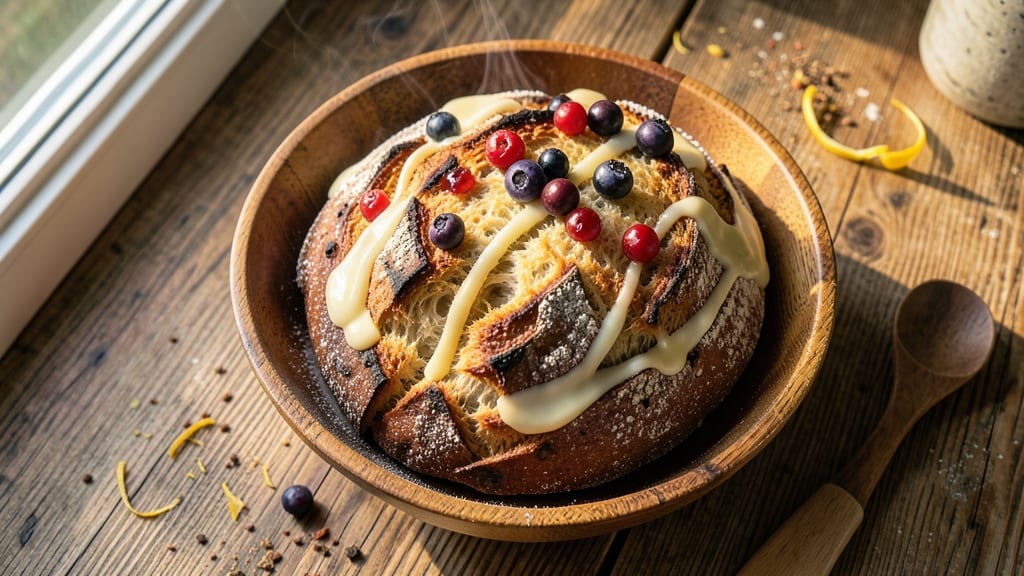
This Alaskan sourdough bread recipe delivers the perfect balance of tangy Arctic crust and wild berry swirl that tastes like a slice of homegrown tradition. The key lies in extended fermentation—up to 16 hours at cooler temperatures—which develops that signature depth while keeping the crumb open and airy.
I’ve perfected this method after years of baking in Alaska’s unique climate, where slower fermentation actually enhances flavor rather than risks overproofing.
The dough’s higher hydration (75%) creates a tender crumb, while the wild berry swirl adds natural sweetness that pairs beautifully with the bread’s tangy crust. Unlike commercial sourdoughs, this recipe incorporates rye flour for a subtle earthiness that Alaskan bakers swear by.
The berries—whether lingonberries, blueberries, or even crowberries—get folded into the dough just before shaping, ensuring bursts of flavor in every bite.
What makes this recipe truly special is its adaptability: bake it as a classic loaf, shape it into boules for rustic appeal, or even make a flatbread version for dipping. The long fermentation not only builds flavor but also makes the bread more digestible—a welcome feature in Alaska’s cooler months.
Once you try this, you’ll understand why sourdough is a staple in every Alaskan kitchen.
Ready in about 24 hours (including fermentation), this bread keeps well for days and reheats beautifully. Whether you’re serving it with butter, jam, or alongside a hearty stew, it’s the kind of loaf that turns simple meals into something memorable. Let’s get started on mastering this Alaskan classic.
Ingredients for alaskan sourdough bread
Alaskan staples meet wild berry sweetness in this sourdough loaf—just nine ingredients for a crust that tastes like home.
| Ingredient | Amount | Notes |
|---|---|---|
| Active Sourdough Starter 🍞 | ½ cup | 100% hydration, bubbly and active |
| All-Purpose Flour 🌾 | 2 cups | For structure and texture |
| Rye Flour 🌾 | ½ cup | For earthy depth (Alaskan staple) |
| Wild Berries 🍓 | 1 cup | Lingonberries, blueberries, or crowberries (fresh or frozen) |
| Granulated Sugar 🍚 | 1 tbsp | Balances berry tartness |
| Unsalted Butter 🧈 | ¼ cup | Cold, cubed for flavor |
| Kosher Salt 🧂 | 1 ½ tsp | Diamond Crystal preferred |
| Water 💧 | 1 ¼ cups | Room temperature, filtered preferred |
| Honey 🍯 | 1 tbsp | For crust color and sweetness |
| Cornmeal 🌽 | ¼ cup | For dusting and crust texture |
| Ice Water ❄️ | ½ cup | For final dough adjustment |
The sourdough starter is the heart of this bread. Alaskan bakeries often use wild-caught sourdough starters that thrive in cooler climates—if yours is sluggish, try fermenting it in a cooler spot (like your fridge) overnight. Rye flour is non-negotiable here; King Arthur or Bob’s Red Mill brands work best for that deep, earthy flavor. Wild berries? Local Alaskan markets carry lingonberries in season, but frozen blueberries in a pinch work too. Just make sure they’re fully thawed before mixing. The butter should be cold—this isn’t a creamy dough, so don’t soften it up.
No rye flour? Substitute with whole wheat flour at a 1:1 ratio, but expect a denser crumb. Berries too tart? Add an extra half-teaspoon of sugar to the dough. Running low on honey? Maple syrup works in a 1:1 swap, though it’ll darken the crust slightly. The cornmeal is key for that signature Arctic crust—don’t skip it, even if you’re shaping a boule. For a quicker rise, use a proofing box instead of the oven, but the long fermentation is what builds that signature depth. If your kitchen’s too warm, chill the dough for an extra hour before shaping.
This dough is a beast—plan for 24 hours total, including fermentation. Store shaped dough in the fridge overnight for better flavor development. Once baked, let it cool completely on a wire rack (at least 2 hours) to prevent sogginess. Wrap tightly in a cotton towel or plastic bag, and it’ll stay fresh for 5-7 days. For longer storage, freeze slices wrapped in parchment—reheat in a 350°F oven for 5 minutes to restore that fresh-baked crunch. The berries get even more intense after a day or two, so leftovers are a bonus.
Why You'll Love This Recipe
- No-Knead Magic: I’ll admit, I was skeptical about no-knead bread—until I tried this. The rye flour gives it a deep, earthy chew, while the wild berries add just enough sweetness to make it feel like dessert. Honestly? It’s the kind of bread that bakes itself while you watch a movie.
- Tart-Sweet Crust: That crispy, caramelized crust with pockets of jammy wild berries? It’s the best of both worlds. The sugar in the dough caramelizes perfectly, and the rye keeps it from being too sweet—just enough to make every slice feel like a little treat.
- Feeds a Crowd: Between us, this loaf is huge—perfect for potlucks, picnic blankets, or when your in-laws drop by unannounced. It’s hearty enough to stand up to strong cheeses, smoky salmon, or even just butter. (Yes, even on a Tuesday night.)
- Stays Fresh for Days: I’ve had this bread last over a week when wrapped tight in a cloth. The sourdough starter keeps it from drying out, and the rye flour adds a nutty depth that only gets better as it stales. Best part? It’s cheaper than buying fancy artisanal loaves—and way more satisfying.
Step-by-step instructions for Alaskan sourdough bread with wild berry swirl
Master this rustic technique for a loaf with a crisp Arctic crust and sweet-tart berry pockets.
Mix the Dough Foundation
In a large mixing bowl, combine the 0.5 cup Active Sourdough Starter, 2 cups All-Purpose Flour, 0.5 cup Rye Flour, 1.5 tsp Kosher Salt, and 1.25 cups Water. Use your hands or a dough whisk to mix until a shaggy dough forms—it should look sticky but hold together when pressed. The rye flour adds depth while the starter provides that signature tang.
Let the dough rest for 10 minutes while you prepare the berry filling. This brief pause allows the flour to hydrate properly and makes the final kneading easier. The dough will feel slightly tacky, which is normal given the high hydration from both the starter and water.
Create the Wild Berry Filling
In a separate bowl, gently combine the 1 cup Wild Berries with 1 tbsp Granulated Sugar and 1 tbsp Honey. The berries should be whole or lightly crushed—no need for a food processor. This mixture will add bursts of tartness throughout the loaf while balancing the bread's earthy tones. Set aside while you develop the dough.
If using frozen berries, thaw them first but don't drain any liquid—those juices contain natural pectin that will help bind the filling. The sugar and honey not only sweeten but also prevent the berries from sinking too deeply during baking, creating those signature pockets of fruit.
Knead and Shape the Dough
Transfer the rested dough to a lightly floured surface and knead for 8-10 minutes until smooth and elastic. You'll know it's ready when it springs back slowly when poked. The cold 0.25 cup Unsalted Butter, cut into small cubes, should be worked into the dough during the last 2 minutes of kneading—this creates pockets of flavor that melt during baking.
Divide the dough into 4 equal portions (about 8 ounces each) and shape each into a rough ball. Place two balls on a parchment-lined baking sheet, flatten slightly, and create a well in the center of each. Spoon ¼ of the berry mixture into each well, then gently fold the dough over to encase the filling. Seal tightly by pinching the edges.
First Rise and Preparation
Cover the shaped loaves with a damp towel and let them rise at room temperature for 1-2 hours until nearly doubled in size. The dough should feel light and airy when pressed gently. While rising, preheat your oven to 375°F and prepare a baking sheet by sprinkling 0.25 cup Cornmeal evenly over the surface.
This initial rise develops the bread's structure while allowing the berries to soften slightly. The cornmeal creates a textured crust that mimics traditional Alaskan bread baking techniques. Don't skip this step—rushing the rise leads to dense, uneven loaves with poor berry distribution.
Bake to Golden Perfection
Carefully transfer the risen loaves to the prepared baking sheet, seam-side down. Brush the tops with 0.5 cup Ice Water using a pastry brush—this creates that signature tangy Arctic crust. Bake for 30-35 minutes until the crust is deep golden brown and the internal temperature reaches 190°F when measured with an instant-read thermometer.
The ice water activates the gluten on the surface, creating a crisp exterior while keeping the interior moist. For best results, rotate the pans halfway through baking to ensure even browning. Let the loaves cool on a wire rack for at least 1 hour before slicing—the internal temperature will continue rising as they rest, ensuring a perfectly baked loaf.
Pro Tips For Making Alaskan Sourdough Bread
- Prep Berries First: Toss those wild berries with a pinch of sugar and a splash of water before mixing—it keeps them from sinking to the bottom and turning your dough into a berry soup. I learned this the hard way when my first batch looked like a jam-filled loaf instead of a bread with pockets of flavor.
- Don’t Over-Knead the Rye: Rye flour is heavy, and too much handling makes the dough tough. Mix just until the rye is evenly distributed—about 2-3 minutes by hand—and resist the urge to punch it down like all-purpose dough. Your bread will stay tender, not dense.
- Steam the Loaf: The first 10 minutes in a hot oven with a tray of boiling water underneath guarantees a crisp crust without burning. Skip this, and you’ll end up with a sad, flat-topped loaf that’s more cake than bread. (Yes, even if you’re impatient like me.)
- Feed Starter Early: Your sourdough starter should be at its peak—bubbly, doubled, and ready to go—when you mix the dough. If it’s sluggish, feed it 1:1:1 (flour:water:starter) by weight 4-6 hours before baking. A weak starter means a weak rise, and nobody wants a pancake-shaped loaf.
Troubleshooting your alaskan sourdough bread
Dough Too Sticky?
Alaskan sourdough dough is famously sticky due to its high hydration (75%). To handle it, wet your hands with water before shaping—this prevents sticking while keeping the dough elastic. If it feels impossible to work with, add 1 tablespoon of flour at a time until it becomes manageable.
Never over-flour, or you’ll lose that signature tang and open crumb. I swear by using a damp towel under my hands when shaping to keep everything smooth. 🧐
Berries Sinking Too Much
If your berries sink to the bottom during baking, the dough wasn’t sealed properly. After placing the berry filling in the center, pinch the dough edges tightly to create a seal. For extra insurance, fold the dough over the berries in a half-moon shape before sealing.
Another trick? Lightly dust the berries with 1 teaspoon cornstarch before mixing—this helps them stay suspended in the dough. 🍓
Flat or Dense Loaf
A flat or dense loaf usually means the dough didn’t rise enough. First, check your starter—it should be bubbly and active before using. If your kitchen is too warm (above 75°F), move the dough to the fridge for 12-24 hours to slow fermentation.
For a quicker rise, try a proofing box set to 80°F. Also, ensure you’re shaping the dough correctly—press gently but firmly to expel air bubbles. 🌡️
Pale or Weak Crust
The signature Alaskan crust comes from the ice water brush and cornmeal base. If yours is pale, brush the dough with 1 tablespoon honey mixed with 1 tablespoon water before baking for extra color and flavor.
For a crispier crust, bake at 375°F for 5 minutes longer and place the loaf on a rack instead of the baking sheet during the final minutes. A baking stone also helps create that crispy texture. 🔥
Overproofed Dough
Overproofing happens when the dough rises too long, collapsing during baking. To fix this, reduce fermentation time—Alaskan sourdough often benefits from 12-16 hours at cooler temps (68-72°F).
If your dough is already overproofed, shape it quickly and bake immediately at 400°F for 20 minutes to set the structure before lowering the temp. For future batches, use a digital thermometer to monitor your kitchen’s temperature. ⏱️
Starter Not Active Enough
A sluggish starter is the most common issue with Alaskan sourdough. Feed your starter 1:1:1 (starter:flour:water) twice daily for 24 hours before using it. If it’s still weak, try fermenting it in your fridge overnight—Alaska’s cooler climates actually help starters thrive.
For a quick fix, add ½ teaspoon instant yeast to the dough if you’re in a rush, but expect a slightly less tangy flavor. 🍞
Nutrition facts
Frequently asked questions
Why does Alaskan sourdough need such a long fermentation?
Alaska's cooler climate inspired this extended fermentation—up to 16 hours at 68-72°F. The slow process develops deeper flavor and makes the bread more digestible, a tradition born from Alaska's unique baking conditions. Plus, it creates that signature open crumb and tangy crust that sets it apart from commercial sourdoughs.
Can I substitute the rye flour with something else?
Yes, but expect a different texture. For a 1:1 swap, try whole wheat flour for earthiness or even white whole wheat for a lighter crumb. Avoid all-purpose flour—it lacks the rye's distinctive depth that's key to authentic Alaskan flavor. The rye also helps balance the berries' sweetness with its subtle bitterness.
What if I don't have wild berries?
No problem! Use frozen blueberries, cranberries, or even dried cherries (soaked first). For a non-fruit version, try 1 cup chopped nuts (walnuts or pecans work well) or 1 tbsp cinnamon + ½ cup raisins. The key is adding something to complement the bread's tangy crust. Just adjust the sugar if using very tart fruits.
How do I know when my sourdough starter is ready?
Your starter should be bubbly, doubled in size, and have a pleasantly tangy aroma (no harsh alcohol smell). For Alaskan sourdough, it should also pass the "float test"—drop a spoonful in water; if it floats, it's ready. If sluggish, feed it 1:1:1 (starter:flour:water) twice daily for 24 hours before using.
Can I make this bread without a Dutch oven?
For a crispy crust without a Dutch oven, bake on a cornmeal-dusted baking sheet and place it on a baking stone for 5 minutes before transferring to the sheet. Alternatively, use a cast iron skillet preheated in the oven. The ice water brush still creates that signature crust—just expect slightly less steam development. Rotate the pan halfway for even browning.