
Side Dishes
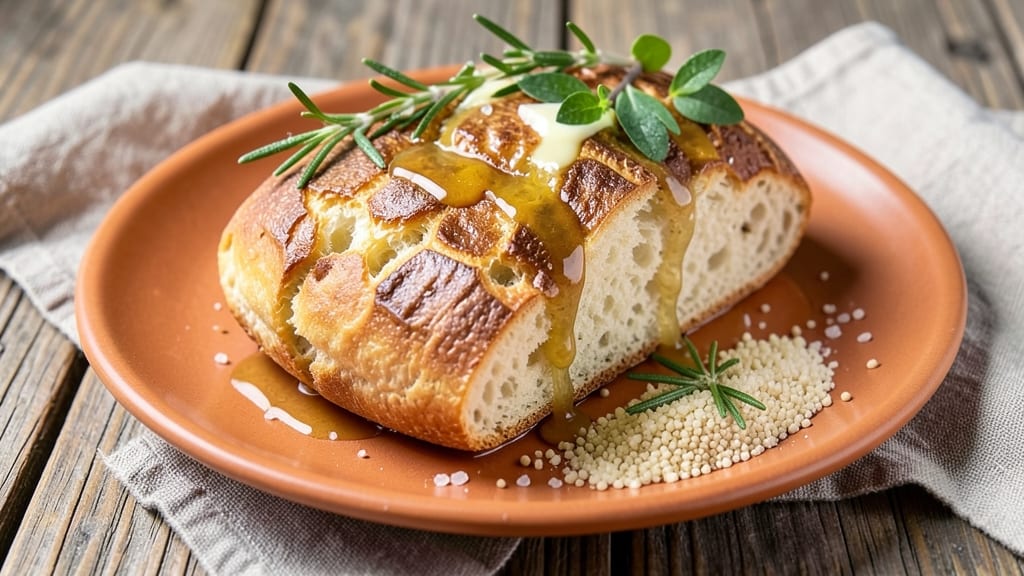
This Algerian Matlouh bread recipe transforms simple dough into layers of buttery, flaky perfection with a secret semolina twist. 💛 The traditional technique creates tender, pillowy folds that soak up every drop of sauce or stew—exactly how it’s served in Algerian homes.
What makes this recipe special is the balance of crispy edges and soft centers, achieved through precise layering and baking. The process starts with a basic dough enriched with semolina for texture, then rolled and folded in a way that creates those signature layers.
While traditional versions are baked in a tagine or clay oven, this adaptation works beautifully in a home oven with just a few adjustments. The result is bread that’s light enough to eat by itself but hearty enough to stand up to rich stews or spiced dips.
By the end, you’ll have golden, aromatic loaves with a crisp exterior and a melt-in-your-mouth interior—each slice revealing those buttery, flaky layers. The semolina adds a subtle crunch that contrasts beautifully with the soft dough, making every bite satisfying.
This is the kind of bread that turns ordinary meals into something special. Perfect for serving alongside tagines, grilled meats, or even as a standalone appetizer with olive oil and za’atar. Let’s get started on creating this Algerian classic!
Ingredients for algerian bread matlouh
Flour, semolina, and yeast create the signature layers—simple ingredients for extraordinary Algerian bread.
| Ingredient | Amount | Notes |
|---|---|---|
| All-Purpose Flour 🌾 | 4 cups | High-protein for better structure |
| Semolina Flour 🌾 | ½ cup | Fine-ground for even texture |
| Active Dry Yeast 🍞 | 2 ¼ tsp | Fresh yeast if preferred |
| Granulated Sugar 🍚 | 1 tbsp | Feeds yeast for activation |
| Warm Water 💧 | 1 ¼ cups | 110°F for yeast activation |
| Unsalted Butter 🧈 | ½ cup | Cold, cubed for layering |
| Salt 🧂 | 1 ½ tsp | Diamond Crystal preferred |
| Milk 🥛 | ¼ cup | Warm for dough tenderness |
| Olive Oil 🫒 | 2 tbsp | Extra-virgin for flavor |
| Egg Yolks 🥚 | 1 whole | For egg wash |
| Coarse Salt 🧂 | ¼ cup | For sprinkling on top |
The semolina is non-negotiable here—it’s what gives Matlouh its signature texture. Bob’s Red Mill or Anthony’s Goods brands work best for fine-ground consistency. If you can’t find semolina, fine cornmeal in a pinch, but the crunch won’t be as refined. For the flour, King Arthur or Gold Medal high-protein varieties create better layers. The yeast should be fresh—if it’s over a week old, proof it first in warm water with a pinch of sugar to ensure it’s active. Butter matters too: Land O’Lakes or Plugrá brands stay firm when cold, which is key for those crispy layers.
No semolina? Substitute with fine cornmeal or extra flour, but expect slightly less crunch. Running short on butter? Olive oil or vegetable shortening works, though texture will differ. The milk can be swapped for water or plant-based milk if needed, but the dough will be slightly less tender. For the egg wash, water with a touch of olive oil is a decent substitute if you’re avoiding eggs. Pro tip: if your kitchen is cold, warm the milk slightly to help the yeast activate properly—this is especially important if you’re using active dry yeast.
This dough is best used within 24 hours after mixing, though it keeps 3 days wrapped tightly in the fridge. For longer storage, freeze the shaped loaves for up to 1 month—thaw at room temperature before baking. The baked bread stays fresh 2 days wrapped in a clean kitchen towel. To revive stale slices, warm in a 300°F oven for 5 minutes—they’ll taste almost as good as fresh. Store semolina in a cool, dark place for up to 6 months to preserve its crunch.
Why You'll Love This Recipe
- No-Knead Magic: I swear by this dough—just mix, let it rise, and roll it out without a single stretch or strain. The semolina flour gives it that signature chewy texture with zero fuss, and honestly? My lazy Sundays thank me every time.
- Sweet & Savory Crunch: That crispy, golden crust with a soft interior? It’s all thanks to the sugar caramelizing just right during baking. I love dipping it in tea or spreading it with honey—simple, but ridiculously satisfying.
- Packable Perfection: Between us, this bread is my meal prep secret weapon. It stays fresh for days, so I can toss a few in my bag for snacks or pack slices with hummus for lunch. No reheating needed—just tear and eat.
- Budget-Friendly Staple: Five ingredients, zero waste. The yeast and sugar are minimal, and the flour stretches further than you’d think. I make a double batch on Sundays, freeze half, and still have bread for weeks—my wallet and my stomach win.
Step-by-step instructions for Algerian matlouh bread
Master the layered technique that makes this bread uniquely Algerian—where semolina secrets create a crispy crust and tender crumb.
👨🍳 Step 1: Activate the Yeast and Mix the Dough
In a large mixing bowl, combine the 1.25 cups warm water (around 110°F), 1 tbsp granulated sugar, and 2.25 tsp active dry yeast. Let it sit for 5-10 minutes until frothy—this confirms your yeast is active and ready to work. If it doesn't bubble, your yeast may be dead, and you'll need to start over.
In a separate bowl, whisk together the 4 cups all-purpose flour, 0.5 cup semolina flour, and 1.5 tsp salt. Create a well in the center and pour in the yeast mixture along with the 2 tbsp olive oil and 0.25 cup milk. Mix with a wooden spoon until a shaggy dough forms, then turn it out onto a lightly floured surface and knead for 8-10 minutes until smooth and elastic.
🥘 Step 2: Layer the Dough with Butter
Shape the dough into a rough rectangle about 12x8 inches. Cut the 0.5 cup unsalted butter into small cubes and arrange them evenly over the dough, leaving a ½-inch border around the edges. Fold the dough over the butter, sealing the edges tightly to trap the butter inside. This creates the signature flaky layers that make matlouh special.
Roll the dough out again into a 12x8-inch rectangle, then fold it into thirds like a letter. Repeat this folding and rolling process two more times, adding more butter cubes if needed, until you've created 4 layers. The goal is to build a rich, buttery dough that will create those signature pockets when baked.
🔥 Step 3: Shape and Proof the Dough
Roll the dough out one final time into a 12x16-inch rectangle (about ¼-inch thick). Sprinkle the 0.25 cup coarse salt evenly over the surface, then roll it up tightly from the long side into a log. Pinch the seam to seal and place it seam-side down in a greased 9x13-inch baking dish. The dough should fill the pan completely with a slight overhang.
Cover the baking dish with a clean kitchen towel and let it proof in a warm place for 1-1.5 hours, or until it rises about 1.5 inches above the rim of the pan. The dough should feel springy when pressed gently—this indicates it's ready for baking. If it doesn't rise enough, your yeast may need more time or a warmer environment.
🔪 Step 4: Score and Bake for Crispy Layers
Preheat your oven to 375°F. Using a sharp knife, score the top of the dough in a crosshatch pattern (about ½-inch deep cuts), being careful not to cut through to the bottom. Brush the top lightly with the 1 whole egg yolk mixed with 1 tbsp water for a golden finish. Bake for 45-50 minutes until the top is deep golden brown and the internal temperature reaches 190°F.
The bread is done when it sounds hollow when tapped on the bottom and the crust is crisp enough to stand up on its own. For extra crispiness, increase the oven temperature to 400°F for the last 5-10 minutes of baking. Let it cool in the pan for 10 minutes before slicing—this prevents the layers from falling apart.
⏰ Step 5: Rest and Serve for Perfect Texture
Transfer the matlouh to a wire rack to cool completely. The bread will firm up as it cools, making it easier to slice into clean, flaky layers. For the best texture, serve it warm or at room temperature—this allows the butter to soften just enough to create that melt-in-your-mouth experience.
Slice the bread into ½-inch thick pieces and serve with soups, stews, or simply with butter. The semolina layers add a delightful crunch, while the buttery dough keeps every bite tender. Store any leftovers wrapped in plastic at room temperature for up to 3 days, or freeze for up to 1 month—just thaw at room temperature before serving.
Pro Tips For Making Algerian Bread Matlouh
- Sift the Semolina: I learned this the hard way—just dumping semolina into the flour mix makes for dense, heavy bread. Lightly sift it through a fine-mesh sieve first, then whisk it into the flour. This aerates the dough right from the start, giving you that signature fluffy, airy texture matlouh is known for.
- Proof at Room Temp: The yeast in this dough is picky—don’t let it get cold. After the first rise, move the dough to a warm spot (like the top of your fridge with a lightbulb nearby) and give it 1–2 hours to double. Cold dough slows fermentation, and that’s when your bread turns out flat and bland.
- Shape Tightly, Not Loosely: Matlouh’s layers depend on a snug shape. After dividing the dough, roll each piece into a log and coil it tightly—almost like a rope—before placing it in the pan. Loose coils mean uneven layers and a less impressive final product. Press the ends together firmly to seal.
- Steam the Pan First: Sounds weird, but it works: Before baking, pour about ¼ cup warm water into the bottom of your baking dish and let it steam for 2–3 minutes. This creates a moist environment for the dough’s first rise in the oven, helping those layers puff up instead of drying out. (Yes, even if you’re impatient like me.)
Creative variations of algerian bread matlouh
Semolina-Free Version
Skip the semolina entirely and replace it with an extra ¼ cup all-purpose flour for a softer texture. The layers will still form beautifully, though without that signature crunch.
I’ve tested this version and found it works especially well when you add 1 tbsp toasted sesame seeds to the dough before shaping—this gives a subtle nutty flavor and slight texture contrast. 🌾
Herbed Matlouh
Infuse your bread with fresh herbs by adding 2 tbsp finely chopped parsley and 1 tbsp chopped dill to the dough during kneading. For a stronger flavor, mix 1 tsp dried za’atar directly into the flour before mixing.
The herbs pair beautifully with the buttery layers and add a bright, aromatic note that cuts through rich stews or dips.
Sweet Matlouh Twist
Turn this savory bread into a sweet treat by reducing the salt to ½ tsp and adding 2 tbsp orange zest and 1 tbsp cardamom to the dough. Replace the coarse salt topping with 2 tbsp turbinado sugar before baking.
This version is perfect for breakfast with a spread of clotted cream or as a dessert with honey and nuts. The citrus and cardamom create a fragrant, aromatic loaf that’s surprisingly versatile. 🍊
Whole Wheat Adaptation
Swap 2 cups all-purpose flour for whole wheat flour to create a heartier, nuttier version. The dough will be denser, so increase the water by 1 tbsp and knead for an extra 2 minutes to develop the gluten properly.
This version pairs exceptionally well with hearty Algerian dishes like chakhchoukha or spiced lentil stews. The added fiber makes it more filling, perfect for a satisfying meal.
Mini Matlouh Bites
Divide the dough into 12 equal portions and shape each into a small log. Place them in a greased mini muffin tin, proof for 45 minutes, then bake at 375°F for 20-25 minutes.
These bite-sized versions are ideal for appetizers or as a fun way to serve bread with dips like harissa or whipped tahini. They’re also perfect for meal prep—store in an airtight container for 3 days or freeze for 1 month. 🍽️
Lemon-Garlic Matlouh
Brighten up your bread by mixing 2 tbsp minced garlic and 1 tbsp lemon zest into the dough. For extra flavor, brush the baked loaf with a mixture of 2 tbsp melted butter and 1 tbsp lemon juice while still warm.
This variation adds a zesty kick that pairs wonderfully with grilled meats or Mediterranean-inspired dishes. The garlic infuses the layers with a subtle aroma that enhances every bite. 🍋
Nutrition facts
Frequently asked questions
Why does Algerian Matlouh bread have semolina?
The semolina creates that signature crunchy texture that contrasts perfectly with the buttery, flaky layers. It also helps absorb moisture, keeping the bread fresh longer while adding a subtle nutty flavor. Without it, you lose both the texture and traditional taste.
Can I make Matlouh without a tagine?
While traditional methods use a tagine or clay oven, a home oven works perfectly. Just bake in a 9x13-inch pan at 375°F for 45-50 minutes. For extra crispiness, increase heat to 400°F for the last 5-10 minutes. The key is proper layering and proofing.
How do I know when the dough is properly proofed?
Press the dough gently—if it springs back slowly (not too fast), it's ready. It should also rise 1.5 inches above the pan rim. Cold kitchens? Place the pan near a warm oven (turned off) or use a proofing box. Never rush proofing—this is where flavor develops!
What if my layers collapse during baking?
This usually happens from overproofing or opening the oven too soon. Let the dough proof until just right (springy test), and avoid opening the oven for at least 25 minutes. For extra stability, chill the shaped dough for 30 minutes before baking in a cold oven.
Can I freeze Matlouh bread?
Yes! Wrap baked loaves tightly in plastic wrap, then foil. Freeze for up to 1 month. Thaw at room temperature for 2-3 hours—no need to reheat. For best texture, slice before freezing. The layers stay intact when properly stored and thawed.