
Side Dishes
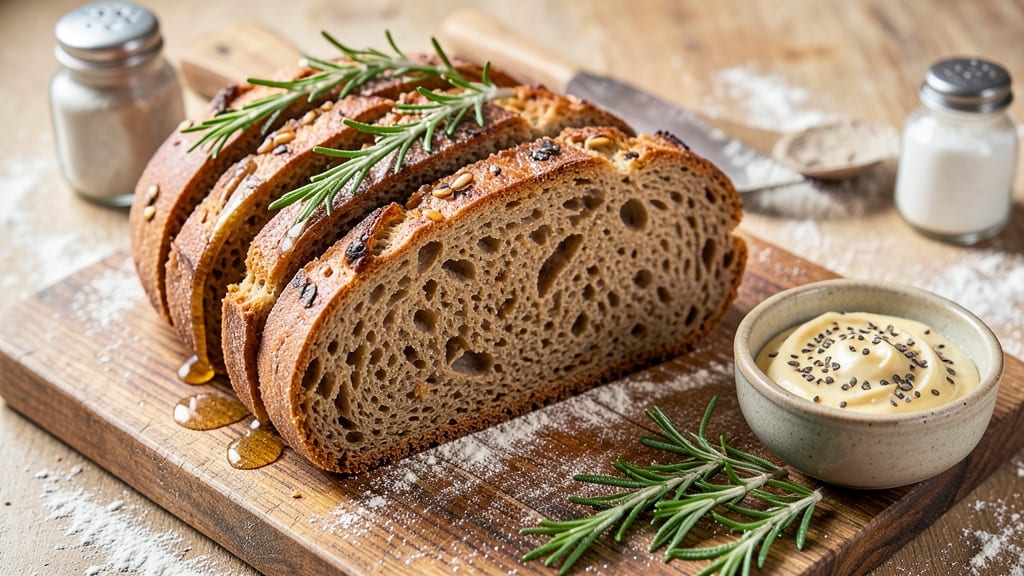
This all-wheat bread recipe delivers the perfect balance of nutty crust and airy crumb—no gluten compromise required. 🌾 The secret lies in precise hydration and gluten development, creating a loaf that's both hearty and tender.
Unlike dense whole-grain breads, this version stays light thanks to a strategic mix of white flour for structure and whole wheat for nutrition.
Professional bakers know the key is in the kneading—this recipe guides you through a method that develops gluten without overworking the dough. With just 5 ingredients and 2 hours of hands-off time, you'll achieve a golden crust that crackles satisfyingly and a crumb so light it almost feels like brioche.
The hydration ratio ensures moisture without stickiness, while a simple egg wash guarantees that perfect oven-spring.
What sets this recipe apart is its versatility—whether you're making sandwiches, toast, or bread pudding, the texture holds up beautifully. The whole wheat flour provides fiber and nutrients without sacrificing taste, and the crust develops a rich, toasty flavor that's hard to resist.
For those new to whole-grain baking, this method eliminates common pitfalls like dense texture or uneven rise.
Ready in 3 hours total (including proofing), this all-wheat bread is perfect for meal prep or serving fresh from the oven. The recipe includes troubleshooting tips to ensure success, so even first-time bakers will achieve bakery-quality results. Let's get started!
Ingredients for all wheat bread
Five simple ingredients transform into a golden loaf with a nutty crust and light crumb—no gluten compromise here!
| Ingredient | Amount | Notes |
|---|---|---|
| Bread Flour (High-Protein) 🌾 | 2 ½ cups | For optimal gluten development |
| Whole Wheat Flour 🌾 | 1 ½ cups | King Arthur or Bob's Red Mill preferred |
| Instant Yeast 🍞 | ½ tsp | Fresh yeast works too (use 1.5 tsp) |
| Granulated Sugar 🍚 | ½ tsp | Feeds yeast for better rise |
| Salt 🧂 | 1 ½ tsp | Diamond Crystal preferred |
| Large Eggs 🥚 | 1 whole | Room temperature for best results |
| Unsalted Butter 🧈 | ½ cup | Cold, cubed for easier mixing |
| Warm Water 💧 | 1 ½ cups | 110°F (43°C) for yeast activation |
| Honey 🍯 | 1 tbsp | For crust color and sweetness |
| Cornmeal (for dusting) 🌽 | ½ cup | Prevents sticking on baking sheet |
The flours are the stars here. King Arthur or Bob's Red Mill whole wheat flours yield the best texture, but don't stress if you've got store-brand—just sift them well. The bread flour provides structure while the whole wheat adds nutrition without heaviness. Instant yeast is a game-changer for consistency, but fresh yeast works in a pinch (just double the amount). For the butter, Land O'Lakes or Plugrá brands melt beautifully—avoid salted versions unless you adjust the recipe's salt. The warm water should feel like bathwater to your wrist (110°F)—too hot and you'll kill the yeast, too cold and it won't activate properly.
No bread flour? All-purpose plus 1 tbsp vital wheat gluten per cup works wonders. Short on whole wheat? Substitute half with white whole wheat flour for a lighter crumb. The honey can be swapped for maple syrup or agave, though honey gives that perfect golden crust. For a richer loaf, add 1 tbsp milk powder to the flour mix—it enhances browning and softness. The egg wash? 1 egg yolk + 1 tbsp water works just as well if you're avoiding full eggs. And if you're making this ahead, freeze the shaped loaf for up to 3 months—thaw overnight in the fridge before baking.
This dough is a forgiving beast, but timing is everything. Proof the dough until it's doubled—that's your cue to bake, not before. The crust develops its nutty flavor in the last 10 minutes of baking, so don't peek! Store wrapped at room temp for 2 days or freeze for 3 months. For reheating, wrap in foil and warm at 300°F for 10 minutes—no sad, dry bread here. The leftovers? Perfect for garlic toast or bread pudding. And if your loaf flattens during baking? Increase oven temp to 375°F next time—it's the secret to that perfect oven spring.
Why You'll Love This Recipe
- No-Knead Magic: I swear by the high-protein bread flour—it keeps this dough so forgiving. No stand mixer, no fancy techniques, just mix, rest, and bake. Even my first attempt turned out golden and crusty without a single tear.
- Nutty, Toasty Crunch: Between us, the whole wheat flour gives it that hearty, slightly sweet bite you don’t get with white bread. The sugar caramelizes just enough to make every slice taste like it’s fresh from a bakery—no added butter or honey needed.
- Weeknight Workhorse: This bread is my go-to for sandwiches, toast, or even garlic bread. It freezes like a dream, so I bake a loaf on Sundays and pull it out all week. Honestly, I’ve used it for everything from grilled cheese to charcuterie boards—it’s that reliable.
- Budget Wins: Five ingredients, zero specialty items. The yeast is instant, so no waiting for it to activate, and the high-protein flour stretches my grocery budget further. Plus, one loaf feeds my family for days—leftovers? More like planned extras.
Step-by-step instructions for all wheat bread with perfect texture
This method delivers a bread with a nutty crust and tender crumb—no dense, heavy texture here.
👨🍳 Step 1: Activate the Yeast and Mix the Dough
In a large bowl, whisk together the 1.5 cups warm water (should feel like bathwater, 110°F), 0.5 tsp instant yeast, 0.5 tsp granulated sugar, and 1.5 tsp salt. Let it sit for 5-10 minutes until frothy—this confirms the yeast is alive and ready to work. If it doesn't bubble, your yeast might be dead, and you'll need to start over.
Add the 2.5 cups bread flour and 1.5 cups whole wheat flour to the bowl. I like to use a wooden spoon first to break up any flour clumps before mixing. Then, add the 1 whole large egg and 0.5 cup cold, cubed unsalted butter. Mix until a shaggy dough forms—don't worry if it looks messy at this stage. The butter should still have some cold spots, which helps create that tender crumb later.
🍳 Step 2: Knead the Dough for Optimal Gluten Development
Turn the dough onto a lightly floured surface and knead for 8-10 minutes by hand (or 5-6 minutes in a stand mixer with a dough hook). You're looking for a smooth, elastic dough that springs back when poked. The high-protein bread flour helps build the gluten structure, while the whole wheat flour adds nutty flavor without compromising texture.
Here's the thing—I press down gently on the dough during the first minute to strengthen the gluten strands. This ensures the bread rises properly and doesn't collapse later. If the dough feels sticky, add 1 tablespoon of flour at a time, but don't overdo it or the bread will turn dense.
⏰ Step 3: First Rise and Shaping for Even Baking
Lightly grease a large bowl with a bit of oil, place the dough inside, and cover with a damp towel. Let it rise in a warm place (75-80°F) for 1-1.5 hours until nearly doubled in size. The whole wheat flour absorbs more moisture, so the dough might take a bit longer to rise than all-purpose flour doughs.
Once risen, punch down the dough to release air bubbles, then shape it into a loaf. I like to roll it into a rectangle, fold the long sides inward, then roll it again into a tight log. This technique creates tension in the dough, which helps it expand evenly during baking and prevents cracks.
🥘 Step 4: Second Rise and Pre-Baking Prep
Place the shaped loaf on a parchment-lined baking sheet, brush the top with 1 tbsp honey (this gives that beautiful golden crust), and let it rise again for 30-45 minutes until puffy. Preheat your oven to 375°F while the bread rises—this ensures it goes straight into a hot oven for maximum oven spring.
Just before baking, sprinkle the top with 0.5 cup cornmeal (for dusting). This creates that classic rustic look and adds a subtle crunch. The cornmeal also helps prevent the crust from becoming too soft. Bake for 30-35 minutes until the internal temperature reaches 190-195°F and the crust is deep golden brown.
🔥 Step 5: Cool and Slice for Maximum Flavor
Remove the bread from the oven and let it cool on a wire rack for at least 30 minutes—this prevents a gummy interior. The contrast between the nutty crust and tender crumb is what makes this bread special. I know it's tempting to slice immediately, but patience here ensures every bite is perfect.
Once cooled, slice with a sharp serrated knife for clean cuts. The bread should have a crisp exterior and a soft, airy interior with visible flecks of whole wheat. Store wrapped at room temperature for 2-3 days or freeze for up to 3 months—it reheats beautifully in a warm oven or toaster.
Pro Tips For Making All Wheat Bread
- Mix the Dough by Hand: Whole wheat flour is heavier and stickier than bread flour, so resist the urge to use a stand mixer—it’ll just turn into a gluey mess. Grab a wooden spoon and your hands: knead for 8-10 minutes until the dough pulls cleanly away from the bowl. (Yes, it’ll feel like overkill at first, but that’s how you get the gluten to develop enough for a light, airy crumb.)
- Bloom the Yeast in Warm Water: Instant yeast is forgiving, but it still needs a cozy environment to wake up. Mix it with ¼ cup warm water (about 110°F—lukewarm, not hot) and 1 tsp sugar, then let it sit for 5 minutes until foamy. If it doesn’t bubble, your yeast is dead or expired, and you’ll end up with dense, flat bread. (Trust me, I’ve learned this the hard way.)
- Weigh Your Flours—Don’t Scoop: Whole wheat flour packs differently than bread flour, and scooping leads to inconsistent batches. Use a kitchen scale for accuracy: aim for 50% bread flour and 50% whole wheat by weight, not volume. A slight variation (even 10 grams) can make your dough either too stiff or too slack—neither of which bakes well.
- Steam the Oven First: All-wheat bread dries out faster than white bread, so create a steam bath to lock in moisture. Place a metal tray on the bottom oven rack, pour in 1 cup of boiling water, then preheat to 375°F. Once the oven hits temp, slide your shaped loaf in and close the door quickly—this gives you that crisp crust without burning the outside while the inside stays tender. (Pro move: Use a Dutch oven if you have one.)
Flavor customization for all wheat bread
Sweet & Nutty Twist
Add 1 tbsp cinnamon and ½ cup chopped walnuts to the dough for a caramelized flavor profile. The nuts add crunch while the cinnamon enhances the honey's sweetness—perfect for French toast or dessert bread.
Toast the nuts in a dry pan for 3 minutes before mixing to deepen their flavor. 🌰
Herb & Garlic Boost
Incorporate 2 tbsp fresh rosemary or 1 tbsp garlic powder into the dough for a savory twist. The rosemary pairs beautifully with roasted meats, while garlic adds depth to sandwiches.
For extra aroma, infuse the warm water with 1 crushed garlic clove before mixing with yeast. This variation works especially well with olive oil instead of butter.
Seeded Crunch Option
Mix in 2 tbsp sesame seeds or 1 tbsp poppy seeds for texture contrast. The seeds add a subtle nutty flavor and visual appeal, especially when sprinkled on top before baking.
For a Middle Eastern touch, use 1 tbsp toasted cumin seeds—they add warmth and earthiness that complements the whole wheat base.
Savory Cheese Infusion
Fold ½ cup shredded cheddar or ¼ cup grated Parmesan into the dough for a cheesy loaf. The cheese melts slightly during baking, creating pockets of gooey goodness. For a vegan option, use nutritional yeast—it adds a cheesy umami flavor without dairy.
This variation excels as a side for soups or paired with sharp cheddar jam for open-faced sandwiches.
Spiced & Smoky Variation
Enhance the dough with 1 tsp smoked paprika and ½ tsp black pepper—this adds a subtle smokiness that pairs well with grilled meats. For extra depth, replace half the water with chicken or vegetable broth during mixing.
The result? A bread with complex layers of flavor perfect for BBQ sandwiches or as a side for hearty stews. 🔥
Dairy-Free Adaptation
Swap the butter for ½ cup coconut oil (solid) and use plant-based milk for the egg wash. The coconut oil adds richness while keeping the bread vegan-friendly. For extra binding, add 1 tbsp ground flaxseed mixed with 3 tbsp water as an egg substitute.
This version maintains the same light texture but works beautifully for vegan diets without compromise.
Nutrition facts
Frequently asked questions
Why does my all-wheat bread turn out dense instead of light?
The whole wheat flour absorbs more moisture than white flour, so you may need to adjust hydration slightly. Try reducing water by 1-2 tablespoons or adding 1 extra tablespoon of bread flour for structure. Also, ensure proper kneading (8-10 minutes) to develop gluten—this creates the airy crumb. Overproofing can also cause density, so bake when the dough is just doubled in size.
Can I make this recipe without a stand mixer?
This dough is perfect for hand-kneading. Use a lightly floured surface and knead for 8-10 minutes by pressing, folding, and turning the dough. The key is consistent pressure—press down firmly with your knuckles during the first 2 minutes to strengthen the gluten strands. Whole wheat flour makes the dough stickier, so add flour gradually if needed.
How do I store all-wheat bread to keep it fresh?
Wrap the cooled loaf tightly in plastic wrap or place it in an airtight container at room temperature for 2-3 days. For longer storage, freeze the bread (unsliced) for up to 3 months. To reheat, wrap in foil and warm at 300°F for 10 minutes—this restores moisture without drying it out. The crust stays crispy while the crumb remains soft.
What's the best way to test if my yeast is still active?
Mix 1 packet (2¼ tsp) instant yeast with ¼ cup warm water (110°F) and ½ tsp sugar. If it bubbles within 5-10 minutes, your yeast is alive. No bubbles? Your yeast may be dead—try a fresh packet. The warm water should feel like bathwater; too hot and it kills the yeast, too cold and it won't activate. This quick test saves time and frustration!
Can I substitute whole wheat flour with white whole wheat flour?
Yes! White whole wheat flour has a lighter color and slightly sweeter flavor while maintaining the same nutritional benefits. Use a 1:1 substitution—this version will have a softer crumb and lighter crust. The bread will still be nutritious but with a more refined appearance. For best results, sift the flour well to avoid lumps in the dough.