
Side Dishes
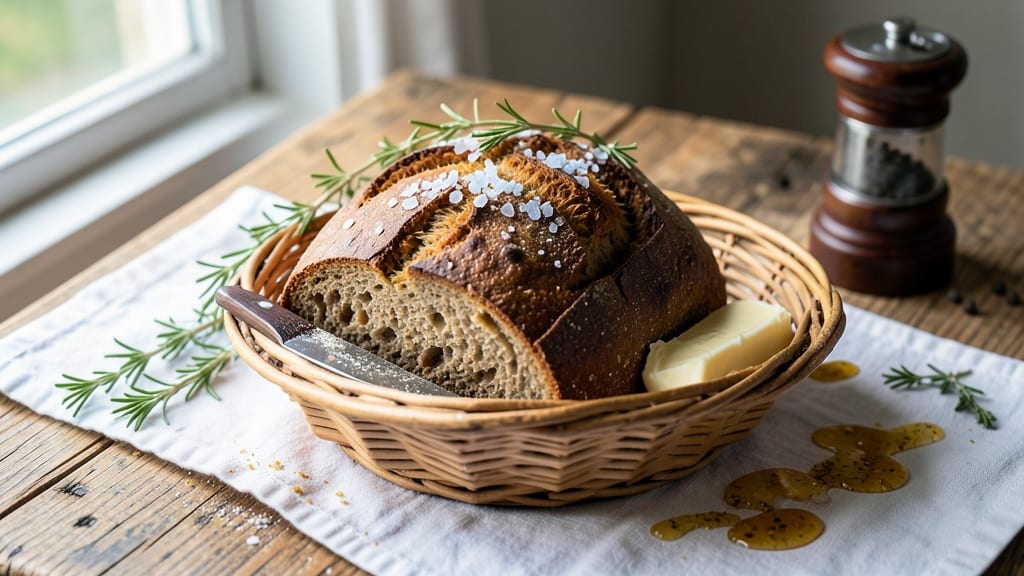
This artisan spelt bread recipe delivers the perfect balance of nutty crust and chewy, tangy crumb—far superior to store-bought loaves. 🌟 The key lies in spelt flour's unique properties, which create a rustic texture with subtle sweetness and earthy depth.
Unlike regular wheat bread, spelt develops flavor during extended fermentation, resulting in a loaf that's both satisfying and nutritious.
What makes this recipe stand out is the combination of traditional techniques with modern convenience. You'll work with a simple dough that develops its signature character through overnight cold fermentation, which enhances gluten development and flavor complexity.
The result is a loaf with a crisp, golden crust that gives way to a moist, open crumb—ideal for serving with butter, soups, or as the base for sandwiches.
The process requires patience but yields restaurant-quality results with minimal effort. We'll cover everything from mixing and kneading to proper shaping and baking techniques, including how to achieve that perfect oven spring.
This bread isn't just about taste—it's about texture, aroma, and the satisfaction of baking something truly artisanal at home.
Perfect for bread lovers who appreciate rustic quality, this recipe scales easily for gatherings while remaining manageable for home bakers. The nutty flavor pairs beautifully with hearty soups, fresh cheeses, or simply toasted with a pat of butter. Let's get started on creating your perfect loaf.
Ingredients for artisan spelt bread
Four cups of spelt flour kickstart this rustic loaf's signature nutty depth and chewy crumb.
| Ingredient | Amount | Notes |
|---|---|---|
| Spelt Flour 🌾 | 4 cups | Stone-ground for optimal texture |
| Active Dry Yeast 🍞 | ¼ oz | Or 2.5g packet of instant yeast |
| Unsalted Butter 🧈 | ½ cup | Cold and cubed for flavor |
| Warm Water 💧 | 1 ½ cups | 110°F for yeast activation |
| Honey 🍯 | 1 tbsp | For subtle sweetness and yeast feed |
| Sea Salt 🧂 | 1 ½ tsp | Diamond Crystal preferred |
| Extra-Virgin Olive Oil 🫒 | 2 tbsp | For dough elasticity and crust |
| Whole Milk 🥛 | ¼ cup | Enhances dough tenderness |
| Cornmeal 🌽 | ¼ cup | For dusting baking surface |
| Sesame Seeds 🌻 | 1 tbsp | Optional for decorative crust |
| Poppy Seeds 🌱 | 1 tsp | Optional for nutty flavor |
| Coarse Sea Salt 🧂 | 1 tsp | For finishing crust |
Spelt flour is the heart of this recipe—Bob's Red Mill or King Arthur brands deliver the best texture, but any quality stone-ground spelt works. Look for flour labeled '100% whole grain' to maximize that authentic rustic flavor. The yeast should be fresh (test by dissolving in warm water—it should foam within 5-10 minutes). For butter, Plugrá or Land O'Lakes unsalted cubes work perfectly. The honey? Manuka or clover varieties add subtle floral notes that complement the spelt beautifully. Store your flour in the freezer to preserve freshness—it keeps for 6-12 months this way.
No honey? Maple syrup or agave nectar work in a pinch, though they'll slightly alter the flavor profile. Short on milk? Unsweetened almond milk maintains moisture but lacks richness. The olive oil matters here—California avocado or Colavita brands elevate the crust. For yeast activation, your water should feel warm to the touch (like bathwater). If your dough feels too sticky, add 1 tbsp more flour. For a seedless version, skip the sesame and poppy—just focus on that perfect crust. And trust me, the cold fermentation is worth the wait for that open crumb.
This dough thrives with patience—overnight cold fermentation develops unmatched flavor. Shape your loaf and let it proof in the fridge for 12-16 hours before baking. The finished loaf keeps beautifully wrapped in a cotton towel at room temperature for 3-4 days, or freeze slices for up to 3 months. For reheating, wrap slices in foil and warm in a 350°F oven for 5-8 minutes. Pro tip: Toast slices before freezing to lock in freshness. The crust gets crunchier as it sits—perfect for making ahead!
Why You'll Love This Recipe
- Five-Ingredient Magic: The spelt flour and honey alone make this feel like a special occasion—no fancy add-ins needed. Honestly, I’ve made it with just those five staples, and it still tastes like something from a bakery.
- Golden Crust, Soft Heart: That honey caramelizes into a crispy top while the butter keeps the inside tender—like biting into a warm hug. I’ll be real: my kids now ask for this over plain baguettes.
- Weeknight Workhorse: I keep a loaf in the freezer to toast for breakfasts or pack in lunches—no reheating needed. It’s the bread equivalent of a good pair of jeans: always useful, never boring.
- Budget-Friendly Luxury: Spelt flour costs more than white, but a little goes far, and butter stretches with honey’s richness. Between us, I’ve fed six people for under $10 with this—feels fancy, costs smart.
Step-by-step instructions for artisan spelt bread
Here's how to craft a rustic spelt loaf with a nutty crust and chewy crumb—every bite is worth the effort.
👨🍳 Step 1: Activate the Yeast and Mix the Dough
In a large mixing bowl, combine the 1.5 cups warm water (about 110°F) with the 1 tbsp honey and 0.25 oz active dry yeast. Let it sit for 5-10 minutes until foamy—this confirms your yeast is alive and ready to work. If it doesn't foam, start over with fresh yeast.
Add the 4 cups spelt flour, 1.5 tsp sea salt, and 0.25 cup whole milk to the bowl. Mix with a wooden spoon until a shaggy dough forms. Then add the 0.5 cup cold cubed unsalted butter and 2 tbsp extra-virgin olive oil. Use your hands to knead the dough on a lightly floured surface for 8-10 minutes until smooth and elastic. The dough should feel slightly tacky but not sticky—this is normal with spelt flour.
🥘 Step 2: First Rise and Shape the Dough
Lightly oil a large bowl, place the dough inside, and cover with a damp towel. Let it rise in a warm place for 1.5-2 hours until nearly doubled in size. Spelt dough rises slower than wheat dough, so be patient—this slow fermentation develops deep flavor. Poke the dough gently; if it springs back slowly, it's ready.
Turn the dough out onto a lightly floured surface and divide it into 4 equal portions. Shape each into a round boule by pulling the edges toward the center and sealing the seam. Place the boules on a parchment-lined baking sheet, cover with a towel, and let them rest for 30 minutes. This resting period relaxes the gluten, making them easier to shape and preventing cracks during baking.
🔥 Step 3: Pre-Shape and Score for Baking
Preheat your oven to 450°F with a baking stone or inverted baking sheet inside. Sprinkle the baking sheet with 0.25 cup cornmeal to prevent sticking. After the 30-minute rest, gently shape each boule into a tight round by pulling the edges inward and sealing the bottom. Place them on the cornmeal-dusted sheet, spacing them about 2 inches apart.
Brush the tops with a little water and sprinkle with 1 tbsp sesame seeds and 1 tsp poppy seeds for texture and flavor. Let them rest uncovered for 10 minutes while you preheat the oven. Just before baking, use a sharp razor blade or knife to score the tops in a decorative pattern—this controls expansion and creates that gorgeous crust.
🔥 Step 4: Bake to Golden Perfection
Bake the boules for 25-30 minutes until they're deep golden brown and sound hollow when tapped on the bottom. The crust should be crisp and nutty, while the crumb inside should be chewy with a slight tang. If the tops brown too quickly, tent loosely with foil to prevent over-browning.
Remove from the oven and immediately brush the crust with melted butter (if desired) and sprinkle with 1 tsp coarse sea salt. Let the bread cool on a wire rack for at least 30 minutes before slicing—this allows the crumb to set properly. The aroma alone will make your kitchen smell like a French bakery!
⏰ Step 5: Serve and Enjoy
Slice the bread with a serrated knife and serve warm with butter or your favorite jam. The exterior should be crisp with a subtle nutty flavor from the spelt and seeds, while the interior reveals a soft, open crumb with pockets of air. Store any leftovers in an airtight container at room temperature for up to 3 days—spelt bread reheats beautifully in a 350°F oven for 5 minutes to restore its crust.
Pro Tips For Making Artisan Spelt Bread
- Test Yeast First: Spelt’s density can be tricky—proof your yeast in warm water with a pinch of honey before mixing. If it bubbles within 10 minutes, you’re good; if not, toss it and start fresh. I’ve wasted enough dough waiting for sluggish yeast to wake up.
- Soak the Flour: Mix the spelt flour with warm water and honey before adding yeast—let it sit for 15 minutes. This hydrates the flour fully, making the dough less sticky and easier to handle. (Yes, it looks like oatmeal at first—that’s normal.)
- Don’t Over-Knead: Spelt dough is fragile; knead just until it pulls away from the bowl (about 5–7 minutes). Overworking it turns the crumb gummy. I used to go for 10, thinking more = better—until my bread tasted like glue.
- Score Deeply: Use a razor or very sharp knife to slash the dough almost to the pan before baking. Spelt’s dense structure needs those deep cuts to expand properly. Shallow scores? You’ll get a sad, uneven rise.
Creative variations of these flavors
Sweet & Savory Twist
Add 1 tbsp cinnamon and 2 tbsp chopped walnuts to the dough for a sweet version perfect with breakfast. The warm spices complement spelt's natural sweetness, while walnuts add crunch.
Brush the baked loaf with honey butter (mix 2 tbsp softened butter with 1 tsp honey) for extra richness. 🍯
Herb-Infused Crust
For a savory upgrade, mix 1 tbsp fresh rosemary or thyme into the dough before shaping. The aromatic herbs elevate the crust's complexity. After baking, sprinkle with flaky sea salt and a drizzle of olive oil for a Mediterranean-inspired finish. This version pairs beautifully with roasted vegetables or charcuterie boards.
Whole-Grain Boost
Replace 1 cup spelt flour with 1 cup whole-grain rye flour for a denser, nuttier loaf. The rye adds depth while keeping the chewy texture. For extra fiber, add ½ cup ground flaxseeds to the dough.
This variation is perfect for hearty soups or sandwiches with bold flavors like smoked salmon or avocado.
Sourdough Hybrid
Swap ½ cup warm water for ½ cup active sourdough starter (fed and bubbly) to create a tangier loaf. The starter replaces half the yeast for a slower fermentation. Shape into a batard and bake at 425°F for 35 minutes.
This version has a more complex flavor profile and a slightly sour note that balances the spelt's sweetness.
Seeded & Spiced
Mix 1 tbsp whole flaxseeds, 1 tbsp sunflower seeds, and ½ tsp smoked paprika into the dough for a nutty, smoky twist. The seeds add texture, while the paprika deepens the crust's flavor.
Brush the baked loaf with garlic-infused olive oil (mix 2 tbsp olive oil with 1 minced garlic clove) for an extra layer of aroma. 🌻
Gluten-Free Adaptation
For a gluten-free version, replace 1 cup spelt flour with 1 cup gluten-free all-purpose flour blend (like Bob's Red Mill 1:1). Add 1 tsp xanthan gum to improve texture. The dough will be stickier, so use extra cornmeal when shaping.
Expect a denser crumb, but the nutty flavor remains intact. Perfect for those with gluten sensitivities who still want artisanal quality.
Nutrition facts
Frequently asked questions
Why does spelt bread have a different texture than regular wheat bread?
Spelt flour contains more protein and a unique gluten structure that creates a denser, chewier crumb with a slightly nutty flavor. The lower gluten content means it requires longer fermentation to develop proper texture—this is why the overnight cold proof is essential. The result is a rustic loaf with an open crumb and crisp crust that's far more flavorful than standard white bread.
Can I make this recipe without a stand mixer?
Spelt dough benefits from hand-kneading because it's naturally more elastic. Knead for 8-10 minutes on a lightly floured surface until smooth and springy. The dough will feel slightly tacky—this is normal. For best results, use a dough scraper to help gather and fold the dough during kneading.
What if my dough doesn't rise properly?
Check these three things first:
- Yeast freshness (test in warm water first),
- Water temperature (should be 110°F—like bathwater), and
- Warm environment (place near oven with light on or use a proofing box). If it still doesn't rise, try adding 1 extra tbsp honey or 1 extra tsp yeast. Spelt dough rises slower than wheat—be patient and give it 2-3 hours minimum.
How do I store spelt bread to keep it fresh?
Wrap cooled bread in a cotton towel (not plastic) and store at room temperature for 3-4 days. The towel prevents moisture loss while allowing airflow. For longer storage, freeze slices wrapped in parchment paper for up to 3 months. To revive, toast slices in a 350°F oven for 5-8 minutes until crisp.
Can I substitute whole wheat flour for spelt?
While they're both whole grains, they behave differently. Whole wheat requires more water and often benefits from adding 1 tbsp vital wheat gluten to improve texture. Spelt's unique protein structure creates that signature chewy crumb—whole wheat will yield a denser, heavier loaf. For best results, stick with spelt flour or use a 50/50 blend with whole wheat for a lighter texture.