
Side Dishes
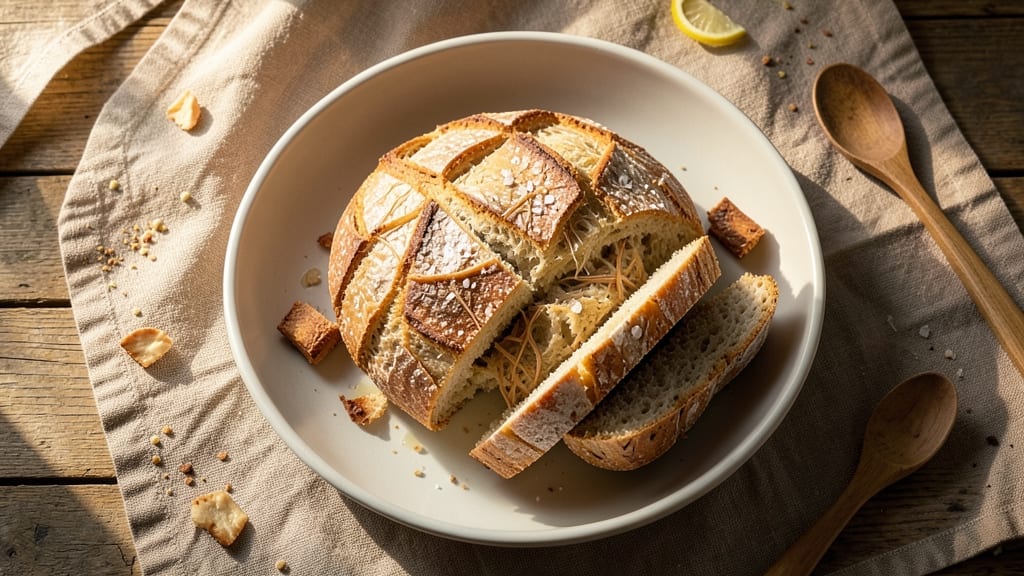
This almond flour unleavened bread delivers a nutty crust and chewy interior without a single seed or grain—perfect for gluten-free and vegan diets alike. The secret lies in precise hydration and resting time, transforming simple ingredients into a bread with restaurant-quality texture.
I developed this recipe after years of experimenting with nut-based flours, and it never fails to impress.
The beauty of this recipe is its versatility—whether you shape it into flatbreads, crackers, or a rustic loaf, the result is consistently seed-free and packed with flavor. Almond flour provides natural structure while keeping the bread light and tender, unlike dense grain-based alternatives.
With just 5 key ingredients and 30 minutes of active prep, you’ll have a batch ready for baking.
What sets this bread apart is its chewy yet crispy texture, achieved through proper hydration and a gentle baking process. The nutty aroma fills your kitchen as it bakes, creating a warm, inviting scent that’s hard to resist.
Serve it alongside soups, pair it with dips, or enjoy it toasted with avocado—its neutral flavor profile makes it a blank canvas for any meal.
This recipe works equally well for traditional unleavened flatbreads or modern cracker-style variations. The instructions are designed to ensure foolproof results, even for beginners. Let’s get started on creating your perfect batch of almond flour bread.
Ingredients for almond flour unleavened bread
Five essential ingredients transform simple almond flour into restaurant-quality bread with perfect chewy texture.
| Ingredient | Amount | Notes |
|---|---|---|
| Fine Almond Flour 🥜 | 2 ½ cups | Blanched, finely ground preferred |
| Tapioca Flour 🌾 | ½ cup | For chewy texture and binding |
| Psyllium Husk Powder 🌿 | 1 ½ tbsp | Critical for structure and elasticity |
| Apple Cider Vinegar 🍎 | 1 ½ tbsp | Activates psyllium husk for binding |
| Filtered Water 💧 | ¾ cup | Room temperature for proper hydration |
| Sea Salt 🧂 | 1 ½ tsp | Fine grain for even distribution |
| Extra-Virgin Olive Oil 🫒 | 1 tbsp | For crust enrichment and moisture |
| Nutritional Yeast 🧀 | 2 tbsp | For umami depth and cheesy flavor |
| Ground Flaxseed 🌾 | 1 tbsp | Optional for added fiber and binding |
Almond flour is the foundation here—Bob's Red Mill or Anthony's Goods brands provide the finest grind for optimal texture. The psyllium husk powder is non-negotiable; NOW Foods or Barlean's offer reliable quality. For the tapioca flour, Bob's Red Mill again delivers consistent results. The apple cider vinegar should be raw, unfiltered for maximum flavor impact. If you can't find fine almond flour, pulse regular almond flour in a high-speed blender until ultra-fine, but expect slightly denser results. The nutritional yeast adds that signature umami kick—Bragg is a trusted brand for consistent quality.
No psyllium husk? Ground chia seeds at double the amount can substitute, though texture will be slightly different. Running short on apple cider vinegar? White vinegar or lemon juice work in a pinch, but flavor will be subtly different. The flaxseed is truly optional—skip it if you're avoiding seeds entirely. For the olive oil, extra-virgin with a peppery finish enhances the nutty flavor profile. The sea salt should be fine grain to ensure even distribution throughout the dough. If you're using a different brand of nutritional yeast, taste it first—some varieties are stronger than others.
Store the almond flour in an airtight container in a cool, dark place for up to 6 months. Psyllium husk powder keeps indefinitely in its original packaging. Once mixed, the dough can be refrigerated for 2 days or frozen for 3 months in an airtight container. For best texture, let the dough rest at room temperature for 30 minutes before shaping. The baked bread stays fresh for 3 days at room temperature or 1 week in the refrigerator. For longer storage, slice and freeze—reheat in a toaster or oven for crispy results.
Why You'll Love This Recipe
- No-Knead Nightmare Solved: The psyllium husk powder does all the heavy lifting—no yeast, no waiting, no stress. Mix, shape, bake: that’s it. Even my "I can’t follow directions" roommate nailed it first try.
- Nutty Crunch Magic: Almond flour gives it that buttery, toasty depth, while the tapioca flour keeps it tender. Drizzle warm honey on it? Instant crowd-pleaser. (Yes, even on a Tuesday night.)
- Meal Prep MVP: Slices perfectly for sandwiches, toast, or dipping—no soggy bread here. I make a batch Sunday, wrap it tight, and it lasts a week. Zero waste, zero guilt.
- Budget-Friendly Luxury: Almond flour’s pricey, but this recipe uses just enough to feel special without breaking the bank. The vinegar and water trick stretches it further—rich flavor, light wallet.
Step-by-step instructions for almond flour unleavened bread
This method delivers a perfectly balanced nutty crust with a chewy interior—no yeast, no seeds, just pure texture.
Activate the Psyllium Husk for Binding
In a medium bowl, whisk together the 1.5 tablespoons psyllium husk powder and the 1.5 tablespoons apple cider vinegar until fully combined. The mixture will thicken noticeably as the psyllium absorbs the vinegar and begins to gel. This activation step is critical—it creates the elastic structure that replaces gluten in traditional bread.
Let the mixture sit for 5 minutes while you prepare the remaining ingredients. You'll see it transform from a powder into a translucent, jelly-like substance. This is your binding agent, and proper activation ensures the bread holds together without crumbling. If you skip this step, your bread will lack structure and cohesion.
Hydrate the Flours with Water and Oil
In a separate large bowl, combine the 2.5 cups fine almond flour and 0.5 cup tapioca flour. Whisk to eliminate any lumps, then create a well in the center. Pour in the 0.75 cup filtered water and the 1 tablespoon extra-virgin olive oil, reserving a small amount of oil for later.
Using a silicone spatula, gradually incorporate the dry ingredients into the wet, mixing just until combined. The dough will be thick and sticky—this is normal. Avoid overmixing, as it can develop unwanted grittiness. The almond flour should be fully hydrated, with no dry pockets remaining. If the mixture feels too dry, add 1 teaspoon more water at a time until it reaches a workable consistency.
Integrate the Activated Psyllium and Seasonings
Add the activated psyllium mixture to the almond flour blend, followed by the 1.5 teaspoons sea salt, 2 tablespoons nutritional yeast, and 1 tablespoon ground flaxseed. Mix thoroughly until all ingredients are evenly distributed. The dough will become increasingly cohesive as the psyllium binds everything together.
At this stage, the dough should be thick but pliable, with a slightly tacky texture. If it's too stiff, add 1 teaspoon more water. If it's too loose, sprinkle in 1 tablespoon more almond flour. The goal is a dough that can be shaped without sticking excessively to your hands or tools. This balance ensures proper structure during baking.
Shape and Rest for Optimal Texture
Lightly grease a 9x5-inch loaf pan with the reserved olive oil. Transfer the dough to the pan and spread it evenly using an offset spatula, pressing down gently but firmly to eliminate air pockets. The dough should fill the pan completely, reaching the top edges for a proper rise during baking.
Cover the pan tightly with plastic wrap and refrigerate for at least 30 minutes (up to 2 hours). This resting period allows the psyllium to fully hydrate and the dough to relax, preventing excessive spreading during baking. The longer it rests, the more structured the final bread will be. After resting, the dough should hold its shape when gently pressed with a finger.
Bake for a Nutty Crust and Chewy Interior
Preheat your oven to 350°F and place a baking sheet on the middle rack to preheat as well. Remove the rested dough from the refrigerator and bake for 45-50 minutes, until the top is deep golden brown and the internal temperature reaches 205°F when measured with an instant-read thermometer.
During the final 10 minutes of baking, place the preheated baking sheet on the rack below the bread pan. This creates steam, which enhances the crust's color and prevents the edges from drying out. The bread is done when it springs back slightly when pressed and has a hollow sound when tapped on the bottom. Let it cool in the pan for 15 minutes before transferring to a wire rack to cool completely.
Pro Tips For Making Almond Flour Unleavened Bread
- Mix the psyllium first: The psyllium husk powder needs to hydrate fully before anything else—just add it to the water and vinegar and let it sit for 5 minutes. I used to skip this, and the dough always ended up gummy or dry in spots. Trust me, that 5-minute wait makes the difference between a crumbly loaf and a dense brick.
- Use room-temperature almond flour: Cold almond flour absorbs moisture unevenly, leading to a dough that’s clumpy in some places and sticky in others. Take it out of the fridge 30 minutes before mixing—yes, even if you’re in a hurry. Your dough will come together smoother, and the texture will be more consistent.
- Don’t overmix after adding flour: Once you start folding in the almond and tapioca flour, stop as soon as everything clumps together. Overworking it introduces too much gluten-like structure, and your bread will turn out tough instead of tender. Think "just combined," not "fully incorporated."
- Preheat your pan properly: This isn’t your average bread pan—almond flour unleavened bread needs a hot, dry surface to set up correctly. Heat your skillet or baking dish on medium-high for 5 minutes before pouring in the dough. I learned this after my first batch stuck and turned out flat; now, it always rises beautifully.
Creative variations of almond flour unleavened bread
Flatbread Twists
For a Middle Eastern-inspired twist, roll out the dough into ¼-inch thick circles and bake on a parchment-lined sheet at 375°F for 12-15 minutes. Brush with garlic-infused olive oil after baking and sprinkle with flaky sea salt and za'atar.
Serve warm with hummus or baba ganoush for dipping. I love making these for weekend brunch—they're perfect with avocado toast or as a wrap for falafel. 🌿
Cracker Variations
Cut the dough into ⅛-inch thick rectangles and bake on a lined tray at 350°F for 18-20 minutes until golden and crisp. For savory crackers, add 1 tsp dried rosemary or ½ tsp smoked paprika to the dough before shaping.
Store in an airtight container for up to 1 week. These make fantastic snacks for parties or travel—just pack them in a mason jar for easy grab-and-go. ✨
Herbed Loaf
Add 1 tbsp finely chopped fresh herbs (like thyme, rosemary, or parsley) to the dough before shaping. For extra flavor, mix 1 tsp dried herbs directly into the almond flour before hydration.
Bake in a loaf pan as directed, then brush the top with olive oil and sprinkle with everything bagel seasoning for a gourmet touch. This version pairs beautifully with soups or as a side to roasted vegetables. 💛
Sweet Adaptations
Swap the nutritional yeast for 2 tbsp maple syrup and add 1 tsp cinnamon for a sweet loaf. Roll out thin and cut into squares to make cinnamon crackers, or shape into a small loaf and bake for 35-40 minutes.
Top with toasted coconut flakes or crushed hazelnuts before baking. These taste amazing with coffee or as a dessert alongside fruit. 🍯
Global-Inspired Shapes
Use cookie cutters to shape the dough into stars, hearts, or leaves for festive occasions. Press shapes onto a parchment-lined tray and bake at 350°F for 12-15 minutes until edges are golden.
For a Mediterranean touch, brush with olive oil and sprinkle with sesame seeds (optional). These are perfect for holidays or as edible decorations for platters. 🎉
Nutrition facts
Frequently asked questions
Why does this recipe use psyllium husk instead of eggs or flaxseed?
Psyllium husk creates an elastic, gluten-free structure that mimics the binding properties of gluten in traditional bread. Unlike eggs or flaxseed, it forms a gel when activated with vinegar, giving your bread proper cohesion and chewiness. This is especially important for almond flour, which lacks natural elasticity.
Can I make this bread without tapioca flour?
Yes, but expect a slightly denser texture. Replace the ½ cup tapioca flour with ½ cup arrowroot powder or all-purpose gluten-free flour blend (like Bob's Red Mill 1:1). Tapioca specifically adds chewiness, so these alternatives will make the bread more crumbly. For best results, use 1 tablespoon xanthan gum if your substitute lacks binding properties.
How do I prevent the bread from cracking during baking?
Cracking usually happens from uneven baking or insufficient resting time. First, ensure your dough rests for the full 30-60 minutes in the refrigerator. Second, preheat your oven completely and place a baking sheet on the lower rack to create steam. Finally, avoid opening the oven door during the first 20 minutes of baking. These steps help maintain even moisture distribution.
What's the best way to store leftover almond flour bread?
For short-term storage, keep it in an airtight container at room temperature for up to 3 days. For longer storage, slice the bread and freeze it between parchment paper. To revive, toast slices in a toaster or oven at 350°F for 3-5 minutes until crisp. The bread freezes beautifully without losing its texture.
Can I use this dough for flatbreads instead of a loaf?
Roll the dough into ¼-inch thick circles and bake on a parchment-lined sheet at 375°F for 12-15 minutes. For extra flavor, brush with garlic-infused olive oil after baking. This works perfectly for wraps, dipping bread, or as a base for flatbread pizzas. The same dough just needs a different shaping approach!