
Side Dishes
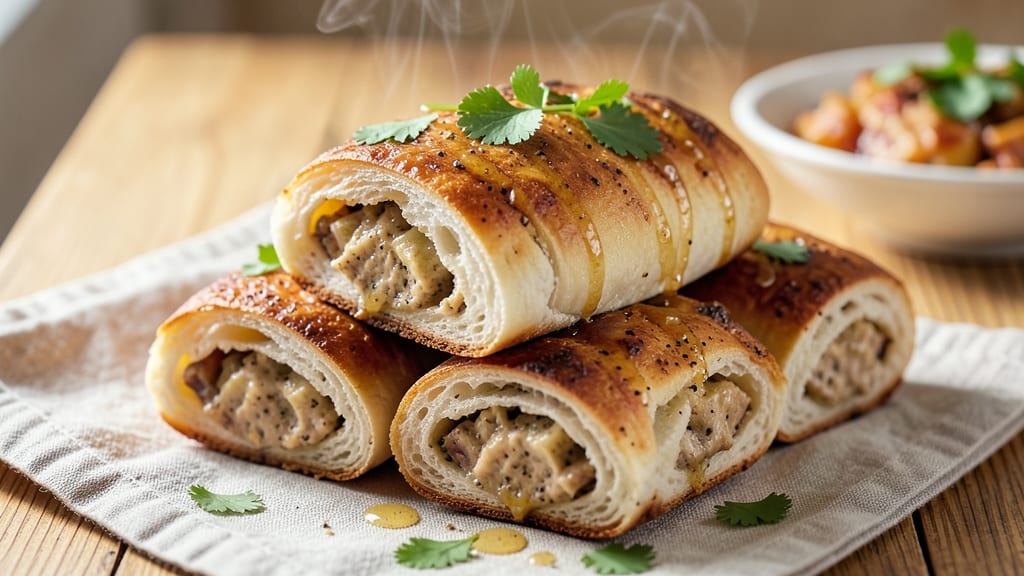
This aloo bread roll recipe delivers soft, pillowy bites stuffed with aromatic spiced potatoes—perfect for pairing with curries or enjoying on their own. 💛 The secret lies in a perfectly balanced dough that stays tender while wrapping around the flavorful potato filling, creating a harmonious blend of textures and spices that feels both comforting and celebratory.
What makes these bread rolls special is the two-part technique: a soft, slightly sweetened dough that's rolled out thinly to encase the spiced potato mixture, then lightly fried or baked until golden.
The potato filling—made with boiled potatoes, onions, and a blend of cumin, coriander, and garam masala—adds a savory depth that complements the dough's mild sweetness.
By the time you're done, you'll have warm, fluffy rolls with a crisp exterior and a soft, spiced center that melts in your mouth. The aroma alone will have everyone at the table asking for seconds, making these ideal for meal times or as a snack with tea.
This recipe balances tradition with simplicity, ensuring restaurant-quality results at home.
Whether you prefer the classic fried version or a lighter baked adaptation, these aloo bread rolls are versatile enough for any occasion. Let's get started on creating these delicious, comforting bites that bring a taste of home to every meal.
Ingredients for aloo bread roll
Sixteen ingredients that transform into golden, fluffy aloo bread rolls with crisp edges and soft centers.
| Ingredient | Amount | Notes |
|---|---|---|
| All-Purpose Flour 🌾 | 3 cups | Plus extra for dusting |
| Warm Water 💧 | ¾ cup | Adjust as needed |
| Granulated Sugar 🍚 | ½ tsp | For slight sweetness |
| Instant Yeast 🍞 | ½ tsp | Active dry works too |
| Unsalted Butter 🧈 | ¼ cup | Softened, not melted |
| Russet Potatoes 🥔 | 2 lbs | Medium size, peeled |
| Yellow Onion 🧅 | 1 whole | Finely chopped |
| Vegetable Oil 🫒 | ¼ cup | For frying dough |
| Ground Cumin 🌿 | ½ tsp | Toasted for depth |
| Ground Coriander 🌿 | ½ tsp | Freshly ground preferred |
| Garam Masala 🌶️ | ½ tsp | Store-bought blend works |
| Salt 🧂 | 1 tsp | Adjust to taste |
| Red Chili Powder 🌶️ | ¼ tsp | Adjust for heat |
| Fresh Green Chilies 🌶️ | 2 whole | Slit lengthwise, optional |
The dough's magic starts with all-purpose flour—Bob's Red Mill or King Arthur brands work best for that tender texture. Russet potatoes are key for the filling; their starchy nature soaks up flavors beautifully. Grab organic potatoes if you can, but regular ones work too. For the spices, Penzeys Spices or bulk bins at Whole Foods ensure maximum freshness. The garam masala blend is non-negotiable—it's what gives these rolls their signature aroma. Toast your whole spices (cumin, coriander) in a dry pan for 30 seconds before grinding to wake up their flavors (trust me, it makes a difference).
No instant yeast? Active dry yeast works—just dissolve it in warm water with a pinch of sugar first. Running short on butter? Coconut oil or vegetable shortening keeps the dough tender, though butter adds that rich flavor. For the potatoes, microwave-steaming (pierce with a fork, microwave 8-10 mins) speeds up boiling time. No fresh green chilies? Dried red chili flakes at half the amount give similar heat. The dough might feel sticky—don't panic, just knead it a few extra times. If your filling seems dry, add a splash of warm milk (dairy or plant-based) to bind it.
Dough keeps 2 hours covered at room temp, but for longer storage, wrap tightly in plastic and refrigerate for up to 3 days. The potato filling can be prepped a day ahead—it actually tastes better after flavors meld. For frying, maintain oil at 350°F—too hot and they burn before cooking through. Baking option? Brush with melted butter and bake at 375°F for 12-15 mins until golden. Freeze shaped rolls (before cooking) for 2 months—thaw at room temp before frying.
Why You'll Love This Recipe
- No-Knead Magic: I swear by this dough—just mix, let it rise, and roll. No stand mixer, no fancy skills, just a bowl and patience (the good kind). That butter-in-the-dough moment? Pure flaky gold.
- Spiced Warmth Bites: The sugar and yeast give it a subtle sweetness that plays so well with the soft, pillowy texture. Stuff it with mashed potato or spiced chickpeas, and you’ve got a flavor party in every bite.
- Weeknight Workhorse: These rolls are my secret for lazy dinners—toss them in a basket while you cook curry or chili. They reheat beautifully, so they’re perfect for meal prep too. (Yes, even on a Tuesday night.)
- Budget-Friendly Luxury: Five ingredients, zero waste. The yeast and sugar stretch the dough to perfection, and that butter makes it feel special without breaking the bank. My wallet and my taste buds win.
Step-by-step instructions for aloo bread roll recipe
Here's how to make these soft, spiced potato-stuffed bread rolls from scratch.
👨🍳 Step 1: Prepare the Spiced Potato Filling
Start by boiling the 2 lbs russet potatoes in salted water until fork-tender—about 15-20 minutes. Drain and let them cool slightly, then peel off the skins. While still warm, mash them in a large bowl until smooth with no lumps.
In a small pan, heat 2 tablespoons vegetable oil over medium heat. Add the finely chopped yellow onion and sauté for 3-4 minutes until translucent. Add the 2 slit fresh green chilies and cook for another 30 seconds until fragrant. Stir in the 0.5 tsp ground cumin, 0.5 tsp ground coriander, 0.5 tsp garam masala, 1 tsp salt, and 0.25 tsp red chili powder, cooking for 30 seconds to toast the spices.
Combine the spiced onions with the mashed potatoes and mix well. Let the filling cool completely before using—this prevents the yeast from activating too soon in the dough. The filling should be smooth with a vibrant yellow color from the spices and a slightly oily texture from the sautéed onions.
👨🍳 Step 2: Make the Dough and Incorporate Filling
In a large mixing bowl, combine the 3 cups all-purpose flour, 0.5 tsp granulated sugar, 0.5 tsp instant yeast, and 1 tsp salt. Mix well to distribute the yeast evenly. Add the 0.25 cup softened unsalted butter and work it into the flour using your fingers until the mixture resembles coarse crumbs.
Gradually add the 0.75 cup warm water while mixing with a wooden spoon or your hands. The dough will start to come together—keep adding water until it forms a soft, slightly sticky ball. If it's too dry, add 1 teaspoon at a time until it reaches the perfect consistency. You want a dough that's soft enough to handle but not so sticky it sticks to your fingers.
Turn the dough out onto a lightly floured surface and knead for 8-10 minutes until smooth and elastic. If the dough feels too sticky, add 1 tablespoon flour at a time while kneading. Once kneaded, divide the dough into 6 equal portions (about 4 ounces each) and set them aside to rest for 15 minutes while you prepare the filling.
🥘 Step 3: Shape the Bread Rolls
Take one piece of dough and roll it into a 12-inch long rope, about ½-inch thick. Flatten the rope slightly with your palm to create a rectangular shape. Spread about ⅙ of the potato filling evenly over the flattened dough, leaving a ½-inch border around the edges. Roll the dough tightly from one end, pinching the seam to seal.
Shape the roll into an oval or round form by pressing gently with your fingers. Place the shaped roll on a parchment-lined baking sheet, seam-side down. Repeat with the remaining dough and filling, spacing the rolls about 2 inches apart on the sheet. Cover the baking sheet with a clean kitchen towel and let the rolls rise in a warm place for 30-45 minutes until they've nearly doubled in size.
Here's the thing—don't overproof these rolls. They should puff up nicely but not collapse. If they rise too quickly, move them to a cooler spot to control the fermentation. The rolls are ready when they feel light and springy to the touch.
🔥 Step 4: Fry to Golden Perfection
Heat 0.25 cup vegetable oil in a deep skillet over medium heat until it reaches 350°F. You'll know it's ready when a small piece of dough sizzles and turns golden immediately upon contact. Carefully add the risen rolls to the hot oil, frying 2-3 rolls at a time to avoid overcrowding.
Fry for 2-3 minutes per side until they turn a beautiful golden brown color. The rolls should be puffed and crispy on the outside while remaining soft inside. If they brown too quickly, reduce the heat slightly to 325°F and fry more slowly. Use a slotted spoon to remove the fried rolls and drain them on paper towels.
Serve the aloo bread rolls warm, still steaming from the hot oil. The exterior should be crispy and golden, while the interior remains soft and pillowy. The spiced potato filling should be warm and fragrant, with each bite delivering a perfect balance of savory, spicy, and buttery flavors.
Pro Tips For Making Aloo Bread Roll
- Knead Until Silky: This isn’t about brute force—your dough should stretch like soft wax, not fight you. Work it for 8-10 minutes by hand (or 5-6 on a stand mixer with the dough hook) until it’s smooth and just slightly tacky to the touch. Over-kneading turns it gummy; under-kneading means your rolls won’t hold their shape when stuffed with aloo.
- Use Room-Temp Butter: Cold butter creates tough layers; soft butter (65°F/18°C) melts into the dough for a flaky, tender crumb. Take it out of the fridge 30 minutes before mixing, or microwave it for 10 seconds if you’re in a hurry. Yes, even if you’re impatient like me.
- Let the Dough Rise Twice: The first rise (1-2 hours) builds flavor, but the second—after shaping—is non-negotiable. Skip it, and your rolls will be dense. Cover the shaped dough with a damp towel and let it puff almost double in a warm spot (like a turned-off oven with a bowl of hot water). Patience here makes all the difference.
- Stuff While Warm: Cold aloo filling shrinks and leaks when wrapped in dough. Heat your potato mix to 160°F (71°C) before stuffing—just until it’s steaming but not soggy. Wrap the rolls immediately, or they’ll stick to your hands like glue. Trust me, your future self will thank you.
Regional styles of these flavors
North Indian Style
In North India, these rolls are often called aloo parathas or aloo puris, and they're a breakfast staple in Delhi and Punjab. The key difference?
The dough is typically rolled thinner and the filling includes boiled cauliflower mixed with the potatoes—about ½ cup finely chopped cauliflower added to the spiced potato mix. For extra richness, many cooks add 1 tablespoon ghee to the dough.
Serve them with mint chutney and tamarind date chutney for that classic Delhi street-food experience. 🌶️
South Indian Adaptation
In South India, these rolls take on a crispier texture and are often paired with coconut chutney or tomato onion sauce. The dough here is slightly firmer, using ½ cup rice flour blended with the all-purpose flour for a distinct texture.
The filling gets a South Indian twist with grated coconut (about ¼ cup) and curry leaves (about 8-10 leaves) added to the spiced potato mix. These are typically baked or shallow-fried until extra crispy, making them perfect with dosa batter or sambar.
Bengali Aloo Luchi
Bengali aloo luchis are a sweeter, softer cousin to the bread rolls, often served during Puja or festive occasions.
The dough here is made with ½ cup milk instead of water, and the filling includes grated carrots (about ½ cup) and raisins (about 2 tbsp) for a subtle sweetness.
The rolls are deep-fried in mustard oil (about ¼ cup) for an authentic flavor, and the exterior is often dusted with powdered sugar before serving. Pair them with litti chokha or sweetened yogurt for a true Bengali treat. 💛
Maharashtrian Vada
In Maharashtra, these rolls are transformed into aloo vadas, where the dough is replaced with a chickpea flour batter (about 1 cup besan) mixed with water and spices. The filling remains similar, but the exterior is deep-fried until golden and crispy.
The batter includes 1 tsp baking soda for extra fluffiness, and the vadas are typically served with spicy potato curry or mango pickle. This version is a popular street food in Mumbai and Pune.
Gujarati Aloo Thepla
Gujarati aloo theplas are flat, disc-shaped rolls that skip the frying step entirely. The dough is rolled out thin and cooked on a tawa (griddle) with ghee until golden spots appear.
The filling includes grated bottle gourd (about ½ cup) and sesame seeds (about 1 tbsp) for a nutty flavor. These are often served with dhokla or undhiyu (a mixed vegetable curry).
The key here is to press the dough thinly and cook it on medium heat for a crispy yet soft texture. ✨
Nutrition facts
Frequently asked questions
Can I make aloo bread rolls without frying?
For a lighter version, bake them at 375°F for 12-15 minutes until golden. Brush with melted butter halfway for extra crispiness. The dough will still puff up beautifully—just monitor closely to avoid over-browning.
Why did my dough turn out too sticky?
Sticky dough usually means you added too much water. Knead in 1 tablespoon flour at a time until it becomes smooth but pliable. If it's still sticky after kneading, let it rest covered for 10-15 minutes—the gluten relaxes and absorbs excess moisture.
How do I store leftover aloo bread rolls?
Keep them in an airtight container at room temperature for 2 days. For longer storage, freeze shaped rolls (before cooking) for up to 2 months. Reheat in a 350°F oven for 5-7 minutes or air-fry at 375°F for 3-4 minutes to restore crispiness.
What's the best way to reheat aloo bread rolls?
For crispy results, reheat in a 375°F oven for 5-7 minutes or use an air fryer at 375°F for 3-4 minutes. Microwaving works in a pinch (wrap in a damp paper towel, 20 seconds) but loses crispiness. The filling stays warm and flavorful either way!
Can I make the potato filling ahead of time?
Yes! The filling tastes even better when made 1 day ahead—flavors meld beautifully. Store it in the fridge and let it come to room temperature before using. Avoid adding fresh green chilies until ready to use to prevent sogginess.