
Side Dishes
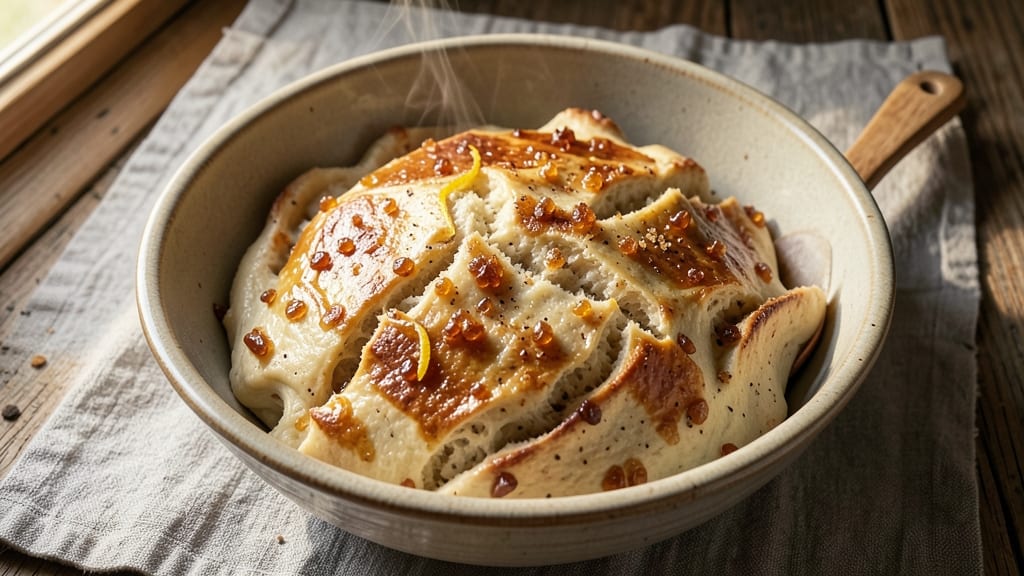
This amaretto bread recipe transforms ordinary loaves into something extraordinary—where nutty liqueur swirls meet a golden, buttery crust. The secret lies in infusing amaretto into the dough, creating a subtle almond aroma that lingers with every bite.
I perfected this version after years of baking, ensuring the liqueur enhances rather than overpowers the bread's natural sweetness.
The process begins with a classic bread dough, enriched with butter and eggs for a tender crumb. As it rises, amaretto-infused butter swirls through the dough, promising pockets of nutty flavor in every slice.
Baking at 350°F for 30-35 minutes yields a crust that's crisp yet yielding, while the interior remains soft and moist.
What makes this bread truly special is how the amaretto transforms a simple loaf into a dessert-like treat. The nutty undertones pair beautifully with butter, jam, or even a dusting of powdered sugar. Serve warm for breakfast or as an after-dinner indulgence—it’s versatile enough for any occasion.
For an extra touch, drizzle the baked loaf with a light glaze or sprinkle with flaky sea salt to balance the sweetness. The aroma alone will draw everyone to the table, making this bread a showstopper for gatherings or a cozy treat for yourself.
Let’s get started on creating this luxurious loaf.
Ingredients for amaretto bread
Four cups flour and a splash of amaretto create this luxurious loaf with golden crust and nutty swirls.
| Ingredient | Amount | Notes |
|---|---|---|
| All-Purpose Flour 🌾 | 4 cups | Sifted for light texture |
| Granulated Sugar 🍚 | ¼ cup | White or light brown |
| Instant Yeast 🍞 | 2 ¼ tsp | Active dry works too |
| Unsalted Butter 🧈 | ¾ cup | Cold, cubed for dough |
| Large Eggs 🥚 | 2 whole | Room temperature preferred |
| Amaretto Liqueur 🍷 | ¼ cup | High-quality, 25% ABV |
| Milk 🥛 | ¾ cup | Warm for activation |
| Salt 🧂 | 1 tsp | Kosher or sea salt |
| Vanilla Extract 🌿 | 1 tsp | Pure vanilla preferred |
| Powdered Sugar 🍚 | ¼ cup | For glaze option |
| Flaky Sea Salt 🧂 | 1 tsp | For finishing touch |
The amaretto is the star—Disaronno or Galliano work best for authentic almond flavor. Grab the good stuff from BevMo or your local liquor store. For the butter, Plugrá or Land O'Lakes work well, but avoid salted. The yeast? Red Star instant yeast is my go-to—it activates faster. Flour matters too: King Arthur or Bread Flour gives the best texture, but all-purpose works in a pinch. Keep everything chilled until mixing to prevent early activation.
No amaretto? Almond extract at half the amount works, but it won't have the same depth. Short on butter? Coconut oil can replace half the amount, though the flavor won't be identical. For the glaze, powdered sugar plus a splash of milk is classic, but honey glaze adds extra richness. The sea salt? Maldon flakes are ideal, but any flaky salt will do. If your dough feels too sticky, add 1 tbsp more flour—it's better to err on the side of extra flour than too little.
The dough keeps for 24 hours in the fridge, covered tightly. For best flavor, bake within 48 hours. The baked loaf stays fresh 3 days at room temperature, wrapped in foil. For longer storage, freeze slices wrapped in plastic for up to 3 months. To reheat, wrap in foil and warm at 300°F for 10 minutes. The aroma alone will draw everyone to the table—trust me, it's worth the effort.
Why You'll Love This Recipe
- No-Fuss Dough: I swear by this recipe—just mix, knead (or don’t, if you’re lazy), and let the yeast do the work. The butter and sugar blend into a silky dough that’s practically foolproof, even when I forget to measure the yeast correctly.
- Almond-Kissed Magic: That amaretto swirl? It’s like biting into a dessert with every slice—warm, buttery, and just sweet enough to make you reach for another. Honestly, the sugar and butter combo is already rich, but the amaretto takes it to a whole other level.
- Breakfast or Snack: Between us, this bread is my go-to for toast in the morning or a quick snack with coffee. It’s sturdy enough to handle jam or butter, but light enough to eat plain. (Yes, even on a Tuesday night when I’m too tired to think.)
- Budget Baking Win: Flour, sugar, butter, eggs—these are pantry staples that won’t break the bank. A single batch feeds my whole family, and the leftovers? They last for days without drying out. Plus, the amaretto flavor makes it feel special without the price tag.
Step-by-step instructions for amaretto bread
This method delivers a tender crumb with rich amaretto swirls and a golden, buttery crust every time.
Mix the Dough Base
In a large mixing bowl, combine the 4 cups all-purpose flour, 1 tsp salt, and 2.25 tsp instant yeast. Whisk to remove any lumps from the flour. Create a well in the center and add the 0.75 cup cold cubed unsalted butter, 0.25 cup granulated sugar, and 2 whole large eggs. Using a wooden spoon or dough whisk, mix until the butter begins to soften and the mixture resembles coarse crumbs.
In a small separate bowl, warm the 0.75 cup milk until it reaches about 110°F—it should feel warm to the touch but not hot. Add the 0.25 cup amaretto liqueur and 1 tsp vanilla extract to the warm milk mixture. Pour this liquid into the flour mixture and stir until a shaggy dough forms. The dough will be sticky, but don't add extra flour yet—this is normal and helps develop gluten properly.
Knead and Develop Gluten
Turn the dough onto a lightly floured surface and knead for 8-10 minutes by hand, or use a stand mixer with a dough hook attachment for 5-6 minutes on medium speed. You're looking for a smooth, elastic dough that springs back slowly when poked. If the dough feels too sticky, wet your hands slightly and continue kneading—adding extra flour will make the bread denser.
Form the dough into a round loaf and place it back in the mixing bowl. Cover with a clean kitchen towel and let it rise in a warm place for 1-1.5 hours or until it has nearly doubled in size. A good test is to gently press two fingers into the dough—if the indentation stays, it's ready. The warm environment helps activate the yeast and creates that light, airy texture we want in this bread.
Shape and Prepare for Swirl
Once the dough has risen, punch it down to release any air bubbles. Divide the dough into two equal pieces and roll each piece into a 12-inch log on a lightly floured surface. For the amaretto swirl, take one log and gently roll it up in a sheet of plastic wrap. Use a sharp knife to make 4-5 diagonal cuts through the center of the log, creating a crosshatch pattern. This creates channels for the amaretto filling to seep into the dough.
Unroll the second dough log and spread it with a thin layer of 0.25 cup amaretto liqueur mixed with 1 tbsp granulated sugar. Roll this up tightly and place it alongside the cut log. Gently press the two logs together, sealing them tightly. This creates the signature swirl pattern while keeping the amaretto flavor concentrated in the center.
Proof and Bake to Perfection
Place the shaped loaf back in the mixing bowl, cover with a towel, and let it proof for another 30-45 minutes until it has risen slightly. Preheat your oven to 375°F and line a baking sheet with parchment paper. Brush the top of the loaf with an egg wash made by beating 1 whole egg with 1 tbsp water. Sprinkle generously with 1 tsp flaky sea salt for that perfect finishing touch.
Bake for 30-35 minutes until the bread is deep golden brown and sounds hollow when tapped on the bottom. For extra browning, you can also place a baking sheet with 1 cup hot water in the lower oven rack for the first 10 minutes of baking. This creates steam that helps develop that beautiful crust. Remove from the oven and let cool on a wire rack for at least 20 minutes before slicing—this resting time prevents a gummy interior.
Glaze and Serve
While the bread is still warm, prepare the optional powdered sugar glaze by whisking together the 0.25 cup powdered sugar with 1-2 tbsp warm water until smooth. Drizzle this glaze over the top of the bread just before serving. The glaze adds a delicate sweetness that complements the nutty amaretto flavor perfectly.
Slice the bread into thick slices and serve warm. Each bite should deliver a tender crumb with bursts of amaretto flavor in the center, a buttery crust, and that perfect balance of sweetness and salt. This bread pairs beautifully with coffee or as a dessert with a dollop of whipped cream. The flavors develop even more as it cools, so it's worth the wait!
Pro Tips For Making Amaretto Bread
- MIX IN COLD BUTTER: Cut that unsalted butter straight from the fridge into the flour—no waiting for it to soften. I used to melt it first, and the bread turned out dense and greasy. Cold butter creates flaky layers, just like in pie crust.
- WEIGH YOUR SUGAR: Ditch the scoop and spoon—use a kitchen scale for that granulated sugar. Packed cups vary wildly, and too much sugar will make your dough sticky and gummy. A little precision goes a long way here.
- LET THE DOUGH REST: After kneading, give the dough a 30-minute rest before shaping. This isn’t just "waiting"—it relaxes the gluten so your loaf doesn’t collapse when it bakes. (Yes, even if you’re impatient like me.)
- BAKE UNTIL GOLDEN: Stop checking at 350°F—wait until the top is deep golden brown, not just pale. Underbaked amaretto bread stays dense and tastes underwhelming. A toothpick test works, but don’t trust it alone.
Troubleshooting this recipe
Dough Too Sticky
If your dough feels excessively sticky during kneading, resist the urge to add extra flour—this can make your bread denser. Instead, wet your hands slightly and keep kneading for another 2-3 minutes.
The gluten will strengthen naturally. If you must add flour, use no more than 1 tablespoon total. For extra insurance, chill the dough for 15 minutes before shaping—this helps firm it up. 💪
Yeast Not Activating
If your dough isn’t rising properly, your yeast might be old or the milk too hot. Test your yeast by mixing 1 packet with ¼ cup warm milk and 1 tsp sugar—it should foam in 5-10 minutes.
If not, replace it with fresh Red Star instant yeast. Also, ensure your milk is between 105-115°F—too hot kills yeast, too cold slows activation. A warm oven with the light on creates the perfect proofing environment. ✨
Amaretto Flavor Weak
If your bread lacks amaretto depth, you might need more liqueur or a stronger brand. Use Disaronno or Galliano for authentic almond flavor. For extra punch, brush the baked loaf with 1 tablespoon amaretto after baking.
Alternatively, fold 1 teaspoon almond extract into the dough alongside the liqueur. The key is balance—too much can make the bread taste like liquor rather than bread. 🍷
Crust Not Browning
A pale crust often means the oven isn’t hot enough or lacks steam. Preheat your oven to 375°F and place a baking sheet with 1 cup hot water in the lower rack for the first 10 minutes of baking.
For extra color, brush the loaf with egg wash and sprinkle with 1 tsp flaky sea salt before baking. If your oven runs hot, reduce the temperature to 350°F and bake for 5-10 minutes longer. 🌡️
Dense or Gummy Texture
Over-kneading or under-proofing usually causes dense bread. Knead just until the dough is smooth and elastic (8-10 minutes by hand), then let it rise until it nearly doubles in size. If the bread still feels gummy after baking, it may need longer in the oven.
Check doneness by tapping the bottom—it should sound hollow. For extra tenderness, brush warm slices with melted butter before serving. 🍞
Swirl Not Visible
If your amaretto swirl disappeared during baking, the dough logs weren’t sealed tightly enough. When rolling the logs, press them firmly together to trap the filling. For a bolder swirl, use a piping bag to inject 1-2 tablespoons amaretto mixture into the center of the loaf before the final proof.
Chill the shaped loaf for 15 minutes before baking to help the swirl hold its shape. 🔥
Nutrition facts
Frequently asked questions
Can I substitute amaretto with another liqueur?
You can try, but amaretto's almond flavor is unique. For a similar nutty profile, use 1/4 cup almond extract (reduce to 1 tsp) or frangelico (equal amount). Avoid citrus liqueurs like triple sec—they'll alter the bread's delicate balance. The key is maintaining the bread's subtle sweetness while enhancing its flavor.
How do I store leftovers to keep them fresh?
Wrap cooled slices tightly in plastic wrap or foil and store at room temperature for 3 days. For longer storage, freeze slices for up to 3 months. To reheat, wrap in foil and warm at 300°F for 10 minutes—this restores the bread's soft texture. The amaretto flavor actually improves as it sits!
Why does my bread taste like alcohol?
This happens when too much amaretto is used or the bread isn't baked long enough. Stick to 1/4 cup total (in dough + glaze) and bake until fully set (30-35 minutes). The alcohol should cook off completely. For extra insurance, let the bread cool completely before slicing.
Can I make this bread without a stand mixer?
Knead by hand for 8-10 minutes on a lightly floured surface until the dough is smooth and elastic. Wet your hands occasionally to prevent sticking. The extra effort develops gluten properly—this bread actually tastes better when kneaded by hand!
What's the best way to serve this bread?
Warm slices make the perfect breakfast with butter or jam, or serve as an elegant dessert with whipped cream and fresh berries. For a coffee pairing, toast lightly and spread with almond butter. The nutty flavors shine when contrasted with tart accompaniments like lemon curd.