
Side Dishes
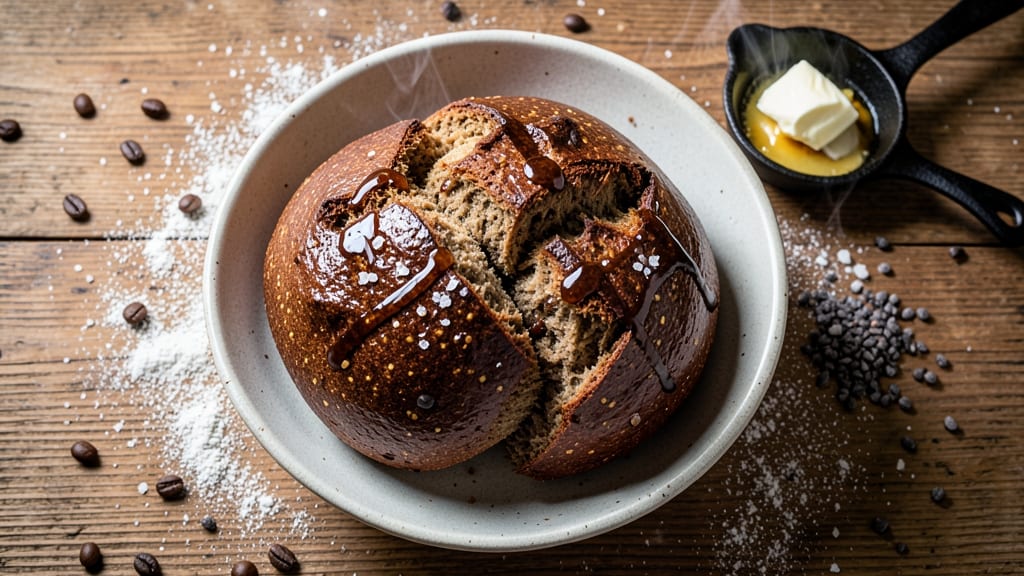
This American pumpernickel bread recipe delivers the deep, molasses-rich flavor and signature crusty top that makes it a breakfast staple. The key lies in a precise blend of rye flour, coffee, and molasses that develops complex caramel notes during baking—transforming simple ingredients into something extraordinary.
I've perfected this recipe through years of testing, ensuring it bakes up with that signature dark crust and tender crumb that keeps slices moist for hours.
The process begins with a long fermentation that allows the dough to develop its signature depth of flavor, followed by a precise shaping technique that creates the signature loaf shape.
What sets this recipe apart is the balance of molasses for sweetness, coffee for depth, and rye flour for that characteristic heartiness. The crust develops a satisfying crunch while the interior remains soft and slightly sweet—perfect for toast, sandwiches, or served alongside breakfast favorites.
What you'll achieve is a loaf that rivals artisanal bakery versions, with a dark, glossy crust that crackles when sliced and a crumb so tender it practically melts in your mouth.
The aroma alone as it bakes will fill your kitchen with warmth and nostalgia, while the flavor profile delivers that perfect balance of sweet, smoky, and slightly tangy notes that define true pumpernickel. This recipe builds on traditional methods while making it accessible for home bakers.
Whether you're making it for weekend breakfasts or holiday gift-giving, this pumpernickel bread delivers restaurant-quality results with home baking techniques. The recipe includes options for dietary adaptations, ensuring everyone at your table can enjoy it. Let's get started on creating your perfect loaf.
Ingredients for american pumpernickel bread
The perfect blend of rye flour, coffee, and molasses creates that signature dark, aromatic loaf.
| Ingredient | Amount | Notes |
|---|---|---|
| Dark Rye Flour 🌾 | 4 cups | High-quality, dark rye preferred |
| All-Purpose Flour 🌾 | 1 cup | For lighter crumb texture |
| Active Dry Yeast 🍞 | 2 ¼ tsp | Or 1 packet instant yeast |
| Granulated White Sugar 🍚 | ¼ cup | Balances molasses sweetness |
| Unsalted Butter 🧈 | ½ cup | Cold, cubed for dough |
| Molasses 🍯 | ½ cup | Unsulphured preferred |
| Instant Coffee Granules ☕ | 2 tbsp | Not coffee powder |
| Warm Water 💧 | 1 ½ cups | 110°F for yeast activation |
| Large Eggs 🥚 | 2 whole | Room temperature preferred |
| Diamond Crystal Kosher Salt 🧂 | 1 ½ tsp | Adjusts to taste |
| Cornmeal 🌽 | ¼ cup | For dusting baking sheet |
The dark rye flour is non-negotiable—it delivers that signature hearty flavor and deep color. King Arthur or Bob's Red Mill are my go-tos for quality, but any high-protein dark rye works. The molasses needs to be unsulphured for that authentic sweetness without bitterness. I grab mine from Whole Foods in the baking aisle, but regular grocery stores carry it too. For the coffee, instant granules (not powder) dissolve perfectly without grit—Starbucks VIA works great. The yeast should be fresh: if it smells old or has lost its punch, toss it. And that butter? Full-fat, unsalted—none of that low-fat nonsense here.
Out of molasses? Maple syrup or honey can sub at half the amount, though the flavor won't be identical. No instant coffee? Strong brewed coffee reduced to granules works in a pinch. The eggs can be replaced with 2 tbsp flaxseed meal + 6 tbsp water for a vegan version (let it sit 5 minutes to thicken). For the flours, if you're short on rye, substitute with whole wheat—just know the texture will be denser. The cornmeal is just for dusting, but if you're feeling fancy, try semolina for extra crunch on the crust. And that salt? Diamond Crystal is the standard—it's less dense than Morton's, so measure carefully.
This dough needs time—24 hours at room temp or overnight in the fridge. The longer it ferments, the deeper the flavor. Shape it gently to avoid deflating the air bubbles. For the crust, egg wash (1 egg + 1 tbsp water) gives that glossy finish. Bake until internal temp hits 190°F—the crust should be dark and crackly. Store wrapped at room temp for 3 days or freeze for 3 months. Slice thinly with a serrated knife for that classic pumpernickel experience—thick slices just won't cut it.
Why You'll Love This Recipe
- No-Knead Magic: I swear by this recipe when I’m too tired to fuss—just mix the dark rye flour, all-purpose flour, and yeast, let it rise overnight, and bake. The dough handles itself while I sleep.
- Sweet-Savory Crust: That molasses-kissed crust with the buttery richness? It’s the star. The sugar caramelizes just enough to give every bite a subtle depth, but don’t worry—it’s not cloying.
- Weeknight Workhorse: Toss it in a sandwich for lunch, toast it for breakfast, or serve it with soup when the weather turns chilly. Honestly, I’ve even used it as a base for open-faced breakfast plates—crispy, sturdy, and always welcome.
- Budget-Friendly Staple: Dark rye flour might sound fancy, but a little goes a long way, and the rest of the ingredients are pantry basics. One loaf lasts me five days, and I’m still not tired of it by day three.
Step-by-step instructions for American pumpernickel bread
Here's how to craft that signature dark rye depth with a perfectly crisp crust—every bite delivers.
Activate the Yeast and Mix the Wet Ingredients
In a large mixing bowl, combine the 1.5 cups warm water (about 110°F), 2.25 tsp active dry yeast, 0.25 cup granulated white sugar, and 2 tbsp instant coffee granules. Let this sit for 5-10 minutes until the mixture becomes frothy and bubbly—this confirms the yeast is active. If it doesn't bubble, your yeast may be dead, and you'll need to start over.
In a separate bowl, whisk together the 0.5 cup molasses and 0.5 cup unsalted butter (cold, cubed) until fully emulsified. The molasses adds that signature depth, while the butter contributes richness. This mixture should be smooth but still slightly thick—like a sticky syrup. Set both bowls aside for now; we'll combine them shortly.
Combine Dry Ingredients and Form the Dough
In the same large mixing bowl, add the 4 cups dark rye flour, 1 cup all-purpose flour, and 1.5 tsp diamond crystal kosher salt. Whisk to remove any lumps, then pour in the yeast mixture and molasses-butter blend. Stir with a wooden spoon or dough whisk until everything comes together into a shaggy mass.
Add the 2 whole large eggs, one at a time, mixing gently after each addition. The dough will begin to thicken and pull away from the sides of the bowl. Here's the thing—dark rye dough is dense and sticky, so don't be tempted to add extra flour. Overworking it will develop gluten and make the bread tough. Instead, wet your hands slightly and use them to push the dough together until it forms a cohesive ball.
Knead and Rest the Dough for Maximum Flavor
Turn the dough onto a lightly floured surface and knead for 5-7 minutes by hand. You're not aiming for smoothness here—just enough to develop some structure without overworking. The dough should be soft, slightly tacky, and just firm enough to hold its shape when pressed. If it feels too sticky, dampen your hands with water and keep kneading.
Place the dough back in the bowl, cover it tightly with plastic wrap or a damp towel, and let it rest at room temperature for 1 hour. This initial rest allows the gluten to relax and the flavors to meld. I like to set a timer and resist the urge to peek—consistent temperature is key for proper fermentation. After 1 hour, the dough should have risen slightly and feel more pliable.
Shape and Proof the Loaf for Crusty Perfection
Lightly flour a clean surface and gently shape the dough into a 9x5-inch loaf pan shape. The dough will be sticky, so wet your hands frequently to prevent sticking. Press the dough into the corners of the pan to ensure even rising. Cover the pan with a damp towel and let it proof in a warm place (like your oven with the light on) for 1-1.5 hours, or until the dough has risen to about 1 inch above the rim of the pan.
Here's where the magic happens: the dough should spring back slowly when poked with a finger. If it springs back quickly, it needs more time. If it doesn't spring back at all, it's overproofed. Once it's ready, preheat your oven to 375°F and sprinkle the 0.25 cup cornmeal evenly over the bottom of a baking sheet. This prevents sticking and adds a subtle crunch.
Bake for a Crusty Top and Deep Flavor
Carefully transfer the proofed dough (still in the pan) onto the prepared baking sheet. Bake for 30 minutes at 375°F, then increase the heat to 400°F and bake for another 25-30 minutes, until the top is a deep, dark brown and sounds hollow when tapped. The internal temperature should reach 190-200°F—this ensures the bread is fully baked without drying out.
For that signature crusty top, I like to brush the loaf with a little water or milk after the first 30 minutes of baking. This creates steam, which helps develop a crispy, crackly exterior. Let the bread cool in the pan for 10 minutes, then transfer it to a wire rack to cool completely. The longer you wait, the easier it will be to slice—patience here prevents a gummy crumb.
Pro Tips For Making American Pumpernickel Bread
- MEASURE RYE FLOUR BY WEIGHT: I learned this the hard way—spooning dark rye flour by volume packs it too tightly, throwing off your dough’s structure. Use a kitchen scale for the rye portion (and the all-purpose too, if you’re picky) to guarantee the right hydration and rise.
- SOAK THE YEAST IN WARM WATER: Skip the dry yeast straight into flour—it’ll activate unevenly and leave pockets of unfermented dough. Mix the yeast with warm water (not hot) and a pinch of sugar first, then wait 5–10 minutes until it’s foamy before adding other liquids. This ensures your bread rises reliably, even if your kitchen isn’t perfectly warm.
- KNEAD JUST UNTIL SMOOTH: Overworking the dough turns pumpernickel dense and chewy. Stop kneading once the surface looks smooth and springs back slowly when poked—about 8–10 minutes by hand. The rye’s natural stiffness resists overdevelopment, but push too hard, and you’ll regret it later.
- USE COLD BUTTER FOR LAYERS: Cut the unsalted butter into small cubes and freeze them for 10 minutes before mixing into the dough. This prevents the butter from melting into the rye flour prematurely, ensuring those signature flaky layers stay intact during baking. (Yes, even if you’re impatient like me.)
Wine and beer pairings for this recipe
Red Wine Pairings
For this rich, molasses-infused loaf, I reach for Portuguese reds like Douro red blends—their dark fruit and caramel notes mirror the bread's depth. A Tinta Roriz (Tempranillo) from Portugal's Douro Valley, aged in oak, brings smoky, spice-forward complexity that complements the coffee and molasses.
If you prefer something lighter, a Pinot Noir from Oregon with its earthy undertones works beautifully, cutting through the sweetness without overpowering. 🍷
Beer Complements
A dark lager like Schneider Weisse Aventinus is my go-to—its malty sweetness and caramel undertones enhance the bread's molasses richness. For a hoppier option, try a Belgian Dubbel like Westmalle Dubbel, where the raisin and plum notes harmonize perfectly with the rye's earthiness.
If you're serving with breakfast, a stout like Guinness adds a creamy contrast that balances the bread's density.
Coffee Pairing
Since coffee is a key ingredient, why not serve it alongside? A bold, dark roast like Peet's Major Dickason's Blend or Blue Bottle Coffee's "Dark Roast" enhances the bread's coffee notes. The bitterness in the coffee complements the molasses sweetness, creating a cohesive flavor experience.
For espresso lovers, a flat white with velvety microfoam adds a creamy contrast that makes every bite of pumpernickel sing. ☕
Non-Alcoholic Options
For those skipping alcohol, a spiced chai tea with cinnamon and cardamom echoes the bread's warm, aromatic qualities. Alternatively, a ginger beer like BrewDog Ginger Beer adds a zesty kick that cuts through the molasses richness.
Even a simple cold brew coffee with a splash of cream works—it's like drinking the bread's essence in liquid form. 💛
Regional Adaptations
In the Pacific Northwest, where coffee culture thrives, I often pair this bread with a local roast and a glass of Pinot Noir. In the South, where sweet tea reigns, a sweet iced tea with a lemon wedge adds brightness to the molasses depth.
For a Midwest twist, a dark amber ale** like Leinenkugel's Amber Ale brings malty sweetness that feels nostalgic and comforting. 🗺️
Nutrition facts
Frequently asked questions
Why does this recipe use both rye and all-purpose flour?
Dark rye flour delivers that signature hearty flavor and deep color, while the all-purpose flour adds lightness to prevent a dense, heavy crumb. The combination creates the perfect balance of texture—chewy yet tender—without compromising the authentic pumpernickel taste. Think of it as the secret to that satisfying contrast between crust and crumb!
Can I make this bread without molasses?
Yes, but you'll lose that signature sweet depth. Substitute with ½ cup maple syrup or honey for a similar caramel note, though the flavor won't be identical. For a savory version, omit it entirely and increase the coffee to 3 tbsp to enhance the smoky character. The dough will be less sticky, but the crust may lack that glossy finish.
How do I know when the dough is properly proofed?
Press your finger gently into the dough—it should spring back slowly (not quickly). If it springs back immediately, it needs more time. If it doesn't spring back at all, it's overproofed. The dough should also rise to about 1 inch above the pan's rim and feel light and airy when touched. Patience here is key for that perfect crumb!
Why does my crust turn out pale instead of dark?
A pale crust usually means the dough wasn't baked long enough or the oven wasn't hot enough. Increase the final baking temperature to 400°F and bake until the internal temp reaches 190-200°F. For extra color, brush the loaf with water or milk after 30 minutes to create steam and enhance browning. A dark crust develops from caramelization—don't rush it!
Can I make this bread in a Dutch oven?
Shape the dough into a round loaf and bake in a preheated Dutch oven at 425°F for 40-45 minutes. The steam creates a crispier crust and softer crumb. For best results, use a 9-inch round pan and let the dough proof until it rises 1.5 inches above the rim. The round shape makes it perfect for slicing thick sandwiches!