
Side Dishes
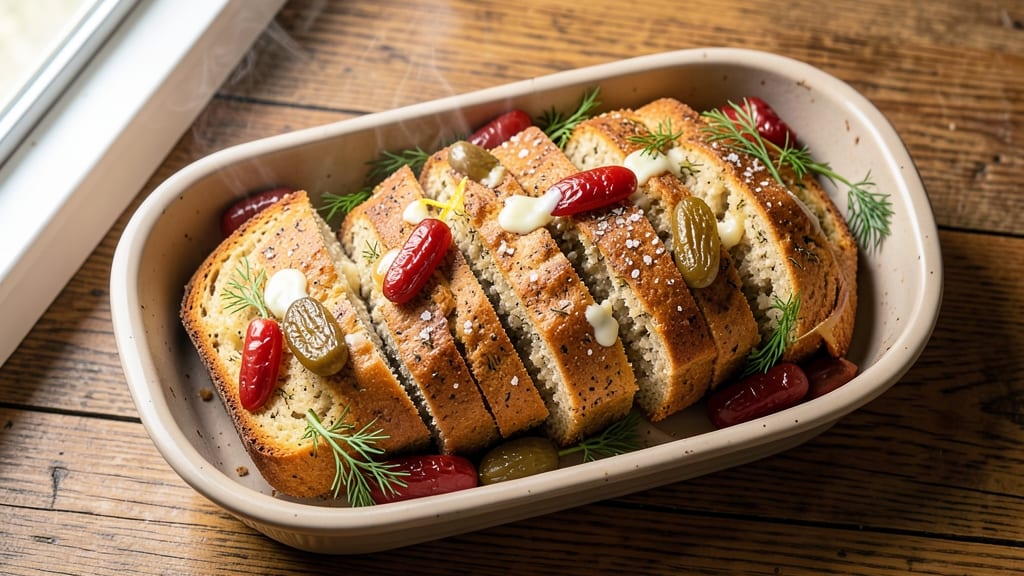
This Amish dill pickle bread recipe transforms humble bread dough into a tangy, crusty masterpiece that pairs perfectly with soups or sandwiches. The secret lies in folding chopped dill pickles and a splash of brine into the dough, creating pockets of briny, herby flavor that surprise with every bite.
I developed this recipe after realizing how often dill pickles disappear too quickly—now they become the star of your next loaf.
The dough comes together with simple ingredients—flour, yeast, and a touch of sugar—but the magic happens when you incorporate those crunchy pickles and their tangy brine.
Traditional Amish baking techniques ensure a crusty exterior and soft, airy interior, while the pickles add a satisfying crunch that keeps you reaching for seconds. This isn’t just bread; it’s a conversation starter.
By the time it emerges from the oven, you’ll have a loaf with golden-brown crust and flecks of pickles peeking through, promising a burst of flavor in every slice. The aroma alone—warm bread mingling with dill and vinegar—will have everyone at the table asking for seconds.
Serve it warm with butter or pair it with hearty soups for a meal that feels both rustic and refined.
Perfect for meal prep or last-minute gatherings, this recipe delivers restaurant-quality results with minimal effort. The pickles soften slightly during baking, releasing their briny essence into the dough, while the crust stays crisp enough to hold up to even the heartiest sandwich. Let’s get baking!
Ingredients for amish dill pickle bread
Simple pantry staples meet bold flavors in this rustic Amish-inspired loaf.
| Ingredient | Amount | Notes |
|---|---|---|
| All-Purpose Flour 🌾 | 4 cups | Unbleached, for optimal texture |
| Active Dry Yeast 🍞 | ¼ tsp | Ensure it's fresh for best rise |
| Granulated Sugar 🍚 | 1 tbsp | For yeast activation |
| Warm Water 💧 | 1 cup | 110°F for ideal yeast activation |
| Unsalted Butter 🧈 | ½ cup | Cold, cubed for dough handling |
| Dill Pickles 🥒 | 1 cup | Chopped with brine included |
| Dill Pickle Brine 💧 | ¼ cup | Reserved from jar for tang |
| Diamond Crystal Kosher Salt 🧂 | 1 ½ tsp | Adjust to taste |
| Garlic Powder 🧄 | ½ tsp | For subtle depth |
| Dried Dill 🌿 | 1 tsp | Crushed for aromatic punch |
| Cornmeal 🌽 | ½ cup | For dusting work surface |
| Egg Wash 🥚 | 1 whole | Beaten with 1 tbsp water |
| Coarse Sea Salt 🧂 | ½ tsp | For final crust sprinkle |
The pickles are non-negotiable—look for dill pickles with firm, crisp spears and minimal vinegar dilution. Heinz or Vlasic brands work best for their reliable tang. Reserve the brine; it’s the secret weapon for that authentic Amish flavor. For the flour, King Arthur or Bob’s Red Mill provide consistent texture, but any unbleached all-purpose will do. The yeast must be fresh—if it’s past its expiration, toss it. Fresh yeast ensures that golden rise, not a sad, flat loaf.
No dill pickles? Substitute with chopped green olives (use half the amount) for a similar briny bite, though the dill flavor will be missing. Short on pickle brine? Apple cider vinegar diluted with water mimics the tang, but use sparingly—you want flavor, not overpowering acidity. The dried dill can be swapped for fresh dill at double the amount, but chop it finely so it distributes evenly. For a gluten-free version, substitute with a 1:1 gluten-free flour blend and reduce the yeast by 20%.
Store the dough in the fridge for up to 24 hours if prepping ahead—this actually deepens the flavor. The baked loaf keeps well at room temperature for 3 days wrapped in a clean kitchen towel, or 1 week refrigerated. For longer storage, slice and freeze—it reheats beautifully in a 350°F oven for 10 minutes. The crust stays crisp when reheated, and the pickles soften just enough to release their briny essence.
Why You'll Love This Recipe
- No-Fuss Dough: I swear, this bread comes together faster than I can finish my morning coffee. Just mix flour, yeast, sugar, and warm water—no fancy techniques, no waiting forever for the dough to rise. The butter gets worked in last, and boom: ready to shape in under 10 minutes.
- Pickle-Perfect Tang: That dill pickle juice swirling through the dough? It’s the secret weapon. The bread has this bright, herby crunch that pairs insanely well with butter—like a zesty, tangy hug for your sandwiches. (Pro tip: Save your jar’s leftover juice for extra flavor.)
- Weeknight Hero: This bread is my go-to for quick lunches, charcuterie boards, or even breakfast toast. It holds up for days in the fridge, makes killer sandwiches, and? Yes, even on a Tuesday night when I’m too tired to think.
- Budget Magic: Flour, yeast, sugar, butter—these are pantry staples you already own. No specialty ingredients, no markup. Plus, one loaf stretches into so many meals: toast, French toast, or even breadcrumbs for fried chicken. Zero waste, all win.
Step-by-step instructions for Amish dill pickle bread
Transform simple ingredients into a rustic loaf with bold dill pickle flavor and a crisp exterior.
Activate the Yeast and Mix the Dough
In a small bowl, whisk together the 1 cup warm water (about 110°F—test by dropping a few drops on your wrist, it should feel warm but not hot), 1 tbsp granulated sugar, and 0.25 tsp active dry yeast. Let it sit for 5-10 minutes until foamy. This step ensures your yeast is alive and ready to work.
In a large mixing bowl, combine the 4 cups all-purpose flour and 1.5 tsp diamond crystal kosher salt. Pour in the yeast mixture and stir until a shaggy dough forms. Add the 0.5 cup cold unsalted butter, cut into cubes, and work it into the dough until fully incorporated. The butter should be cold enough to hold its shape but soft enough to mix in—this creates flaky layers later.
Incorporate Pickle and Aromatics
Chop the 1 cup dill pickles into small pieces, reserving 0.25 cup dill pickle brine for later. Add the chopped pickles, 0.5 tsp garlic powder, and 1 tsp dried dill to the dough. Mix thoroughly until the pickles are evenly distributed and the dough becomes sticky. The tangy flavor will infuse the bread, creating that signature Amish zing.
Turn the dough onto a lightly cornmeal-dusted surface and knead for 5-7 minutes until smooth and elastic. If the dough feels too sticky, wet your hands slightly to prevent tearing. Shape it into a round loaf about 8 inches in diameter, then place it in a lightly greased bowl. Cover with a damp towel and let it rise in a warm place for 1-2 hours, or until doubled in size.
Shape and Proof the Dough
Punch down the risen dough to release air, then shape it into a round loaf again. Place it on a parchment-lined baking sheet and cover loosely with the damp towel. Let it proof for another 30-45 minutes until it springs back slowly when gently pressed. This final rise ensures a light, airy crumb.
Preheat your oven to 375°F while the dough proofs. Brush the loaf with the 1 whole egg wash (beaten with 1 tbsp water) and sprinkle generously with 0.5 tsp coarse sea salt. The egg wash adds shine and helps the crust brown beautifully, while the salt enhances the flavors and creates a crisp exterior.
Bake to Golden Perfection
Bake the bread for 25-30 minutes, rotating the pan halfway through, until the crust is deep golden brown and the internal temperature reaches 190°F. You’ll know it’s done when it sounds hollow when tapped on the bottom. The aroma of dill and pickles should fill your kitchen—this is the moment you’ve been waiting for.
Remove the bread from the oven and let it cool on a wire rack for at least 15 minutes before slicing. The crust will firm up as it cools, and the interior will develop that perfect balance of tangy, herby flavor. Slice thickly to showcase the flaky layers and the pockets of chopped pickles throughout.
Pro Tips For Making Amish Dill Pickle Bread
- Test Yeast First: Skip the guesswork—mix 1 teaspoon yeast with ¼ cup warm water (110°F) and 1 teaspoon sugar, then wait 5–10 minutes for bubbly foam. If nothing happens, your yeast is dead, and your bread will flop like a sad pancake. I learned this the hard way after baking a dense, flavorless loaf.
- Use Cold Butter: Cut that unsalted butter into tiny cubes and toss it straight into the flour—no melting required. The cold butter creates pockets for the dill pickle juice to soak into later, giving you that signature tangy crumb without greasy heaviness. (Yes, even if you’re impatient like me.)
- Knead Until Silky: Stop when the dough springs back immediately when poked, not after a slow rebound. Over-kneading makes the bread tough, and under-kneading leaves it gummy. I used to eyeball it—now I test with my finger and save myself from chewy regret.
- Proof in a Warm Spot: Skip the oven with the light on—place your dough in a bowl over a slow cooker with ½ cup hot water (or a turned-off oven with the pilot light on). The steady 80°F humidity makes it rise twice as fast without drying out. My grandmother swore by this, and she was right: no more waiting all day for a loaf.
Creative variations of amish dill pickle bread
Sweet & Spicy Twist
Add 1 tbsp honey and ½ tsp smoked paprika to the dough for a caramelized, slightly sweet contrast to the pickles. The honey caramelizes beautifully during baking, creating pockets of sticky sweetness that balance the tang.
I like to sprinkle crushed red pepper flakes on top before baking for a subtle kick. 🌶️
Everything Bagel Version
Turn this into an everything bagel-inspired loaf by adding 2 tbsp sesame seeds, 1 tbsp poppy seeds, 1 tbsp white sesame seeds, and 1 tbsp black sesame seeds to the dough. Press them into the surface before the final proof.
After baking, brush with garlic butter (melted butter + 1 tsp garlic powder) for an extra layer of flavor. The seeds stick beautifully to the egg wash.
Cheesy Pickle Loaf
Fold in ½ cup shredded sharp cheddar or Monterey Jack during the final kneading stage. The cheese melts slightly during baking, creating gooey pockets that pair perfectly with the pickles.
For extra richness, add 1 oz cream cheese to the dough as well. This version is a crowd-pleaser for cheese lovers—every slice feels like a mini grilled cheese sandwich. 🧀
Herb-Infused Variation
Boost the herbal notes by adding 1 tbsp chopped fresh dill (in place of dried) and 1 tsp onion powder to the dough. For a Mediterranean twist, swap the dill pickles for ½ cup chopped kalamata olives and add ½ tsp dried oregano.
The olives provide a briny depth while the oregano adds earthy complexity. This version works beautifully as a side for grilled meats.
Gluten-Free Adaptation
Use a 1:1 gluten-free flour blend like King Arthur or Bob’s Red Mill, and reduce the yeast to 0.2 tsp. Add 1 tbsp psyllium husk powder to improve texture. The dough will be slightly stickier, so use extra cornmeal when kneading.
Bake at 350°F for 35-40 minutes to prevent over-browning. The flavor remains bold, just with a slightly denser crumb. 🌾
Mini Dinner Rolls
Divide the dough into 12 equal balls (about 2 oz each) and place them on a parchment-lined baking sheet. Let them proof for 45 minutes, then brush with egg wash and bake at 375°F for 12-15 minutes.
These bite-sized rolls are perfect for serving with soups or as a side to burgers. The pickles soften just enough to create a tangy surprise in every bite. 🍽️
Nutrition facts
Frequently asked questions
Why does this bread need pickle brine in addition to the pickles?
The brine contains the essential tangy flavor that makes this bread truly special. The pickles alone won't provide enough liquid to create that signature Amish zing - the brine acts like a flavor extractor during baking, infusing the dough with that briny depth. Think of it as the secret ingredient that transforms regular bread into something extraordinary.
Can I make this bread without yeast?
This recipe relies on yeast for that classic bread texture, but you could try a quick bread version. Replace the yeast with 1 tsp baking powder and 1 tsp baking soda, reduce the water to ½ cup, and bake immediately at 375°F for 25-30 minutes. The result will be denser but still delicious with pickle flavor. The crust won't be as crispy though.
How can I tell when the bread is fully baked?
Look for a deep golden brown crust and listen for a hollow sound when you tap the bottom - it should sound like knocking on wood. The internal temperature should reach 190°F when measured with an instant-read thermometer. If you don't have one, cut into the center - it should be fully set with no raw dough showing.
What's the best way to store leftover slices?
Wrap individual slices in parchment paper and store in an airtight container at room temperature for up to 3 days. For longer storage, slice the whole loaf and freeze the pieces - they'll reheat beautifully in a 350°F oven for 5-7 minutes. The crust stays crispy when reheated properly.
Can I use store-bought pizza dough as a shortcut?
Use about 1 pound of pizza dough (thawed if frozen) and follow the same steps for incorporating pickles and proofing. You'll need to adjust the baking time to 18-22 minutes at 375°F since pizza dough bakes faster. The texture will be slightly different but still delicious with that pickle flavor.