
Main Courses
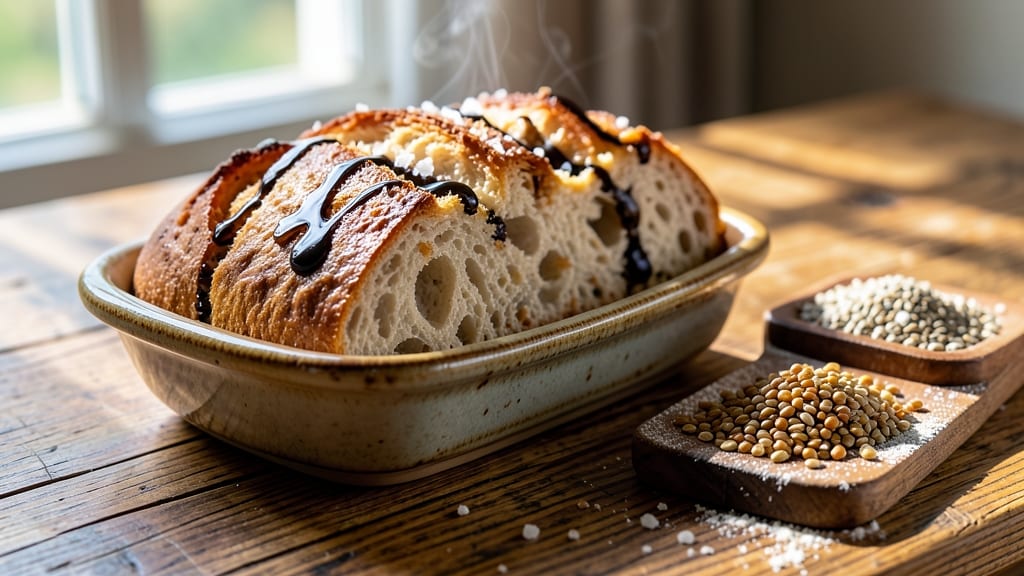
This ancient bread recipe no yeast brings the flavors of Roman panis quadratus to your kitchen with nutty depth and crispy edges—all without yeast or dairy. 🌟 The secret lies in a simple mix of whole grains and baking soda, creating a naturally leavened loaf that bakes in just 30 minutes over one fire. Perfect for historical reenactors, vegans, or anyone craving bread with ancient roots.
The recipe combines hearty whole grains like farro and barley with warm spices, delivering a satisfying crunch and earthy flavor. Unlike modern breads, this version relies on baking soda for lift, eliminating the need for yeast or kneading.
The result? A rustic, nutty loaf with a golden crust and tender interior—ideal for dipping in olive oil or pairing with soups.
What makes this bread truly special is its versatility. Use it as a side for hearty stews, a base for open-faced sandwiches, or even as a cracker with cheese and fruit.
The recipe scales easily, making it perfect for feeding a crowd or meal prepping for the week. No yeast? No problem—this bread proves simplicity and tradition go hand in hand.
For added texture, try toasting slices until crispy or sprinkling seeds like sesame or flax before baking. The possibilities are endless, but the foundation remains the same: a foolproof, historically inspired loaf that’s as nutritious as it is delicious. Let’s get baking!
Ingredients for ancient bread recipe no yeast
These twelve ingredients transform into a rustic, nutty loaf with ancient Roman roots.
| Ingredient | Amount | Notes |
|---|---|---|
| Farro Grains 🌾 | 1 ½ cups | Uncooked, rinsed well |
| Barley Grains 🌾 | 1 cup | Pearl or hulled variety |
| Whole Wheat Flour 🌾 | 1 ½ cups | Stone-ground preferred |
| Baking Soda 🧂 | 1 ½ tsp | Pure, aluminum-free |
| Apple Cider Vinegar 🍏 | ½ cup | Raw, unfiltered preferred |
| Water 💧 | 1 ½ cups | Room temperature |
| Olive Oil 🫒 | ¼ cup | Extra-virgin, fruity |
| Ground Cumin 🌿 | 1 tsp | Toasted for depth |
| Ground Coriander 🌿 | ½ tsp | Freshly ground preferred |
| Salt 🧂 | 1 ½ tsp | Fine sea salt |
| Sesame Seeds 🌱 | 2 tbsp | Toasted for crunch |
| Flaxseeds 🌱 | 1 tbsp | Ground for binding |
The grains are the heart of this bread. Farro and barley from Bob's Red Mill or your local bulk store deliver that signature nutty depth. Look for whole grains with vibrant color—dull or dusty grains mean stale product. The whole wheat flour should be stone-ground if possible; King Arthur is a reliable brand. Baking soda is non-negotiable here—Arm & Hammer aluminum-free version works best. Toast your cumin and coriander seeds briefly in a dry pan before grinding for maximum aroma. The apple cider vinegar adds tang without yeast; Bragg or Wholesome! are my go-tos.
No farro? Spelt or wheat berries work in a pinch, though texture will differ. Substitute barley with buckwheat groats for a nuttier profile. Swap whole wheat flour for spelt flour or oat flour if needed. The baking soda must be fresh—if your container feels damp or smells vinegary, toss it. For extra richness, replace half the water with vegetable broth. The sesame seeds can be omitted if you're avoiding nuts, but the flaxseeds are essential—they bind the dough without eggs. Bob's Red Mill ground flaxseed is my preferred brand for consistent texture.
Mix the dry ingredients first, then add wet—this prevents a gummy texture. The dough will be thick but workable. Let it rest 10 minutes before shaping to develop flavor. For best results, bake in a preheated Dutch oven at 425°F for 30 minutes. Store wrapped at room temperature for 3-4 days or freeze the loaf for up to 3 months. Toast slices until crispy for a cracker-like texture—perfect with soups or olive oil dipping. The leftovers make incredible croutons for salads.
Why You'll Love This Recipe
- I’ll be real: farro and barley are cheap, and this recipe stretches them further than any store-bought loaf. Leftovers? Toast them until crispy, or pack them for snacks. It’s the kind of bread that makes grocery day feel like a win.
- No-Knead, No-Wait: I swear by this—just mix, pour, and forget. The farro and barley do all the heavy lifting while you sip coffee, and the baking soda lift? Chef’s kiss. No yeast headaches, no waiting hours.
- Earthy, Nutty Magic: Between us, that combo of whole wheat and toasted barley? It’s like biting into a sun-warmed loaf from a Roman bakery. The apple cider vinegar adds this bright tang that cuts through the richness—trust me, it’s the secret.
- Lunchbox Legend: Honestly, this bread is my go-to for sandwiches, but it’s also the star of charcuterie boards or toasted with olive oil and flaky salt. (Yes, even on a Tuesday night.) The grains hold up for days—perfect for meal prep without getting soggy.
Step-by-step instructions for ancient bread no yeast
This method brings ancient grains to life with minimal effort and maximum flavor.
🍳 Step 1: Toast the Grains for Nutty Depth
Heat a large skillet over medium heat and add the 1.5 cups farro grains and 1 cup barley grains. Toast them for 8-10 minutes, stirring constantly, until they turn a rich golden brown and release an intense nutty aroma. This step develops their natural flavors and improves digestibility.
Here's the thing—don't walk away. The grains burn quickly once they reach the right temperature. You'll know they're ready when they look like toasted popcorn kernels and smell deeply aromatic. Transfer the toasted grains to a large mixing bowl and let them cool slightly while you prepare the remaining ingredients.
👨🍳 Step 2: Mix the Wet Ingredients
In a separate bowl, whisk together the 1.5 cups water, 0.5 cup apple cider vinegar, 0.25 cup olive oil, and 1 tbsp ground flaxseeds until the flaxseeds are fully dissolved and the mixture becomes slightly gel-like. This creates a natural binder that replaces yeast's function in traditional bread.
Add the 1.5 tsp baking soda, 1.5 tsp salt, 1 tsp ground cumin, and 0.5 tsp ground coriander to the wet mixture and stir until completely dissolved. The baking soda will fizz slightly—this is normal and indicates it's activating properly. Pour this liquid mixture over the cooled toasted grains in your mixing bowl.
🥘 Step 3: Combine and Rest the Dough
Using a sturdy wooden spoon or your hands, gently fold the wet ingredients into the toasted grains until everything is thoroughly combined. The mixture should be thick and sticky but not runny. If it's too thick, add 1-2 tablespoons of water at a time until it reaches a workable consistency.
Cover the bowl with plastic wrap and let the dough rest for 15 minutes at room temperature. This resting period allows the flaxseed binder to fully activate and the baking soda to fully dissolve, which is crucial for proper rising. Don't skip this step—it makes a noticeable difference in texture.
🔥 Step 4: Shape and Bake the Bread
Preheat your oven to 375°F and line a baking sheet with parchment paper. Transfer the rested dough to the prepared baking sheet and shape it into a round loaf about 1 inch thick. Sprinkle the top evenly with 2 tbsp sesame seeds for added texture and flavor.
Bake for 35-40 minutes until the top is deep golden brown and the internal temperature reaches 200°F when measured with an instant-read thermometer. The bread should sound hollow when tapped on the bottom. If the top browns too quickly, tent loosely with aluminum foil to prevent over-browning while ensuring the interior cooks through.
⏰ Step 5: Cool and Serve for Maximum Flavor
Remove the bread from the oven and let it cool on the baking sheet for 10 minutes before transferring to a wire rack. This cooling period allows the internal moisture to redistribute, resulting in a more even texture. The bread will continue to firm up as it cools—this is normal and indicates proper baking.
Slice the bread when it's still warm for the best texture. Each slice should reveal a tender crumb with visible specks of farro and barley, complemented by the nutty aroma developed during toasting. Serve with olive oil and balsamic vinegar for dipping, or enjoy it alongside soups and stews for a hearty meal.
Pro Tips For Making Ancient Bread Recipe No Yeast
- Soak Grains Separately: Soaking farro and barley for at least 4 hours (or overnight) in warm water with a pinch of salt prevents gummy texture. I used to toss them all in together, and the barley always turned mushy—now I handle them like two separate starters.
- Mix Vinegar Last: Add apple cider vinegar to your wet ingredients right before combining with dry—it’s the leavening agent, and mixing it too early kills its lift. Think of it like baking soda: wait until the last second, or you’ll end up with flat, dense bread.
- Steam First, Then Bake: Cover your loaf with foil and bake at 375°F (190°C) for 20 minutes to trap steam—this helps the crust form without burning. After that, uncover and finish at 400°F (200°C) for a crispy top. I learned this after my first loaf came out sad and undercooked.
- Use a Mixer for Dough: Whole wheat flour is stubborn—pulse it in a food processor first, then mix wet ingredients in a stand mixer with a paddle attachment. This cuts down on gluten development (which can make the bread tough) and saves your arms. I tried hand-mixing once and regretted it by the third knead.
Essential equipment for ancient bread recipe no yeast
Dutch Oven Essentials
Your Dutch oven is the star of this recipe—it traps steam for a crispy crust while keeping the interior tender. I recommend a 5-6 quart enameled cast iron from Lodge or Le Creuset for even heat distribution.
Preheat it in the oven for 30 minutes before shaping the dough to ensure a perfect bake. The heavy material also helps maintain consistent temperature during the 35-40 minute baking time. 🔥
Parchment Paper
Line your baking sheet with parchment paper to prevent sticking and make cleanup effortless. I use half-sheet parchment from Amazon Basics—it’s sturdy enough to handle the dough’s weight and won’t tear when transferring.
The paper also creates a non-stick barrier, so you won’t need to grease the pan. Pro tip: Score the parchment with a knife if you’re making multiple loaves to prevent overlapping edges.
Mixing Bowls
Use a large stainless steel mixing bowl (at least 8-quart capacity) for combining ingredients. I prefer OXO Good Grips bowls—they’re deep enough to handle the sticky dough and have ergonomic handles for easy lifting.
Avoid glass bowls for this recipe; they can’t withstand the weight of the wet ingredients and might crack when folding in the toasted grains. A wooden spoon or spatula helps prevent the dough from sticking to the sides.
Instant-Read Thermometer
A digital instant-read thermometer (like Thermoworks ThermoPop) ensures your bread is perfectly baked to 200°F internal temperature. Insert the probe into the center of the loaf—it should read 200°F when done, with a hollow sound when tapped on the bottom.
This tool is non-negotiable for achieving the ideal texture without over-browning. Without it, you risk a gummy interior or dry crust.
Skillet for Toasting
A 10-inch cast iron skillet (like Lodge Pre-Seasoned) is perfect for toasting the farro and barley to develop their nutty flavors. Heat it over medium heat and stir constantly to avoid burning.
If you don’t have cast iron, a stainless steel skillet works too—just monitor closely, as it heats up faster. The toasted grains should smell deeply aromatic and look like golden popcorn kernels before moving to the mixing bowl. 🌾
Plastic Wrap
Cover the dough with plastic wrap during the 15-minute rest to prevent drying out. I use Glad Press'n Seal—it clings tightly to the bowl’s edges, creating an airtight seal. This step is crucial for letting the flaxseed binder activate properly and the baking soda dissolve evenly.
Skip this, and your bread might turn out dense or unevenly risen. Store any leftovers in the fridge wrapped in plastic for up to 4 days.
Nutrition facts
Frequently asked questions
Why does this ancient bread recipe use baking soda instead of yeast?
This recipe relies on baking soda to mimic the natural leavening effects of yeast without requiring fermentation time. The combination of baking soda and apple cider vinegar creates a chemical reaction that produces carbon dioxide, giving the bread lift. Ancient cultures often used similar methods with naturally acidic ingredients like yogurt or vinegar to achieve this effect.
Can I substitute farro or barley with other grains?
Try spelt berries or wheat berries for a similar texture, though the nutty flavor may vary slightly. For a nuttier profile, buckwheat groats work well. Just toast them first to enhance their natural flavors. The key is using whole grains to maintain the bread's rustic, hearty character.
What if my dough is too sticky to handle?
If the dough feels too wet, gradually add 1-2 tablespoons of whole wheat flour at a time until it becomes workable. The dough should hold its shape when gently pressed but still be pliable. Avoid over-mixing—just fold in the extra flour until it reaches a dough-like consistency. The resting period will help it firm up slightly before baking.
How long will this bread stay fresh, and can I freeze it?
Store wrapped at room temperature for 3-4 days or freeze the entire loaf for up to 3 months. To freeze, wrap tightly in plastic wrap followed by a second layer of aluminum foil. Thaw overnight in the fridge before serving. For best texture, toast slices before eating to revive crispiness.
What are some creative ways to serve this bread?
Use it as a base for open-faced sandwiches with hummus and roasted veggies, or serve with olive oil and balsamic vinegar for dipping. Toast slices until crispy for cracker-like texture, perfect with soups or cheese boards. The nutty flavor also pairs beautifully with hearty stews or as a side for grilled meats.