
Side Dishes
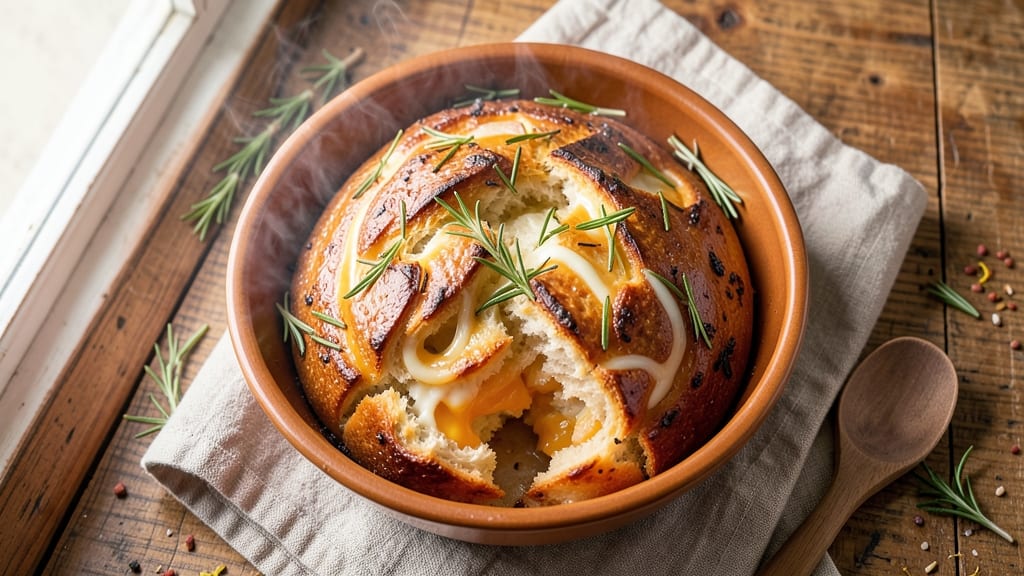
This animal-based bread recipe delivers a rich, savory loaf packed with cheese and herbs—no yeast required. The secret lies in eggs and butter, which create a tender crumb and golden crust without relying on fermentation.
I developed this recipe after years of perfecting no-yeast breads, and the results speak for themselves: a loaf that’s both elegant and foolproof, ideal for sandwiches or serving alongside soups.
The magic happens with a simple dough made from flour, eggs, butter, and milk, combined with sharp cheddar and fresh herbs like rosemary and thyme. Unlike traditional yeast breads, this version rises quickly in the oven, thanks to baking soda, while the animal fats create a melt-in-your-mouth texture.
The crust develops a beautiful golden-brown hue, while the interior stays soft and flavorful.
What sets this recipe apart is its versatility—it’s perfect for beginners yet impressive enough for dinner parties. The cheese and herbs infuse every bite with depth, while the buttery richness makes it irresistibly tender.
No need for special equipment; just mix, shape, and bake. The result? A loaf that tastes like it came from a bakery, not your kitchen.
Once baked, let it cool slightly before slicing to preserve that perfect texture. Serve warm with butter or as the base for gourmet sandwiches. This recipe proves that animal-based ingredients can elevate even the simplest bread into something extraordinary. Ready to try it?
Ingredients for animal based bread
Rich, savory ingredients for a tender loaf with golden crust—no yeast needed.
| Ingredient | Amount | Notes |
|---|---|---|
| All-Purpose Flour 🌾 | 3 ½ cups | Sifted for even texture |
| Unsalted Butter 🧈 | ¾ cup | Cold and cubed for mixing |
| Large Eggs 🥚 | 3 whole | Room temperature for blending |
| Whole Milk 🥛 | ½ cup | Warmed slightly for smoother dough |
| Sharp Cheddar Cheese 🧀 | 1 ½ cups | Shredded, aged for best flavor |
| Fresh Rosemary 🌿 | ¼ cup | Chopped finely for aroma |
| Fresh Thyme 🌿 | 1 tbsp | Leaves only, finely chopped |
| Baking Soda 🧂 | 1 ½ tsp | Ensures proper rise |
| Salt 🧂 | 1 ½ tsp | Kosher or sea salt preferred |
| Garlic Powder 🧄 | 1 tsp | Adds subtle depth |
| Black Pepper 🌶️ | ½ tsp | Freshly ground for best flavor |
| Cornstarch 🌾 | 1 tbsp | Prevents sticking during mixing |
The butter and cheese are non-negotiable here. European-style unsalted butter like Plugrá or Land O’Lakes gives the best flavor, and sharp cheddar from brands like Cabot or Tillamook makes all the difference. Fresh herbs are worth hunting down—Whole Foods or local farmers markets usually have the best quality. For the flour, King Arthur or Bob’s Red Mill are reliable choices, and sifting it ensures a lighter texture. The baking soda is critical—it’s what creates that bakery-style rise without yeast.
No sharp cheddar? Parmesan mixed with mild cheddar works in a pinch, though the flavor won’t be as bold. Fresh rosemary and thyme can be swapped for dried at one-third the amount, but the aroma won’t be the same. Running low on butter? Olive oil or coconut oil can replace up to half, though the texture will be slightly denser. For the milk, any dairy milk works—just warm it slightly to help blend with the butter. The cornstarch is optional but helps prevent a gummy texture if you’re using a high-moisture cheese.
This dough keeps for up to 2 days in the fridge, wrapped tightly in plastic. For best results, let it sit at room temperature for 30 minutes before baking. The baked loaf stays fresh for 3 days at room temperature, wrapped in a clean kitchen towel. For longer storage, freeze slices wrapped in parchment paper for up to 3 months. Reheat in a 350°F oven for 5-10 minutes to restore that fresh-baked warmth.
Why You'll Love This Recipe
- No-Knead Nightmare Solved: I swear by this dough—just mix, rest, and bake. The butter and milk make it tender without a single ounce of effort from me (or you).
- Cheese Pulls No Punches: That sharp cheddar? It’s the star. The moment it melts into the warm bread, you’ll forget it’s even a recipe—just pure, gooey satisfaction.
- Weeknight Hero: Toss a slice in the toaster for breakfast, tear it for sandwiches, or serve it warm with soup. It’s the one loaf that does it all without judgment.
- Budget-Friendly Staple: A bag of flour, a stick of butter, and a block of cheddar stretch further than you’d think. Honestly, it’s the kind of bread that makes grocery day feel like a win.
Step-by-step instructions for savory cheese and herb loaf
This no-yeast bread delivers rich flavor and perfect texture through precise technique and ingredient timing.
Prepare the Dough Foundation
In a large mixing bowl, combine the 3.5 cups all-purpose flour, 1.5 tsp baking soda, 1.5 tsp salt, 1 tsp garlic powder, and 0.5 tsp black pepper. Whisk these dry ingredients together until evenly distributed—this ensures consistent flavor throughout the loaf. In a separate medium bowl, beat the 3 whole large eggs until frothy, then whisk in the 0.5 cup warmed whole milk and 1 tbsp cornstarch to create a smooth base.
Cut the 0.75 cup cold unsalted butter into small cubes and add them to the egg mixture. Use a hand mixer on medium speed for 2-3 minutes until the butter is fully incorporated and the mixture becomes pale and creamy. The butter should be emulsified but still hold some texture—this creates tender layers in the final bread. Real talk: if the mixture looks too thick, add 1 tablespoon of milk at a time until it reaches a smooth, pourable consistency.
Combine Wet and Dry Ingredients
Gradually add the dry ingredient mixture to the wet ingredients while mixing on low speed. Scrape down the sides of the bowl as needed to ensure everything combines evenly. Once fully incorporated, fold in the 1.5 cups shredded sharp cheddar cheese, 0.25 cup finely chopped fresh rosemary, and 1 tbsp finely chopped fresh thyme using a silicone spatula. The cheese should be evenly distributed, and the herbs should be incorporated without overmixing—this preserves their aromatic oils.
Here's the thing—don't overwork the dough. Mix just until the cheese is fully combined and the dough comes together. Overmixing develops gluten, which can make the bread dense rather than light and airy. The dough will be thick and sticky at this stage, but that's exactly what we want for that melt-in-your-mouth texture.
Shape and Prepare for Baking
Lightly grease a 9x5-inch loaf pan with butter or nonstick spray. Transfer the dough to the prepared pan and spread it evenly using an offset spatula, pressing down gently to remove any air bubbles. The dough should fill the pan completely—this ensures even baking and a proper rise. Sprinkle the top with additional chopped rosemary and black pepper for extra flavor and presentation.
Place the loaf pan in the refrigerator and chill for at least 30 minutes (up to 2 hours). This chilling step is crucial—it allows the baking soda to activate fully and prevents the bread from spreading too much in the oven. The dough will firm up slightly, making it easier to handle when transferring to the oven. I know it seems counterintuitive to refrigerate dough, but trust me—this makes all the difference in achieving that perfect rise and texture.
Bake to Golden Perfection
Preheat your oven to 375°F and place a baking sheet on the middle rack to catch any potential drips. Bake the loaf for 45-50 minutes until the top is golden brown and a toothpick inserted into the center comes out clean. The bread should have risen noticeably and have a slightly crisp exterior with a tender, cheesy interior.
Don't open the oven door during the first 30 minutes of baking—this helps maintain even heat and prevents the bread from collapsing. If the top browns too quickly, tent the loaf with aluminum foil to prevent over-browning while allowing the center to finish cooking. Once fully baked, remove from the oven and let the bread rest in the pan for 10 minutes before transferring to a wire rack to cool completely.
Pro Tips For Making Animal Based Bread
- Melt Butter Slowly: If you dump cold butter into your dough all at once, you’ll end up with greasy lumps instead of a smooth, tender crumb. Warm the butter to room temp first, then mix it into the flour in small batches—this guarantees even distribution and that perfect buttery texture without fighting gluten.
- Grate Cheese Fresh: Pre-shredded cheddar is coated in anti-caking agents that make your bread dense and gummy. Use a box grater and pulse the cheese in a food processor for a finer, drier texture—this ensures it melts evenly and adds that sharp, gooey richness without clumping.
- Don’t Overmix the Dough: I used to beat this dough like I was punishing it, and it turned out tough as a boot. Mix just until the flour is mostly incorporated, then fold in the wet ingredients by hand—this keeps the gluten relaxed and gives you that soft, pillowy crumb instead of a chewy brick.
- Proof in a Warm Spot: Your kitchen’s drafty corner isn’t helping that dough rise. Place the bowl in a turned-off oven with a cup of boiling water for 10 minutes first—this mimics a warm, humid environment and cuts proofing time by nearly half without risking overproofing. (Yes, even if you’re impatient like me.)
Common mistakes when making perfect results
Overmixing the Dough
This is the #1 mistake I see with no-yeast breads. When you mix the dough too vigorously after adding the cheese and herbs, you develop too much gluten, which makes the bread dense instead of tender.
The goal here is a thick, sticky dough—not a smooth, elastic one. Mix just until the cheese is evenly distributed and the dough comes together, about 1-2 minutes with a spatula. 💫
Skipping the Chill
Refrigerating the dough before baking might seem like an extra step, but it's absolutely critical. Without chilling, the baking soda activates too quickly, causing the bread to spread excessively in the oven and potentially collapse.
I've seen loaves that looked like pancakes because someone skipped this step. Chill for at least 30 minutes—up to 2 hours if you have time.
Incorrect Butter Temperature
Using warm butter instead of cold cubes can make the dough too soft and difficult to handle. Cold butter creates pockets of fat that melt during baking, contributing to that melt-in-your-mouth texture.
Cut your butter into small cubes and keep it cold until it's time to mix. If your kitchen gets warm, consider chilling the mixing bowl beforehand.
Overfilling the Pan
Pressing the dough too firmly into the pan can prevent proper rising. The dough should fill the pan completely but still have room to expand slightly. If you pack it down too tightly, the bread will be flat and dense.
Use an offset spatula to spread it evenly, then let it rise naturally in the oven. The chilling step helps prevent excessive spreading, but don't skip it.
Baking at Wrong Temperature
This bread needs consistent heat at 375°F—any lower, and it won't rise properly; any higher, and the exterior will brown too quickly before the interior is fully cooked.
Invest in an oven thermometer to verify your oven's accuracy. I've seen loaves that were underbaked because the oven ran hot, or overbrowned because it ran cold. 🌡️
Premature Slicing
Cutting into the bread too soon releases steam and can make the interior gummy. Always let the bread cool in the pan for 10 minutes after baking, then transfer to a wire rack to cool completely before slicing.
This allows the structure to set properly. I know it's tempting to dig in immediately, but patience here makes all the difference in texture.
Nutrition facts
Frequently asked questions
Why does this bread use baking soda instead of yeast?
This recipe relies on baking soda for a quick rise and tender texture without the need for fermentation. The baking soda reacts with the eggs and milk to create carbon dioxide bubbles, giving the bread lift while keeping it moist. The animal-based fats (butter and cheese) enhance this effect, creating a rich, bakery-style loaf in just 45-50 minutes—perfect for busy schedules.
Can I substitute the sharp cheddar with another cheese?
Yes! For a milder flavor, try Parmesan mixed with mild cheddar (1:1 ratio). For extra richness, swap in Gouda or Gruyère. Avoid soft cheeses like brie—they won’t melt evenly during baking. The cheese should be shredded finely to distribute flavor evenly throughout the loaf.
How do I store leftovers to keep them fresh?
Wrap the baked loaf tightly in a clean kitchen towel and store at room temperature for up to 3 days. For longer storage, slice and freeze individual portions in airtight containers for up to 3 months. Reheat slices in a 350°F oven for 5 minutes to restore freshness. The towel helps maintain moisture better than plastic wrap.
What if my dough looks too sticky to handle?
This is normal! The dough should be thick and sticky—it’s designed that way for maximum tenderness. If it’s too difficult to work with, wet your hands slightly and use an offset spatula to gently press it into the pan. Avoid adding extra flour, as it can make the bread dense. The butter and milk create a naturally rich texture that requires minimal handling.
Can I make this bread without dairy?
This recipe relies on dairy for its signature richness, but you can substitute olive oil or coconut oil for the butter (use ½ cup total) and unsweetened almond milk for the dairy milk. The texture will be slightly denser, and the flavor will differ, but it’s still a delicious option. For cheese, use nutritional yeast for a cheesy flavor, though it won’t melt like dairy.