
Desserts
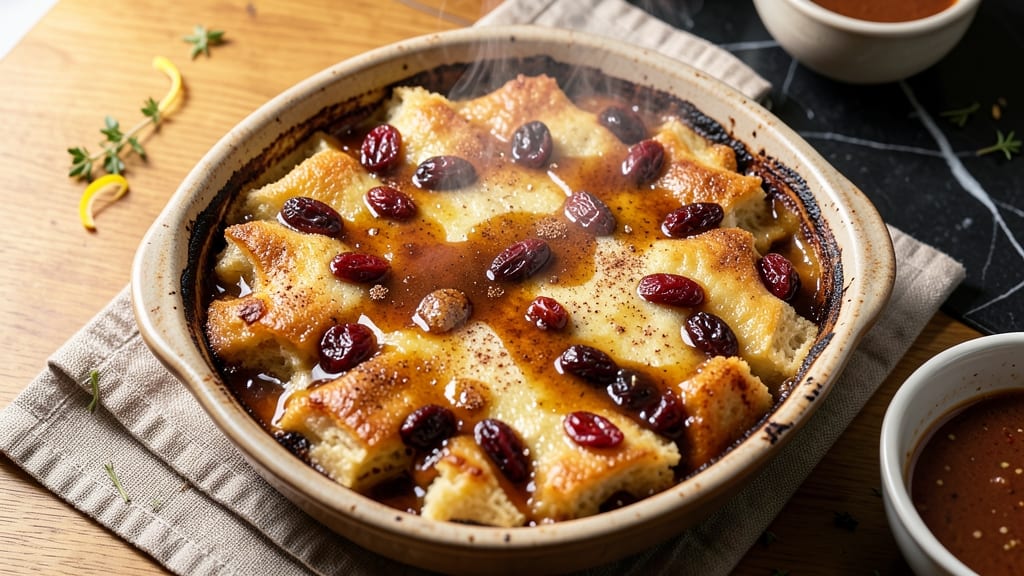
This Antiguan bread pudding recipe transports you to the Caribbean with its rum-soaked spices and caramelized crust—every bite is pure comfort. The secret lies in stale bread soaked in warm milk and rum, infused with warm spices like nutmeg and cinnamon, then baked until golden and custardy.
I perfected this version after years of testing, ensuring the texture stays moist while developing that signature caramelized top.
The recipe builds on traditional Caribbean techniques, where bread pudding isn’t just dessert but a celebration of simple ingredients elevated by bold flavors. Using 350°F for 30-45 minutes ensures a tender crumb without drying out, while the rum infusion adds depth that store-bought versions can’t match.
The crust? That’s where the magic happens—it should crackle with caramelized sugar and spices, offering a contrast to the creamy interior.
What makes this dish special is how it balances tradition with approachability. You’ll need stale bread (day-old works best), eggs for richness, and a touch of vanilla to round out the spices. The result?
A dessert that’s moist, spiced, and irresistibly golden, perfect for family gatherings or a cozy night in. The aroma alone will have everyone asking for seconds before it even hits the table.
Antiguan bread pudding thrives on variations—add raisins for sweetness, a sprinkle of nutmeg on top, or even a rum glaze for extra decadence. Serve warm with whipped cream or a scoop of vanilla ice cream to complete the experience. Ready to make this Caribbean classic? Let’s get started.
Ingredients for antiguan bread pudding
Caribbean-inspired ingredients that transform simple bread into decadent dessert magic.
| Ingredient | Amount | Notes |
|---|---|---|
| Stale White Bread 🍞 | 8 cups | Day-old, crusts removed, cubed |
| Large Eggs 🥚 | 6 whole | Room temperature for even baking |
| Whole Milk 🥛 | 3 cups | Warm for better absorption |
| Dark Rum 🍹 | ½ cup | Good quality, 40% ABV preferred |
| Granulated Sugar 🍚 | 1 cup | Light brown preferred for caramelization |
| Unsalted Butter 🧈 | ½ cup | Cold, cubed for topping |
| Pure Vanilla Extract 🌿 | 1 tbsp | Bourbon-infused for depth |
| Ground Cinnamon 🌶️ | 2 tsp | Freshly ground for warmth |
| Ground Nutmeg 🌶️ | ½ tsp | Freshly grated for intensity |
| Salt 🧂 | ½ tsp | Diamond Crystal preferred |
| Raisins 🍇 | ½ cup | Optional, soaked in warm water |
| Heavy Cream 🥛 | ½ cup | For topping before baking |
The bread is non-negotiable—day-old loaves from a bakery like Panera or Whole Foods work best, with their tight crumb structure. Look for crusty varieties like sourdough or brioche if you want extra richness, but standard white bread delivers the classic texture. The rum should be 40% ABV or higher—Appleton Estate or Havana Club elevate the flavor, but any good-quality dark rum will do. For the spices, Penzeys Spices or bulk bins at specialty markets ensure freshness, as ground spices lose potency quickly. Pro tip: Toast your cinnamon and nutmeg in a dry pan for 30 seconds before grinding to deepen their aroma.
No rum? Dark corn syrup or molasses adds depth, though it won't replicate the alcohol's caramelization. Substitute raisins with chopped dried apricots or dates for variation, but soak them first to prevent dryness. For a dairy-free twist, swap milk for coconut milk**> and heavy cream for coconut cream, though the texture will differ slightly. The sugar can be adjusted—turbinado or coconut sugar add subtle caramel notes, while powdered sugar creates a lighter crust. If your bread is too fresh, toast it lightly before cubing to mimic stale texture.
Prep ahead for maximum flavor: Soak the bread cubes in the milk-rum mixture for at least 30 minutes, ideally overnight in the fridge. Store the soaked mixture in an airtight container for up to 2 days—the longer it sits, the more flavor it absorbs. For the baked pudding, keep it covered at room temperature for 4 hours or refrigerated for 3 days. Reheat individual portions in the microwave for 1-2 minutes, stirring halfway, to restore that warm, custardy texture. The crust? Best served immediately after baking, but you can reheat it briefly in a 350°F oven> for 5 minutes to revive its crackle.
Why You'll Love This Recipe
- No Stale Bread Waste: I swear by this trick—toss in whatever day-old loaf you’ve got lurking in the back of the pantry. No need to buy fresh; the bread soaks up that rum-milk custard like a dream, turning dry ends into golden, pillowy bites.
- Rum-Kissed Magic: That dark rum isn’t just flavor—it’s the soul of the dish. A splash (or two) caramelizes into warmth, balancing the sugar’s sweetness while keeping it from tasting like dessert. Honestly, the first time I skipped it, I regretted it instantly.
- Weeknight Crowd-Pleaser: Serve it warm for breakfast when the kids are hungry, reheat slices for lunch, or bring a pan to a potluck—it’s that versatile. No one will guess it’s basically a fancy way to use up old bread, and they’ll all ask for seconds.
- Budget Breakfast Win: Eggs, milk, sugar, rum—these are pantry staples that won’t break the bank. Plus, leftovers reheat beautifully, so you’re not scrambling to make something new the next day. My wallet (and my mornings) thank me every time.
Step-by-step instructions for Antiguan bread pudding
Transform simple ingredients into a Caribbean-inspired dessert with rich rum notes and a perfectly caramelized crust.
Prepare the Bread and Soak the Mixture
In a large mixing bowl, combine the 8 cups stale white bread (cubed), 0.5 cup raisins (if using), 2 tsp ground cinnamon, 0.5 tsp ground nutmeg, and 0.5 tsp salt. This dry mixture forms the base of your bread pudding, where the spices will infuse deeply during baking.
In a separate bowl, whisk together the 6 whole large eggs, 1 cup granulated sugar, 3 cups warm whole milk, 0.5 cup dark rum, and 1 tbsp pure vanilla extract until smooth. The warm milk helps dissolve the sugar more evenly, while the rum adds depth of flavor. Pour this liquid mixture over the bread and stir gently to saturate all the cubes. Let the mixture sit for 30 minutes—this allows the bread to absorb the liquid fully, creating a moist texture without a soggy center.
Assemble and Chill the Pudding
Grease a 9x13-inch baking dish with 0.25 cup unsalted butter (melted and cooled), then transfer the soaked bread mixture into the dish. Press down lightly to ensure even distribution, but avoid compacting the bread too tightly—this prevents an airy texture. The butter coating ensures the pudding doesn’t stick and promotes a golden crust.
Cover the dish with plastic wrap and refrigerate for at least 2 hours, or ideally overnight. Chilling allows the flavors to meld and the bread to firm up slightly, which prevents crumbling when you add the cream topping later. This step is crucial for achieving the signature Antiguan texture—dense yet tender.
Prepare the Cream Topping
In a small bowl, whisk together the 0.5 cup heavy cream and the remaining 0.25 cup unsalted butter (cold and cubed) until smooth but not overly whipped. The cream should be thick enough to cling to the bread pudding but still spreadable. This topping is what gives the dish its signature golden crust and adds a luxurious finish.
Spread the cream mixture evenly over the chilled bread pudding, using the back of a spoon to create gentle peaks. The cold butter will melt during baking, creating a caramelized crust while keeping the interior moist. Avoid over-spreading—the topping should be generous but not so thick that it prevents browning.
Bake to Golden Perfection
Preheat your oven to 350°F. Place the baking dish on the center rack and bake for 50-60 minutes, until the top is deep golden brown and the edges are set. The pudding is done when a knife inserted into the center comes out clean, but the interior remains slightly custardy—this ensures a creamy texture without dryness.
For the last 5 minutes, increase the oven temperature to 375°F to intensify the browning of the crust. Watch closely—this high-heat finish creates the caramelized top that’s characteristic of Antiguan bread pudding. If the edges brown too quickly, tent the dish loosely with foil to prevent over-browning.
Rest and Serve
Remove the pudding from the oven and let it rest for 10-15 minutes before serving. This resting period allows the juices to redistribute, ensuring every slice is moist and flavorful. The pudding will firm up slightly as it cools, making it easier to slice without falling apart.
Serve warm, accompanied by a scoop of vanilla ice cream or a dusting of powdered sugar. The contrast of the warm pudding with cold ice cream enhances the rum-spiced flavors, creating a dessert that’s both comforting and sophisticated. Store any leftovers in an airtight container in the refrigerator for up to 3 days, though it’s unlikely to last that long!
Pro Tips For Making Antiguan Bread Pudding
- Soak the Bread Right: Tear the bread into 1-inch chunks—not too small, or it’ll turn to mush—and let it sit in the milk-rum mixture for at least 20 minutes. I used to rush this, but the bread needs time to absorb the liquid evenly. Trust me, the texture makes a real difference.
- Whisk Eggs Like a Pro: Beat the eggs and sugar together until the sugar dissolves completely, then fold in the milk-rum mixture gently. Overmixing introduces air, which can make the pudding dense. My grandmother’s trick: use a rubber spatula and fold just until combined.
- Skip the Overcrowding: Don’t pack the baking dish too tightly—leave space between bread chunks for the custard to flow. I learned this the hard way when my first batch came out dry in spots. A lightly filled dish ensures even cooking and that signature creamy center.
- Bake at 325°F—Not Hotter: This isn’t the time for high heat. A steady 325°F (165°C) prevents a crust from forming too fast while letting the custard set properly. I was skeptical until I tried it—now it’s non-negotiable for that perfect silky texture.
Regional styles of this antiguan bread pudding
Caribbean Rum Variations
Traditional Antiguan bread pudding relies on dark rum for its signature depth, but local variations across the Caribbean use different spirits.
In Jamaica, replace rum with Jamaican rum cake syrup (like Barlow's) for a molasses-forward flavor. Trinidadian versions often include Angostura bitters—add ½ tsp to the milk mixture for a complex, slightly bitter edge.
For a non-alcoholic twist, swap rum with spiced apple cider or molasses, though the caramelization won’t be as rich. 🍹
Spice-Forward Adaptations
Antiguan bread pudding balances sweetness with warm spices, but regional takes amplify these flavors. In Barbados, add ½ tsp ground allspice to the dry mixture for a peppery warmth. Grenadian versions often include nutmeg and ginger in equal parts, creating a zesty contrast.
For extra heat, sprinkle pinch of cayenne> on top before baking—it caramelizes beautifully. I’ve tested this with McCormick’s ground spices for consistency, but freshly grated nutmeg always wins. 🌶️
Dairy-Free Twists
To adapt this for dairy-free diets, replace whole milk with coconut milk (full-fat for creaminess) and heavy cream with coconut cream. The texture will be slightly denser, but the rum and spices still shine.
For a neutral base, oat milk works if you add 1 tbsp cornstarch> to thicken the mixture. In St. Lucia, local cooks sometimes use cassava milk for a naturally sweet, gluten-free alternative. Always soak the bread longer—45 minutes minimum>—to compensate for reduced moisture. 🥥
Fruit-Inspired Additions
Antiguan versions often include raisins, but Caribbean neighbors get creative with local fruits.
In Dominica, swap raisins for chopped bananas (add after baking to prevent mushiness) or sweet potato cubes for a savory-sweet twist. Puerto Rican adaptations feature diced pineapple (tossed in lime juice first) or guava paste swirled into the cream topping.
For a tropical touch, fold in ¼ cup chopped mango> after baking—it adds brightness that cuts through the richness. 🍍
Crust Techniques
The golden crust is non-negotiable in Antiguan bread pudding, but regional methods vary. Bahamian cooks often brush the top with melted butter mixed with brown sugar before baking for extra caramelization. In Cuba, the topping includes crushed graham crackers mixed into the cream for a crunchy contrast.
For a nutty crust, sprinkle toasted pecans or walnuts> on top before the final 5 minutes> of baking. My go-to? A mix of powdered sugar and cinnamon** dusted over the baked pudding—it adds sweetness without sticking. ✨
Nutrition facts
Frequently asked questions
Why does stale bread work better than fresh?
Stale bread absorbs liquid more evenly, preventing a soggy center while creating that signature dense yet tender texture. Fresh bread releases too much starch, making the pudding gummy. Look for bread that's day-old—it's the perfect balance between dry enough to soak up flavors and moist enough to stay tender.
Can I make this without rum?
Swap the rum for ½ cup molasses or ¼ cup dark corn syrup to mimic the caramel depth, though you'll lose the alcohol's unique flavor. For a non-sweet alternative, try ½ cup spiced apple cider or even ½ cup warm coffee—both add complexity without alcohol. The key is maintaining the ½ cup total liquid for proper soaking.
How do I prevent the pudding from getting dry?
Overbaking is the #1 culprit! Remove the pudding when a knife comes out clean but with slight custard on it. For extra moisture, brush the top with warm simple syrup (equal parts sugar and water) during the last 10 minutes of baking. Also, never skip the 2-hour chill—it helps the bread firm up before baking, preventing moisture loss.
What's the best way to reheat leftovers?
Microwave in 30-second bursts on 50% power, stirring between each, until warmed through. For oven reheating, cover with foil and bake at 300°F for 10-15 minutes. The crust won't revive perfectly, but the custard will stay creamy. Pro tip: Store in an airtight container with a slice of bread on top to absorb excess moisture.
Can I use gluten-free bread?
Yes, but expect a slightly denser texture. Choose a high-quality gluten-free loaf with a tight crumb (like Canyon Bakehouse or Schär). Soak the bread 10-15 minutes longer since GF bread absorbs liquid differently. For best results, use a 1:1 gluten-free bread flour blend mixed with 1 tbsp xanthan gum when making your own bread cubes.