
Side Dishes
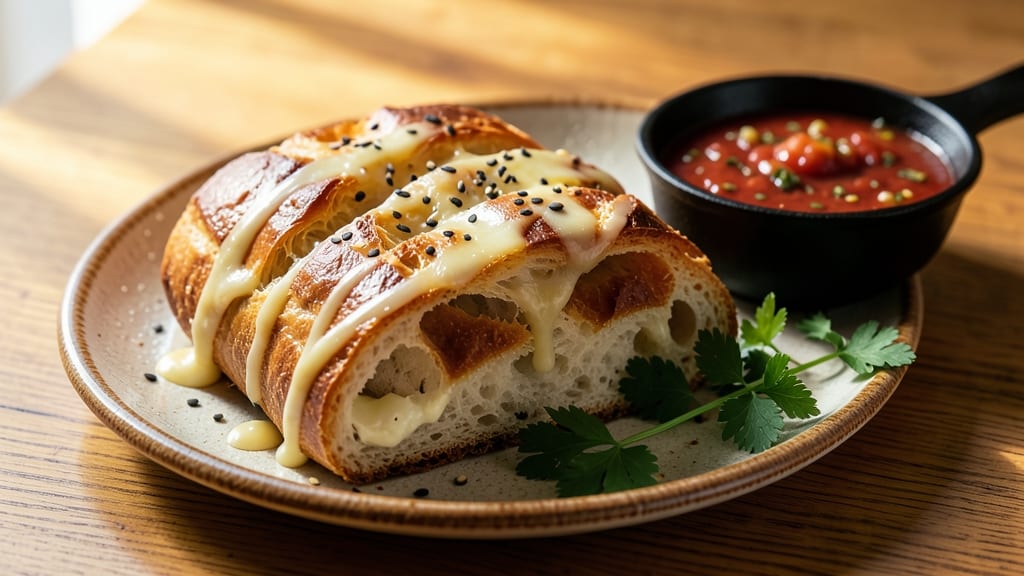
This Arabic cheese bread recipe delivers the perfect balance of flaky layers and gooey, melted Akkawi cheese—just like the kind you'd find in a bustling Lebanese bakery. 🌟 The secret lies in a simple yet precise dough technique that creates those signature crispy edges while keeping the interior tender, all wrapped around rich, salty cheese that stretches into golden, pull-apart strands.
What sets this recipe apart is its approachability—no special equipment or advanced skills required. The dough comes together in just 15 minutes, with a brief rest to develop flavor, while the cheese filling (traditionally Akkawi but adaptable to mozzarella or halloumi) gets rolled in with ease.
The baking process transforms everything into a warm, aromatic loaf with a crisp exterior and a soft, cheesy center that's impossible to resist.
Each bite offers a symphony of textures: the crispy, flaky crust gives way to tender dough, and the melted cheese ties it all together in a way that's both comforting and satisfying.
This recipe pays homage to traditional Arabic flavors while being simple enough for weeknight dinners—perfect for serving alongside soups, grilled meats, or as a standalone snack.
The best part? You can customize it with toppings like sesame seeds, za'atar, or fresh herbs for added depth. Let's get started on creating your own bakery-style cheese bread at home!
Ingredients for arabic cheese bread
These 12 ingredients transform into bakery-style Arabic cheese bread with crispy layers and gooey Akkawi magic.
| Ingredient | Amount | Notes |
|---|---|---|
| All-Purpose Flour 🌾 | 3 ½ cups | High-protein preferred for flakiness |
| Active Dry Yeast 🍞 | 1 tbsp | Or 2¼ tsp instant yeast |
| Granulated Sugar 🍚 | ½ tsp | Feeds yeast for activation |
| Unsalted Butter 🧈 | ½ cup | Cold, cubed for flaky layers |
| Warm Water 💧 | 1 cup | 110°F for yeast activation |
| Salt 🧂 | ½ tsp | Kosher or sea salt |
| Akkawi Cheese 🧀 | 1 lb | Traditional or mozzarella substitute |
| Extra-Virgin Olive Oil 🫒 | 1 tbsp | For dough and cheese coating |
| Semolina Flour 🌾 | ½ cup | For dusting and crispy crust |
| Sesame Seeds 🌱 | 2 tbsp | For topping (optional) |
| Za'atar Seasoning 🌿 | 1 tbsp | For aromatic finish (optional) |
| Fresh Rosemary 🌿 | 2 sprigs | For dough aroma (optional) |
The Akkawi cheese is the star—look for blocks at Middle Eastern markets (or use mozzarella in a pinch). Freshly grated makes all the difference, so skip the pre-shredded kind. For the dough, high-protein flour creates that signature flakiness, and cold butter ensures crispy layers. I always grab Diamond Crystal kosher salt for consistent flavor, but any fine grain works. The yeast? Fresh is best, but instant yeast in the fridge will do in a bind—just dissolve it in warm water first.
No Akkawi? Mozzarella or halloumi stretch beautifully when melted, though halloumi stays firmer. Semolina flour is key for that bakery-style crust—substitute with all-purpose if needed, but the texture won’t be as crispy. For the sesame seeds, toasted adds extra crunch, but raw works too. The rosemary is optional but worth it for that fragrant, authentic touch. Need to skip za'atar? Dried oregano or thyme gives a similar earthy note. And if you’re short on time, pre-shredded cheese (the good kind, not the sawdust variety) saves steps.
The dough keeps for 2 days in the fridge, wrapped tightly. For longer storage, freeze shaped loaves for up to 3 months—thaw at room temp before baking. The cheese filling? Wrapped in parchment, it stays fresh for 3 days in the fridge. Pro tip: Portion the dough into individual loaves before freezing—bake straight from frozen, adding 5-10 minutes to cook time. Leftovers? Toast them for a crispy, cheesy snack—absolute game-changer.
Why You'll Love This Recipe
- No-Knead Magic: I swear by this dough—just mix, let it rise, and forget it. The yeast does all the work while you’re making dinner, and honestly? That’s my kind of cooking.
- Buttery Cheese Bliss: That warm, pull-apart crust with melted cheese inside? It’s like a hug in bread form. The butter keeps it tender, and the cheese—well, let’s just say it disappears fast.
- Weeknight Hero: Breakfast, snack, or side—this bread handles it all. Toast it for eggs, serve it with soup, or just eat it straight from the oven. (Yes, even on a Tuesday night.)
- Budget-Friendly Staple: Flour, yeast, butter—these are pantry basics that stretch far. Make a big batch, freeze half, and you’ve got fresh bread anytime without the grocery run. My wallet thanks me.
Step-by-step instructions for Arabic cheese bread
Here's how to create those legendary flaky layers and melty Akkawi cheese perfection.
👨🍳 Step 1: Activate the Yeast and Mix the Dough
In a small bowl, whisk together the 1 cup warm water, 0.5 tsp granulated sugar, and 1 tbsp active dry yeast until fully dissolved. Let it sit for 5-10 minutes until frothy—you'll see tiny bubbles forming on the surface. This is your signal the yeast is alive and ready to work.
In a large bowl, combine the 3.5 cups all-purpose flour and 0.5 tsp salt. Make a well in the center and pour in the yeast mixture along with the 2 sprigs fresh rosemary (finely chopped). Mix with a wooden spoon until a shaggy dough forms. Here's the thing—don't overmix yet. We want to preserve the gluten development for those beautiful flaky layers later.
🍳 Step 2: Incorporate Butter and Knead the Dough
Cut the 0.5 cup unsalted butter into small cubes and add them to the dough. Using your hands, work the butter into the dough until it's fully incorporated and you have a smooth, elastic ball. This is where the magic happens—the cold butter creates those signature flaky layers when baked.
Transfer the dough to a lightly floured surface and knead for 8-10 minutes until smooth and slightly tacky. You'll know it's ready when it springs back slowly when poked. If the dough feels too sticky, add just enough flour to make it manageable—but don't go overboard or you'll lose that tender texture. Shape into a ball, place in a lightly oiled bowl, cover with a damp towel, and let rise in a warm place for 1-2 hours or until doubled in size.
🥘 Step 3: Prepare the Cheese Filling and Shape the Bread
While the dough rises, shred the 1 lb Akkawi cheese into fine, even shreds—think about the size of rice grains. In a small bowl, mix the shredded cheese with 1 tbsp za'atar seasoning and 1 tbsp extra-virgin olive oil. This aromatic blend will infuse the cheese with incredible depth of flavor.
Once the dough has risen, punch it down to release the air and divide it into 4 equal pieces. Roll each piece into a 12-inch rectangle about ¼-inch thick. Spread about ¼ of the cheese mixture evenly over each rectangle, leaving a ½-inch border around the edges. This border is crucial—it prevents the cheese from leaking out during baking.
🔥 Step 4: Fold, Proof, and Bake for Maximum Flakiness
Starting with one short side, tightly roll each rectangle into a log, sealing the edges as you go. Place the rolls seam-side down on a parchment-lined baking sheet. Cover with a damp towel and let them proof for 30-45 minutes until they've risen noticeably. This second rise is what gives the bread its airy texture.
Preheat your oven to 375°F. Just before baking, brush the tops of the rolls with a little more extra-virgin olive oil and sprinkle generously with 0.5 cup semolina flour and 2 tbsp sesame seeds. Bake for 20-25 minutes until the bread is golden brown and sounds hollow when tapped on the bottom. Here's the secret: bake until the crust is deep golden—not just light brown—this ensures maximum crispiness.
⏰ Step 5: Rest and Serve Warm
Remove the bread from the oven and let it rest on a wire rack for 5-10 minutes. This resting period allows the cheese to set slightly and makes the bread easier to slice. The aroma will fill your kitchen—trust me, it's worth the wait.
Slice the bread into ½-inch thick pieces and serve immediately while still warm. Each bite should deliver that perfect combination of crispy, flaky layers with molten, za'atar-infused Akkawi cheese. The semolina crust adds just the right texture contrast, while the sesame seeds provide a delightful crunch. For the ultimate experience, serve with a side of garlic sauce or spicy harissa.
Pro Tips For Making Arabic Cheese Bread
- Use Room-Temp Butter: I learned this the hard way—cold butter in the dough makes it fight you when shaping. Let that block sit out for 20-30 minutes until it’s soft but not melted, or the bread will tear when you stretch it. (Yes, even if you’re impatient like me.)
- Dissolve Yeast in Warm Water: Skip the "sprinkle and stir" method—dissolve the yeast in the warm water first, then add sugar. This guarantees it activates faster, especially if your kitchen runs cold. I used to wonder why my dough took forever; turns out, yeast needs a sugar bath to wake up properly.
- Shape Tight, Not Thin: Stretch the dough until it’s thin enough to see light through edges, but don’t go translucent—that’s how you get chewy, uneven bread. Aim for a ¼-inch thickness, and resist the urge to pull too hard near the center. (Your future self will thank you when the cheese melts evenly.)
- Preheat Pan with Butter: Grease that baking pan with melted butter, then wipe off the excess—this isn’t the prettiest method, but it’s the tastiest. The residual butter creates a nonstick crust and adds flavor. I skip this when I’m lazy, but the bread is noticeably better when I don’t.
Common mistakes when making your arabic cheese bread
Over-Kneading the Dough
I see this all the time—cooks get nervous and knead the dough until it's tough and elastic. That's a big no-no for this recipe! Over-kneading develops too much gluten, which makes the bread dense instead of flaky.
Stop when the dough springs back slowly when poked (around 8-10 minutes total). The goal is tender layers, not bread that could double as a soccer ball. 💫
Skipping the Resting Periods
Rushing the dough's first rise (1-2 hours) or the second proof (30-45 minutes) is a common mistake that kills texture. The yeast needs time to do its magic—skipping these steps means your bread will be dense and chewy instead of light and airy.
Set a timer and let it rise completely, even if you're eager to bake. Patience pays off with those perfect flaky layers.
Cheese Distribution Issues
Uneven cheese distribution leads to some bites being dry and others drowning in cheese. Spread the cheese mixture evenly in a thin layer, leaving that ½-inch border around edges.
Too much cheese in one spot will leak out during baking, creating a messy loaf. Think of it like frosting a cake—consistency is key for that bakery-style look.
Incorrect Cheese Temperature
Using cold cheese straight from the fridge can make it difficult to work with and may not melt as beautifully. Let your Akkawi cheese sit at room temperature for 20-30 minutes before shredding.
This makes it easier to handle and ensures it melts smoothly into those perfect gooey strands. Cold cheese = sad, stringy results. 🧀
Baking at Wrong Temperature
Your oven might read 375°F, but it could actually be 350°F or higher. Use an oven thermometer to confirm accuracy—this is especially important for delicate breads like this.
Too low? Your bread will be pale and gummy. Too high? The outside burns before the inside cooks. Aim for that deep golden brown color for maximum crispiness.
Not Using Semolina Flour
Substituting semolina with all-purpose flour for the topping is a common shortcut, but it changes the texture dramatically. Semolina creates that signature crispy, golden crust that's essential for authentic Arabic cheese bread.
If you must substitute, use fine cornmeal as a second choice, but expect slightly less crispiness. The effort is worth it for that bakery-style finish!
Nutrition facts
Frequently asked questions
Can I make this Arabic cheese bread without yeast?
Traditional versions use yeast for that light, airy texture, but you can make a quick version with 1 cup self-rising flour instead of all-purpose flour and yeast. Replace the yeast activation step with mixing the flour, sugar, and salt directly, then proceed with the butter. The result will be denser but still delicious—great for a 30-minute solution!
What if I can't find Akkawi cheese?
No problem! Mozzarella melts beautifully and is widely available. For extra authenticity, mix ¾ lb mozzarella with ¼ lb mild cheddar to mimic Akkawi's slightly tangy flavor. Avoid pre-shredded cheese—it contains anti-caking agents that prevent proper melting. Freshly grated always wins!
How do I store leftover Arabic cheese bread?
Keep it fresh by wrapping tightly in plastic wrap or aluminum foil. Store at room temperature for 2 days or refrigerate for up to 5 days. For longer storage, freeze baked loaves for 3 months. To reheat, wrap slices in foil and warm in a 350°F oven for 5-7 minutes until crispy again.
Can I make this bread without sesame seeds?
While sesame seeds add that classic crunch, you can use poppy seeds, everything bagel seasoning, or even crushed pistachios for a nutty twist. For a savory option, try dried thyme or crushed black pepper. Just skip the semolina flour topping if you're using seeds—it's the semolina that gives that signature crispy crust.
Why did my cheese bread turn out dense?
Dense bread usually means one of two things: either the dough didn't rise enough (check your yeast—it might be expired) or you over-kneaded it. For flaky layers, knead just until smooth (8-10 minutes) and let it rise fully—doubled in size—before shaping. Also, ensure your oven is at the correct 375°F (use an oven thermometer to confirm).