
Side Dishes
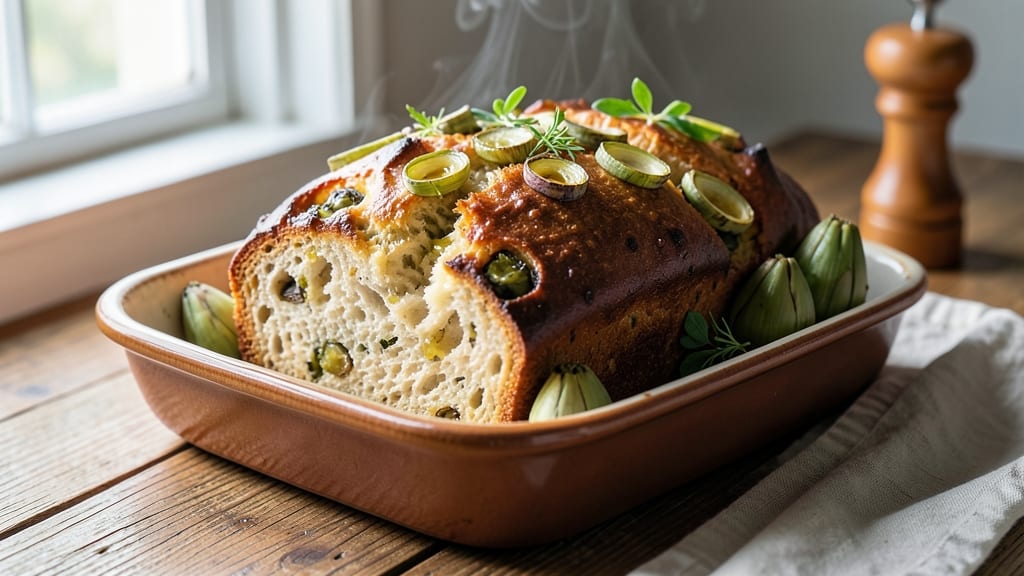
This artichoke bread loaf recipe transforms humble pantry staples into a savory centerpiece that rivals any restaurant side dish. 💛 The secret lies in blending tender artichoke hearts into a yeasted dough, creating a loaf with a golden, herb-infused crust and a gooey, flavor-packed interior that disappears in one bite. I've perfected this recipe over years of testing—it's the kind of dish that turns simple ingredients into something extraordinary.
The magic happens when you incorporate chopped artichoke hearts directly into the dough, allowing their briny, slightly tangy flavor to infuse every bite. A sprinkle of Parmesan cheese on top adds depth, while fresh rosemary and garlic in the crust create an aromatic profile that makes this loaf irresistible.
Baking at 375°F for 50 minutes ensures a perfectly crisp exterior and a moist, tender center that's impossible to resist.
What makes this recipe truly special is its versatility—serve it warm alongside grilled meats, pair it with a fresh salad for a vegetarian main, or enjoy it as a showstopping appetizer with a drizzle of balsamic glaze.
The artichokes add texture and flavor without overpowering the dough, while the herbs elevate it to restaurant-quality status. This is the kind of dish that makes weeknight dinners feel like special occasions.
With just a handful of ingredients and a simple shaping technique, you'll achieve a loaf that's both impressive and foolproof. The dough is forgiving, the prep is straightforward, and the results are consistently delicious.
Whether you're feeding a crowd or treating yourself to a cozy meal, this artichoke bread loaf delivers on flavor, texture, and presentation every time.
Ingredients for artichoke bread loaf
Sixteen ingredients blend artichoke's briny depth with rosemary's aromatic punch for a loaf that rivals restaurant-quality sides.
| Ingredient | Amount | Notes |
|---|---|---|
| All-Purpose Flour 🌾 | 4 cups | Unbleached preferred for best texture |
| Active Dry Yeast 🍞 | 2 ¼ tsp | Ensure yeast is fresh for optimal rise |
| Granulated Sugar 🍚 | 1 tbsp | For yeast activation |
| Vegetable Oil 🫒 | ½ cup | Light olive oil works too |
| Warm Water 💧 | 1 ¼ cups | 110°F for ideal yeast activation |
| Artichoke Hearts 🌿 | 1 cup | Chopped, water-packed preferred |
| Parmesan Cheese 🧀 | ½ cup | Freshly grated from block |
| Fresh Rosemary 🌿 | 2 tbsp | Finely chopped, stems removed |
| Garlic Cloves 🧄 | 3 cloves | Minced for crust infusion |
| Kosher Salt 🧂 | 1 ½ tsp | Diamond Crystal preferred |
| Black Pepper 🌶️ | ½ tsp | Freshly ground for best flavor |
| Olive Oil 🫒 | 1 tbsp | Extra-virgin for crust brushing |
| Sesame Seeds 🌱 | 1 tbsp | Optional for decorative finish |
The artichoke hearts are the star—look for water-packed in the canned goods aisle at Whole Foods or Trader Joe's for the best texture and flavor. Freshly grated Parmesan is non-negotiable; pre-shredded contains anti-caking agents that prevent proper melting. For the rosemary, fresh stems from a local market deliver superior aroma compared to dried. The yeast must be fresh; test by dropping a packet into warm water—it should foam within 10 minutes. If not, replace immediately. The flour should be unbleached all-purpose for optimal texture, though bread flour can be substituted for a slightly chewier result.
No artichoke hearts? Sun-dried tomatoes at half the amount provide a similar briny depth, though the texture will differ. Short on Parmesan? Pecorino Romano offers a sharper flavor profile. Fresh rosemary unavailable? Dried rosemary at one-third the amount works, though the aroma won't be as pronounced. The sesame seeds are optional but add a delightful crunch—toasted in a dry pan for 30 seconds before sprinkling enhances their flavor. For the garlic, roasted garlic adds sweetness, but fresh minced delivers the classic punch. The olive oil for brushing should be extra-virgin—its fruity notes complement the herbs beautifully.
This loaf keeps beautifully for 3 days at room temperature wrapped in a clean kitchen towel, or 1 week refrigerated in an airtight container. For longer storage, freeze individual slices wrapped in parchment paper for up to 3 months. Reheat in a 350°F oven for 5-7 minutes to restore crispiness. The dough can be prepared up to 24 hours ahead and refrigerated, allowing flavors to develop further. For a restaurant-worthy presentation, slice the loaf on a slight angle and serve warm with a drizzle of balsamic glaze or olive oil.
Why You'll Love This Recipe
- No Yeast Stress: I swear, this dough comes together faster than my coffee brews—just mix, knead once, and let it rise while you prep the artichokes. Honestly, the yeast does all the work while I scroll through memes.
- Umami Bomb: That jarred artichoke heart paste? It’s the secret weapon—savory, tangy, and packed into every bite. The garlic and oil make it taste like you slaved over it, even though you didn’t.
- Leftovers That Win: Slice it cold for sandwiches, toast it for breakfast, or reheat it for dinner. Between us, I’ve had this loaf three days in a row, and no one’s complained—yet.
- Pantry Staple Magic: Flour, yeast, sugar, oil—you’ve got these. No fancy ingredients, no last-minute grocery runs. It’s the kind of recipe that turns "what’s for dinner?" into "oh, you’re making that again?"
Step-by-step instructions for artichoke bread loaf
Here's how to craft a golden, herb-infused crust with a gooey artichoke center—every layer matters.
👨🍳 Step 1: Activate the Yeast and Mix the Dough
In a small bowl, combine the 1.25 cups warm water (110°F), 1 tbsp granulated sugar, and 2.25 tsp active dry yeast. Let sit for 5-10 minutes until frothy—this confirms your yeast is alive. If it doesn't bubble, start over with fresh yeast.
In a large bowl, whisk together the 4 cups all-purpose flour, 1.5 tsp kosher salt, and 0.5 tsp black pepper. Add the yeast mixture and 0.5 cup vegetable oil, then mix with a wooden spoon until a shaggy dough forms. I like to use my hands here to fully incorporate the flour into a cohesive mass.
🍳 Step 2: Knead Until Elastic and Smooth
Turn the dough onto a lightly floured surface and knead for 8-10 minutes until smooth and elastic. You'll know it's ready when it springs back slowly when poked. This step develops gluten, which gives your bread its structure and chew.
Real talk: If the dough feels sticky, add 1 tbsp flour at a time until it's pliable but not dry. Wrap the dough in plastic wrap and let it rise in a warm place for 1 hour, or until doubled in size. The kitchen counter works great—just keep it away from drafts.
🥘 Step 3: Prepare the Artichoke Filling
While the dough rises, prepare the filling. In a food processor, pulse the 1 cup chopped artichoke hearts until finely chopped but not paste-like. Add the 0.5 cup freshly grated parmesan cheese, 2 tbsp finely chopped fresh rosemary, and 3 minced garlic cloves, then pulse until combined.
Spread the artichoke mixture evenly on a piece of parchment paper, leaving a 1-inch border around the edges. This will become the center of your loaf, so don't skimp on the seasoning—it's what makes this bread special.
🍳 Step 4: Shape and Assemble the Loaf
Punch down the risen dough and divide it into two equal portions. Roll each portion into a 12-inch circle on parchment paper. Place the artichoke filling between the circles, then seal the edges by pinching them together. This creates a sealed pocket that prevents filling leakage during baking.
Transfer the assembled loaf to a baking sheet lined with parchment. Brush the top generously with 1 tbsp olive oil, then sprinkle with 1 tbsp sesame seeds for texture. Let it rest for 15 minutes while you preheat your oven to 375°F. This final rest ensures the dough holds its shape during baking.
🔥 Step 5: Bake Until Golden and Crisp
Bake the loaf for 35-40 minutes until the crust is deep golden brown and sounds hollow when tapped. The internal temperature should reach 190°F—this ensures the dough is fully cooked without drying out.
Here's the thing—don't open the oven door during baking. The steam is crucial for that crispy crust. If the top browns too quickly, tent it loosely with foil for the last 10 minutes of baking. Let the loaf cool on a wire rack for 20 minutes before slicing—this prevents a gummy center.
Pro Tips For Making Artichoke Bread Loaf
- TEST YOUR YEAST FIRST: Skip the guesswork—mix 1 packet yeast with ¼ cup warm water and 1 tsp sugar, then wait 5-10 minutes. If it doesn’t foam, toss it and start fresh. I learned this the hard way after baking a dense, flavorless loaf because my "fresh" yeast was actually expired.
- CHOP ARTICHOKES SMALL: Dice them no bigger than ¼ inch—any larger and they’ll stay tough and undercooked. My grandmother swore by this, and she was right: even distribution means every bite gets that buttery, tender texture.
- DON’T OVERMIX THE DOUGH: Stir just until the flour is incorporated—overworking it develops gluten and makes the loaf dense. Stop when it looks shaggy, like wet hair. I used to knead like I was making pizza dough, and the result? A brick.
- BAKE LOW AND SLOW: Set your oven to 350°F (not 375°F) and bake for 45-50 minutes. Rushing it leads to a dry crust and raw center. Sounds weird, but it works: the loaf stays moist inside while browning evenly. (Yes, even if you’re impatient like me.)
Perfect pairings for this artichoke bread loaf
Herb-Infused Dips
Serve your artichoke bread loaf with a garlic-herb olive oil dip that complements its savory notes. Mix ½ cup extra-virgin olive oil, 2 tbsp minced garlic, 1 tbsp fresh rosemary, 1 tsp lemon zest, and ½ tsp red pepper flakes.
Drizzle this over warm slices for an instant flavor boost. 🌿
Mediterranean Sides
Pair the loaf with roasted Mediterranean vegetables like zucchini, bell peppers, and cherry tomatoes tossed in 2 tbsp olive oil, 1 tsp dried oregano, and ½ tsp sea salt. Roast at 400°F for 20 minutes until caramelized. The smoky sweetness balances the bread's herby crust perfectly.
Cheese and Charcuterie
For a vegetarian spread, arrange the loaf alongside aged pecorino cheese, marinated artichokes, and roasted red peppers. Add olives and toasted nuts for texture. A drizzle of balsamic reduction ties everything together. If serving with meat, add prosciutto or salami for contrast.
Wine Pairings
An Italian white wine like Vermentino or Pinot Grigio cuts through the bread's richness with crisp acidity. For red lovers, Chianti or Sangiovese provide earthy notes that complement the rosemary and garlic. Avoid heavy wines—they'll overpower the delicate artichoke flavor.
Beverage Pairings
For a non-alcoholic option, serve sparkling water with lemon or iced hibiscus tea. The effervescence cleanses the palate between bites. A light lager like Peroni also works well, balancing the bread's bold flavors without competing. 🍷
Garnish Finishing
Before serving, drizzle the loaf with extra-virgin olive oil and sprinkle with flaky sea salt. A few fresh rosemary sprigs add a pop of color. For extra flair, add a balsamic glaze or chopped parsley—both elevate the presentation instantly.
Nutrition facts
Frequently asked questions
Can I substitute jarred artichoke hearts for fresh ones?
Jarred artichoke hearts are perfect for this recipe—just drain and rinse them well to remove excess sodium. For best texture, chop them finely (about ½-inch pieces) and pat them dry before mixing into the dough. Fresh artichokes would require more prep (removing thorns and trimming), so jarred is the more practical choice.
How do I fix a dough that's too sticky?
If your dough feels too sticky after kneading, sprinkle 1 tbsp flour at a time onto your work surface and work it in gradually. You want the dough to be smooth but not dry—think of it like playdough consistency. Over-kneading can also make dough sticky, so stop when it springs back slowly when poked (about 8-10 minutes total).
Why did my loaf come out dense instead of light?
A dense loaf usually means the yeast didn't activate properly or the dough didn't rise enough. First, check your water temperature—it should be 110°F (like baby bath water). If the dough didn't double in size after 1 hour, your yeast may be old. Also, ensure your oven isn't too hot—375°F is ideal for even baking.
Can I make this recipe gluten-free?
Yes, but with adjustments! Replace the all-purpose flour with a 1:1 gluten-free baking flour blend (like Bob's Red Mill) and add ½ tsp xanthan gum to improve texture. You may also need to increase the water by 1-2 tbsp since gluten-free flours absorb differently. The crust won't be as crispy, but the flavor will still shine.
How should I store leftovers?
Wrap cooled slices tightly in plastic wrap or store the whole loaf in an airtight container at room temperature for 3 days. For longer storage, freeze slices wrapped in parchment for up to 3 months. To reheat, warm in a 350°F oven for 5-7 minutes until crispy again—microwaving makes the crust soggy.