
Desserts
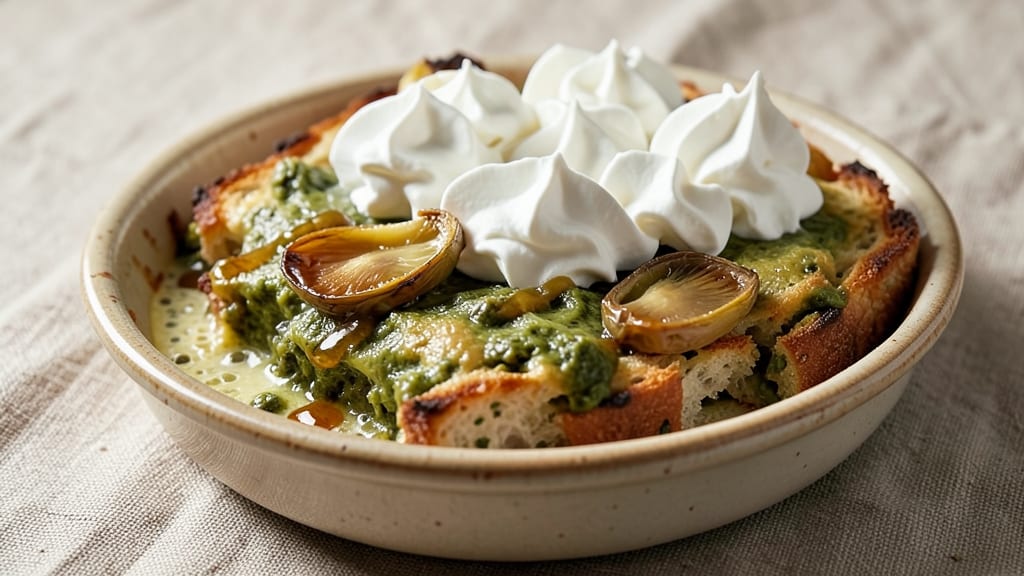
This artichoke bread pudding recipe transforms humble ingredients into a dessert with a crispy golden top and silky artichoke-infused custard. The secret lies in layering day-old bread with a rich custard base and roasted artichoke purée, creating a texture that's both tender and satisfying.
After perfecting this over countless batches, I've developed a method that ensures every bite delivers that perfect contrast—crunchy crust meeting creamy filling.
The custard is where the magic happens, enriched with eggs, cream, and a touch of vanilla to balance the artichoke's earthy notes. Roasting the artichokes first intensifies their flavor, turning them into a velvety purée that blends seamlessly into the custard.
This approach elevates the dish beyond traditional bread pudding, adding a sophisticated twist that still feels approachable for home cooks.
By the time it emerges from the oven, you'll have a dessert that's restaurant-quality—golden and crackling on top, with a custard so rich it practically melts in your mouth.
The artichoke flavor shines through without overpowering, creating a harmonious balance that's both unexpected and irresistible. It's the kind of dessert that feels indulgent yet still manages to be comforting.
Perfect for brunch, dessert, or even a cozy weeknight treat, this recipe scales beautifully for any occasion. The method is straightforward, but the result is anything but ordinary. Let's get started on this artichoke bread pudding that's sure to impress.
Ingredients for artichoke bread pudding
Twelve ingredients transform simple bread into restaurant-quality artichoke bread pudding with crispy perfection.
| Ingredient | Amount | Notes |
|---|---|---|
| Day-Old Bread 🍞 | 6 cups | Stale, crusts removed, cubed |
| Large Eggs 🥚 | 6 whole | Room temperature for blending |
| Heavy Whipping Cream 🥛 | 2 cups | Full-fat for richness |
| Whole Milk 🥛 | 1 cup | Warmed for custard |
| Granulated Sugar 🍚 | 1 cup | Lightly packed |
| Vanilla Extract 🌿 | 1 tbsp | Pure, high-quality |
| Salt 🧂 | ½ tsp | Diamond Crystal preferred |
| Fresh Artichoke Hearts 🌿 | 1 ½ cups | Roasted, puréed smooth |
| Unsalted Butter 🧈 | ½ cup | Cold, cubed for topping |
| Pecans 🌰 | ½ cup | Toasted, chopped |
| Cinnamon 🌶️ | ½ tsp | Ground, for dusting |
| Ground Nutmeg 🌶️ | ¼ tsp | Freshly grated |
The bread is non-negotiable—day-old ensures maximum moisture absorption, while crusts removed prevent soggy bottoms. Sourdough or brioche from the bakery section at Whole Foods or Trader Joe's adds depth, but any crusty loaf works. For artichokes, fresh is ideal but high-quality canned hearts (like Meijer) save time. Roast them until tender, then purée until silky—no lumps. The custard relies on room-temperature eggs for smooth blending, so take them out 30 minutes before mixing.
No fresh artichokes? High-quality canned hearts (drained and rinsed) work beautifully—just purée them thoroughly. Running short on butter? Vegan butter or coconut oil maintains crispiness, though texture may vary slightly. Substitute pecans with walnuts or almonds if preferred, but toast them first for maximum flavor. For extra richness, add 2 tbsp sour cream to the custard mixture. The cinnamon and nutmeg can be swapped for pumpkin pie spice at a 1:1 ratio, though the earthy artichoke pairs best with pure cinnamon.
Prep the bread pudding ahead for optimal texture—assemble the dish in a baking dish and refrigerate overnight. This allows flavors to meld and ensures a crispier crust when baked. Store leftovers in an airtight container for 3-4 days in the fridge, though it reheats best when warmed gently in the oven. For make-ahead convenience, freeze the unbaked pudding (without butter topping) for up to 2 months
Why You'll Love This Recipe
- No Chopping Needed: I swear by this trick—just tear that stale bread into chunks, no knife required. The artichoke hearts (marinated or jarred, no judgment) get tossed right in with the eggs and cream, so you’re basically mixing while someone else could be doing the dishes.
- Rich Without the Fuss: That combo of heavy cream and whole milk makes it unexpectedly luscious—like a custardy hug in bread form. Honestly, the artichokes add a briny depth that turns this into something special without extra work.
- Leftovers? Better Than Fresh: Between us, this tastes better the next day when the bread soaks up all the creamy goodness. I make a double batch on Sundays, and by Wednesday, it’s the only thing anyone wants—no sad desk lunches here.
- Budget Breakfast for Dinner: Day-old bread? Eggs? A can of artichokes? This is my go-to when I’m broke but still want to impress. It’s cheap, filling, and somehow feels fancy enough for guests (they’ll never know it’s my secret money-saving move).
Step-by-step instructions for artichoke bread pudding
Here's the method for achieving that perfect balance of crispy golden crust and creamy artichoke-infused custard.
Prepare the Artichoke Purée and Custard Base
In a blender, combine the 1.5 cups fresh artichoke hearts with 1 cup whole milk and blend until completely smooth. This purée will form the rich, herby foundation of your bread pudding. Strain through a fine-mesh sieve to eliminate any remaining fibrous bits that could make the texture grainy.
In a separate large bowl, whisk together the 6 whole large eggs, 2 cups heavy whipping cream, 1 cup granulated sugar, 1 tablespoon vanilla extract, and 0.5 teaspoon salt. The mixture should be pale yellow and completely smooth. I like to use a whisk for this step to incorporate plenty of air, which will create a lighter texture in the finished pudding. Warm the milk slightly before blending to help emulsify the purée more easily.
Mix in Bread and Artichoke Purée
Add the 6 cups day-old bread (cubed and crusts removed) to the egg mixture and gently fold until the bread is completely saturated. The bread should absorb the custard but still hold its shape—if it feels too dry, add 1-2 tablespoons more milk. Then, stir in the artichoke purée until evenly distributed throughout the mixture.
Here's where the magic happens: The artichoke's natural acidity balances the richness of the eggs and cream, while its earthy flavor becomes the star of this dish. Don't worry if the mixture looks uneven at this stage—it will come together beautifully as it bakes. Let the bread soak for 10 minutes while you prepare the oven.
Assemble and Bake for Crispy Perfection
Preheat your oven to 350°F. Grease a 9x13-inch baking dish generously with butter—this prevents sticking and ensures that crispy crust we're after. Transfer the bread mixture to the prepared dish, pressing down gently to create an even surface. The top should be slightly uneven, which helps create more crispy edges.
Bake for 45-50 minutes until the edges are deep golden brown and the center is just set—it should still have a slight wobble when gently shaken. If the top browns too quickly, tent loosely with aluminum foil for the last 10 minutes of baking. The internal temperature should reach 170°F at the center, indicating a perfect custard consistency.
Add Toppings and Finish
While the pudding is still warm, sprinkle the top evenly with 0.5 cup toasted pecans, 0.5 teaspoon cinnamon, and 0.25 teaspoon ground nutmeg. Then, dot the surface with 0.5 cup cold cubed butter—this is the secret to achieving that irresistible crispy crust. Return the pudding to the oven and bake for an additional 8-10 minutes until the butter melts and the topping is golden and crackly.
Remove from the oven and let the bread pudding rest for 10 minutes before serving. This resting period allows the custard to set slightly, making it easier to slice and serve. The contrast between the crispy, nutmeg-spiced top and the silky artichoke custard is what makes this dish truly special. Serve warm with a dollop of whipped cream or a scoop of vanilla ice cream for an extra touch of indulgence.
Pro Tips For Making Artichoke Bread Pudding
- Soak the Bread Properly: Use a mix of whole milk and heavy cream (about 2 parts milk to 1 part cream) for the soak—it keeps the bread tender without making it soggy. I learned this the hard way: skipping the cream leaves you with a dry, gummy mess, while too much cream turns it into a custard. Aim for 15-20 minutes—no longer, or the bread will start to fall apart when baking.
- Whisk Eggs Like a Pro: Beat the eggs until they’re thick and pale yellow, not just frothy. This ensures a silky texture instead of a dense, rubbery pudding. I used to rush this step, and the result was always disappointing—now I take the extra 30 seconds, and it makes a real difference.
- Skip the Overmixing: Once you fold in the artichokes, stop mixing the moment everything’s just combined. Overworking the batter breaks down the bread and makes the pudding dense. I was skeptical until I tried it—now I resist the urge to "fix" the texture by stirring more.
- Bake at 350°F, Not Higher: A hot oven (400°F+) will brown the top too fast while leaving the center undercooked. 350°F is the sweet spot—it gives you a golden crust without a raw center. I burned the top of my first batch before realizing this; now I set a timer for 50-55 minutes and check with a skewer.
Pro cooking tips for artichoke bread pudding
Artichoke Purée Perfection
Roast the artichokes until tender—about 25-30 minutes at 400°F—before puréeing. This intensifies their flavor and creates a silky texture. I use a high-speed blender like the Ninja BN601 to ensure no lumps remain.
For extra richness, strain the purée through a fine-mesh sieve to remove any fibrous bits that could make the bread pudding texture uneven. 🌿
Custard Consistency Secrets
The custard is where the magic happens, so whisk the eggs and cream vigorously for at least 3-4 minutes to incorporate air. Warm the milk to 100°F before blending with the artichokes—this helps emulsify the purée smoothly.
If the mixture feels too thick after adding the bread, stir in 1-2 tablespoons more milk to ensure even saturation. Let it soak for 10 minutes before baking for optimal texture. ✨
Crispy Top Technique
For that irresistible golden crust, use cold cubed butter on top after the initial bake. The butter melts during the final 8-10 minutes in the oven, creating a crackly, caramelized surface.
Sprinkle toasted pecans and spices evenly to prevent clumping. If your oven runs hot, tent the dish loosely with aluminum foil during the last 10 minutes to avoid over-browning. 🔥
Bread Prep Matters
Use day-old bread with crusts removed to prevent a soggy bottom. I prefer brioche or sourdough for extra richness, but any crusty loaf works. Cube the bread into 1-inch pieces for even baking.
If your bread is too fresh, toast it lightly to dry it out slightly—this helps it absorb the custard without turning mushy. 🍞
Temperature Control
Bake at 350°F for the first 45-50 minutes until the edges are golden and the center is just set (a slight wobble when shaken). Use an instant-read thermometer to check the internal temperature—it should reach 170°F for a perfect custard.
If the top browns too quickly, reduce the heat to 325°F for the last 10 minutes to finish gently. 🌡️
Make-Ahead Pro Tips
Assemble the bread pudding ahead of time and refrigerate overnight for deeper flavor and a crispier crust. Store leftovers in an airtight container for up to 4 days. To reheat, cover with foil and warm at 300°F for 15 minutes—this keeps the crust from drying out.
For freezing, bake the pudding without the butter topping, then add it fresh before the final bake. ❄️
Nutrition facts
Frequently asked questions
Can I use canned artichoke hearts instead of fresh?
High-quality canned artichoke hearts work perfectly—just drain and rinse them thoroughly. For the best texture, purée them until completely smooth, then strain through a fine-mesh sieve to remove any fibrous bits. This ensures your custard stays silky rather than grainy.
Why does my bread pudding come out soggy?
Soggy bread pudding usually means the bread absorbed too much liquid or wasn't stale enough. Use day-old bread with crusts removed, and cube it into 1-inch pieces for even baking. If your mixture feels too wet, add 1-2 tablespoons more bread to soak up excess liquid. Let it soak for 10 minutes before baking to help it firm up.
How do I make this gluten-free?
Replace the bread with a gluten-free loaf (like sourdough or brioche) and use a 1:1 gluten-free flour blend if needed for binding. For the custard, ensure all ingredients (like vanilla extract) are certified gluten-free. The texture will be slightly denser but still delicious. Always check labels on spices and extracts for hidden gluten.
Can I add other vegetables to this recipe?
Yes! Roasted zucchini, asparagus, or spinach pair beautifully with artichokes. Purée them alongside the artichokes for a smooth texture, or chop finely and fold into the custard mixture. Just reduce the artichoke quantity by 1/3 cup to balance flavors. Avoid watery veggies like tomatoes or cucumbers—they can make the pudding too wet.
What’s the best way to reheat leftovers?
Cover the bread pudding with foil and warm at 300°F for 15 minutes to restore moisture without drying out the crust. For extra crispiness, broil for 2-3 minutes at the end. Avoid microwaving—it makes the texture rubbery. Store leftovers in an airtight container for up to 4 days.